

Previous Article
Probation library
Women in Prison: The Bangkok Rules and Beyond
Women are a minority in prison. Currently 6.8% of the world prison population is female, but this number is rapidly growing. Due to the relatively low number of female inmates, prison policies have traditionally developed in response to the behavior of men. However, women in prison have different needs. For example, needs related to: pregnancy, breastfeeding, raising children, hygiene, health and prison security. In order to respond to these specific needs, the UN General Assembly adopted the Bangkok Rules (2010). The Bangkok Rules have three focal points. Apart from responding to the specific needs of women in prison, the rules also focus on the protection of children and the prevention of (sexual) abuse. In addition, the Bangkok Rules promote non-custodial sentences for convicted females.
In 2014, the IPPF (International Penal and Penitentiary Foundation) initiated a global research project on women in prison. Seven authorities in the field of women in prison were asked to write an article on the topic. Furthermore, representatives from 23 countries were asked to fill out a questionnaire on women in prison. Questionnaires were sent to the following countries: Argentina, Australia, Austria, Brazil, England and Wales, Finland, France, Germany, Greece, Ireland, Italy, the Netherlands, New Zealand, Poland, Portugal, Russia, South Africa, Spain, Switzerland, Taiwan, Thailand, Turkey and the United States of America. The responding states were asked to report on the situation in their country considering the following topics: (a) the international legal framework applicable to women in prison, (b) statistics relevant to women in prison (c) criminological factors relevant to women in prison and (d) the actual conditions of women in prison. As to the latter, the responding states were asked to describe whether these conditions are in accordance with the Bangkok Rules. Both the seven thematic articles and the 23 national reports were published in Van Kempen P.H.P.H.M.C. & Krabbe, M.J.M. (eds.), Women in prison: the Bangkok Rules and beyond, Antwerpen: Intersentia, 2017. The introductory chapter to this book presents an overview of the topic of women in prison, referring to the seven thematic articles, the 23 national reports and to supplementary studies on women in prison. The chapter is available for free, right here.
A brief overview of this chapter – focusing on the questionnaire topics and the research results pertaining to Europe – is presented below.
International legal framework
Different categories of international rules are applicable to women in prison: general human rights treaties (such as the European Convention on Human Rights), specific human rights treaties (on torture, war, children, women and work) and international instruments relevant to prisoners (Mandela Rules, European Prison Rules, Bangkok Rules). Most of the respondent states have ratified and/or implemented this international framework. However, not all of these rules are applied in practice, as a fair number of responding states indicates.
Statistics
There are about 700.000 women in prison worldwide. Approximately 98,906 of these women can be found in European prisons. In Europe, 4.9% of the prison population is female. This is a lower number than the 6.8% worldwide average. The highest female prison population rates (per 100,000 of the national population) can be found in the Americans, the lowest in Africa. Middle levels apply to Europe, Asia and Oceania. Within Europe, the lowest female prison population rates can be found in Ireland, France and Italy. The number – and this is a shocking number – of women in prison worldwide has increased with 50% since 2000. This rise cannot be explained in terms of growth of national population levels. The European rise of women in prison is not as dramatic as the worldwide average. In Europe, the number of women in prison only grew 4.4% since 2000.
Criminological factors
As to the causes of criminal behavior of women, various studies demonstrate that women’s pathways to prison can be identified by several shared features, such as: a history of child abuse, sexual abuse, domestic violence, poverty, low level of education, minimum employment histories compared to male prisoners, mothering and responsibilities for others, mental health problems and addiction. Most crimes that women are convicted for, also in Europe, are economic in nature. The highest rates result from drugs-related crimes, but theft and embezzlement also have a high occurrence. In general – but there are several exceptions in Europe – women are less likely to be convicted to a prison sentence than men, and if they are convicted sentences are short.
The actual conditions of women in prison
Several areas in the field of women in prison were so frequently mentioned by the reporting states that they probably require urgent attention from governments. These areas are: health care, children in prison, searches and prison design. Moreover, governments should make an effort to bring down the number of women in prison. Female imprisonment has a high cost, and its effects are often negative. Several suggestions are provided to reduce the number of women in prison.
References relevant to the numbers and facts mentioned in the above summary can be found in:
- Krabbe, M.J.M. & Van Kempen, P.H.P.H.M.C., Women in prison: a transnational perspective, in: Van Kempen P.H.P.H.M.C. & Krabbe, M.J.M. (eds.), Women in prison: the Bangkok Rules and beyond, Antwerpen: Intersentia, 2017, p. 3-34.
- Van Kempen P.H.P.H.M.C. & Krabbe, M.J.M. (eds.), Women in prison: the Bangkok Rules and beyond, Antwerpen: Intersentia, 2017.

Probation library
Probation Journal

juvenile offenders, Probation in Europe
Overview of Probation Procedures for Juveniles and Adults in Albania
22/07/2026
The Albanian Probation Service plays an important role in the implementation of alternative sanctions and measures for both juveniles and adults. Through supervision, assessment, and rehabilitation-oriented interventions, the Service aims to support compliance with court decisions, reduce the risk of reoffending, and promote the successful reintegration of individuals into society.
Reading corner
Probation in Europe
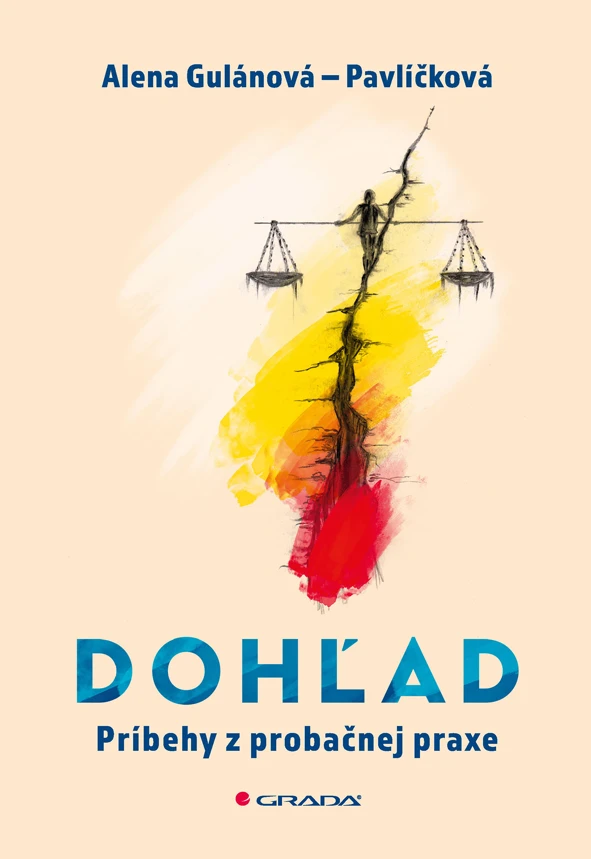
Dohľad
08/07/2026
The authentic world of probation and mediation, in which professional work intersects with human destinies, is brought to you by the publication through case studies revealing the diverse life stories of convicts and the dynamics of their relationship with probation and mediation officers.
Probation Journal

CEP
New Publication: CEP, Probation and the Digital Future
02/07/2026
The latest issue of the Journal of Offender Monitoring features an English version of Gerry McNally’s chapter, CEP, Probation and the Digital Future, first published in 2023 as part of the Portuguese book Execução das Penas e Medidas na Comunidade no Futuro Digital, edited by Nuno Caiado.
Probation Journal

Framework Decisions
Exploratory Study on the possible Lisbonisation of ex-third pillar acquis in the area of mutual recognition in criminal matters published
23/06/2026
Commissioned by the European Commission’s Directorate-General for Justice and Consumers (DG JUST) and undertaken by ICF SA in December 2023, the study, published in April 2026, assesses the mutual recognition of criminal decisions and cross-border cooperation on criminal matters.
Reading corner
Violent Extremism
New newsletter available: EU Knowledge Hub on Prevention of Radicalisation
11/05/2026
The latest edition of the EU Knowledge Hub newsletter brings together policy, research, and practice to address evolving radicalisation threats across Europe.
Probation Journal

Research
What is the societal value of probation?
04/05/2026
During the CEP 15th General Assembly and International Conference on Gender-Based Violence in Probation (from 14 to 16 October 2025 in Vienna, Austria), the Dutch research group Modelling Societal Impact received the CEP Probation Research Award for their work on the societal impact of the Dutch probation services. The research has since been completed. There are multiple reports published (in Dutch) and a short videocast with English subtitles. For anyone interested, see below an oversight of the published research and relevant links to the publications and videocast.
This research may help other European countries demonstrate the added value of probation for their national context. If you would like to learn more about this, please contact: a.a.nemeth@saxion.nl (dr.ir. Attila Németh) or a.visser@saxion.nl (Anouk Visser, MSc.)
Probation Journal

Women, youth
Understanding the needs of girls and young women in youth justice
10/03/2026
New research highlights the underlying needs that influence girls’ and young women’s contact with youth justice systems and calls for more gender responsive approaches in policy and practice. Drawing on a review of recent studies, the authors identify several factors shaping girls’ pathways into the justice system, including persistent abuse, trauma, gendered expectations, and systemic failures. Girls involved in youth justice are often affected by multiple forms of victimisation, such as sexual abuse, neglect, and domestic violence, with experiences frequently beginning in early childhood.
Reading corner
Probation in Europe
The Routledge Handbook of European Penology
05/01/2026
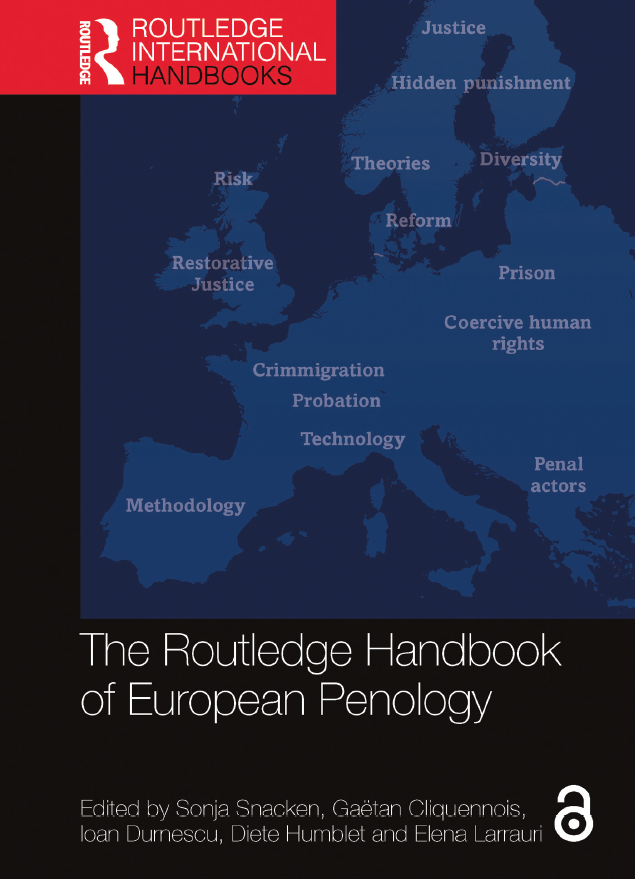
The Routledge Handbook of European Penology, published by Routledge. This comprehensive volume has been edited by Sonja Snacken, Gaëtan Cliquennois, Ioan Durnescu, Diete Humblet and Elena Larrauri.
Reading corner

Criminal Justice
Bridging Research and Practice in Forensic Social Work: An interview with the editors of Forensic Social Work – Supporting Desistance
17/12/2025
Supporting desistance while managing risk is at the heart of criminal justice social work across Europe. In Forensic Social Work – Supporting Desistance, editors Jacqueline Bosker, Anneke Menger and Vivienne de Vogel bring together scientific insights and everyday professional practice to support those working with justice-involved individuals. In this interview, they reflect on the motivation behind the English edition of the book, its core themes, and how professionals can use its tools and approaches in their daily work.
Probation Journal

Domestic violence, Gender-based violence
New evaluation on whole family approach to domestic abuse
26/11/2025
Interventions Alliance has published a new evaluation of a Hub coordinated on behalf of police forces in the south of England, focused on tackling violence against women and children through a whole family approach. The Hub supports victims and perpetrators of domestic abuse and works across policing, health and social services.
Subscribe to our bi-monthly email newsletter!
"*" indicates required fields
- Keep up to date with important probation developments and insights.