

Previous Article
Probation library
Overview of Probation Procedures for Juveniles and Adults in Albania
The Albanian Probation Service plays an important role in the implementation of alternative sanctions and measures for both juveniles and adults. Through supervision, assessment, and rehabilitation-oriented interventions, the Service aims to support compliance with court decisions, reduce the risk of reoffending, and promote the successful reintegration of individuals into society.
Procedures for Juveniles
For juveniles, the Probation Service is responsible for implementing several alternative measures to detention, including suspension of imprisonment with probation supervision, community service, house confinement, conditional release, and restriction of liberty. The Service also contributes to monitoring diversion measures and compulsory measures in cooperation with relevant institutions.
The most commonly applied measure for juveniles is the suspension of imprisonment combined with probation supervision. The work of probation officers is based on the Risk-Need-Responsivity (RNR) model, with a focus on identifying and addressing individual criminogenic needs while supporting the young person’s development and social inclusion.
The supervision process begins with an initial meeting involving the juvenile and their legal guardian. During this meeting, the probation officer gathers information regarding the juvenile’s personal history, family situation, education, behaviour, and other factors relevant to rehabilitation. A risk assessment is then conducted using the YRNAS tool, which serves as the basis for developing an Individual Treatment Plan together with the juvenile and guardian.
The Treatment Plan defines the objectives of supervision, the frequency of meetings, and the interventions required to address identified needs. Depending on the individual case, the Probation Service cooperates with schools, Child Protection Units, vocational training providers, non-profit organisations, and the State Police to support education, vocational development, and compliance with court-imposed obligations.
In cases of community service, placements are selected carefully to ensure that the measure contributes to rehabilitation while avoiding stigma or negative labeling. House confinement is monitored through visits to the juvenile’s residence, while conditional release focuses on supporting reintegration and continued compliance with court requirements.
Procedures for Adults
For adults, the most frequently applied alternative measure is the suspension of imprisonment with probation supervision. The Probation Service is responsible for monitoring compliance with court conditions while providing support aimed at reducing reoffending risks.
The process begins with an initial interview covering relevant areas such as the nature of the offence, personal background, family and economic circumstances, health, and other factors affecting rehabilitation. Based on this information, a risk assessment is completed using the SVR assessment instrument.
Following the assessment, the probation officer and the individual develop an Individual Treatment Plan, which establishes the objectives of supervision, meeting frequency, and interventions required during the probation period.
Where additional court obligations are imposed, such as restrictions related to movement, associations, or certain activities, the Probation Service cooperates with relevant authorities, including the State Police, to monitor compliance. In cases of repeated non-compliance, the matter is reported to the prosecutor for further action.
The same principles apply to other alternative sanctions, including community service, house arrest, and semi-liberty, with procedures adapted according to the specific requirements of each measure.
Download the Full Procedure
This article, written by Julia Hoxha, provides a brief overview of probation procedures for juveniles and adults in Albania. For a detailed description of the legal framework, assessment processes, supervision methods, and implementation of alternative sanctions, please download the full document.
📄 Download: Probation Procedures for Juveniles and Adults in Albania (PDF)

Probation library
Probation Journal

juvenile offenders, Probation in Europe
Overview of Probation Procedures for Juveniles and Adults in Albania
22/07/2026
The Albanian Probation Service plays an important role in the implementation of alternative sanctions and measures for both juveniles and adults. Through supervision, assessment, and rehabilitation-oriented interventions, the Service aims to support compliance with court decisions, reduce the risk of reoffending, and promote the successful reintegration of individuals into society.
Reading corner
Probation in Europe
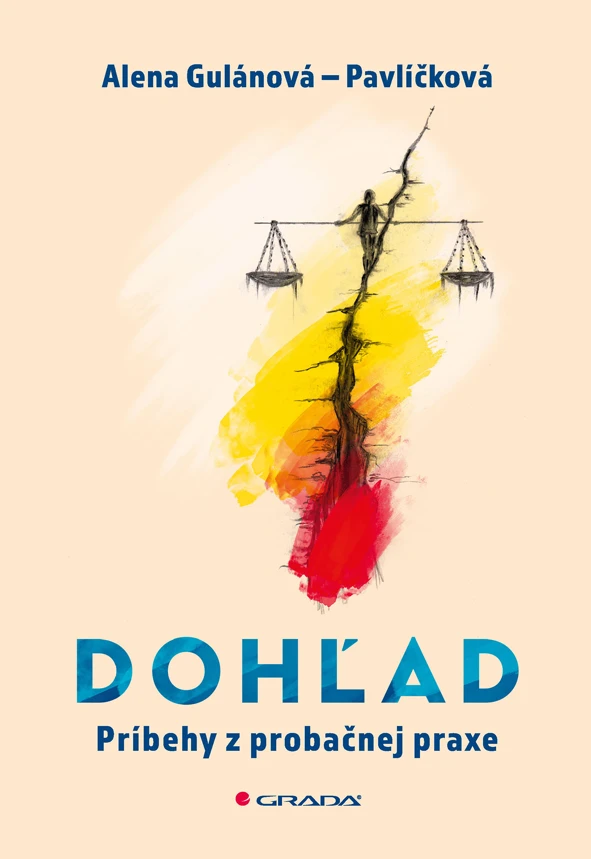
Dohľad
08/07/2026
The authentic world of probation and mediation, in which professional work intersects with human destinies, is brought to you by the publication through case studies revealing the diverse life stories of convicts and the dynamics of their relationship with probation and mediation officers.
Probation Journal

CEP
New Publication: CEP, Probation and the Digital Future
02/07/2026
The latest issue of the Journal of Offender Monitoring features an English version of Gerry McNally’s chapter, CEP, Probation and the Digital Future, first published in 2023 as part of the Portuguese book Execução das Penas e Medidas na Comunidade no Futuro Digital, edited by Nuno Caiado.
Probation Journal

Framework Decisions
Exploratory Study on the possible Lisbonisation of ex-third pillar acquis in the area of mutual recognition in criminal matters published
23/06/2026
Commissioned by the European Commission’s Directorate-General for Justice and Consumers (DG JUST) and undertaken by ICF SA in December 2023, the study, published in April 2026, assesses the mutual recognition of criminal decisions and cross-border cooperation on criminal matters.
Reading corner
Violent Extremism
New newsletter available: EU Knowledge Hub on Prevention of Radicalisation
11/05/2026
The latest edition of the EU Knowledge Hub newsletter brings together policy, research, and practice to address evolving radicalisation threats across Europe.
Probation Journal

Research
What is the societal value of probation?
04/05/2026
During the CEP 15th General Assembly and International Conference on Gender-Based Violence in Probation (from 14 to 16 October 2025 in Vienna, Austria), the Dutch research group Modelling Societal Impact received the CEP Probation Research Award for their work on the societal impact of the Dutch probation services. The research has since been completed. There are multiple reports published (in Dutch) and a short videocast with English subtitles. For anyone interested, see below an oversight of the published research and relevant links to the publications and videocast.
This research may help other European countries demonstrate the added value of probation for their national context. If you would like to learn more about this, please contact: a.a.nemeth@saxion.nl (dr.ir. Attila Németh) or a.visser@saxion.nl (Anouk Visser, MSc.)
Probation Journal

Women, youth
Understanding the needs of girls and young women in youth justice
10/03/2026
New research highlights the underlying needs that influence girls’ and young women’s contact with youth justice systems and calls for more gender responsive approaches in policy and practice. Drawing on a review of recent studies, the authors identify several factors shaping girls’ pathways into the justice system, including persistent abuse, trauma, gendered expectations, and systemic failures. Girls involved in youth justice are often affected by multiple forms of victimisation, such as sexual abuse, neglect, and domestic violence, with experiences frequently beginning in early childhood.
Reading corner

Probation in Europe
The Routledge Handbook of European Penology
05/01/2026
The Routledge Handbook of European Penology, published by Routledge. This comprehensive volume has been edited by Sonja Snacken, Gaëtan Cliquennois, Ioan Durnescu, Diete Humblet and Elena Larrauri.
Reading corner

Criminal Justice
Bridging Research and Practice in Forensic Social Work: An interview with the editors of Forensic Social Work – Supporting Desistance
17/12/2025
Supporting desistance while managing risk is at the heart of criminal justice social work across Europe. In Forensic Social Work – Supporting Desistance, editors Jacqueline Bosker, Anneke Menger and Vivienne de Vogel bring together scientific insights and everyday professional practice to support those working with justice-involved individuals. In this interview, they reflect on the motivation behind the English edition of the book, its core themes, and how professionals can use its tools and approaches in their daily work.
Probation Journal

Domestic violence, Gender-based violence
New evaluation on whole family approach to domestic abuse
26/11/2025
Interventions Alliance has published a new evaluation of a Hub coordinated on behalf of police forces in the south of England, focused on tackling violence against women and children through a whole family approach. The Hub supports victims and perpetrators of domestic abuse and works across policing, health and social services.
Subscribe to our bi-monthly email newsletter!
"*" indicates required fields
- Keep up to date with important probation developments and insights.