
Previous Article

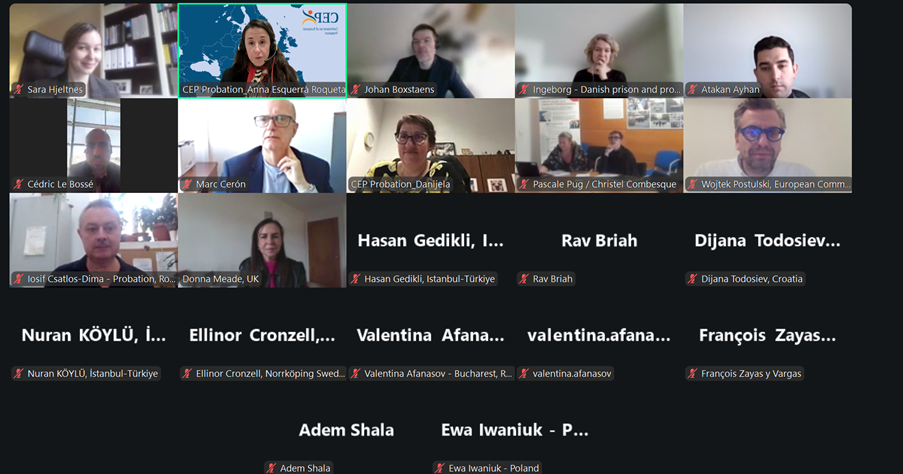
With 26 participants from various EU countries, the presentations provided examples of how the Framework Decisions are applied in practice, shared information and knowledge among participants, as well as challenges, obstacles and best practice.
Prof. Stefano Montaldo from the University of Turin focused on the application of FD 829 and its applicability to house arrest. Colleagues from the Dutch Probation Service and Prosecutor´s Office presented the best practice and core to the work of their team in regard to the implementation of FDs. Mrs. Stefania Stan, Public Prosecutor from Romania and EJN Contact Point, focused in her presentation on challenges and solutions to the use of European Supervision Order during a criminal investigation. Mr. Ramin Farinpour from the Academy of European Law (ERA) introduced the organization and discussed the work and experience in implementing training projects on the Framework Decisions for practitioners. The last presentation was delivered by Mr. Michele Fini from the Italian Ministry of Justice on the application of both FDs in Italian practice as well as the practice of the European Judicial Network for which Mr. Fini is one of the Contact Points.
The world café session provided participants with the opportunity to discuss in smaller groups the following questions:
- What have we learned so far from using FDs?
- What are (still) the main challenges in the implementation of the FDs?
- What can we do to improve/enhance the use of the FDs in an ethical and strategic manner?
Key findings and outcomes:
- Mutual trust between key stakeholders and more importantly between EU countries is needed.
- FD 947 better known than FD 829.
- Differences in national laws and different names of the processes (e.g. different names to the same/similar sanctions).
- Need for direct contacts/one contact point within respective jurisdictions, preferably no fragmentation of tasks within organisations.
- Language barriers between professionals and the height of translation costs (low budget).
- Lack of feedback and answers for closure of the procedure.
- Mutual training of all stakeholders (prosecutors, judges, probation officers, lawyers) is a key to increased mutual cooperation. Lawyers are the first to meet their clients so their role is important.
- Differences in level of training.
- Sharing good examples of projects (bilateral, trilateral etc) – good example to other countries. As known, most of the transfers takes place between neighboring countries.
- Communication between various jurisdictions needs to be improved.
- Communication and promotion of the application of FD need to be enhanced – need to raise awareness of the existence of FDs and their procedures.
- Difficulties in collection of reliable data, data quality, evaluation and research.
- Fear of asking questions – as a professional you feel that you should know everything.
Click here to view the report.
„Where there is a will, there is a way.“
The presentations during this workshop:
- Framework Decision 2009/829/JHA and its applicability to house arrest, Stefano Montaldo, Italy
- The use of European Supervision Order during criminal investigation Challenges and solutions, Stefania Stan, Romania
- The CA of FD 849, 829 and DR 99, H.F. Tillart (LLM) and C.E.M. Rotteveel (LLM), The Netherlands
- The International Desk of the Dutch Probation Service – Melinda Lewis, Bureau Buitenland, The Netherlands
- Enhancing the Implementation of Framework Decisions 947 & 829 – Ramin Farinpour, ERA, Germany
- The Italian implementation of the council FD 2009/829/JHA, Michele Fini, Italy