

Previous Article
News
Probation officers are key actors in reforming pre-trial detention and ensuring effective cross-border justice in the EU
Probation officers have a key role to play in fighting excessive and unlawful pre-trial detention and EU common standards could help them to do just that.
Pre-trial detention is an exceptional deprivation of liberty against a person who is presumed innocent. As such, it is meant to be used only as a measure of last resort. Its impact on a person’s life can be devastating and can lead to serious violations of human rights, including the right to liberty, the right to family life, and the very right to a fair trial.
By Gianluca Cesaro , Fair Trials
In Fair Trials’ recent report, A Measure of Last Resort? The practice of pre-trial detention decision-making in the EU, we mapped the law and practice across the EU, highlighting that pre-trial detention is excessively used across many member states. Foreign nationals, including those involved in cross-border criminal cases, appear to be disproportionately affected by this.
The excessive use of pre-trial detention is one of the major causes of prison overcrowding across the EU, itself a major cause of poor prison conditions in a number of EU Member States. The European Court of Human Rights has increasingly found violations of the prohibition of torture pursuant to Article 3 of the European Convention of Human Rights caused by prison overcrowding in EU member states (see, among others, pilot judgements Torreggiani and others v. Italy, Varga and Others v. Hungary, Stanciu v. Romania ; see also Mandic and Jovic v. Slovenia, Vasilescu v. Belgium).
Because of this, excessive use of pre-trial detention is increasingly becoming a risk for criminal justice cooperation between EU member states. Over the past few years, in implementing the European Arrest Warrant (EAW) system, a number of EU courts have begun to refuse to execute EAWs on the grounds that they were disproportionately issued and/or that the execution of the EAW would jeopardise the human rights of the transferred person. Such practices were recently affirmed by the Court of Justice of the European Union (CJEU) in its judgment in the joint Aranyosi and Caldararu cases (April 2016).
In the judgment, the Court stated that member states must assess whether there is a systematic failure in the issuing state to respect the provisions of the EU’s Charter of Fundamental Rights and, if so, whether that systemic failure presents a risk that the transferred person would be subjected to a fundamental rights violation. If such a risk does exist, such as the poor pre-trial detention conditions in the countries at issue in the Aranyosi and Caldararu cases, the member state should not transfer the person.
Moreover, in its Lanigan (2015) judgment, the Court ruled that a person being held in pre-trial detention pending a decision on whether to execute an EAW, may only be held up to maximum limits fixed by the jurisprudence of the European Court of Human Rights (ECtHR). For example, the subject cannot be detained unless the EAW procedure is, and continues to be, carried out with due diligence, meaning that the executing state must be actively engaged in trying to investigate and process the request in order to hold the person in detention, and must otherwise release the person or use an appropriate alternative to detention.
The implications of these rulings run deep. It is clear, for example, that the overuse of pre-trial detention across the EU needs to stop if the EAW is to be the efficient tool for cross-border criminal justice that it was meant to be. Probation services are, in our view, critical stakeholders in these reform efforts.
Our report highlights how alternatives to detention are key to fighting excessive and abusive pre-trial custody. However, alternatives are also one of the weakest links in the pre-trial detention decision-making chain.
In some countries, the law represents a first barrier to the use of alternatives. Exhaustive lists of permissible alternatives hinder a more creative approach to alternative measures and judges are not always required to consider alternatives before imposing pre-trial detention.
But more importantly, even where a full range of alternatives are available, prosecutors and judges do not use them because they do not trust them. A lack of information related to their successful use and a lack of understanding of the risks of placing people in pre-trial detention are creating a climate of fear around the use of alternatives. Moreover, poor legal and budgetary support for probation agencies to provide pre-trial services around pre-trial detention restricts their ability to encourage a greater use of alternatives by prosecutors and judges.
For this reason, amongst others, we are calling for the EU member states and the EU institutions to enact EU-wide legislation establishing minimum standards on pre-trial detention. Such legislation could, for instance, require judges to demonstrate that they have considered all relevant alternative measures before pre-trial detention is imposed. Legislation could also require that adequate provision be made – in both national law and budgets – for pre-trial services through national probation services.
Earlier in May, EU Commissioner for Justice, Consumers and Gender Equality Vera Jourová clearly expressed her support for such legislation and stated “My priority here is to improve the procedural safeguards related to pre-trial detention. The lack of minimum procedural safeguards for pre-trial detention can hinder judicial cooperation.”
The EU has an opportunity to set pioneering standards on pre-trial detention, and it should not miss it. At Fair Trials we will continue to advocate for effective legislation that can improve the right to a fair trial for everyone, everywhere. But we need all justice actors to join efforts in advocating for and developing new legislation in the EU. And we sincerely hope that probation services from across the EU will join us in these efforts.

Related News
Keep up to date with the latest developments, stories, and updates on probation from across Europe and beyond. Find relevant news and insights shaping the field today.
Recap
Electronic monitoring, Technology
14th Electronic Monitoring Conference, Electronic Monitoring in a Changing World – Perception vs Reality
08/10/2026
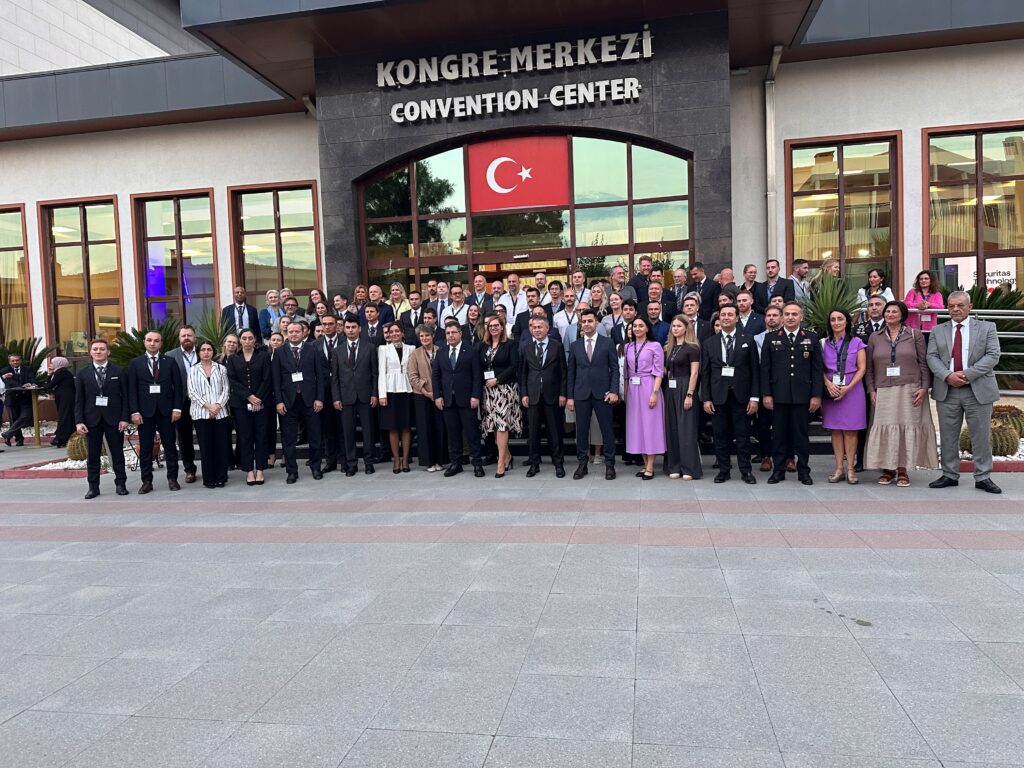
On 6-8 October 2026, Antalya hosted the 14th Electronic Monitoring Conference “Electronic Monitoring in a Changing World – Perception vs Reality”. More than 350 participants coming from 30 countries across Europe and worldwide representing probation services, Ministries of Justice, victims´ services, EM providers, researchers as well as local participants representing the Turkish Prison and Probation Service gathered to discuss how electronic monitoring (EM) is understood by all stakeholders involved including the victims and the public, and how these perceptions compare to the evidence and experiences of those affected. While the gap between perception and reality in electronic monitoring has been recognised for over a decade, the rapid expansion of EM into areas such as victim protection, high-risk supervision and digital innovation has brought new challenges and questions to the forefront.
Recap

ITSCCS
Core Correctional Skills in Digital Probation: highlights from the 6th ITSCCS in Barcelona
05/10/2026
The sixth International Training School on Core Correctional Skills (ITSCCS) took place in Barcelona from 28 September to 2 October 2026, bringing together 26 participants for a week of learning, practical training and international exchange. Organised by the Confederation of European Probation (CEP) and the Centre for Legal Studies and Specialised Training (CEJFE), the programme focused on “Clicks and Empathy: Core Correctional Skills in Digital Probation.”
Recap

Framework Decisions
Recap: ERA workshop on Framework Decisions 829 and 947 in Bucharest
02/10/2026
CEP Vice-President Daniel Danglades, Ambassador Gerry McNally and Policy Officer Mirka Jakesova participated in the Seminar on Framework Decisions 829 and 947 and their Impact on Alternatives in the EU organized under the EU project run by the Academy of European Law on 28-29 September in Bucharest, Romania. The seminar brought together judges, prosecutors, probation practitioners, academics, and policy experts to discuss the growing role of alternatives to detention within European criminal justice systems.
New

CEP
CEP and Catalan justice leaders reaffirm longstanding cooperation
29/09/2026
Representatives of the Confederation of European Probation (CEP) met with senior officials from the Catalan Department of Justice and Democratic Quality in Barcelona on 28 September 2026, alongside the opening of the sixth International Training School on Core Correctional Skills. The meeting offered an opportunity to recognise a longstanding partnership and discuss its continued development.
Updated

Mental Health
DEADLINE EXTENDED: Call for Pilot Implementation of the European Mental Health Training Curriculum
29/09/2026
Good news for CEP members! Following requests from our members, CEP has extended the deadline to apply for the pilot implementation of the European Mental Health Training Curriculum for Probation Officers.
Recap

ITSCCS, Technology
6th International Training School opens in Barcelona with a focus on digital probation
28/09/2026
How can probation professionals use new technologies in their interactions while building trust, showing empathy and supporting change? This question is at the heart of the sixth International Training School on Core Correctional Skills, which opened in Barcelona on 28 September 2026.
Subscribe to our bi-monthly email newsletter!
"*" indicates required fields
- Keep up to date with important probation developments and insights.