

Previous Article
News
New project: Preventing Radicalisation through Probation and Release
On the 22nd of november the European Forum for Urban Security (Efus) will kick-off their new project: Preventing Radicalisation through Probation and Release (PREPARE). PREPARE’s general objective is to contribute to prevent radicalisation through deradicalisation, disengagement and rehabilitation programmes in release and probation, notably through multi-agency partnerships that include local authorities.
Probation services can play a very important role when it comes to the prevention of radicalisation. Through probation, convicted individuals can attend different programmes. Some countries, such as Belgium, the Netherlands, Denmark and Sweden give cities an important role as coordinator in these multi-agency programmes.
With the PREPARE project Efus wants to develope an innovative multi-agency de-radicalisation, disengagement and rehabilitation programme that includes local authorities in the process. First of all, they will identify the needs in the field. This will help them with drawing up fitting recommendations for the local authorities. Efus wants to strengthen their capacities in working with multi-agency prevention of radicalisation projects and bring together European local authorities that are willing to address radicalisation through release and probation.
The three stages
The PREPARE project consists of three different stages:
The first stage will be the research stage. Efus and parner organisations will compile existing examples in Europe of multi-agency partnerships that involve local authorities. This first phase will allow to identify the different forms in which local authorities are involved in strategies to work with released inmates or individuals under probation throughout Europe, as well as to identify the main challenges and topics to be addressed during the project meetings that will follow.
The second stage will exist of four project meetings that are based on the research and the common thematic areas of interest that are identified with local authorities and experts. This second phase will enable partners, cities and experts to exchange and learn from concrete experiences related to PREPARE’s thematic field.
The third and final stage will exist of technical assistance and local activities. This stage runs parallel to the project meetings. Local authorities will be able to mobilise experts who will assist them in the development of activities in the field of de-radicalisation, disengagement and rehabilitation in release and probation scenarios. This third phase of project will be, as the rest of the activities, a tailored one, meaning that the content of the technical assistance and subsequently developed local activities will be defined according to the specific context of each recipient regarding issues of radicalisation (7 partner local and regional authorities), their specific needs and the activities they already develop to prevent radicalisation or de-radicalise.
Partners
PREPARE will gather two types of partners, expert organisations and local authorities:
● Local authorities: City of Malaga and Generalitat of Catalonia (Spain), Rotterdam and The Hague (Netherlands), Rennes and Bagnolet (France) and Vilvoorde (Belgium).
● Organisations: Violence Prevention Network and Denkzeit (Germany), Fryshuset (Sweden), European Forum for Restorative Justice (Belgium) and Fondation Agir Contre l’Exclusion (France)
The Confederation of European Probation is associated partner of the project.
The project will be completed in september 2019.

Related News
Keep up to date with the latest developments, stories, and updates on probation from across Europe and beyond. Find relevant news and insights shaping the field today.
New
Technology
Registration deadline approaching: Join CEP’s final workshop of 2026 on technology in probation
22/10/2026
📢 Have you registered yet? CEP’s final workshop of 2026 takes place on 24 November in Barcelona, bringing together professionals to explore how technology is being used across probation services in Europe.
The Workshop on Alternatives to Detention and Technologies: Deep Diving into New Trends will look beyond artificial intelligence to examine the different ways technology is shaping probation practice, from staff training to working with clients and collaborating with other criminal justice partners.
Recap

Directors General Meetings
CEP Leadership Excellence Training: strengthening leadership and cooperation across Europe
22/10/2026
The CEP Leadership Excellence Training, held on 20–21 October in Zagreb, Croatia, brought together Directors General and senior probation managers from 11 European countries for a two-day interactive programme focused on leadership, communication, staff development, and international cooperation.
New

CEP
Call for Proposals: Evaluation of CEP Expert Groups
21/10/2026
On behalf of Ms. Jana Špero Kamenjarin, CEP Secretary General, it is my pleasure to invite you to submit a proposal to conduct an evaluation within the CEP work programme.
Recap

Uncategorized
CEP at UNODC: Contributing to the Development of Probation Services Worldwide
19/10/2026
The Confederation of European Probation (CEP) was represented by its Secretary General, Jana Špero Kamenjarin, at the Expert Group Meeting on the Establishment of Probation Services and Probation Practices, organised by the United Nations Office on Drugs and Crime (UNODC) and held at the Vienna International Centre (VIC) from 12 to 14 October 2026.
Recap
Electronic monitoring, Technology
14th Electronic Monitoring Conference, Electronic Monitoring in a Changing World – Perception vs Reality
08/10/2026
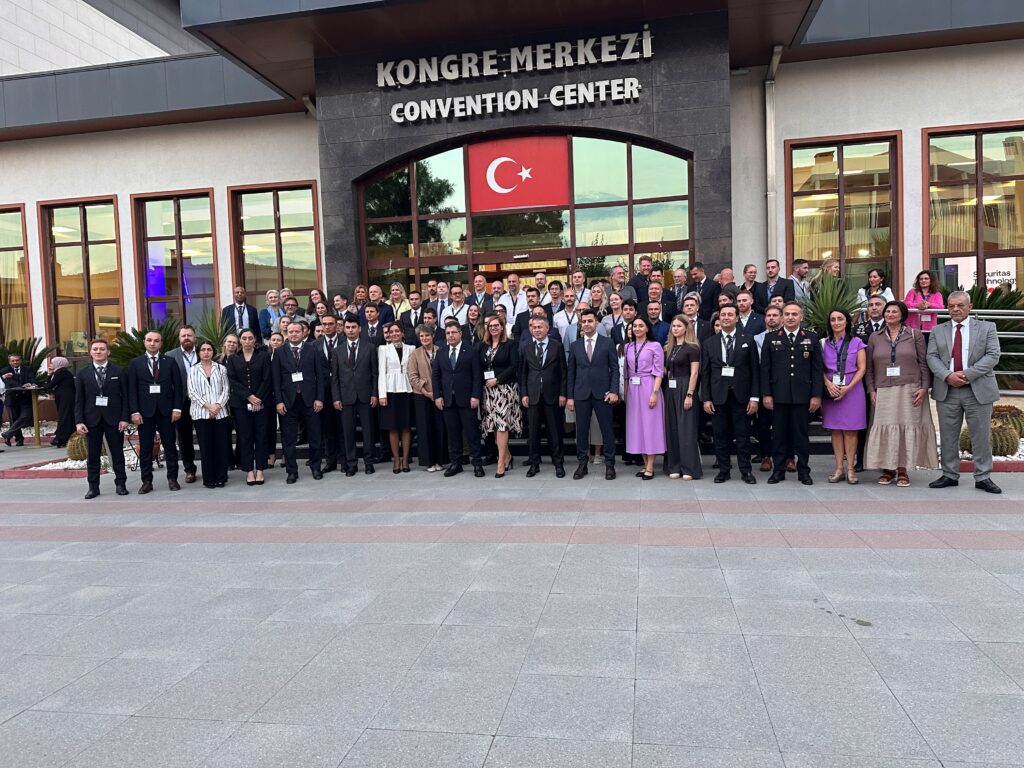
On 6-8 October 2026, Antalya hosted the 14th Electronic Monitoring Conference “Electronic Monitoring in a Changing World – Perception vs Reality”. More than 350 participants coming from 32 countries across Europe and worldwide representing probation services, Ministries of Justice, victims´ services, EM providers, researchers as well as local participants representing the Turkish Prison and Probation Service gathered to discuss how electronic monitoring (EM) is understood by all stakeholders involved including the victims and the public, and how these perceptions compare to the evidence and experiences of those affected. While the gap between perception and reality in electronic monitoring has been recognised for over a decade, the rapid expansion of EM into areas such as victim protection, high-risk supervision and digital innovation has brought new challenges and questions to the forefront.
Recap

ITSCCS
Core Correctional Skills in Digital Probation: highlights from the 6th ITSCCS in Barcelona
05/10/2026
The sixth International Training School on Core Correctional Skills (ITSCCS) took place in Barcelona from 28 September to 2 October 2026, bringing together 26 participants for a week of learning, practical training and international exchange. Organised by the Confederation of European Probation (CEP) and the Centre for Legal Studies and Specialised Training (CEJFE), the programme focused on “Clicks and Empathy: Core Correctional Skills in Digital Probation.”
Subscribe to our bi-monthly email newsletter!
"*" indicates required fields
- Keep up to date with important probation developments and insights.