

Previous Article
News
Interview with new CEP board member Žilvinas Miliauskas
During the General Assembly in Austria, a new CEP Board got elected for the upcoming three years. In the coming weeks we will publish interviews with all newly-elected board members where they will share information on their professional background, how they would like to contribute, what challenges lie ahead and many more.
Enjoy reading!
Can you shortly introduce yourself?
My name is Žilvinas Miliauskas, and I’m Advisor to the Director General at the Probation Service of Lithuania. I have dedicated my career to the penal system, advancing through diverse roles including prison teacher, probation service specialist, and currently advisor responsible for international relations and project implementation. In my present capacity, I represent the Service abroad and coordinate cross-border cooperation, which requires a thorough understanding of probation operations and ongoing initiatives. To maintain an informed perspective, I regularly engage with colleagues at all organisational levels, participate in operational reviews, and oversee the development and implementation of strategic projects. These responsibilities demand continuous professional development, active communication, and stakeholder engagement to ensure alignment with national policy and international standards. My multidisciplinary experience enables me to bridge operational practice and policy, facilitate knowledge exchange, and support evidence-based reforms. I am committed to advancing effective, humane, and rehabilitative probation services through collaborative partnerships, rigorous project management, and sustained dialogue with practitioners, policymakers, and international partners. I prioritise transparency, measurable outcomes, and the dissemination of best practices. I also aim to foster innovation and capacity building initiatives that strengthen institutional resilience and contribute to safer communities, improved reintegration, and respect for human rights.
Why did you decide to run for the CEP Board?
At that stage of my career, I sought to expand my professional engagement beyond the national level. The Lithuanian Probation Service rejoined the Confederation of European Probation (CEP) during my tenure as lead specialist for international cooperation — an initiative I took as my first project. Consequently, I aimed to assume a more prominent role within the organization to demonstrate to colleagues and policymakers that Lithuania can contribute substantively to the international probation community, rather than merely presenting at conferences. Motivated by continuous professional growth, I actively pursue opportunities to deepen my expertise and broaden my impact. Serving on the board of the CEP, the largest international body advocating probation policy in Brussels, presented an unmissable opportunity to influence policy, exchange best practices, and strengthen cross‑border collaborations. This role enables me to represent national perspectives at European fora while learning from diverse systems and innovative approaches. Looking ahead, I envision a career with a wider international scope, leveraging networks and experience to foster evidence‑based reforms and capacity building across jurisdictions. I consider my board membership a strategic and timely step toward a sustained international trajectory that complements my domestic responsibilities and advances the development of effective, humane probation services.
How would you like to contribute to the development of CEP in the upcoming three years, and what impact do you hope to have?
My first objective is to gain a comprehensive, ground-level understanding of how a large international organisation such as CEP operates. I view learning and observation as essential tools that will enable me to contribute effectively. Over the next three years, I have several specific goals. In the short term, I aim to represent the Lithuanian Probation Service as a competent and evolving organisation with valuable expertise to offer international partners. By sharing our experience and demonstrating our commitment to modern practice, I intend to position our Service as one that balances resocialisation and supervision with equal professionalism. I also plan to serve as an active and articulate representative of the Board at both in-person and virtual meetings and conferences, ensuring our perspectives are heard and understood. In the longer term, I aspire to become a recognised speaker and advocate on probation policy. Building strategic relationships and engaging in effective lobbying are strengths I bring to this role, and I will leverage them to influence policy development and foster international collaboration. Through these efforts, I aim to elevate the profile of Probation as a field and contribute meaningfully to the broader community.
What are your main priorities or topics you would like to address as a CEP Board member, and how would you like to make use of your knowledge for the development of CEP?
In my country, the Probation Service occupies a dual role: it is a statutory organisation in which most staff serve as internal state officers, yet it is increasingly adopting a modern probation model that recruits resocialization specialists without formal ranks and is much more focused on resocialization rather than supervision. This evolution creates significant challenges in drawing the line between rehabilitative support and strict supervision — between guiding a client and acting as their guardian. Viewing probation as a multileveled field that requires diverse professional roles to achieve optimal outcomes for clients, communities, and the state, I have identified three priority areas to focus on. First, the development and implementation of robust quality-assurance frameworks to measure the effectiveness and integrity of probation processes. Second, the establishment of clearer definitions and objectives for resocialization and social reintegration, ensuring practices prioritise client autonomy while safeguarding public interest. Third, the reinforcement of inter-institutional cooperation guidelines to improve coordination when managing the most complex and high-risk cases. By addressing these priorities, we can look at our responsibility to supervise our clients with contemporary rehabilitative approaches, enhance professional clarity, and ultimately improve outcomes for individuals and society.
What are the challenges that lie ahead for CEP in the future?
The terms confederation, union and organization share a common purpose in this context: bringing diverse practices together under a single professional umbrella. Increasingly, practitioners (such as most of us) who sometimes lack direct political influence find themselves caught between two priorities. On one hand, we must operate within national legal frameworks that shape our clientele, methods and priorities; on the other, as CEP members, we attend meetings hoping to identify shared approaches, effective algorithms and common solutions to our problems. Too often, we leave realizing there is no single “silver bullet” that fits every national reality. So, at the end of the day, CEP’s greatest strategic challenge is to build an environment and select topics that genuinely unite members rather than accentuate differences. Not every issue holds the same weight for every country, so prioritization matters. The most valuable work we can pursue is developing a clear probation concept and practical, Europe‑wide (or global) guidelines on core issues — guidance that most countries can adapt when reforming their probation services or reshaping their operating models. Such scalable, evidence‑based frameworks would be a genuine asset: universally relevant, adaptable to local contexts, and capable of driving meaningful, long‑term improvements across the field.

Related News
Keep up to date with the latest developments, stories, and updates on probation from across Europe and beyond. Find relevant news and insights shaping the field today.
Recap
Electronic monitoring, Technology
14th Electronic Monitoring Conference, Electronic Monitoring in a Changing World – Perception vs Reality
08/10/2026
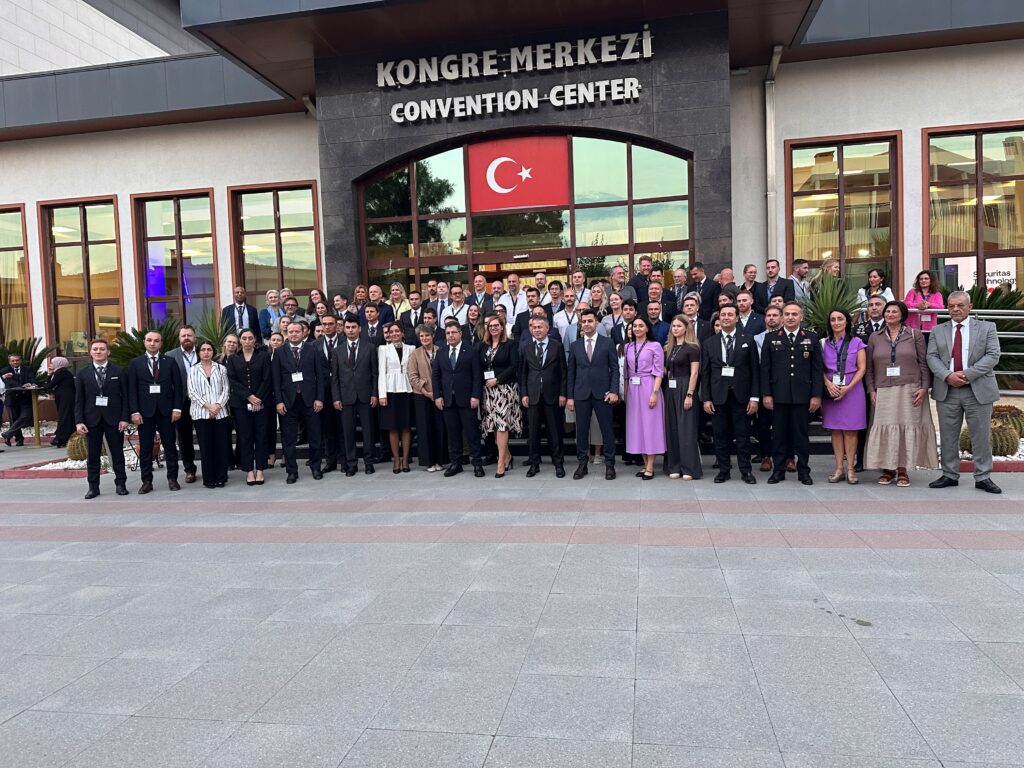
On 6-8 October 2026, Antalya hosted the 14th Electronic Monitoring Conference “Electronic Monitoring in a Changing World – Perception vs Reality”. More than 350 participants coming from 30 countries across Europe and worldwide representing probation services, Ministries of Justice, victims´ services, EM providers, researchers as well as local participants representing the Turkish Prison and Probation Service gathered to discuss how electronic monitoring (EM) is understood by all stakeholders involved including the victims and the public, and how these perceptions compare to the evidence and experiences of those affected. While the gap between perception and reality in electronic monitoring has been recognised for over a decade, the rapid expansion of EM into areas such as victim protection, high-risk supervision and digital innovation has brought new challenges and questions to the forefront.
Recap

ITSCCS
Core Correctional Skills in Digital Probation: highlights from the 6th ITSCCS in Barcelona
05/10/2026
The sixth International Training School on Core Correctional Skills (ITSCCS) took place in Barcelona from 28 September to 2 October 2026, bringing together 26 participants for a week of learning, practical training and international exchange. Organised by the Confederation of European Probation (CEP) and the Centre for Legal Studies and Specialised Training (CEJFE), the programme focused on “Clicks and Empathy: Core Correctional Skills in Digital Probation.”
Recap
Framework Decisions
Recap: ERA workshop on Framework Decisions 829 and 947 in Bucharest
02/10/2026
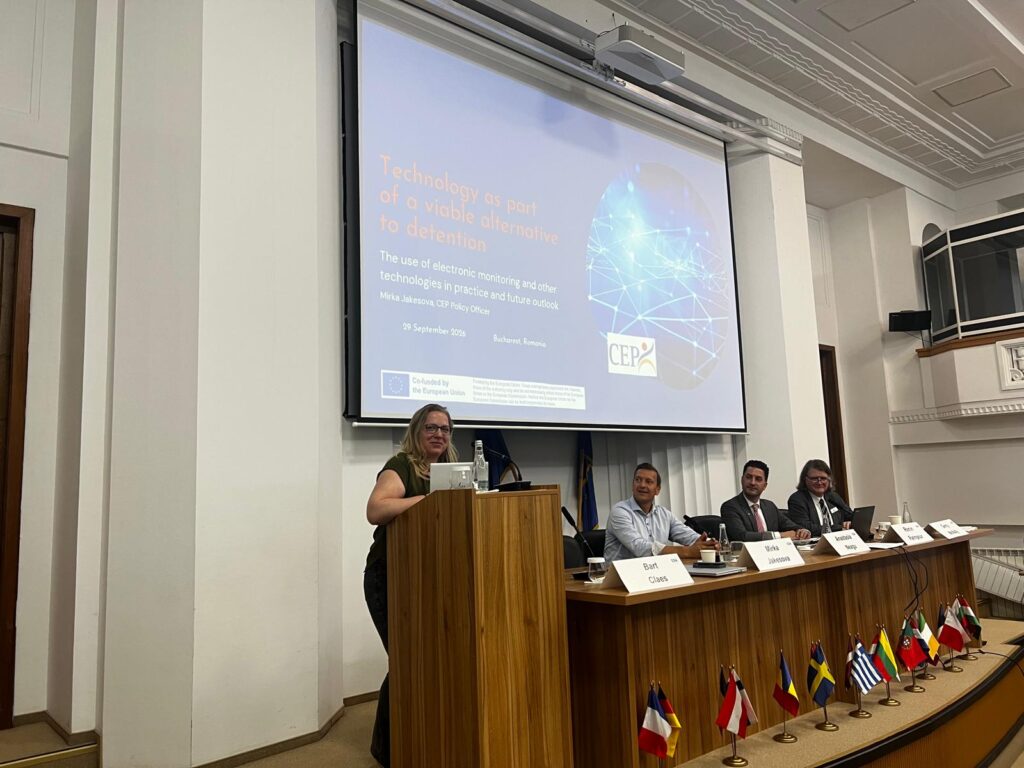
CEP Vice-President Daniel Danglades, Ambassador Gerry McNally and Policy Officer Mirka Jakesova participated in the Seminar on Framework Decisions 829 and 947 and their Impact on Alternatives in the EU organized under the EU project run by the Academy of European Law on 28-29 September in Bucharest, Romania. The seminar brought together judges, prosecutors, probation practitioners, academics, and policy experts to discuss the growing role of alternatives to detention within European criminal justice systems.
New
CEP
CEP and Catalan justice leaders reaffirm longstanding cooperation
29/09/2026
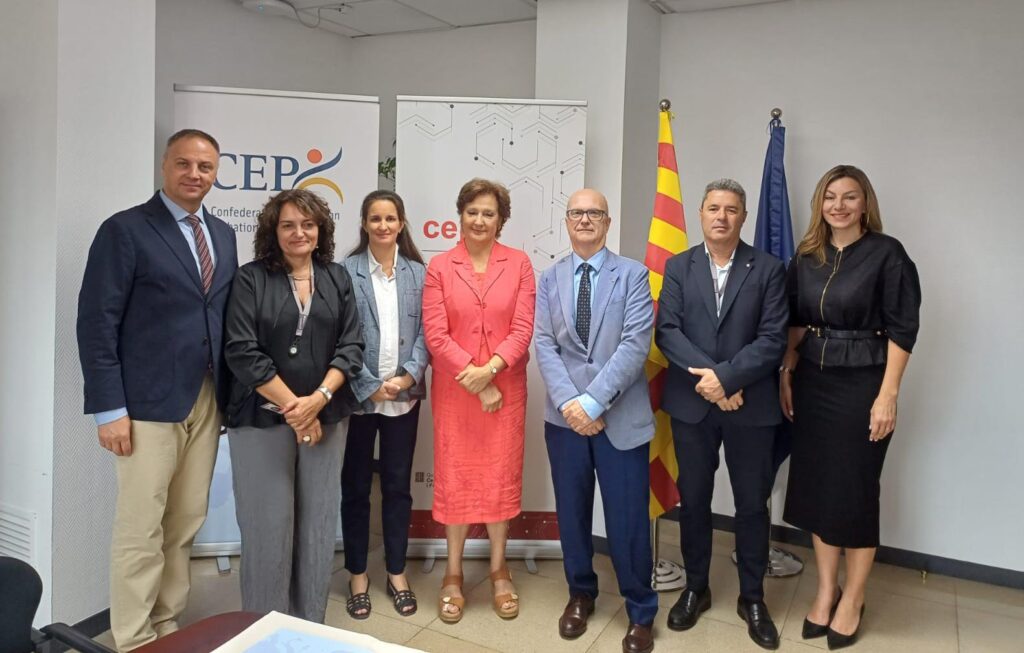
Representatives of the Confederation of European Probation (CEP) met with senior officials from the Catalan Department of Justice and Democratic Quality in Barcelona on 28 September 2026, alongside the opening of the sixth International Training School on Core Correctional Skills. The meeting offered an opportunity to recognise a longstanding partnership and discuss its continued development.
Updated
Mental Health
DEADLINE EXTENDED: Call for Pilot Implementation of the European Mental Health Training Curriculum
29/09/2026
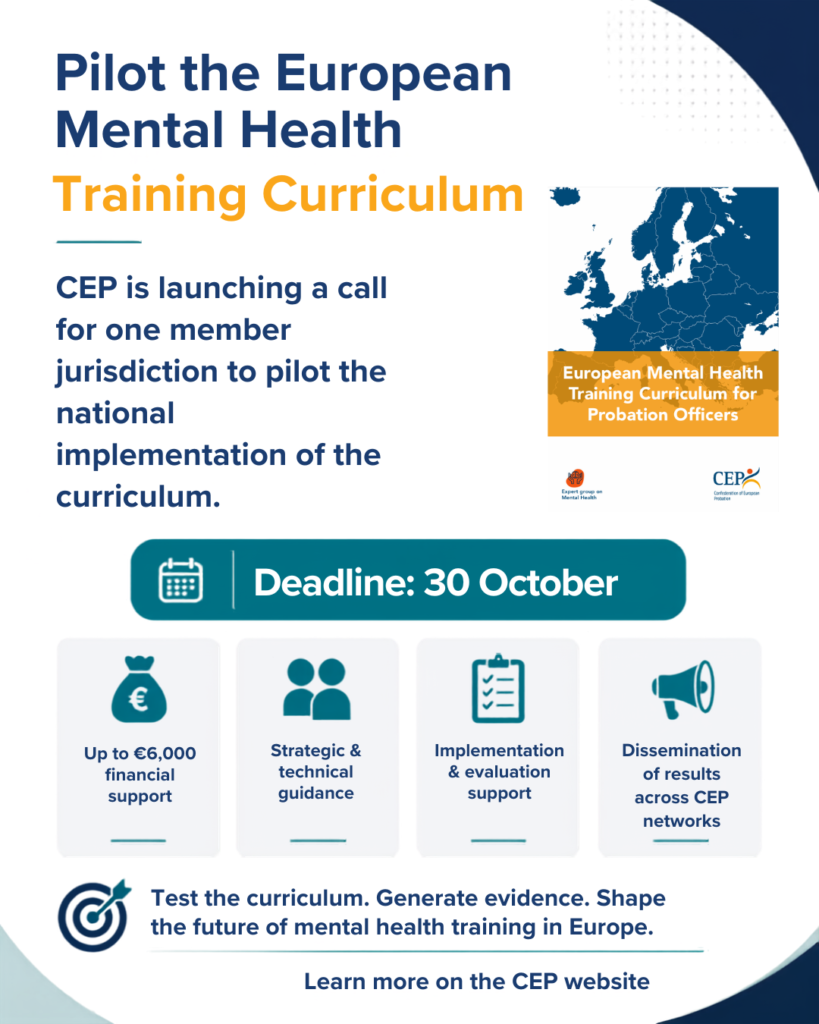
Good news for CEP members! Following requests from our members, CEP has extended the deadline to apply for the pilot implementation of the European Mental Health Training Curriculum for Probation Officers.
Recap

ITSCCS, Technology
6th International Training School opens in Barcelona with a focus on digital probation
28/09/2026
How can probation professionals use new technologies in their interactions while building trust, showing empathy and supporting change? This question is at the heart of the sixth International Training School on Core Correctional Skills, which opened in Barcelona on 28 September 2026.
Subscribe to our bi-monthly email newsletter!
"*" indicates required fields
- Keep up to date with important probation developments and insights.