

Previous Article
News
Interview with new CEP board member Ian Barrow
During the General Assembly in Austria, a new CEP Board got elected for the upcoming three years. In the coming weeks we will publish interviews with all newly-elected board members where they will share information on their professional background, how they would like to contribute, what challenges lie ahead and many more.
Enjoy reading!
Can you shortly introduce yourself?
My name is Ian Barrow and I am the Executive Director of His Majesty’s Prison and Probation Service (HMPPS) in Wales. I am also the lead for Community Accommodation Services for England and Wales and I lead on Probation Pay with our recognised Trade Unions across HMPPS. I have a long history of working in the Criminal Justice Sector (CJS) and have worked in Probation Services since 1994. I have predominantly worked in operational roles across practitioner, manager and senior leader roles. I strongly believe in the importance of an effective Probation Service as part of a CJS that protects the public and reduces reoffending.
Why did you decide to run for the CEP Board?
I decided to run for the Board of CEP to be part of an organisation that has the ability to influence practice and ensure that the probation community across Europe are sharing best practice and learning from each other’s experience. I am keen to ensure that the community is aware of, and understands relevant research and that we are able to ensure that areas for improvement are identified and acted upon. In Wales, we deliver services on behalf of the UK Government, but in the context of a devolved administration – I am keen to understand the various arrangements that are in place across Europe and share experience as much as possible.
How would you like to contribute to the development of CEP in the upcoming three years, and what impact do you hope to have?
I would like to contribute to raising the profile of CEP within the sector – for the reasons I touched on earlier, I think the CEP has a vital role to play in connecting both practitioners and researchers to ensure that we all have access to some of the excellent work that is being undertaken across Europe. Whilst not all of this will be applicable to all jurisdictions, I think that we need to maximise exposure and ensure that we do all we can to support professional growth, both at an individual and organisational level. I hope my experience working at the board level for many years and my approach to partnership working will be beneficial and contribute to the excellent work undertaken by CEP.
What are your main priorities or topics you would like to address as a CEP Board member, and how would you like to make use of your knowledge for the development of CEP?
I am very interested in supported accommodation as a tool to support public protection, desistance and reducing reoffending. I am also very interested in the links between prison and probation services and the ‘through the gate’ journey. These are both areas that I would be keen to pursue with the CEP portfolio.
What are the challenges that lie ahead for CEP in the future?
We work in a challenging environment! I think the challenges ahead include ensuring that jurisdictions are able to meet the demands of the workforce and recruitment, and where things are challenging, ensuring that a focus remains on staff development and training – there is a clear role for CEP in promoting the importance of this development and emphasising the importance of organisational strength and delivery. Secondly, I think there will be increasing scrutiny on community sanctions and their effectiveness against custodial sentences. I think that it will be of prime importance that CEP is at the forefront of sharing evaluations and research on such community options and is able to reinforce the positive outcome they can have. Finally, there is there obvious challenge of technological developments and AI – whilst I think there are lots of opportunities in this area, there is also the danger that we do not adopt the technology quickly enough or we are over optimistic on how it can assist delivery of predominantly human services, and I am keen to ensure that CEP is at the forefront of these discussions.

Related News
Keep up to date with the latest developments, stories, and updates on probation from across Europe and beyond. Find relevant news and insights shaping the field today.
Recap
Electronic monitoring, Technology
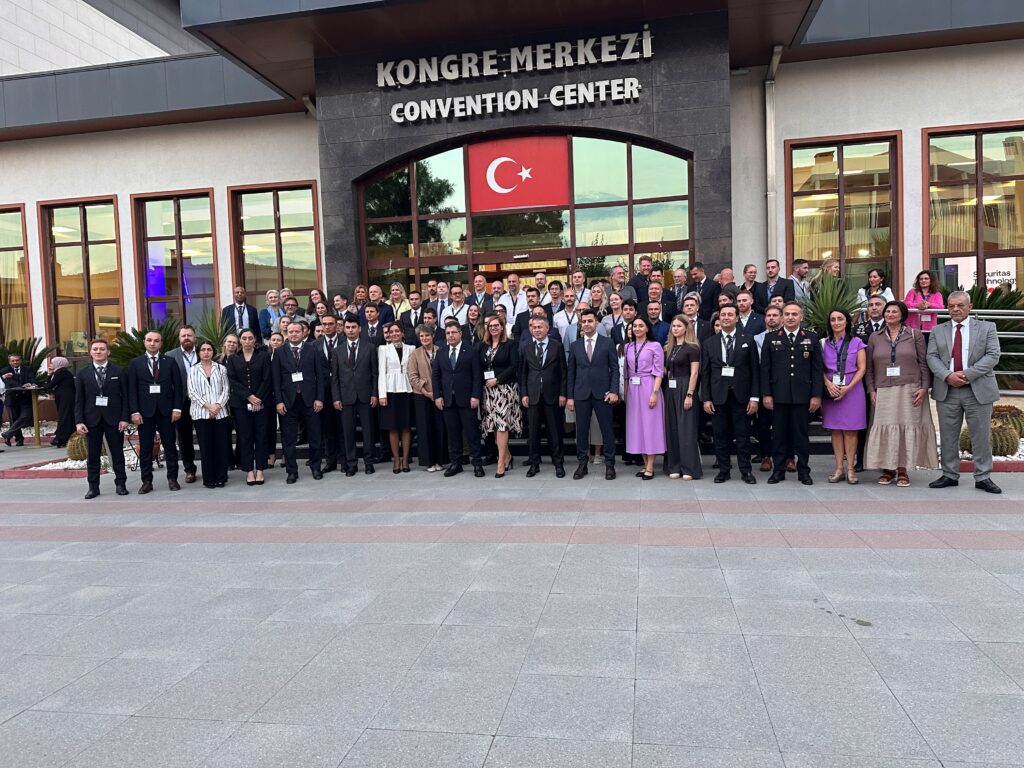
14th Electronic Monitoring Conference, Electronic Monitoring in a Changing World – Perception vs Reality
08/10/2026
On 6-8 October 2026, Antalya hosted the 14th Electronic Monitoring Conference “Electronic Monitoring in a Changing World – Perception vs Reality”. More than 350 participants coming from 30 countries across Europe and worldwide representing probation services, Ministries of Justice, victims´ services, EM providers, researchers as well as local participants representing the Turkish Prison and Probation Service gathered to discuss how electronic monitoring (EM) is understood by all stakeholders involved including the victims and the public, and how these perceptions compare to the evidence and experiences of those affected. While the gap between perception and reality in electronic monitoring has been recognised for over a decade, the rapid expansion of EM into areas such as victim protection, high-risk supervision and digital innovation has brought new challenges and questions to the forefront.
Recap
ITSCCS
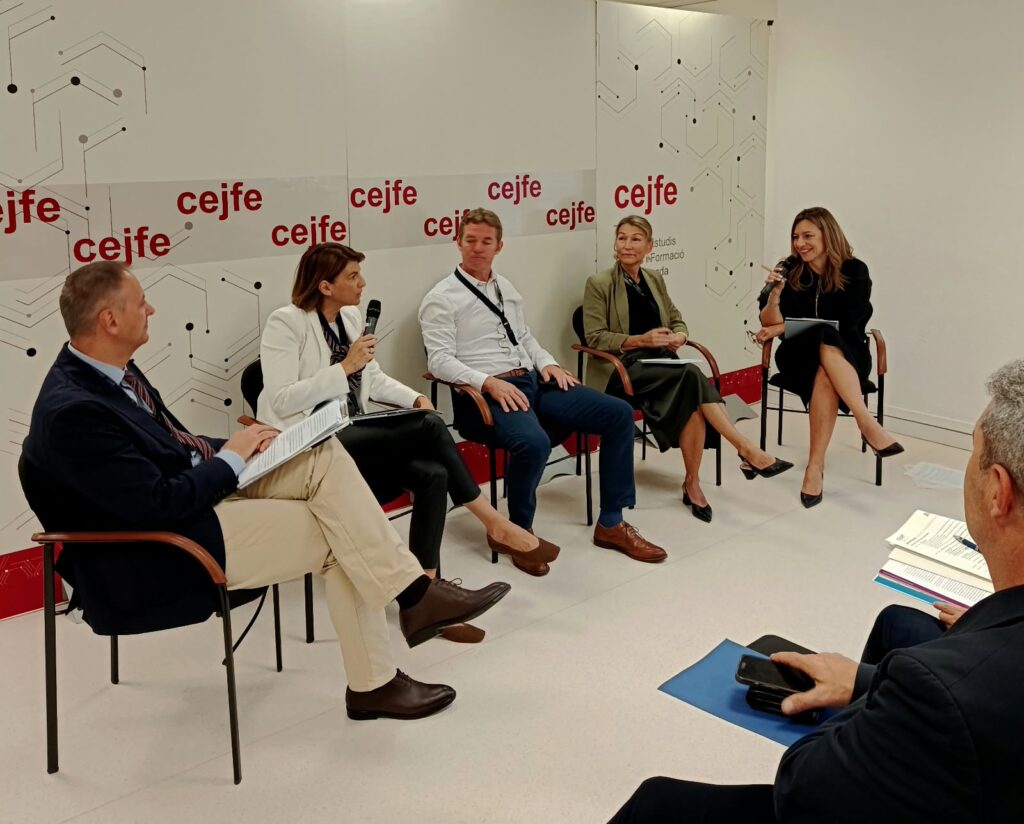
Core Correctional Skills in Digital Probation: highlights from the 6th ITSCCS in Barcelona
05/10/2026
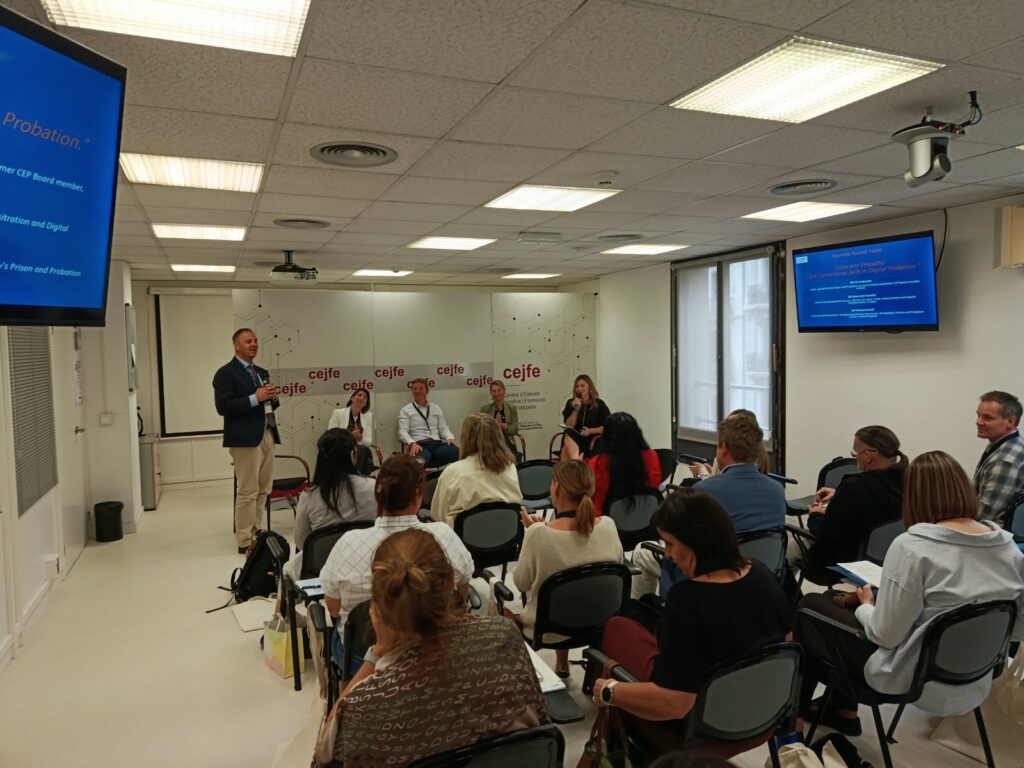
The sixth International Training School on Core Correctional Skills (ITSCCS) took place in Barcelona from 28 September to 2 October 2026, bringing together 26 participants for a week of learning, practical training and international exchange. Organised by the Confederation of European Probation (CEP) and the Centre for Legal Studies and Specialised Training (CEJFE), the programme focused on “Clicks and Empathy: Core Correctional Skills in Digital Probation.”
Recap
Framework Decisions
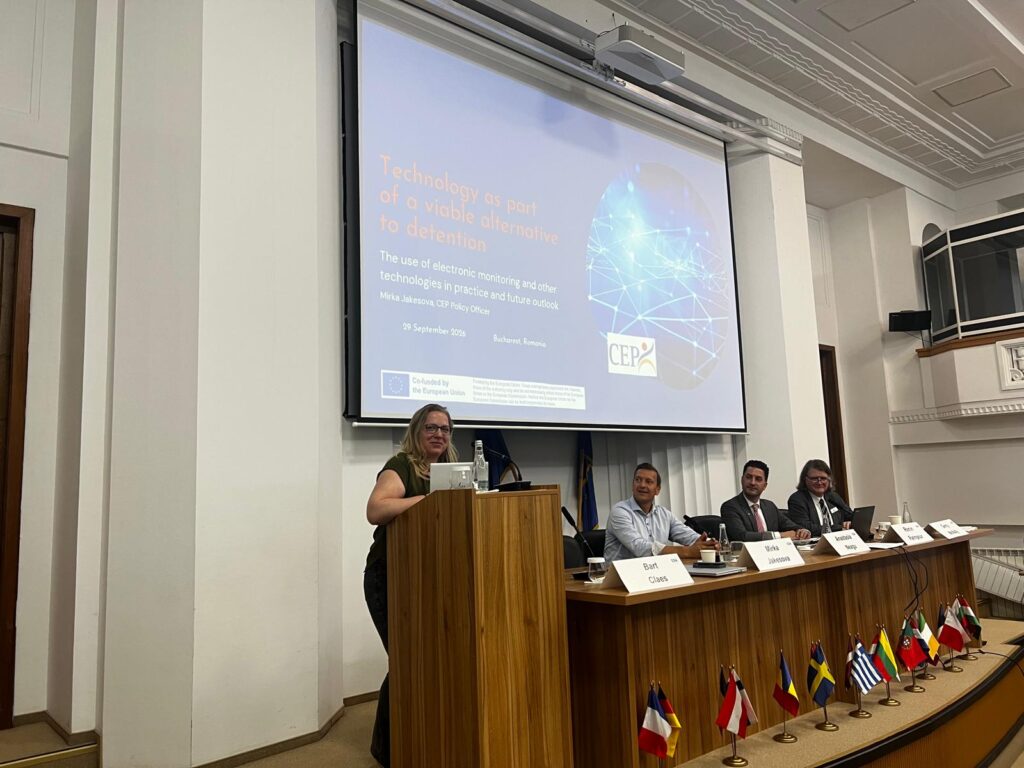
Recap: ERA workshop on Framework Decisions 829 and 947 in Bucharest
02/10/2026
CEP Vice-President Daniel Danglades, Ambassador Gerry McNally and Policy Officer Mirka Jakesova participated in the Seminar on Framework Decisions 829 and 947 and their Impact on Alternatives in the EU organized under the EU project run by the Academy of European Law on 28-29 September in Bucharest, Romania. The seminar brought together judges, prosecutors, probation practitioners, academics, and policy experts to discuss the growing role of alternatives to detention within European criminal justice systems.
New
CEP
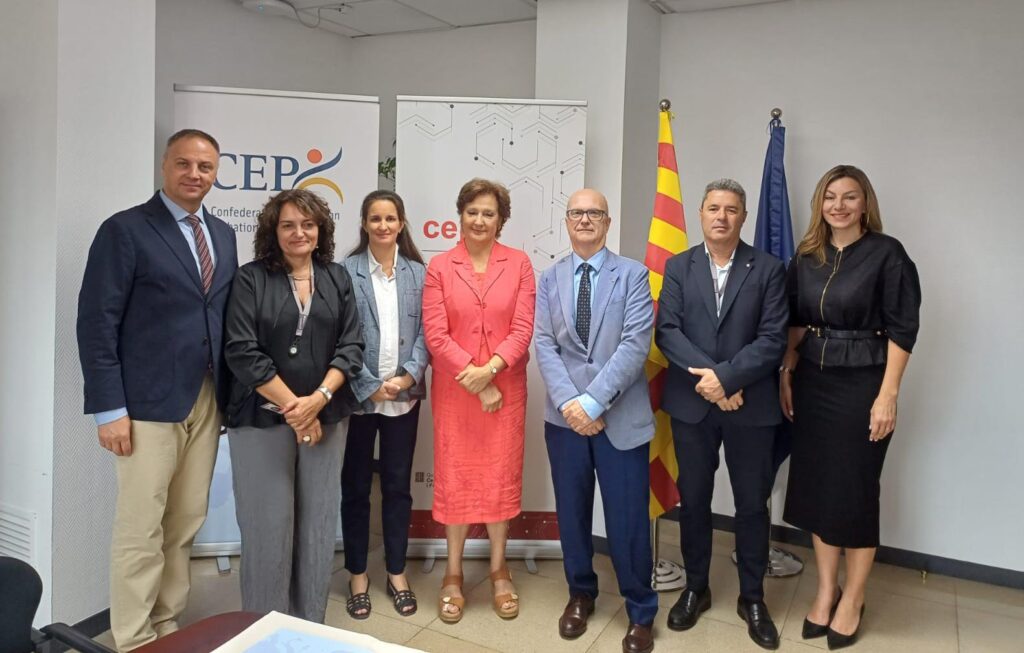
CEP and Catalan justice leaders reaffirm longstanding cooperation
29/09/2026
Representatives of the Confederation of European Probation (CEP) met with senior officials from the Catalan Department of Justice and Democratic Quality in Barcelona on 28 September 2026, alongside the opening of the sixth International Training School on Core Correctional Skills. The meeting offered an opportunity to recognise a longstanding partnership and discuss its continued development.
Updated
Mental Health
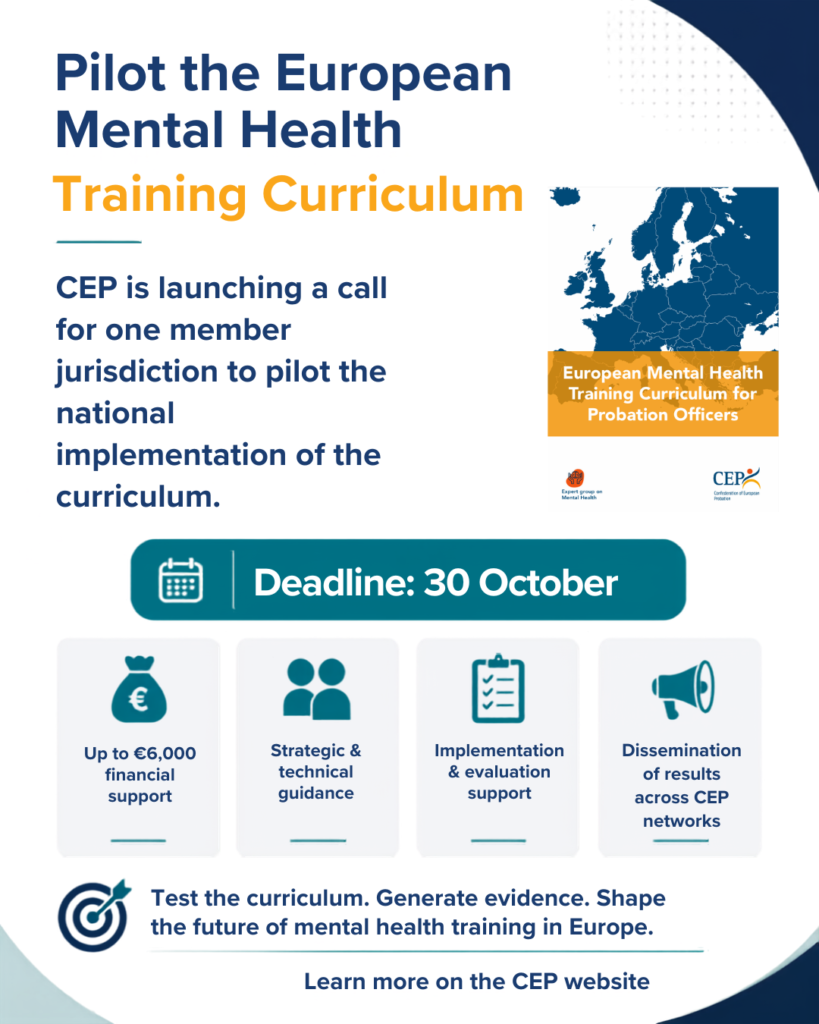
DEADLINE EXTENDED: Call for Pilot Implementation of the European Mental Health Training Curriculum
29/09/2026
Good news for CEP members! Following requests from our members, CEP has extended the deadline to apply for the pilot implementation of the European Mental Health Training Curriculum for Probation Officers.
Recap
ITSCCS, Technology
6th International Training School opens in Barcelona with a focus on digital probation
28/09/2026
How can probation professionals use new technologies in their interactions while building trust, showing empathy and supporting change? This question is at the heart of the sixth International Training School on Core Correctional Skills, which opened in Barcelona on 28 September 2026.
Subscribe to our bi-monthly email newsletter!
"*" indicates required fields
- Keep up to date with important probation developments and insights.