

Previous Article
News
CEP General Assembly: an overview
At the General Assembly in Tallinn, the representatives of the member organisations looked back at results of the CEP over the past three years and set the goals for the three years to come. The excellent atmosphere and the way John Scott presided the Assembly, have helped the participants to discuss and decide on many important issues. Here is an overview of the main decisions taken at the 9th General Assembly of the CEP.
Board
A new Board has been elected. The composition of the present Board is:
| The President: | Patrick Madigou (France, public organisation) |
| Vice-Presidents | Margareta Lindholm (Sweden, public organisation) Riccardo Turrini Vita (Italy, public organisation) |
| Board Members | Hans-Ulrich Bruni (Switzerland, private organisation) Zoltxe1n Bogschxfctz (Hungary, public organisation) Marc Cerxf3n (Spain, public organization) Mary Anne McFarlane (Great Britain, public organization) Dimitar Rusinov (Bulgaria, private organization) Suzanne Vella O’Reilly (Ireland, public organization) |
| Secretary General | Leo Tigges (the Netherlands, private organization) |
The Leaving Board members John Scott, David O’Donovan, Lenka Ourenícková and Jaime Martín Barbaran have been offered an honorary membership.
Business Case for Growth
The General Assembly considered a strategic plan for the future development of the CEP, entitled “A Business Case for Growth”.
The plan was designed and presented by Sjef van Gennip, the Director General of the Dutch probation organization Reclassering Nederland. He urged that as probation in Europe is changing quickly, the CEP should act upon in order to fulfill its role as the European Organisation for Probation. Therefore it needs to speed up its professionalisation and realise a better-developed exchange of information between members.
The importance of informing probation practitioners and communicating best practices to them, as well as the need for the CEP to develop its basic values were again emphasised while discussing this item. The CEP should aim to be the (non-political) probation organisation that spreads the word throughout Europe that probation works.
The large majority of the General Assembly agreed to “A Business Case for Growth” and empowered the incoming Board to implement and report on the means required to achieve this plan.
Budget for the years 2008, 2009 and 2010
A budget proposal and a funding structure for the period 2008-2010, which would make this growth possible, have been adopted. For this new funding structure, the Statute had to be changed, which also has been adopted.
Future activities
- It was considered to be very important that CEP should develop a base of values, a collective vision and a deontology of the probation work. A working group will be installed to work on this.
- The CEP’s collective vision on probation should be used in discussions on the European level. It would avoid the suggestion of a political involvement. It was suggested that CEP give feed back to its members about meetings with European Organisations. The CEP should be a coordinator with the European Union in developing good practice and should disseminate, at all levels, the key message that probation works.
- The CEP should consider approaching the European Social Fund to see whether financial support could be obtained for CEP events related to inclusion, poverty and work with minority groups.
- Universities should be approached to set up knowledge centres. A register of probation experts was also suggested.
- The German-speaking representatives would appreciate an increase of CEP events in the German language.
As the number of activities and important issues were substantial, it was suggested that the action points be scheduled in a three year plan.
Development of the CEP Brand
It was decided that the CEP will present and promote itself with the initials “CEP” and the strap line “The European Organisation for Probation”. The full name Conférence Permanente Européenne de la Probation will be used for formal purposes only. The logo will be redesigned.
Memberships
The following organisations had been provisionally accepted as a full CEP member since the last GA:
- The Crime Prevention Fund- IGA (Bulgaria)
- The Spanish Penitentiary Administration
- Liechtenstein Bewärungshilfe
- Ministry of Justice of Lithuania
- Ministry of Justice of Poland
- The Juveniles and Probation Service of the Dutch Salvation Army
- The Charity Prisoners Abroad (Great Britain)
Four associate memberships had been accepted:
- The Plymouth University, School of Law & Social Science (Great Britain)
- The Rhodes Foundation (Great Britain)
- The Swansea University (Great Britain)
- Mr. Ioan Durnescu (Romania) had been accepted as an individual member.
Affiliation Agreements
An affiliation agreement has been signed with NAPE.
Audit Financial Report on the years 2004-2006
The financial accounts for 2004, 2005 and 2006 were approved unanimously.
10th General Assembly
The Central Administration in Madrid and the autonomous government in Catalonia have offered to be joint hosts for the next General Assembly in 2010. It would be decided at a later date whether the General Assembly would be hosted in Madrid or in Barcelona.

Related News
Keep up to date with the latest developments, stories, and updates on probation from across Europe and beyond. Find relevant news and insights shaping the field today.
Recap
Electronic monitoring, Technology
14th Electronic Monitoring Conference, Electronic Monitoring in a Changing World – Perception vs Reality
08/10/2026
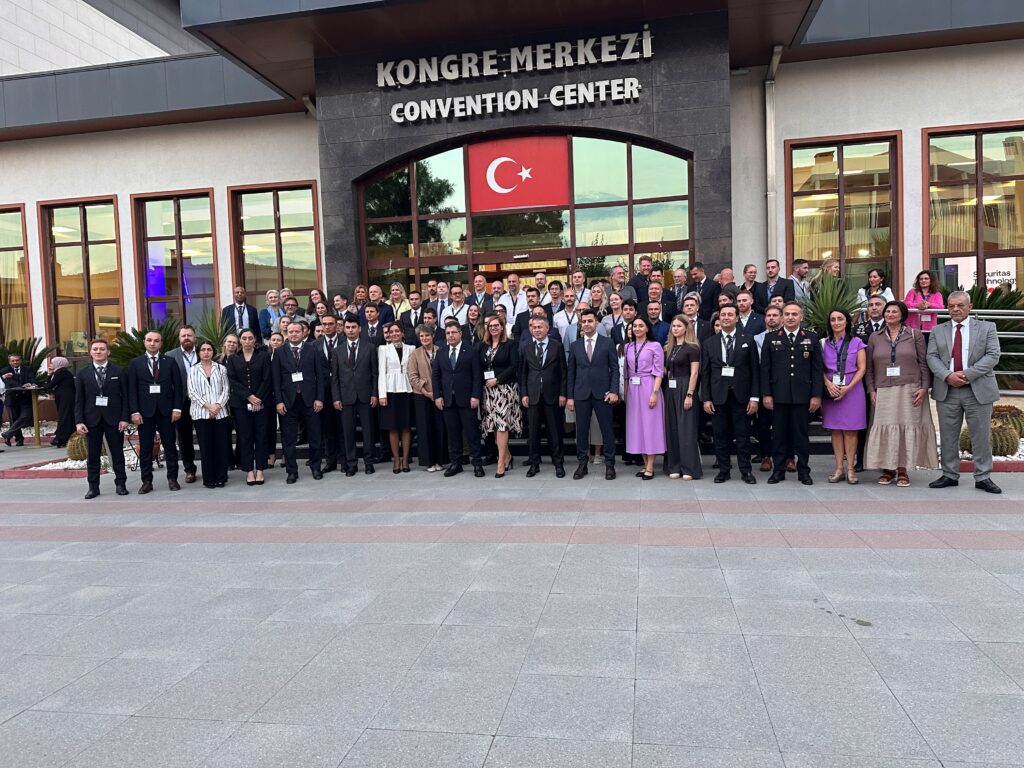
On 6-8 October 2026, Antalya hosted the 14th Electronic Monitoring Conference “Electronic Monitoring in a Changing World – Perception vs Reality”. More than 350 participants coming from 30 countries across Europe and worldwide representing probation services, Ministries of Justice, victims´ services, EM providers, researchers as well as local participants representing the Turkish Prison and Probation Service gathered to discuss how electronic monitoring (EM) is understood by all stakeholders involved including the victims and the public, and how these perceptions compare to the evidence and experiences of those affected. While the gap between perception and reality in electronic monitoring has been recognised for over a decade, the rapid expansion of EM into areas such as victim protection, high-risk supervision and digital innovation has brought new challenges and questions to the forefront.
Recap
ITSCCS
Core Correctional Skills in Digital Probation: highlights from the 6th ITSCCS in Barcelona
05/10/2026
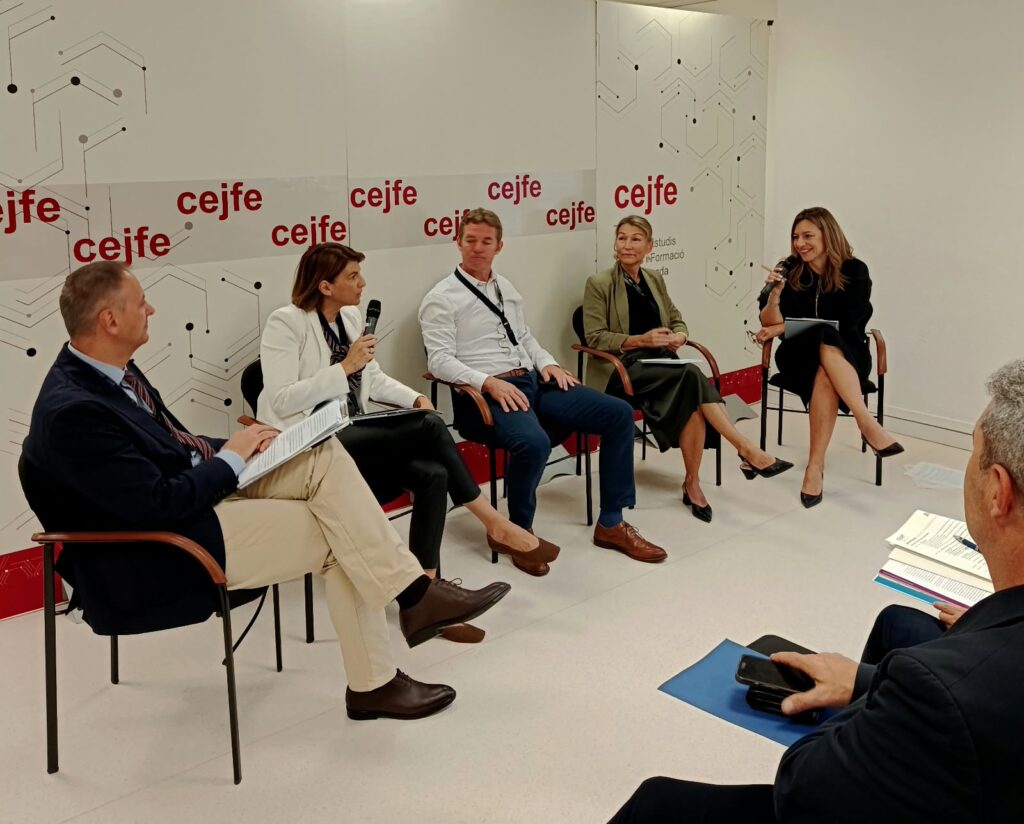
The sixth International Training School on Core Correctional Skills (ITSCCS) took place in Barcelona from 28 September to 2 October 2026, bringing together 26 participants for a week of learning, practical training and international exchange. Organised by the Confederation of European Probation (CEP) and the Centre for Legal Studies and Specialised Training (CEJFE), the programme focused on “Clicks and Empathy: Core Correctional Skills in Digital Probation.”
Recap
Framework Decisions
Recap: ERA workshop on Framework Decisions 829 and 947 in Bucharest
02/10/2026
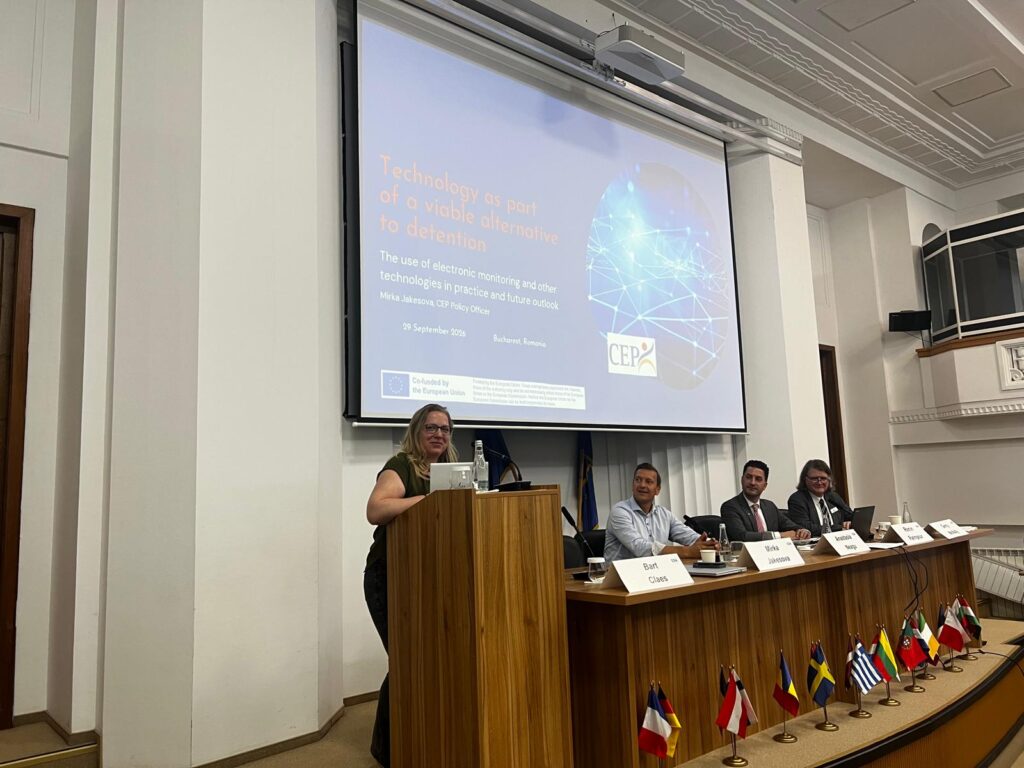
CEP Vice-President Daniel Danglades, Ambassador Gerry McNally and Policy Officer Mirka Jakesova participated in the Seminar on Framework Decisions 829 and 947 and their Impact on Alternatives in the EU organized under the EU project run by the Academy of European Law on 28-29 September in Bucharest, Romania. The seminar brought together judges, prosecutors, probation practitioners, academics, and policy experts to discuss the growing role of alternatives to detention within European criminal justice systems.
New
CEP
CEP and Catalan justice leaders reaffirm longstanding cooperation
29/09/2026
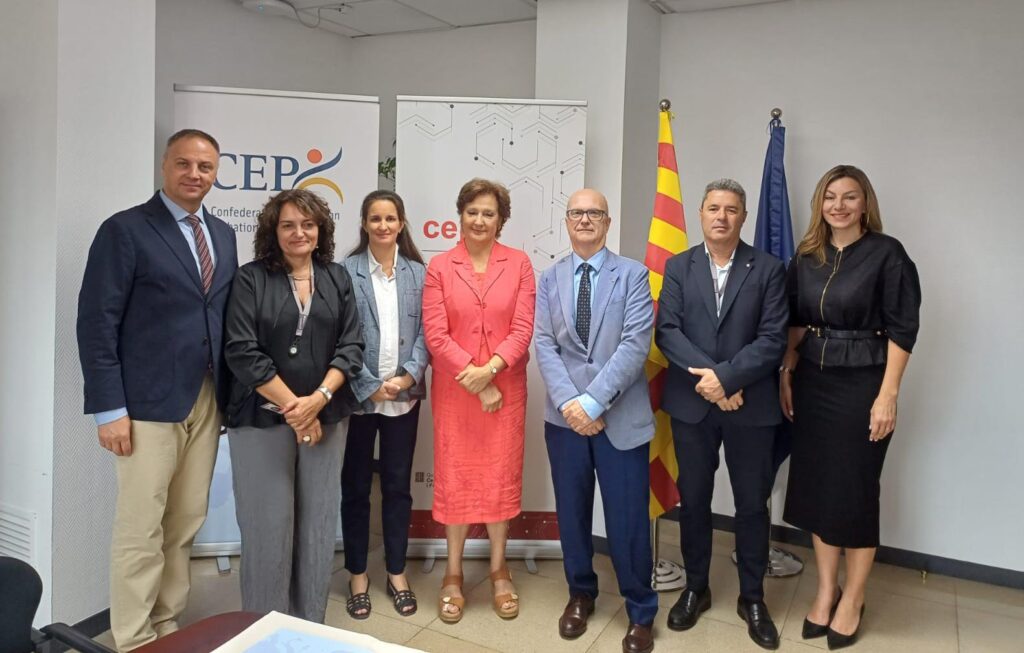
Representatives of the Confederation of European Probation (CEP) met with senior officials from the Catalan Department of Justice and Democratic Quality in Barcelona on 28 September 2026, alongside the opening of the sixth International Training School on Core Correctional Skills. The meeting offered an opportunity to recognise a longstanding partnership and discuss its continued development.
Updated

Mental Health
DEADLINE EXTENDED: Call for Pilot Implementation of the European Mental Health Training Curriculum
29/09/2026
Good news for CEP members! Following requests from our members, CEP has extended the deadline to apply for the pilot implementation of the European Mental Health Training Curriculum for Probation Officers.
Recap

ITSCCS, Technology
6th International Training School opens in Barcelona with a focus on digital probation
28/09/2026
How can probation professionals use new technologies in their interactions while building trust, showing empathy and supporting change? This question is at the heart of the sixth International Training School on Core Correctional Skills, which opened in Barcelona on 28 September 2026.
Subscribe to our bi-monthly email newsletter!
"*" indicates required fields
- Keep up to date with important probation developments and insights.