

Previous Article
News
Facilitators of probation-based domestic violence perpetrator programmes: ‘Who’s in the room?’
This article, published open access in the Probation Journal, explores the experiences of facilitators who delivered domestic abuse perpetrator work within the criminal justice system in England and Wales. The findings are part of a much wider study that sought to reveal new insights into how domestic abuse perpetrator programmes (do or do not) work to reduce domestic abuse, and what might facilitate or hinder the process of change.
Facilitators of probation-based domestic violence perpetrator programmes: ‘Who’s in the room?’
Introduction to the article, the wider research, and relevant criminal justice setting
Funded by an Economic and Social Research Council PhD studentship, the research explored the experiences of programme practitioners and those of a cohort of male perpetrators of domestic abuse whose journeys were followed from inception to programme end; and (where possible) the experiences of men who dropped out before completing the course. This entailed in-depth interviews, observations, informal discussions, and document analysis of pre-sentence reports and programme reviews. The overarching aim was to identify what perpetrators of abuse need to help them Build Better Relationships.
Building Better Relationships (BBR) is a Home Office approved domestic violence perpetrator programme in England and Wales for heterosexual men who have been convicted of a domestic abuse-related offence against a female partner and deemed to be at medium-high risk of reoffending. Premised upon a general aggression model, BBR succeeded the pro-feminist Integrated Domestic Abuse Programme in 2012 and was established across all probation areas by 2015. BBR teaches abusive men emotion management techniques and cognitive skills to avoid incidences of domestic abuse and challenge pro-violent attitudes. Ultimately, BBR aims to reduce repeat offending of intimate partner abuse.
The rollout of BBR coincided with the part-privatisation of probation services in England and Wales in which private companies were awarded contracts to supervise low-medium offenders in the community. The day-to-day delivery of (most) accredited behaviour programmes was transferred to the private sector and delivered by programmes teams in Community Rehabilitation Companies (CRCs). The story of the failed Transforming Rehabilitation agenda is now well known[i]. Under recent reforms, in June 2021, ‘unification’ has now brought all supervision activities and accredited programmes back under the remit of the new public Probation Service. Welcome as this may be, Her Majesty’s Inspectorate of Probation (HMIP) cautioned that without adequate staff training and resources, unification would be no ‘magic bullet’ in itself[ii], not least due to high rates of vacancies, high caseloads and the need for sustainable funding to ensure the continuation and quality of service provision[iii]
Facilitator’s: the forgotten variable in programme evaluation
What is less known or documented, however, are the experiences of facilitators whose role it is to undertake the complex and therapeutic work of supporting desistance amongst (more often) high-risk perpetrators of domestic abuse. The year preceding the demise Transforming Rehabilitation, HMIP undertook a thematic inspection of domestic abuse work within CRCs. Concerns were raised around high attrition rates of BBR and lack of evaluation of its effectiveness. But it also reported that, while some facilitators of BBR were experienced and knowledgeable, others lacked confidence and felt unsupported.
This article is an attempt to address a gap in knowledge about the experiences of facilitators who have all but been forgotten within a ‘what works’ era of evidence-based practice; where the technicalities of implementing cognitive behavioural programmes as intended, superseded a discussion on the skills, knowledge and enthusiasm of those tasked as the key agents of facilitating change amongst programme participants.
The research insights lend support and expand upon the findings of the thematic HMIP report by exploring the emotional and practical difficulties facilitators experienced within their roles. New insights were revealed which uncovered a lack of meaningful training, support, time and resources to work with domestic abuse perpetrators in ways that were commensurate with their own professional values. Ultimately, this impacted their own wellbeing, professional identities, and practice – all of which had been exacerbated within the context of Transforming Rehabilitation.
The article concludes with implications and suggestions for how to improve practice, and the wellbeing of facilitators as the new probation reforms take shape. Although the research was undertaken at only one research site within the criminal justice system in England and Wales, the findings will be internationally relevant and of interest to policymakers, practitioners, and organisations alike; within the wider and beyond the criminal justice system where there is a commitment to tackling men’s violence against women, and driving forward workforce development and wellbeing.
Click here to access the research.
[i] HMIP (2019). Report of the Chief Inspector of Probation.
[ii] HMIP (2020). 2019/2020 Annual Report: inspection of probation services.
[iii] HMIP (2021). A thematic of work to prepare for the unification of probation services.

Related News
Keep up to date with the latest developments, stories, and updates on probation from across Europe and beyond. Find relevant news and insights shaping the field today.
Recap
Electronic monitoring, Technology
14th Electronic Monitoring Conference, Electronic Monitoring in a Changing World – Perception vs Reality
08/10/2026
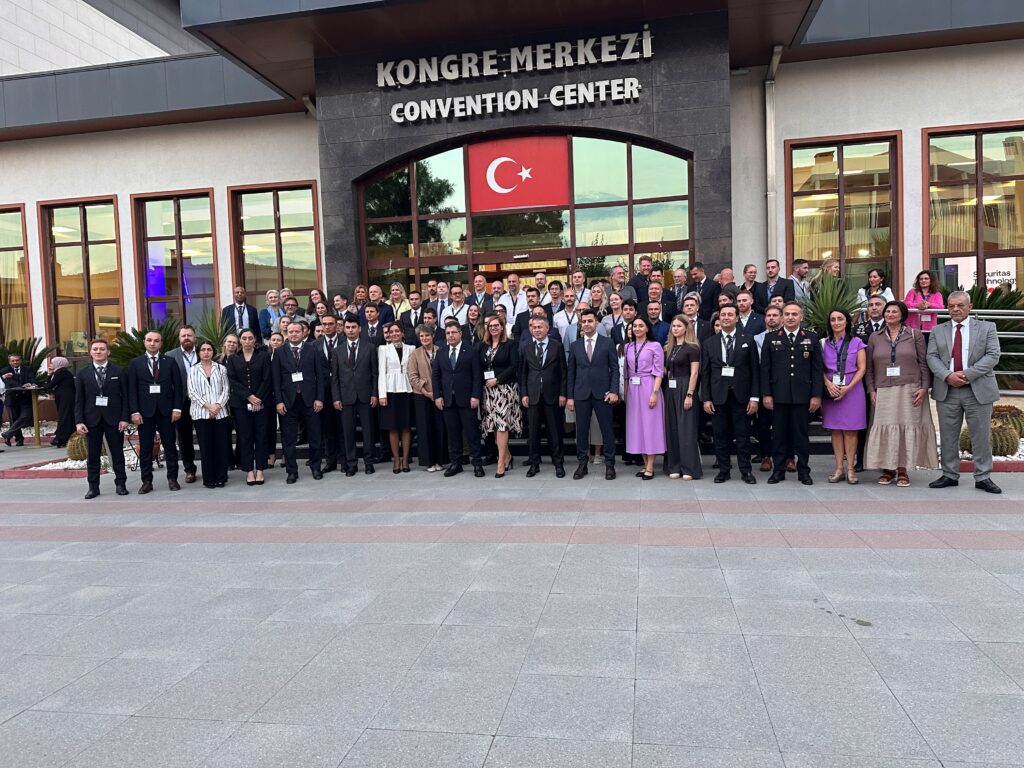
On 6-8 October 2026, Antalya hosted the 14th Electronic Monitoring Conference “Electronic Monitoring in a Changing World – Perception vs Reality”. More than 350 participants coming from 30 countries across Europe and worldwide representing probation services, Ministries of Justice, victims´ services, EM providers, researchers as well as local participants representing the Turkish Prison and Probation Service gathered to discuss how electronic monitoring (EM) is understood by all stakeholders involved including the victims and the public, and how these perceptions compare to the evidence and experiences of those affected. While the gap between perception and reality in electronic monitoring has been recognised for over a decade, the rapid expansion of EM into areas such as victim protection, high-risk supervision and digital innovation has brought new challenges and questions to the forefront.
Recap

ITSCCS
Core Correctional Skills in Digital Probation: highlights from the 6th ITSCCS in Barcelona
05/10/2026
The sixth International Training School on Core Correctional Skills (ITSCCS) took place in Barcelona from 28 September to 2 October 2026, bringing together 26 participants for a week of learning, practical training and international exchange. Organised by the Confederation of European Probation (CEP) and the Centre for Legal Studies and Specialised Training (CEJFE), the programme focused on “Clicks and Empathy: Core Correctional Skills in Digital Probation.”
Recap
Framework Decisions
Recap: ERA workshop on Framework Decisions 829 and 947 in Bucharest
02/10/2026
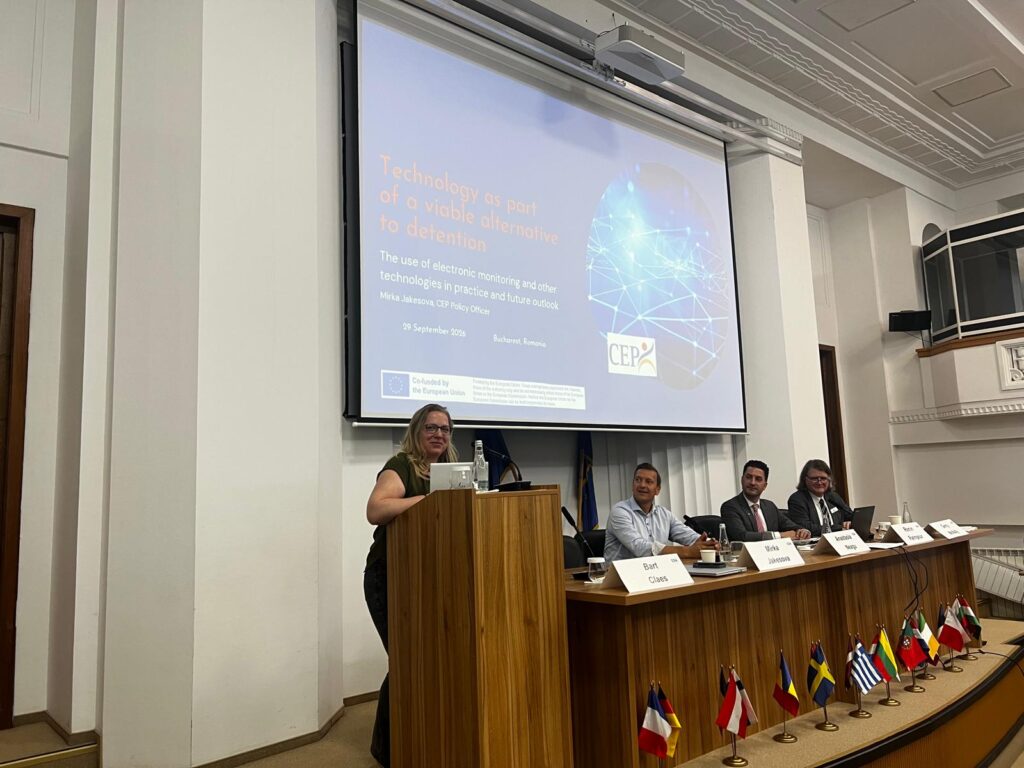
CEP Vice-President Daniel Danglades, Ambassador Gerry McNally and Policy Officer Mirka Jakesova participated in the Seminar on Framework Decisions 829 and 947 and their Impact on Alternatives in the EU organized under the EU project run by the Academy of European Law on 28-29 September in Bucharest, Romania. The seminar brought together judges, prosecutors, probation practitioners, academics, and policy experts to discuss the growing role of alternatives to detention within European criminal justice systems.
New
CEP
CEP and Catalan justice leaders reaffirm longstanding cooperation
29/09/2026
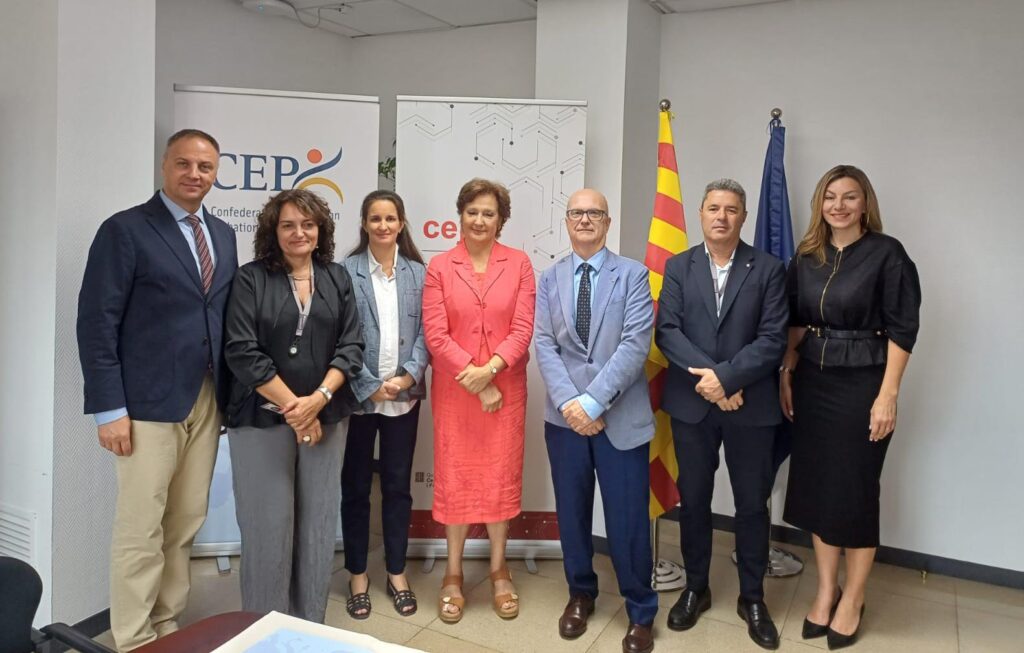
Representatives of the Confederation of European Probation (CEP) met with senior officials from the Catalan Department of Justice and Democratic Quality in Barcelona on 28 September 2026, alongside the opening of the sixth International Training School on Core Correctional Skills. The meeting offered an opportunity to recognise a longstanding partnership and discuss its continued development.
Updated
Mental Health
DEADLINE EXTENDED: Call for Pilot Implementation of the European Mental Health Training Curriculum
29/09/2026
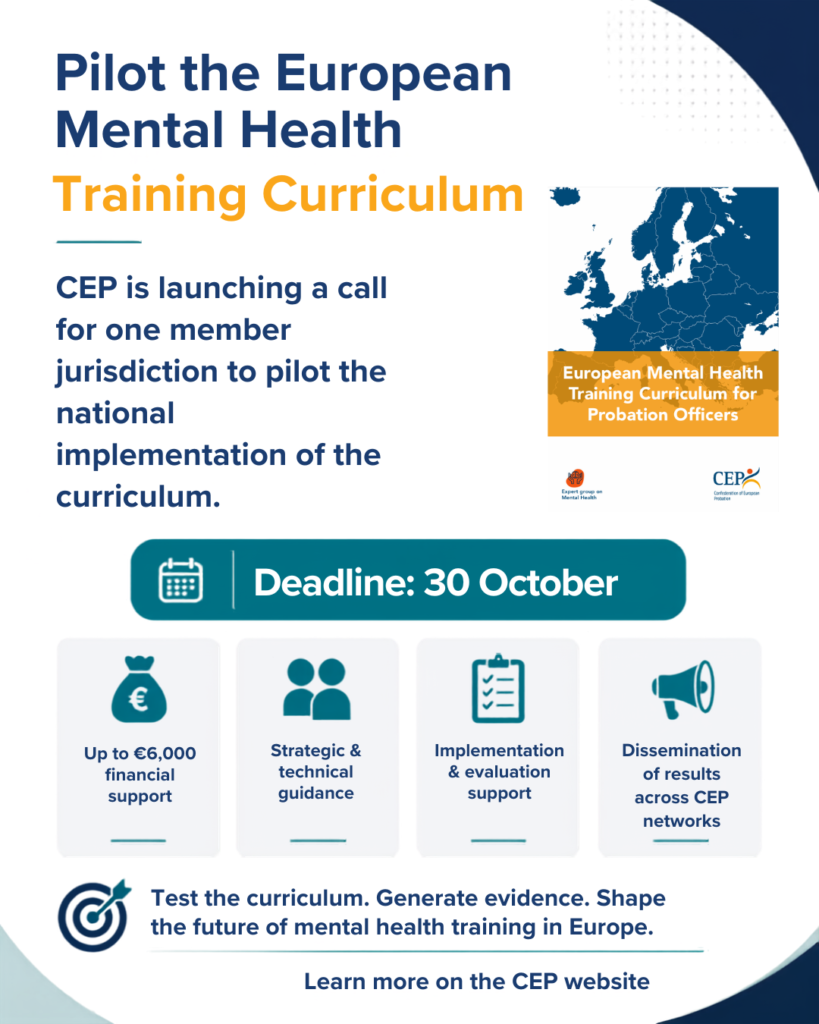
Good news for CEP members! Following requests from our members, CEP has extended the deadline to apply for the pilot implementation of the European Mental Health Training Curriculum for Probation Officers.
Recap
ITSCCS, Technology
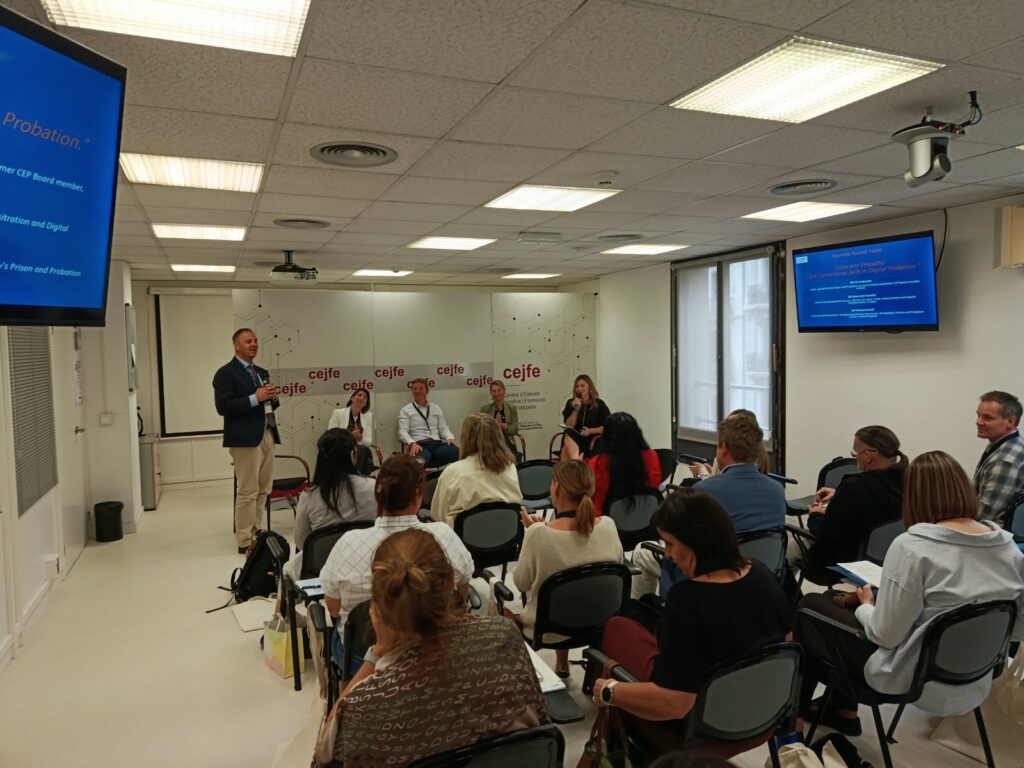
6th International Training School opens in Barcelona with a focus on digital probation
28/09/2026
How can probation professionals use new technologies in their interactions while building trust, showing empathy and supporting change? This question is at the heart of the sixth International Training School on Core Correctional Skills, which opened in Barcelona on 28 September 2026.
Subscribe to our bi-monthly email newsletter!
"*" indicates required fields
- Keep up to date with important probation developments and insights.