

Previous Article
News
Ex-offenders for reducing re-offending: “life-saving” intervention
In May 2015, Kent, Surrey and Sussex Community Rehabilitation Company (KSS CRC), an employee-owned probation service, made the bold decision to hire people with current or recent experience of being under probation supervision to support the current cohort in Kent, Surrey and Sussex. The idea was inspired by the belief that people with direct knowledge of the criminal justice system can reach those most likely to break the terms of sentence in different and potentially more creative ways.
Runner up in the 2019 CEP Social inclusion award
Winner in 2019 of her Majesty’s Prison and Probation Service’s National Probation Awards’ Team of the Year Award (England & Wales).
The initiative was first developed by KSS CRC’s Service User Council – the forum that people on probation in the area use to put forward their ideas on how to improve the service. Senior probation officer Lisa Udale volunteered for the task of recruiting and embedding the new members of the probation family, which would be called community engagement officers.
Ex-offenders as ‘community engagement officers’
Drawing on data provided by KSS CRC’s intelligence unit, Lisa and a small project team chose the offices where a high number of people on probation were at risk of breaking the terms of their community order. The newly assembled team wrote job descriptions, advertised the posts and worked with staff to encourage those with ‘lived experience of the criminal justice system’ to apply.
The new officers were at work by late 2017 after their appointment to Ashford, Brighton and Guildford, the results have been dramatic. In the first year, the officers supported 70 offenders and there has been a continuous reduction in the number of serious breaches, which would end up with the offender being returned to custody for example. During the first six months in Ashford the number of serious breaches went down by two-thirds and in the first year in Brighton, serious breaches declined by three-quarters. In Guildford, the community engagement officers built the experience necessary to move onto another job – a huge success, as it proved the experience was helping ex-offenders to develop careers.
Peter, who was appointed to Brighton had spent eight years in prison. He says through his role he has found “a purpose in helping others” and is very proud of the changes he has made to service users’ lives.
Ashford-based Julian says he was in a “vicious circle” spending his time “consumed behind bars”. He has a firm understanding of the barriers service users face, as he too has faced them too. He feels others are benefiting from his experience of the positive support and interventions probation has to offer.
Two former ex-offenders have turned their lives around and are successfully re-engaging some of our hardest to reach service users through their new roles.
New ways of working
There were early setbacks, such as a longer recruitment process than expected due to the need to negotiate criminal records checks. Long-serving probation officers also had to get used to the idea of working alongside people who had sat across the other side of the interview room table from them.
But efforts to encourage probation officers to understand the value of working with people who had been through the criminal justice system paid off. In an employee survey, 100 per cent agreed the community engagement officers made a difference to the lives of service users. Every member of staff also agreed that people under probation are now more able to engage with probation services. Nearly 9 in 10 (86 per cent) believe that people supervised by probation services are less likely to reoffend after a community engagement officer becomes involved with their case.
The initiative has improved the way ex-offenders take part in society in two ways. Firstly, it has provided dignified employment opportunity to people who may have been turned down elsewhere due to their criminal past. Secondly, it has capitalised on the unique skillset of people like Julian and Peter to enable others with similar experiences to improve their own lives.
The vicious circle which Julian described in his experience was turned on its head and the positive reinforcement of using ex-offenders in this way has clearly yielded results. As someone under probation service supervision said, “yes, it definitely has made a difference. He not just telling you. He knows what it’s like”. Another, perhaps even more powerfully described the intervention more simply – “life-saving”.
About KSS CRC
KSS CRC is part of the Seetec Group, an employee-owned company operating in the UK and Ireland. Through its four probation services KSS CRC works to reduce reoffending and in so doing, improve people’s lives –potential victims as well as perpetrators of crime. We work with people who have been sentenced by a court to either custody or community supervision and who are classed as low to medium risk.
To find out more about KSS CRC, visit www.ksscrc.co.uk.

Related News
Keep up to date with the latest developments, stories, and updates on probation from across Europe and beyond. Find relevant news and insights shaping the field today.
Recap

Electronic monitoring, Technology
14th Electronic Monitoring Conference, Electronic Monitoring in a Changing World – Perception vs Reality
08/10/2026
On 6-8 October 2026, Antalya hosted the 14th Electronic Monitoring Conference “Electronic Monitoring in a Changing World – Perception vs Reality”. More than 350 participants coming from 30 countries across Europe and worldwide representing probation services, Ministries of Justice, victims´ services, EM providers, researchers as well as local participants representing the Turkish Prison and Probation Service gathered to discuss how electronic monitoring (EM) is understood by all stakeholders involved including the victims and the public, and how these perceptions compare to the evidence and experiences of those affected. While the gap between perception and reality in electronic monitoring has been recognised for over a decade, the rapid expansion of EM into areas such as victim protection, high-risk supervision and digital innovation has brought new challenges and questions to the forefront.
Recap

ITSCCS
Core Correctional Skills in Digital Probation: highlights from the 6th ITSCCS in Barcelona
05/10/2026
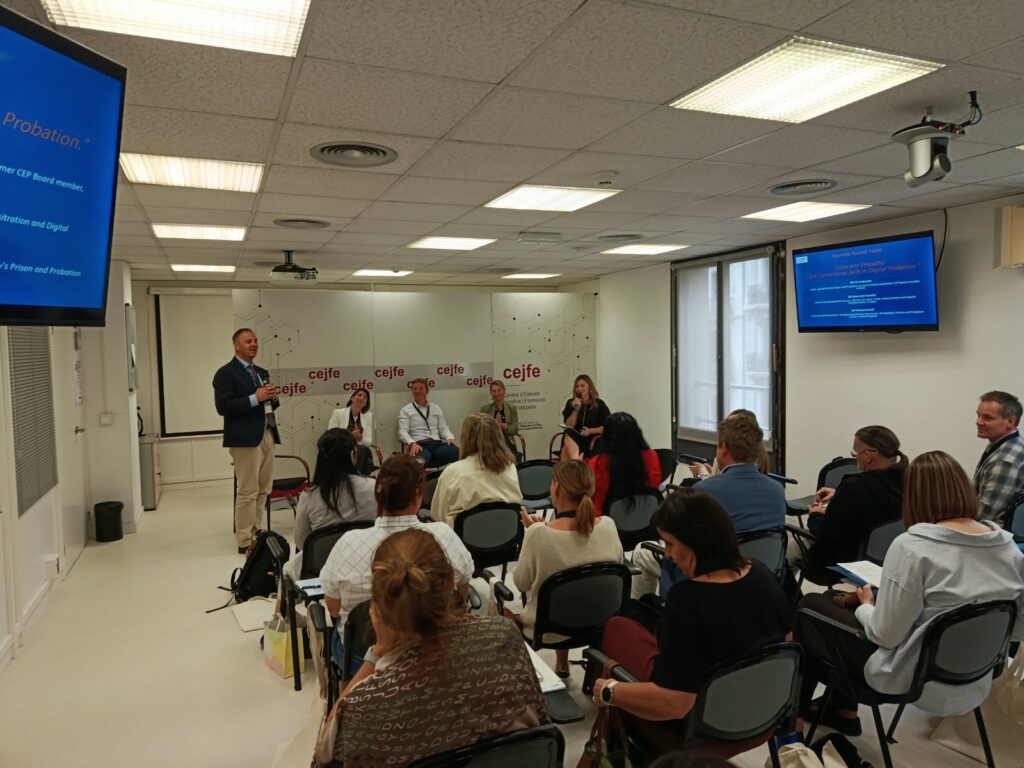
The sixth International Training School on Core Correctional Skills (ITSCCS) took place in Barcelona from 28 September to 2 October 2026, bringing together 26 participants for a week of learning, practical training and international exchange. Organised by the Confederation of European Probation (CEP) and the Centre for Legal Studies and Specialised Training (CEJFE), the programme focused on “Clicks and Empathy: Core Correctional Skills in Digital Probation.”
Recap
Framework Decisions
Recap: ERA workshop on Framework Decisions 829 and 947 in Bucharest
02/10/2026
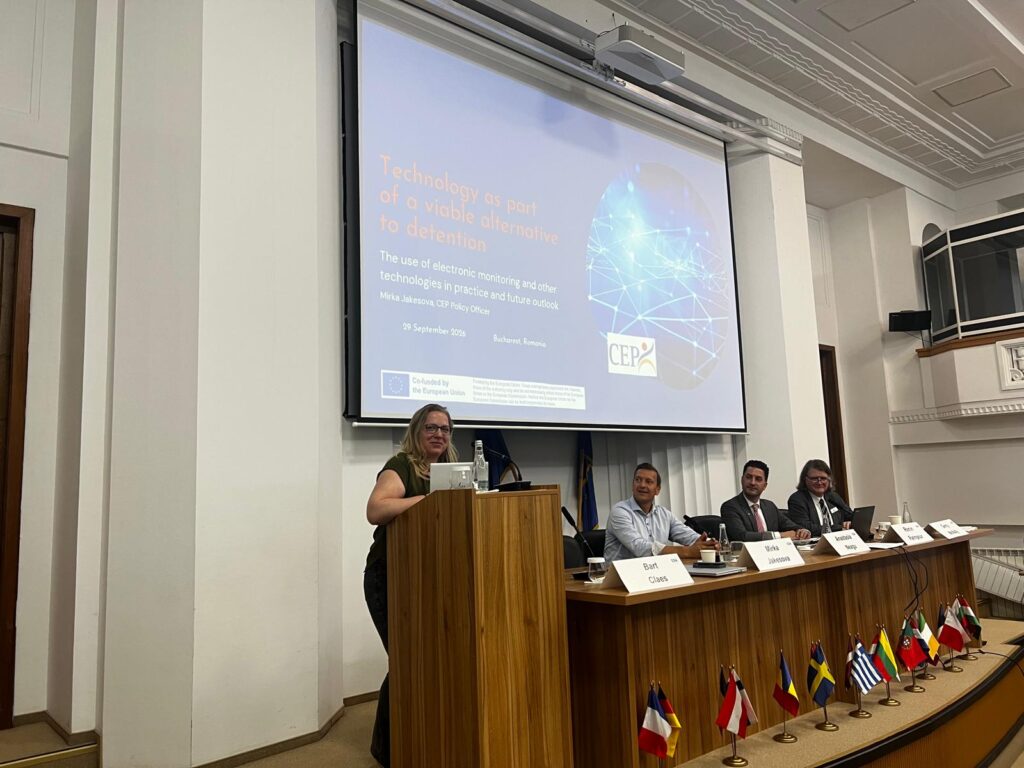
CEP Vice-President Daniel Danglades, Ambassador Gerry McNally and Policy Officer Mirka Jakesova participated in the Seminar on Framework Decisions 829 and 947 and their Impact on Alternatives in the EU organized under the EU project run by the Academy of European Law on 28-29 September in Bucharest, Romania. The seminar brought together judges, prosecutors, probation practitioners, academics, and policy experts to discuss the growing role of alternatives to detention within European criminal justice systems.
New

CEP
CEP and Catalan justice leaders reaffirm longstanding cooperation
29/09/2026
Representatives of the Confederation of European Probation (CEP) met with senior officials from the Catalan Department of Justice and Democratic Quality in Barcelona on 28 September 2026, alongside the opening of the sixth International Training School on Core Correctional Skills. The meeting offered an opportunity to recognise a longstanding partnership and discuss its continued development.
Updated

Mental Health
DEADLINE EXTENDED: Call for Pilot Implementation of the European Mental Health Training Curriculum
29/09/2026
Good news for CEP members! Following requests from our members, CEP has extended the deadline to apply for the pilot implementation of the European Mental Health Training Curriculum for Probation Officers.
Recap
ITSCCS, Technology
6th International Training School opens in Barcelona with a focus on digital probation
28/09/2026
How can probation professionals use new technologies in their interactions while building trust, showing empathy and supporting change? This question is at the heart of the sixth International Training School on Core Correctional Skills, which opened in Barcelona on 28 September 2026.
Subscribe to our bi-monthly email newsletter!
"*" indicates required fields
- Keep up to date with important probation developments and insights.