Previous Article
Can you shortly introduce yourself?
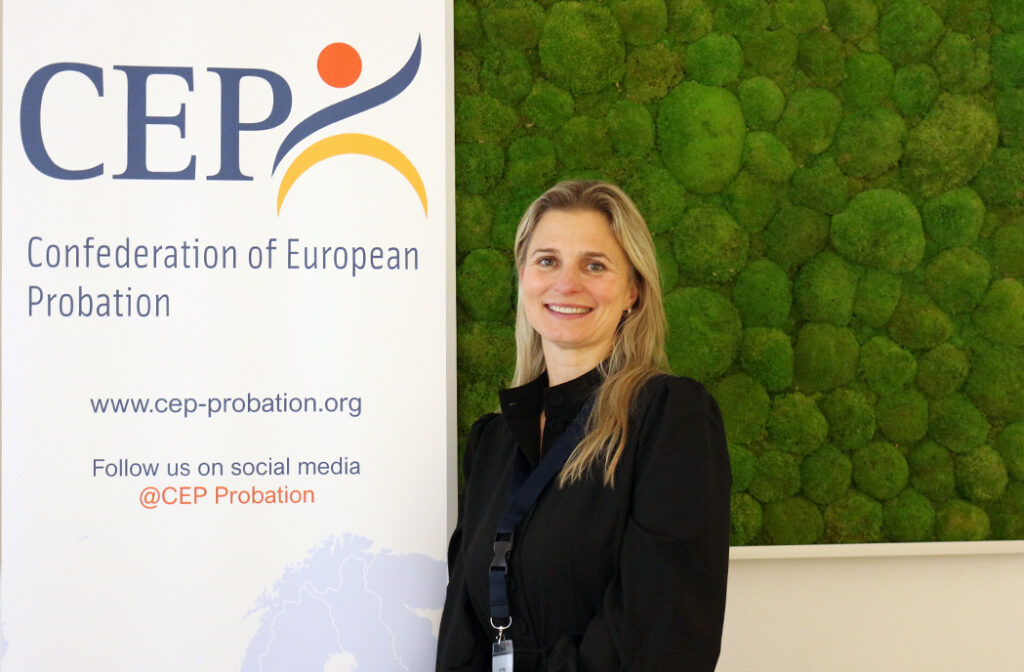
My name is Line Wilberg, and I am from Norway. I am the Director of the Department of Correctional Services at the Norwegian Directorate of Correctional Service. I hold a law degree and have more than 25 years of experience in public administration, mainly in leadership roles within the justice and taxation sectors.
In my current role, I am responsible for developing correctional policies and regulations, as well as overseeing security and preparedness across the Norwegian Correctional Service. This allows me to work strategically on long-term policy development while staying closely connected to operational practice. I place strong emphasis on rehabilitation and reintegration as core principles of correctional services. I believe that people serving sentences must be given real opportunities to build a new life after release. In my experience, this requires close cooperation across sectors — between correctional services, health authorities, labour and welfare services, local communities, and voluntary organisations.
I have also been involved in international and cross-sector cooperation for many years, including through Nordic collaboration frameworks and work related to the OECD. These experiences have strengthened my belief in the value of learning from each other and sharing knowledge across borders.
I am honoured to be a member of the CEP Board and look forward to contributing to humane, effective, and knowledge-based probation and correctional practices across Europe.
Why did you decide to run for the CEP Board?
I decided to run for the CEP Board because I strongly believe in the value of European cooperation in probation and correctional services. Many of the challenges we face — such as increasingly complex service-user needs, workforce development, and balancing security with rehabilitation — are shared across countries.
CEP plays a unique role in bringing together professionals, services, and institutions across Europe. It provides a space where policy, research, and practice meet, and where knowledge and experience can be shared openly. I see CEP as an important driver for development and learning within our field.
My motivation is closely linked to my commitment to humane and evidence-based correctional practices. Effective correctional systems must protect society while also supporting rehabilitation and reintegration. CEP has an important role in promoting these principles and in demonstrating how knowledge-based approaches contribute to long-term public safety.
In addition, my background in leadership and public administration has given me a strong interest in governance, strategic development, and organisational learning. I believe this experience can be useful for CEP’s continued development. For these reasons, running for the CEP Board felt like a natural step, and I am highly motivated to contribute actively to CEP’s work.
How would you like to contribute to the development of CEP in the upcoming three years, and what impact do you hope to have?
Over the next three years, I would like to contribute to strengthening CEP as a key platform for knowledge exchange, strategic dialogue, and professional development within European probation and correctional services. One important area is strengthening the link between research, policy, and practice. Based on my experience with policy development and international cooperation, I see a strong need to translate knowledge and comparative experience into practical insights that members can use in their daily work.
I would also like to contribute to CEP’s strategic discussions on future challenges, such as increasing complexity among people serving sentences, workforce development, and the growing importance of inter-agency cooperation. CEP can play a key role in helping members anticipate change and adapt their services accordingly.
In addition, I am interested in supporting CEP’s external cooperation and visibility, including dialogue with European institutions and international organisations. A strong and visible CEP can have greater impact in policy discussions. Overall, I hope to contribute to CEP’s continued development as a relevant, knowledge-based organisation that delivers clear value to its members.
What are your main priorities as a CEP Board member, and how would you like to make use of your knowledge?
My main priorities as a CEP Board member are rehabilitation and reintegration, cross-sector collaboration, and the development of resilient and sustainable correctional systems. I aim to promote approaches that strengthen cooperation with health services, education, labour and welfare authorities, and voluntary organisations. I think a key priority should be strengthening cross-sector and international cooperation. My experience from Nordic collaboration and international work has shown how valuable structured knowledge exchange can be in addressing shared challenges. I would also support CEP initiatives that encourage peer learning and joint development among member organisations. I am also interested in contributing to discussions on security, preparedness, and organisational resilience. Correctional services must manage risk while maintaining humane standards and supporting staff well-being. By drawing on my background in leadership, policy development, and international cooperation, I hope to contribute to initiatives that are both strategic and practical, and that respond to the needs of CEP’s members.
What are the challenges that lie ahead for CEP in the future?
One of the main challenges ahead is the increasing complexity of the populations served by probation and correctional services. Many individuals have interconnected needs related to mental health, substance use, education, and employment, which require coordinated and cross-sector responses.
Another key challenge is maintaining the balance between security and rehabilitation. Political pressure, public expectations, and limited resources can push systems towards more restrictive approaches. CEP has an important role in promoting evidence-based practices that show how humane and rehabilitative approaches contribute to long-term public safety.
I believe that the use of technology and digital control measures can be an important tool in managing this balance, as a supplement to our staff and the crucial human aspect of the work.
The use of electronic monitoring in the criminal justice system has been of great importance over the past decades and has contributed to ensuring sustainable development. We must continue to share experiences in order to explore a sound path forward in this area. The use of AI in our field is also a development we must follow closely and ensure that available technology is used wisely, and according to common legal frameworks.
Workforce challenges are also becoming more prominent across Europe. Recruitment, retention, competence development, and staff well-being are critical issues where CEP can facilitate knowledge exchange and learning. Finally, societal changes such as digitalisation, migration, and evolving crime patterns will require continuous adaptation. Ensuring that CEP remains relevant, responsive, and valuable to its members will be essential in the years ahead.