Skip to content

News

‘The Monkey Robert’, a children’s probation story by Intress

One day a group of savanna animals wake up and see that someone has stolen the shoes from the store of Pere the hippopotamus. This is the beginning of the story ‘The Monkey Robert’, a book produced by the Catalan organisation Intress to explain to children what probation means. We spoke to Meritxell Campmajo, the author and Director of the Intress Probation Service in Catalonia, about the book.

What is the story about?

The story begins when one day in the savanna, some animals wake up and see how overnight someone has stolen shoes from the store of the Pere the hippopotamus. The police elephants find out that the Monkey Robert is the one who committed this crime. The owl, a judge, gives him the choice between a prison sentence and repairing the damage he has done under the supervision of the Eagle, a probation officer. Robert the Monkey agrees on cleaning the market and help the other animals out. At first, he does not like his job, but the animals tell him how beautiful and clean the market looks after he cleaned it. This makes him proud and appreciate his work. After he is finished Pere the hippopotamus even offers him a job at his shoe store. Robert the Monkey has learned to work in a different way and Pere also learns what it is like to give people a second chance.

How did Intress come up with the idea of producing a story about probation for children?

Intress, as a nonprofit association, has been working on a selection of a tales that wants to teach children about the social values of community intervention. ‘The Monkey Robert’ is the second book of the collection. The first one was about Iris, a little elephant, explaining the welcome in a migration process.

Why is it so important to produce a story for children about these topics?

We are an organisation of professional experts in the social field that detects needs, designs projects and manages services with a model of attention focused on the person and the community. For us it is important to inform as many people as possible about the work we do. Especially for children it is important to learn about alternative measures to prison. We work to raise awareness  about the importance of aiming for a more restorative and less punitive penal model.

How was the book produced?

The text in Robert Monkey story  was written by me, and it was reviewed by different professionals working in the probation service managed by INTRESS. The illustrations are carried out by Kira Diaz, who had already illustrated the first tale of our collection.

The book is published in Spanish and Catalan. 

Related News

Keep up to date with the latest developments, stories, and updates on probation from across Europe and beyond. Find relevant news and insights shaping the field today.

Recap

Electronic monitoring

Recap: CEP Expert Group meeting at ATGV Antalya

12/03/2026

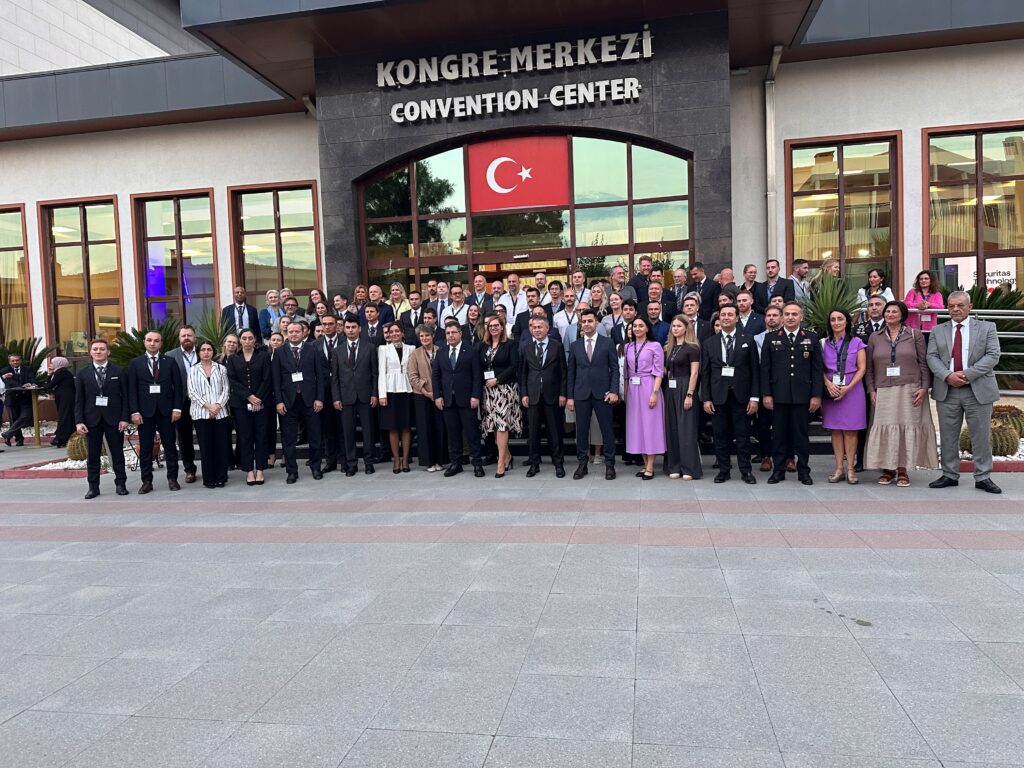
The CEP Expert Group on Electronic Monitoring, along with representatives of the CEP Office led by Mr. Daniel Danglades, CEP Vice-President, visited the Education and Social Facility of the Ministry of Justice in Türkiye – ATGV Antalya. The host country was represented by a high-level delegation, including Deputy Director General Mr. Fatih Güngör, Head of the Turkish Probation Department Dr. Hüseyin Şık, Member of the CEP EM Expert Group Ms. Elçin Kilecioğlu, as well as the Director and representatives of the ATGV facility, and officials from the courts, prosecution, and probation services in Antalya.

Recap

Education and Training

Recap: CEP Expert Network on Education and Training in Probation meets with the European Commission to discuss the EU Judicial Training Strategy

11/03/2026

On 11 March 2026, the CEP Expert Network on Education and Training in Probation met online with more than 20 participants from Belgium, Denmark, Sweeden, France, Romania, Croatia, Catalonia, Poland, United Kingdom and Türkiye to exchange views with the European Commission on the newly adopted EU Judicial Training Strategy 2025–2030.

The meeting provided a valuable opportunity for representatives of probation training institutions across Europe to engage directly with European Commission officials and discuss how the strategy may impact the training of probation and prison staff in the coming years.

Probation Journal

Women, youth

Understanding the needs of girls and young women in youth justice

10/03/2026

New research highlights the underlying needs that influence girls’ and young women’s contact with youth justice systems and calls for more gender responsive approaches in policy and practice. Drawing on a review of recent studies, the authors identify several factors shaping girls’ pathways into the justice system, including persistent abuse, trauma, gendered expectations, and systemic failures. Girls involved in youth justice are often affected by multiple forms of victimisation, such as sexual abuse, neglect, and domestic violence, with experiences frequently beginning in early childhood.

New

CEP Board

Interview with new CEP board member Ian Barrow

09/03/2026

During the General Assembly in Austria, a new CEP Board got elected for the upcoming three years. In the coming weeks we will publish interviews with all newly-elected board members where they will share information on their professional background, how they would like to contribute, what challenges lie ahead and many more.

Enjoy reading!

New

Gender Equality, Gender-based violence

Women’s Day

09/03/2026

Yesterday was International Women’s Day.

At CEP, this day closely reflects our core values and ongoing commitment to promoting gender equality and addressing gender-based violence within the context of probation and community justice.

Directors General Meetings

Online meeting for Directors General and Senior Managers in Probation

05/03/2026

On Wednesday 4 March CEP organized its annual online meeting for Directors General and Senior Managers in Probation. The session offered a comprehensive look into how CEP Expert Groups function and the value they bring across the organization. Participants gained a clearer understanding of how these groups operate, how they support CEP’s strategic priorities, and how colleagues can engage with their work—either as active members or as stakeholders who rely on their outputs.

Subscribe to our bi-monthly email newsletter!