

Previous Article
News
“Dialogue instead of hate” – An Austrian programme for offences concerning hate speech
Today, the polarisation of societal debates, differences and tensions within society as well as prejudices are increasingly taking place on social media, in places under the protection of presumed anonymity. Legislation has responded with an adaptation of the provision of Section 283 of the Criminal Code (StGB; incitement of hatred) which has resulted in an increase in convictions concerning hate speech.
This article is written by Jürgen Kaiser, Head of the NEUSTART Social Work Department
NEUSTART Bayern gGmbH in cooperation with Verein NEUSTART and in collaboration with the judiciary (state prosecutors and judges) has developed a rational and socially constructive response to the current challenge in terms of hate crime as part of the Austrian probation service: The “Dialogue instead of hate” programme aims to sensitise people to discrimination, raise awareness for injustice and lead to reflection and consequently a change in behaviour.
The intervention programme aims to provide state prosecutor offices and courts an effective and specifically deterrent instrument for handling incitement. The programme covers topics such as clarification of the norm, processing of the offence, raising of awareness, understanding and dialogue. The reflection with social workers in direct support but also, if applicable, with experts for various thematic areas of incitement, has a lasting and specifically deterrent effect.
Goals of the programme regarding clients
- Clients are familiar with and respect the statutory standards and limits with regard to discrimination
- Clients analyse the topic of discrimination on a theoretical and personal level and reflect on their behaviour
- Clients develop a sensitivity for the manner and effect of expressing an opinion
- It is not about changing attitudes but about ensuring that future behaviour is compliant with criminal law
- When dealing with social media, clients know the effects of their actions and the legal situation
Modules of the programme
- Clarification of the norm – Information about instruction/obligation, explanation of the legal norm and preventive information about the law
- Media expertise focusing on social media
- Processing of the offence to prevent relapse
- Discourse expertise: expressing criticism without using derogative language
- Change of perspective – Sensitisation and raising awareness for the effects on victims and victim groups
- Introduction of the victim perspective through films, experts and other didactic possibilities
- Discrimination – Awareness for negative discrimination, the influencing parameter of the group
- If applicable, contact to establishments (for instance, refugee support) to highlight the living situation of the victims
Current status
The programme is carried out by specially trained probation officers. This far, the social integration of the clients is good; only a very small group of participants of the programme are assessed as socially isolated. Migrants and refugees are the almost exclusive target of discrimination. The main medium of incitement is Facebook. The modules are worked through in a mix of individual setting and group setting. For instance, in all cases completed up to now, the offence was processed in an individual setting. Particularly the modules “media expertise”, “discourse expertise” and “awareness for discrimination” proved to be easily practicable in a group setting. The programme is very well received among referrers, the press and by experts and is experienced as a suitable response to the referred offences.
Accompanying research
The program was accompanied by evaluative research by the University of Graz. The study provides more in-depth insights into the nature of the cases, offences, clients and above all includes feedback from the clients. On the one hand, results indicate a largely positive acceptance of the programme by the clients and on the other, a change in attitude and/or a change in behaviour respectively in the sense of acceptance of the legal norm, reflection of own behaviour and use of social media with higher awareness and respect.
About NEUSTART
In Austria, probation is provided by NEUSTART, a private non-profit organisation. NEUSTART is offering various justice-connected services for victims and offenders like VOM, unpaid work, electronic monitoring etc.

Related News
Keep up to date with the latest developments, stories, and updates on probation from across Europe and beyond. Find relevant news and insights shaping the field today.
Recap
Electronic monitoring, Technology
14th Electronic Monitoring Conference, Electronic Monitoring in a Changing World – Perception vs Reality
08/10/2026
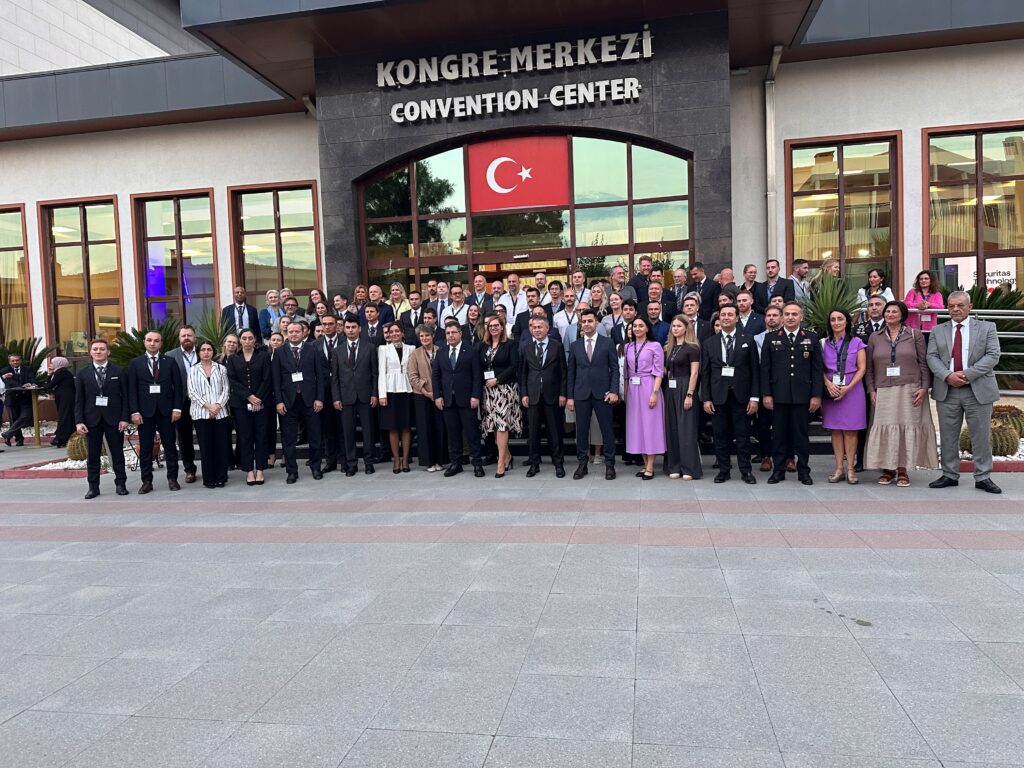
On 6-8 October 2026, Antalya hosted the 14th Electronic Monitoring Conference “Electronic Monitoring in a Changing World – Perception vs Reality”. More than 350 participants coming from 30 countries across Europe and worldwide representing probation services, Ministries of Justice, victims´ services, EM providers, researchers as well as local participants representing the Turkish Prison and Probation Service gathered to discuss how electronic monitoring (EM) is understood by all stakeholders involved including the victims and the public, and how these perceptions compare to the evidence and experiences of those affected. While the gap between perception and reality in electronic monitoring has been recognised for over a decade, the rapid expansion of EM into areas such as victim protection, high-risk supervision and digital innovation has brought new challenges and questions to the forefront.
Recap
ITSCCS
Core Correctional Skills in Digital Probation: highlights from the 6th ITSCCS in Barcelona
05/10/2026
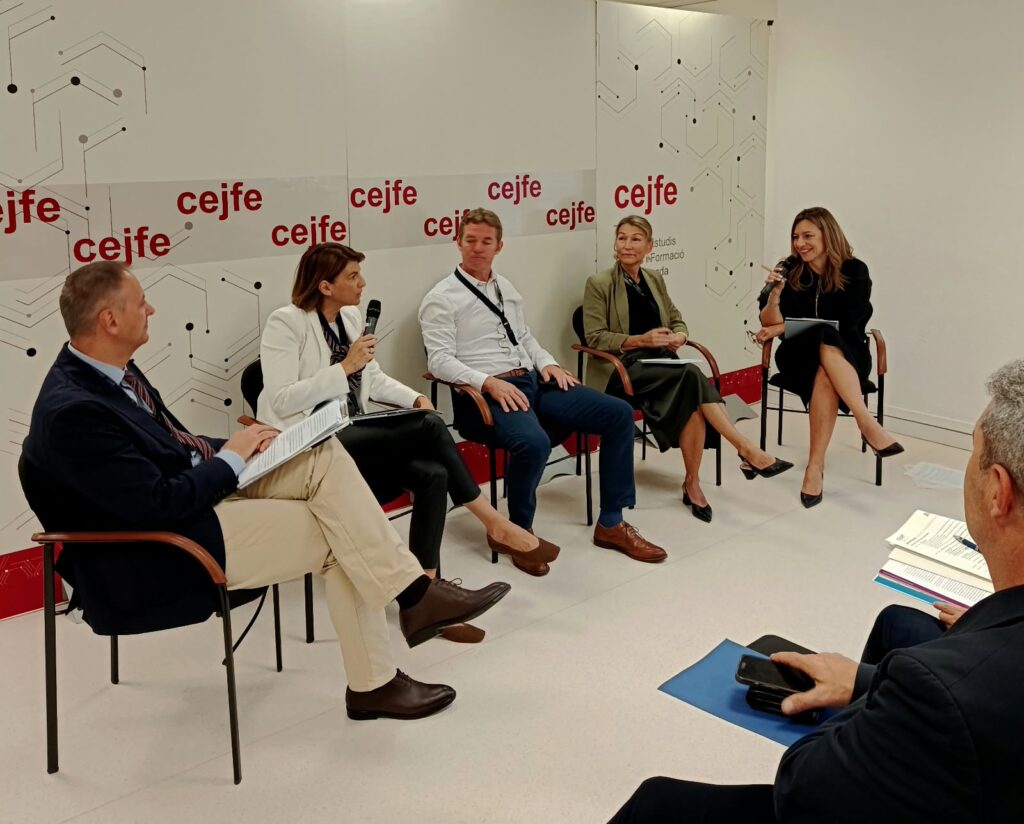
The sixth International Training School on Core Correctional Skills (ITSCCS) took place in Barcelona from 28 September to 2 October 2026, bringing together 26 participants for a week of learning, practical training and international exchange. Organised by the Confederation of European Probation (CEP) and the Centre for Legal Studies and Specialised Training (CEJFE), the programme focused on “Clicks and Empathy: Core Correctional Skills in Digital Probation.”
Recap
Framework Decisions
Recap: ERA workshop on Framework Decisions 829 and 947 in Bucharest
02/10/2026
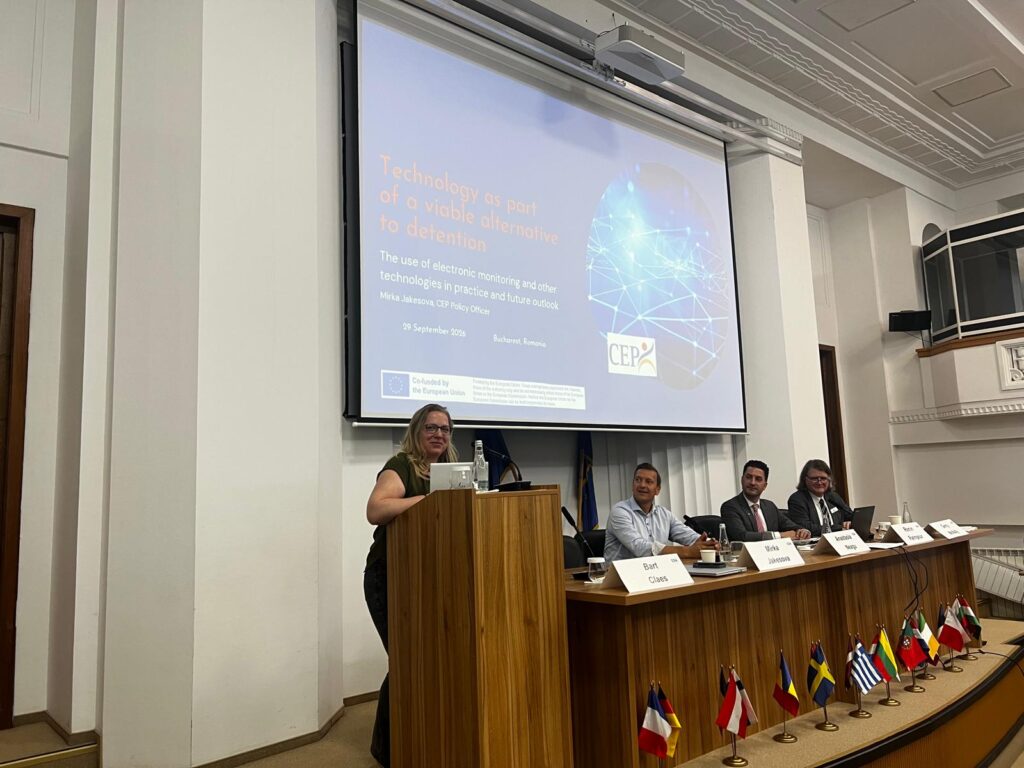
CEP Vice-President Daniel Danglades, Ambassador Gerry McNally and Policy Officer Mirka Jakesova participated in the Seminar on Framework Decisions 829 and 947 and their Impact on Alternatives in the EU organized under the EU project run by the Academy of European Law on 28-29 September in Bucharest, Romania. The seminar brought together judges, prosecutors, probation practitioners, academics, and policy experts to discuss the growing role of alternatives to detention within European criminal justice systems.
New
CEP
CEP and Catalan justice leaders reaffirm longstanding cooperation
29/09/2026
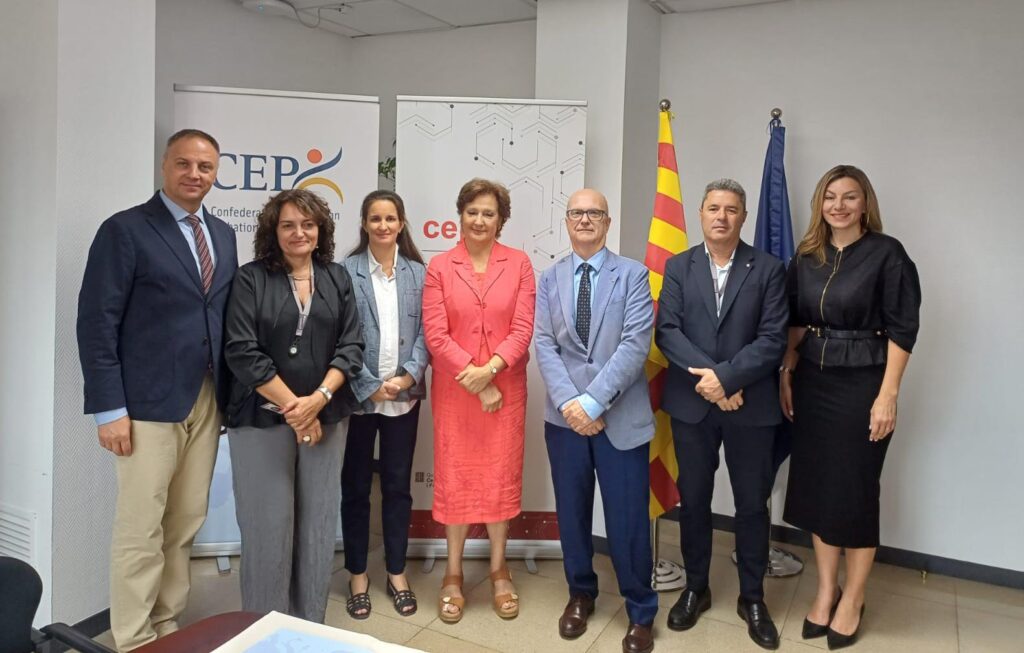
Representatives of the Confederation of European Probation (CEP) met with senior officials from the Catalan Department of Justice and Democratic Quality in Barcelona on 28 September 2026, alongside the opening of the sixth International Training School on Core Correctional Skills. The meeting offered an opportunity to recognise a longstanding partnership and discuss its continued development.
Updated
Mental Health
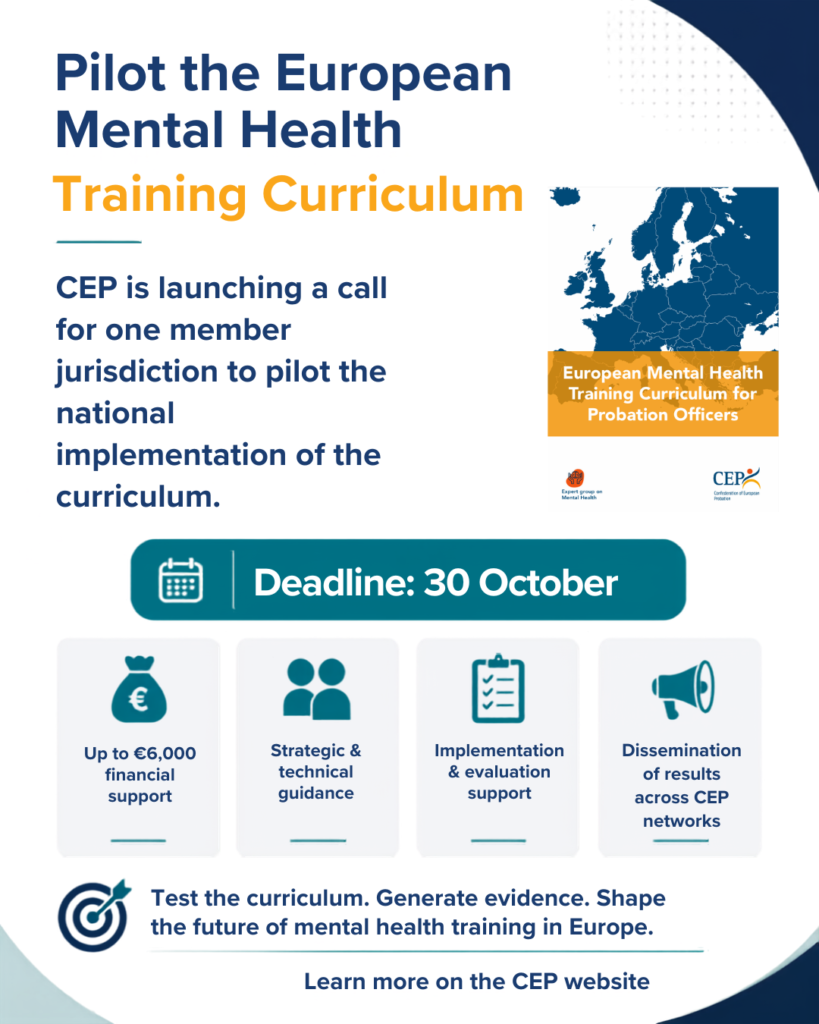
DEADLINE EXTENDED: Call for Pilot Implementation of the European Mental Health Training Curriculum
29/09/2026
Good news for CEP members! Following requests from our members, CEP has extended the deadline to apply for the pilot implementation of the European Mental Health Training Curriculum for Probation Officers.
Recap

ITSCCS, Technology
6th International Training School opens in Barcelona with a focus on digital probation
28/09/2026
How can probation professionals use new technologies in their interactions while building trust, showing empathy and supporting change? This question is at the heart of the sixth International Training School on Core Correctional Skills, which opened in Barcelona on 28 September 2026.
Subscribe to our bi-monthly email newsletter!
"*" indicates required fields
- Keep up to date with important probation developments and insights.