

Previous Article
News
Recap: Directors General Meeting, Strasbourg
The 2008 edition of the annual meeting of Directors General of Probation Services in Europe, held on the 27th and 28th of November, truly could be called ‘European’ in every respect. First, the venue was the Palais de l’Europe in the European capital Strasbourg, France. Second, the programme consisted of the leading themes and challenges in the coming years of the sector of probation in Europe. “Notably the workshop on the upcoming EU Framework Decisions was an eye-opener to me”, reacts Annette Esdorf, Deputy Director General of the Department of Prisons & Probation of the Danish Ministry of Justice.
The Directors General meeting has originated as a CEP event. The meeting in Strasbourg, however, has been organized by the Council of Europe. It regarded the Directors General meeting as an ideal platform to inform probation services in Europe about its Recommendations of Probation, which will come into effect in 2010. Other themes treated concerned Electronic Monitoring , What Works, Restorative Justice & Probation and the EU Framework Decisions on alternative sanctions and measures.
“I think it is a very good idea to bring together all the Directors General in Probation to discuss the hot topics in Europe and to learn from each other’s experiences”, comments Annette Esdorf. “I particularly liked the workshop on What Works, in which also the inter-disciplinary and multi-agency approaches to public protection were included. There was a clear focus on the cooperation between prison and probation. When discussing the relation between prison and probation, there is a tendency in discussions to argue that probation is better than prison. However, I believe that it is more constructive to see probation as complementary to prison, and vice versa, where prison comes in as last resort.”
This view corresponds to the way probation and prison are organized in Denmark. For over 35 years both sections are an integral part of the departmental organisation of the Ministry of Justice. “Due to this model, you can say that, as compared to other countries, probation in Denmark has become more prison-like, with a focus not only on help and support but also on control and monitoring. Instead, prison has become more probation-like, with increased attention for treatment and rehabilitation”, explains Annette Esdorf. ” The short lines between probation and prison enable probation to react quickly and firmly when breaches of alternative sanction programmes occur. Thanks to this model, Denmark has managed to extend the use of probation and alternative measures considerably and in this way to keep its prison population on a stable level over the past few decades.”
Another workshop, on the developments in probation on a European level, turned out to be an eye-opener for the Danish Deputy Director. This workshop had been organized by CEP and was lead by CEP Secretary General. Annette Esdorf: “This workshop was about the EU Framework Decisions that are about to be adopted. I hadn’t heard about them before. So after the meeting I rushed home and tried to find out what the Framework Decisions would imply for us.”
At the moment, the Danish Ministry of Justice is drawing up a plan for the implementation of the Framework Decision when it comes into effect. “There is a lot to do, but we also have some years to work on it”, says Annette Esdorf. “I even look forward to the situation in which probation measures can be transferred between the EU member states. In the Nordic countries a similar regulation is in force for several years now. It works quite smoothly. So maybe we can share our best practices with other European countries in a conference on the Framework Decisions.”
You can read more about the EU Framework Decision on the transfer of non-custodial sanctions and measures here.
Michael Donnellan, Director of the Irish Probation Service and one of the speakers at the above mentioned workshop of the Framework Decisions , announced that his organization is willing to organize a CEP conference on the Framework Decisions in 2009. More information on this initiative can be found at the CEP website soon.

Related News
Keep up to date with the latest developments, stories, and updates on probation from across Europe and beyond. Find relevant news and insights shaping the field today.
New

Others
Applications for the Cambridge MSt in Applied Criminology, Penology and Management are now open
16/09/2026
The Institute of Criminology, Cambridge, have opened up applications for the MSt in Applied Criminology, Penology and Management in the next academic year.
Recap
Probation in Europe
CEP at the Leadership Conference 2026
14/09/2026
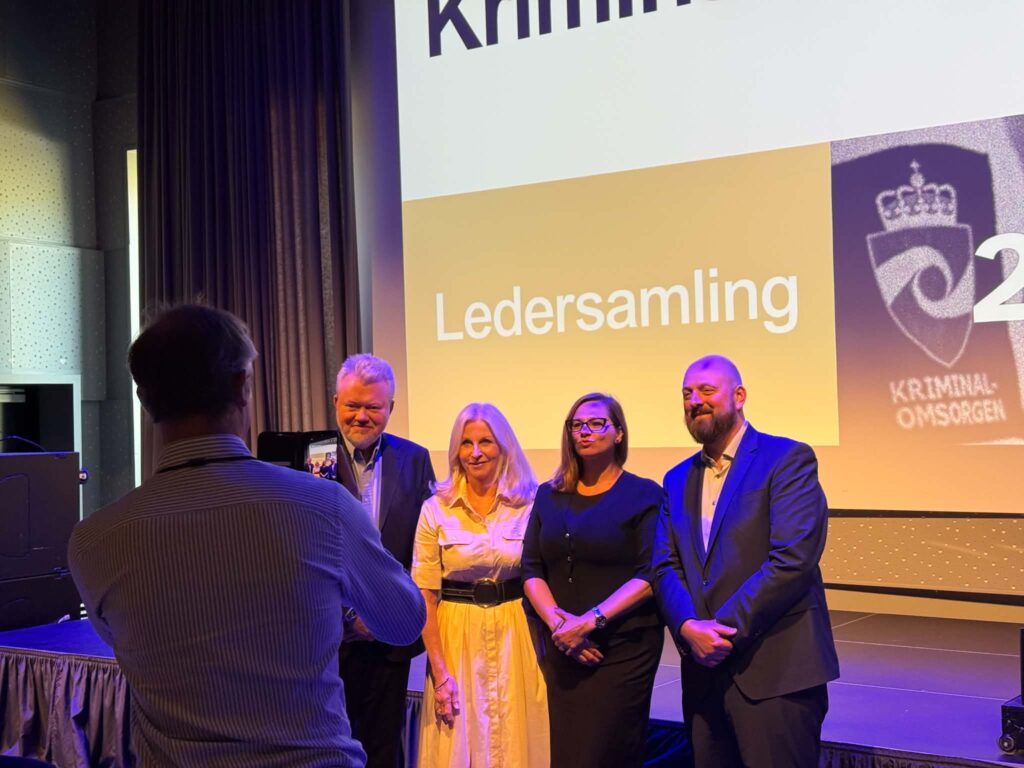
CEP Secretary General Jana Špero Kamenjarin was delighted to participate in the Leadership Conference 2026 of the Norwegian Correctional Service, held on 9–10 September in Oslo.
Recap

Foreign Nationals in Prison and Probation
Recap: Expert Group of CEP and EuroPris, on Foreign Nationals in Prison and Probation (FNPP)
14/09/2026
On 7 and 8 September 2026 the joint Expert Group of CEP and EuroPris, on Foreign Nationals in Prison and Probation (FNPP), came together in The Hague for a valuable exchange of ideas, experiences, and expertise on one of the most important challenges facing prison and probation services across Europe.
New

CEP
Newsletter August 2026 out now
27/08/2026
CEP’s latest newsletter is out now! It includes:
- Approaching deadlines for upcoming events (ITSCCS26, 14th EM and DG leadership training) and the Mental Health curriculum pilot)
- Call for European Probation Journal on the topic of Workload in Probation
- EU documents like SPACE II, revised Victims’ Rights directive and so on
- and much more!
New

Caseload and workload
Do you work in probation? We need your voice!
24/08/2026
As part of its long-standing cooperation with research, CEP invites its members to contribute to a special edition of the European Probation Journal on the topic of Workload in Probation.
New

Alternatives to pre-trial detention, Foreign Nationals in Prison and Probation, Gender Equality, Probation in Europe
SPACE II report is now available
24/08/2026
The use of community sanctions and measures that allow individuals to remain in the community – also known as alternatives to imprisonment – continues to grow overall in Europe, although at a moderate pace, according to the latest Council of Europe annual penal statistics on persons under the supervision of probation agencies (2025 SPACE II survey).
Subscribe to our bi-monthly email newsletter!
"*" indicates required fields
- Keep up to date with important probation developments and insights.