

Previous Article
News
Recap: Expert Network on Education and Training in Probation Launches New Term and Sets Priorities for 2026–2028
On 21 April 2026, the Education and Training Expert Network in Probation held its second online meeting, bringing together representatives from CEP member organisations and experts involved in the training of probation professionals across Europe. The meeting marked the beginning of a new working cycle for the network, under the leadership of its Chair, Cédric Le Bossé, and provided an important opportunity to collectively reflect on its future direction.
Opening the session, Cédric Le Bossé, Head of the International Relations Unit at ENAP, set the tone for this new phase by highlighting the importance of continuity, collaboration, and strategic focus in strengthening probation training across Europe. Together with Anna Esquerrà Roqueta, CEP Policy and Liaison Officer, he welcomed participants and underlined the network’s role as a key platform for advancing professional development and fostering innovation in the field.
A key component of the meeting was a structured brainstorming session aimed at identifying the network’s priorities for the 2026–2028 period. Building on the Chair’s call for active engagement, participants shared their perspectives on emerging challenges, capacity-building needs, and thematic areas requiring further development. This exchange will play a central role in shaping the network’s future activities and will directly inform the preparation of a planned in-person meeting in 2027, ensuring that it reflects members’ expectations and practical priorities.
The meeting also allowed for the continuation of ongoing work on the mapping of training institutions across Europe, an initiative designed to provide a clearer overview of existing structures, strengthen cooperation, and support the exchange of knowledge and practices among training providers.
In addition, CEP presented its commitment to supporting the implementation of the European Commission’s Strategy on the Digitalisation of the Justice Sector, with particular attention to its implications for probation. The discussion emphasised the growing importance of digital competencies, innovative training methodologies, and the need to adapt professional development frameworks to an evolving technological environment.
A round of introductions for new members reflected the continued expansion of the network and the increasing interest of CEP member organisations in contributing to this collaborative platform. The diversity of expertise present further enriched the discussions and reinforced the network’s role as a space for mutual learning and exchange at the European level.
The meeting concluded with closing remarks by the Chair, Cédric Le Bossé, who outlined the next steps for the network and reiterated the importance of maintaining strong engagement from members throughout this new term. Participants reaffirmed the value of the network as a key mechanism for advancing cooperation, supporting professional development, and promoting high-quality education and training in probation.
As the network enters this new phase under its renewed leadership, the active involvement of its members will remain essential to ensuring that its work continues to be relevant, responsive, and impactful in addressing the evolving needs of probation services across Europe.

Related News
Keep up to date with the latest developments, stories, and updates on probation from across Europe and beyond. Find relevant news and insights shaping the field today.
Recap
Electronic monitoring, Technology
14th Electronic Monitoring Conference, Electronic Monitoring in a Changing World – Perception vs Reality
08/10/2026
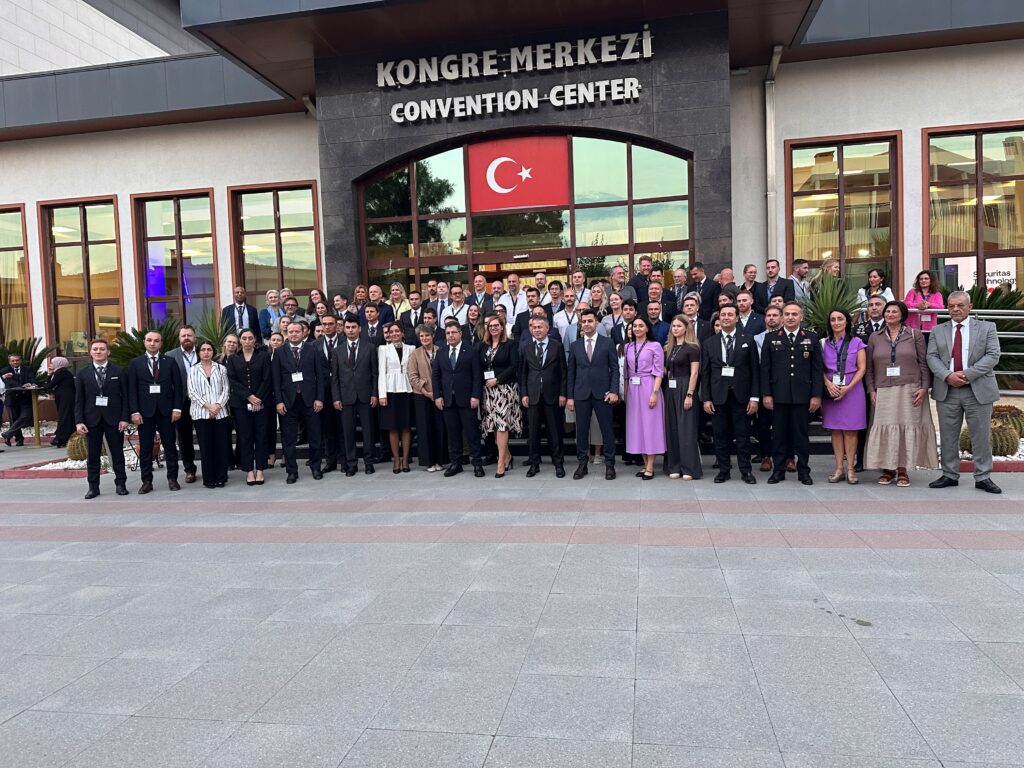
On 6-8 October 2026, Antalya hosted the 14th Electronic Monitoring Conference “Electronic Monitoring in a Changing World – Perception vs Reality”. More than 350 participants coming from 30 countries across Europe and worldwide representing probation services, Ministries of Justice, victims´ services, EM providers, researchers as well as local participants representing the Turkish Prison and Probation Service gathered to discuss how electronic monitoring (EM) is understood by all stakeholders involved including the victims and the public, and how these perceptions compare to the evidence and experiences of those affected. While the gap between perception and reality in electronic monitoring has been recognised for over a decade, the rapid expansion of EM into areas such as victim protection, high-risk supervision and digital innovation has brought new challenges and questions to the forefront.
Recap

ITSCCS
Core Correctional Skills in Digital Probation: highlights from the 6th ITSCCS in Barcelona
05/10/2026
The sixth International Training School on Core Correctional Skills (ITSCCS) took place in Barcelona from 28 September to 2 October 2026, bringing together 26 participants for a week of learning, practical training and international exchange. Organised by the Confederation of European Probation (CEP) and the Centre for Legal Studies and Specialised Training (CEJFE), the programme focused on “Clicks and Empathy: Core Correctional Skills in Digital Probation.”
Recap
Framework Decisions
Recap: ERA workshop on Framework Decisions 829 and 947 in Bucharest
02/10/2026
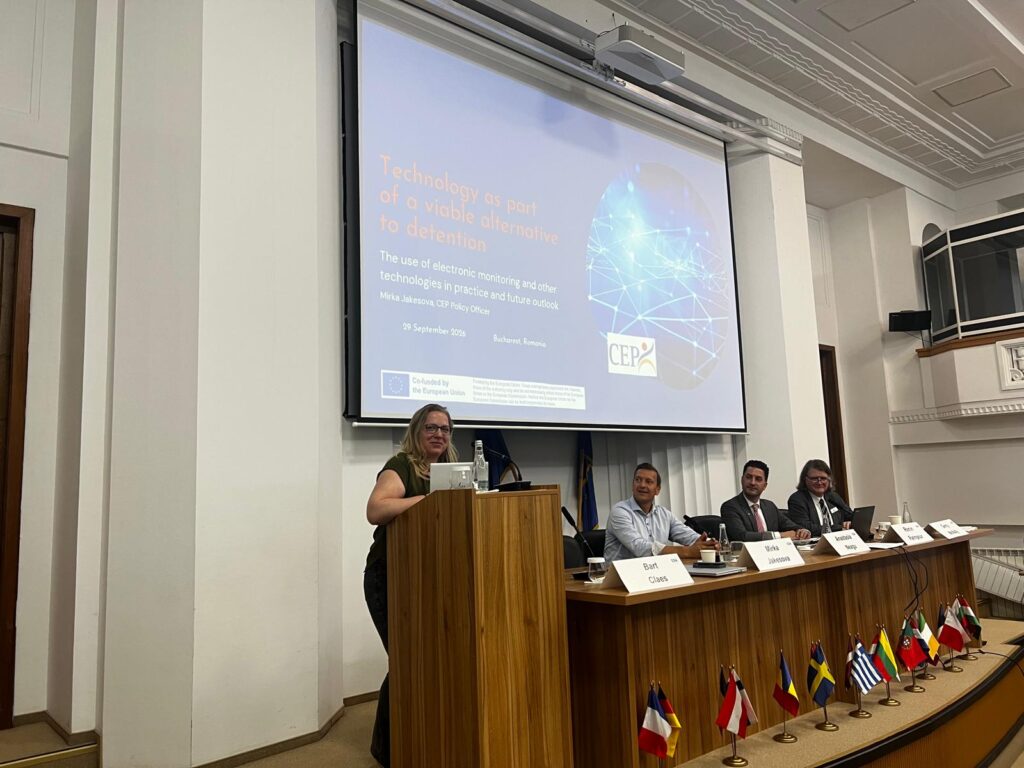
CEP Vice-President Daniel Danglades, Ambassador Gerry McNally and Policy Officer Mirka Jakesova participated in the Seminar on Framework Decisions 829 and 947 and their Impact on Alternatives in the EU organized under the EU project run by the Academy of European Law on 28-29 September in Bucharest, Romania. The seminar brought together judges, prosecutors, probation practitioners, academics, and policy experts to discuss the growing role of alternatives to detention within European criminal justice systems.
New

CEP
CEP and Catalan justice leaders reaffirm longstanding cooperation
29/09/2026
Representatives of the Confederation of European Probation (CEP) met with senior officials from the Catalan Department of Justice and Democratic Quality in Barcelona on 28 September 2026, alongside the opening of the sixth International Training School on Core Correctional Skills. The meeting offered an opportunity to recognise a longstanding partnership and discuss its continued development.
Updated

Mental Health
DEADLINE EXTENDED: Call for Pilot Implementation of the European Mental Health Training Curriculum
29/09/2026
Good news for CEP members! Following requests from our members, CEP has extended the deadline to apply for the pilot implementation of the European Mental Health Training Curriculum for Probation Officers.
Recap

ITSCCS, Technology
6th International Training School opens in Barcelona with a focus on digital probation
28/09/2026
How can probation professionals use new technologies in their interactions while building trust, showing empathy and supporting change? This question is at the heart of the sixth International Training School on Core Correctional Skills, which opened in Barcelona on 28 September 2026.
Subscribe to our bi-monthly email newsletter!
"*" indicates required fields
- Keep up to date with important probation developments and insights.