

Previous Article
News
Webinar on Foreign Offenders (18th May)
‘Foreign Nationals In Prison & Probation in Europe – What Do Statistics Tell Us and How Can They Inform Policy & Practice ?’
EuroPris and CEP in collaboration with the SPACE research team of the University of Lausanne, hosted this webinar to consider the available statistics on foreign national offenders, what they tell us and how they might be useful in the development of policy and practice.
Space I (prisons) and Space II (community sanctions) reports are produced by the University of Lausanne on behalf of the Council of Europe from data provided by its 47 member states. This webinar looked at what is available for comparative study and whether it may contribute to the policy and practice of those responsible in prison, probation, and other agencies working with this group.
Willem van der Brugge, the Secretary-General of CEP, opened the webinar welcoming those attending who represented prison and probation services, academia, NGOs, and other interested parties from across Europe and beyond.
Webinar presentations, all available via the links below, began with Prof. Marcelo Aebi who leads the SPACE team at the University of Lausanne, providing an outline and commentary concerning the range of data available in the SPACE I & SPACE II Annual Reports. Professor Aebi was followed by SPACE team members Melanie Tiago, who provided greater analysis on SPACE I Reports, and then by Yuji Hashimoto, who similarly provided further description and comment on SPACE II Reports.
The second half of the webinar started with three members of the joint EuroPris & CEP Foreign Nationals in Prison and Probation (FNPP) Expert Group, giving presentations from their particular professional perspectives on the value and impact of statistics on their work.
Luisa Ravagnani, founder of Italian Prisoners Abroad and from the University of Brescia, Italy, spoke on behalf of those organisations within the FNPP Expert Group who provide services for their nationals imprisoned abroad groups.
Tijs Bagchus, Policy Officer of the Dutch Custodial Institutions Agency, The Netherlands, similarly provided a statistical overview of the situation of foreign prisoners in the Netherlands.
Daniel Danglades, Policy Officer of the French Prison & Probation Services, provided a comprehensive and detailed overview of the situation in France of foreign national prisoners and those on community sanctions.
Prof. Marcelo Aebi concluded the webinar with a detailed and key presentation on the range of statistics contained in current SPACE I & II Reports on foreign prisoners and foreign offenders in the community. Data requests from the Council of Europe to its Member States about nationality have expanded in recent years to include additional questions on residency and legal status. They provide for increasingly useful comparative and longitudinal studies on the complex issues around foreign offenders, both in custody and the community, which continue to be of considerable interest and concern in the European States.
It was clear from the range of questions coming from attendees, that the question posed by the webinar on the applicability and relevance of statistics in the formulation of policy and practice is complex and not readily answered. The detailed and impressive presentations from the SPACE team and members of the FNPP Expert Group require further time to consider. They provide an essential introduction to the increasing range of information available in SPACE Reports on the nationality, residency, and immigration status of offenders in prison and the community across Europe. As with all complex criminal justice matters, the webinar generated more questions than it answered and the topic certainly warrants further consideration.
Gustav Tallving, the Executive Director of EuroPris, closed the webinar, thanking presenters and attendees for their contributions.
The webinar presentations can be downloaded here :
- Presentation Melanie Tiago
- Presentation Yuji Hashimoto
- Presentation Luisa Ravagnani
- Presentation Tijs Bagchus
- Presentation Daniel Danglades
The webinar recordings can be accessed here :

Related News
Keep up to date with the latest developments, stories, and updates on probation from across Europe and beyond. Find relevant news and insights shaping the field today.
Recap
Electronic monitoring, Technology
14th Electronic Monitoring Conference, Electronic Monitoring in a Changing World – Perception vs Reality
08/10/2026
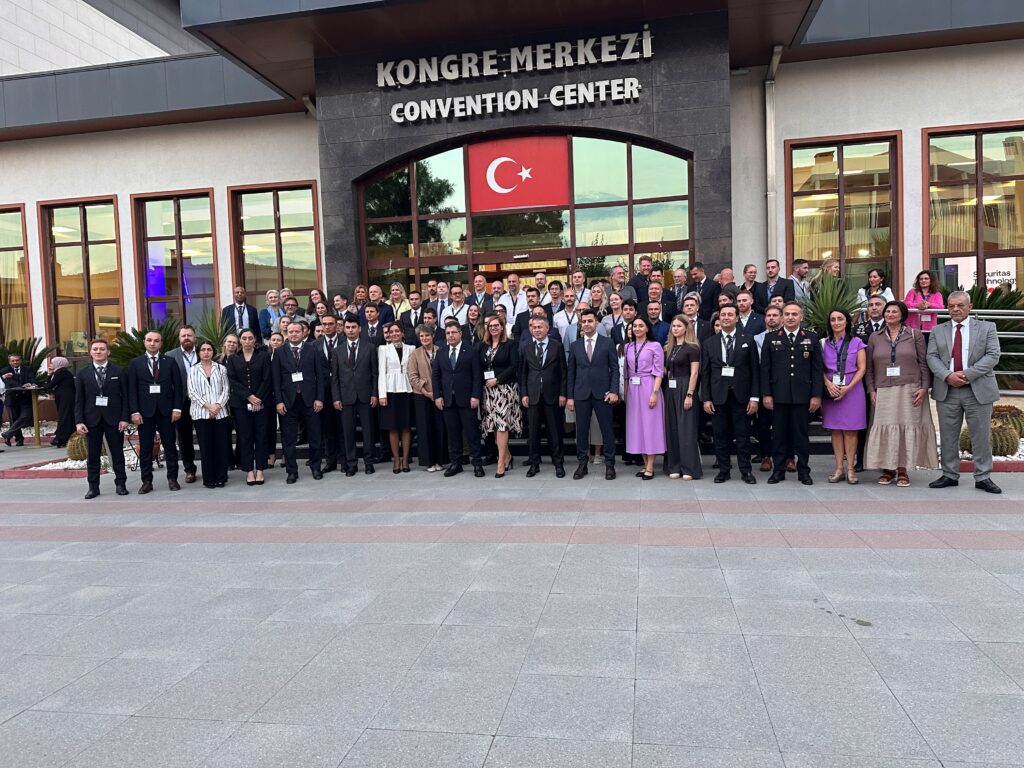
On 6-8 October 2026, Antalya hosted the 14th Electronic Monitoring Conference “Electronic Monitoring in a Changing World – Perception vs Reality”. More than 350 participants coming from 30 countries across Europe and worldwide representing probation services, Ministries of Justice, victims´ services, EM providers, researchers as well as local participants representing the Turkish Prison and Probation Service gathered to discuss how electronic monitoring (EM) is understood by all stakeholders involved including the victims and the public, and how these perceptions compare to the evidence and experiences of those affected. While the gap between perception and reality in electronic monitoring has been recognised for over a decade, the rapid expansion of EM into areas such as victim protection, high-risk supervision and digital innovation has brought new challenges and questions to the forefront.
Recap
ITSCCS
Core Correctional Skills in Digital Probation: highlights from the 6th ITSCCS in Barcelona
05/10/2026
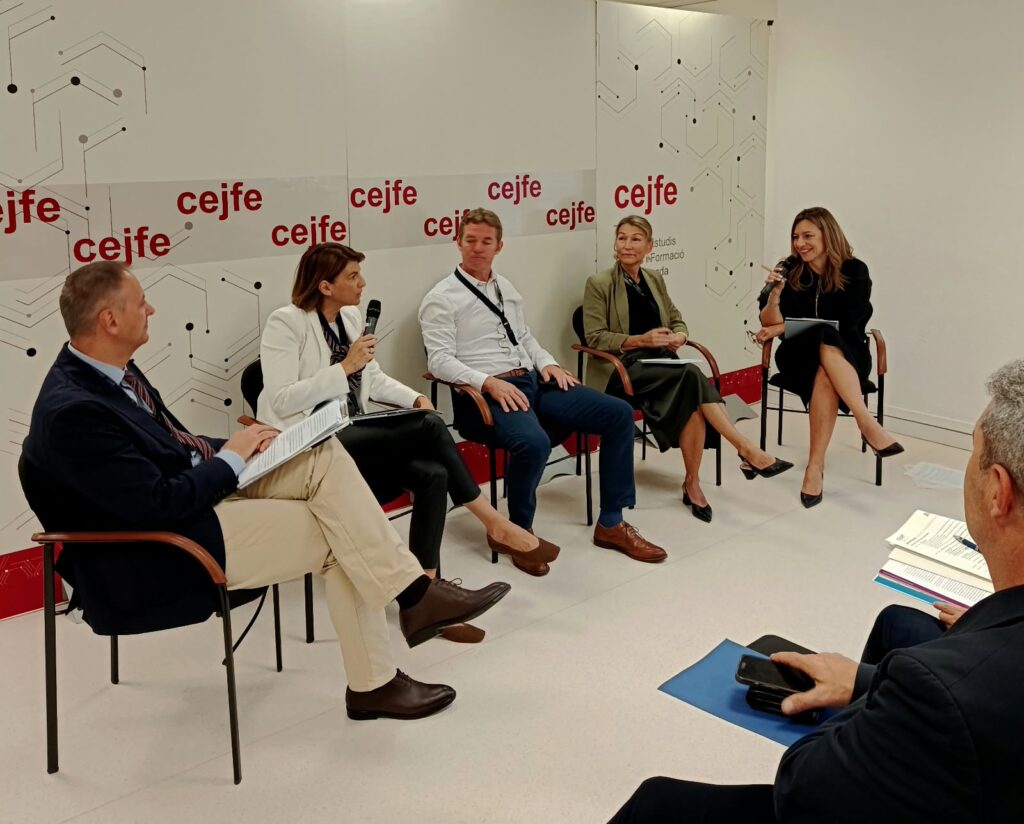
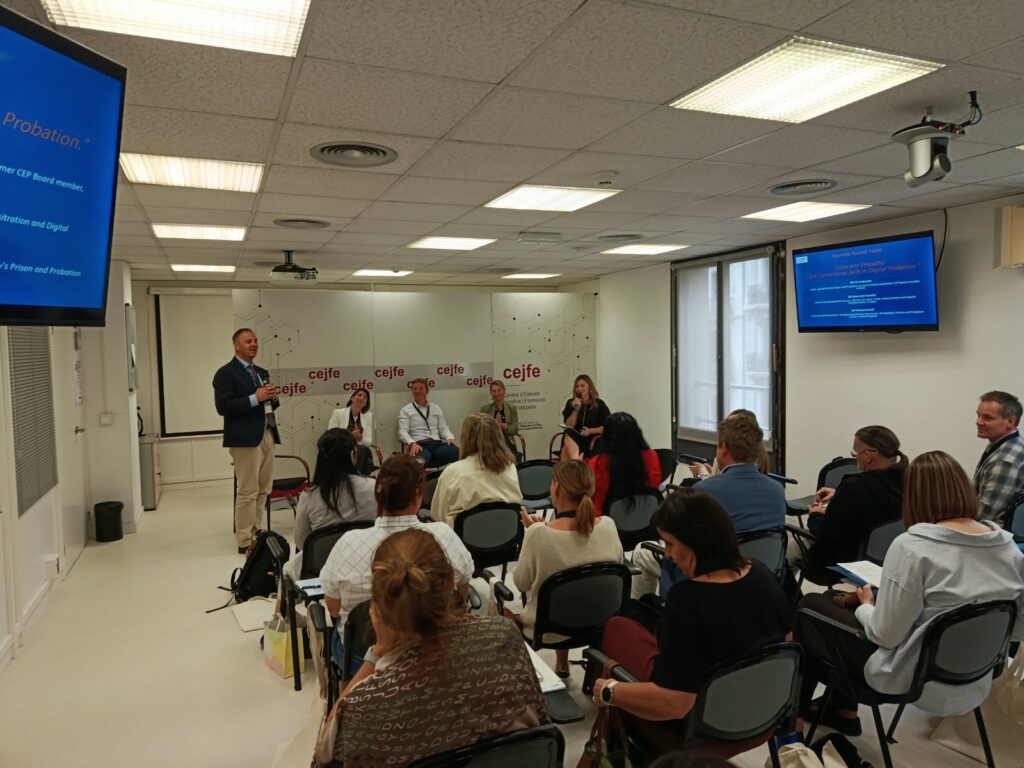
The sixth International Training School on Core Correctional Skills (ITSCCS) took place in Barcelona from 28 September to 2 October 2026, bringing together 26 participants for a week of learning, practical training and international exchange. Organised by the Confederation of European Probation (CEP) and the Centre for Legal Studies and Specialised Training (CEJFE), the programme focused on “Clicks and Empathy: Core Correctional Skills in Digital Probation.”
Recap
Framework Decisions
Recap: ERA workshop on Framework Decisions 829 and 947 in Bucharest
02/10/2026
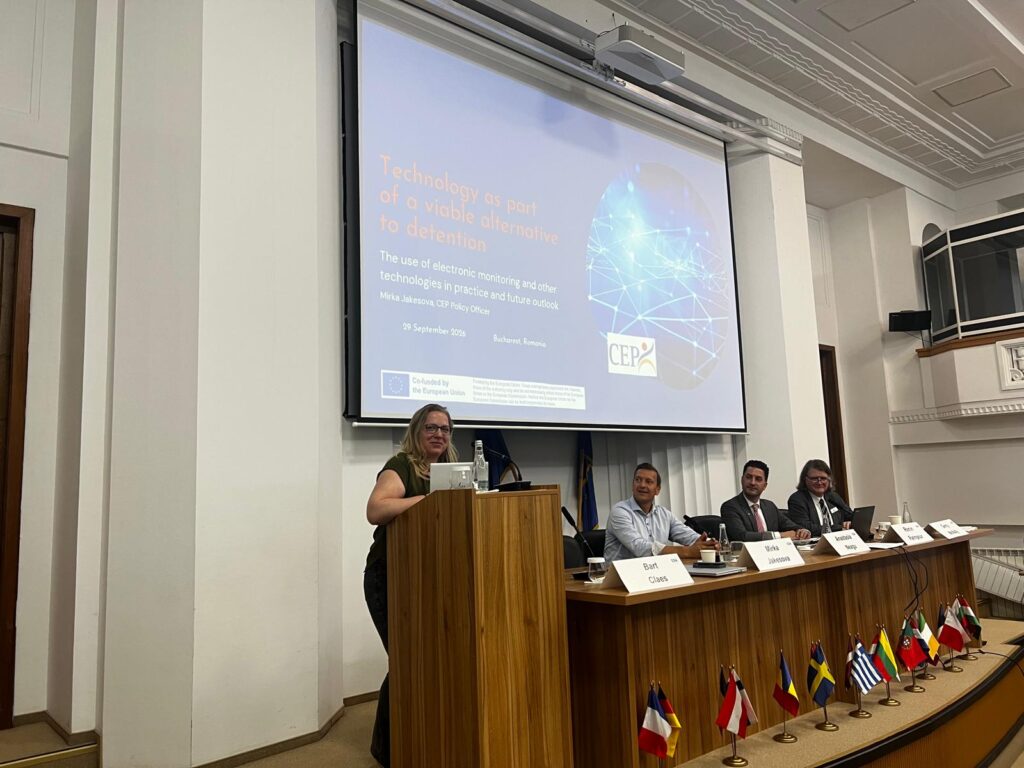
CEP Vice-President Daniel Danglades, Ambassador Gerry McNally and Policy Officer Mirka Jakesova participated in the Seminar on Framework Decisions 829 and 947 and their Impact on Alternatives in the EU organized under the EU project run by the Academy of European Law on 28-29 September in Bucharest, Romania. The seminar brought together judges, prosecutors, probation practitioners, academics, and policy experts to discuss the growing role of alternatives to detention within European criminal justice systems.
New
CEP
CEP and Catalan justice leaders reaffirm longstanding cooperation
29/09/2026
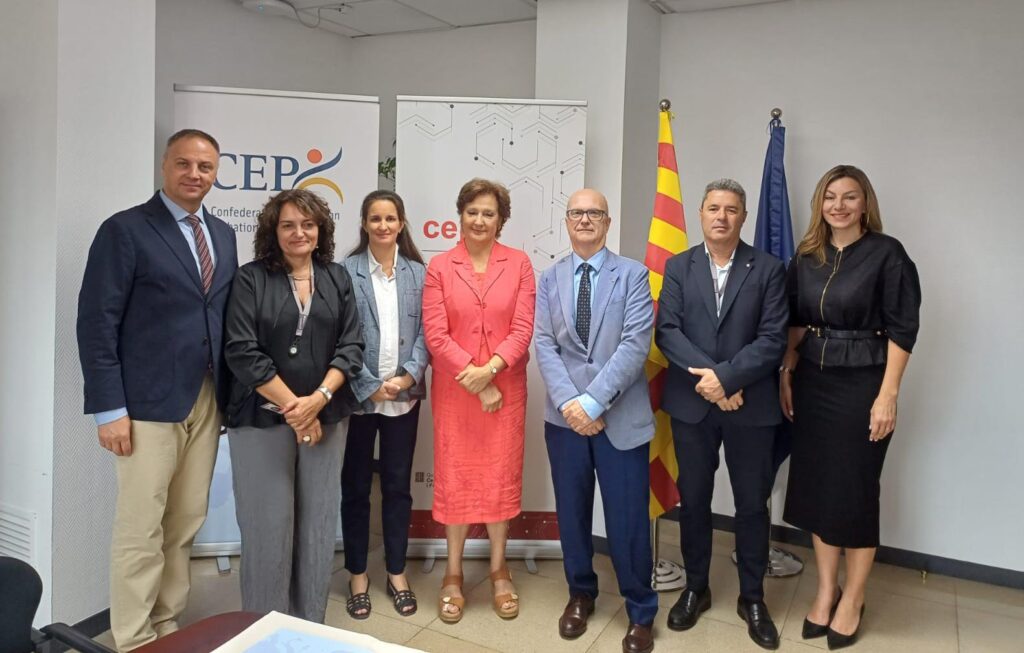
Representatives of the Confederation of European Probation (CEP) met with senior officials from the Catalan Department of Justice and Democratic Quality in Barcelona on 28 September 2026, alongside the opening of the sixth International Training School on Core Correctional Skills. The meeting offered an opportunity to recognise a longstanding partnership and discuss its continued development.
Updated
Mental Health
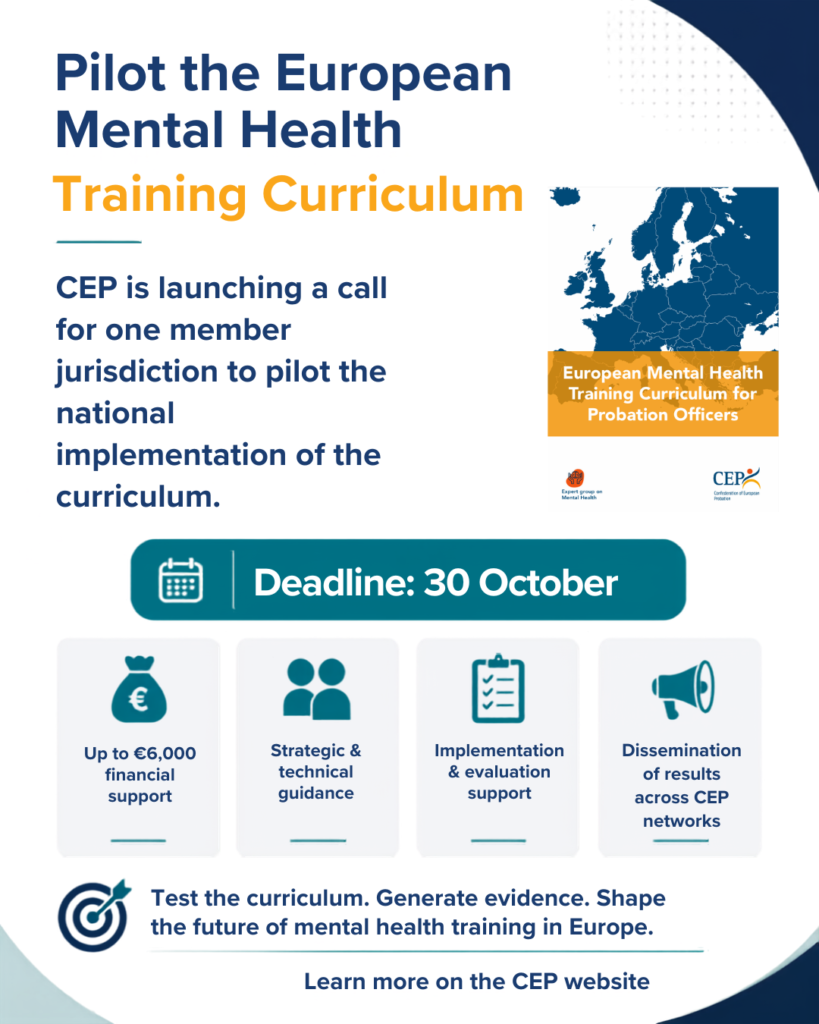
DEADLINE EXTENDED: Call for Pilot Implementation of the European Mental Health Training Curriculum
29/09/2026
Good news for CEP members! Following requests from our members, CEP has extended the deadline to apply for the pilot implementation of the European Mental Health Training Curriculum for Probation Officers.
Recap
ITSCCS, Technology
6th International Training School opens in Barcelona with a focus on digital probation
28/09/2026
How can probation professionals use new technologies in their interactions while building trust, showing empathy and supporting change? This question is at the heart of the sixth International Training School on Core Correctional Skills, which opened in Barcelona on 28 September 2026.
Subscribe to our bi-monthly email newsletter!
"*" indicates required fields
- Keep up to date with important probation developments and insights.