

Previous Article
News
The work during Covid-19 in a French open environment prison
Laurène Boulineau has been a penitentiary counselor for integration and probation in an open environment prison in Paris since 2016. Originally from Vendée, she appreciates the Parisian life with its many cultural and other assets. As for the Seine St Denis department where she now works – despite the difficulties that it concentrates, it also represents a challenge. “We learn to work with the means at hand”, she says.
Different types of probationers
She has about 75 probationers in follow-up. “This is a very diverse audience, with very different profiles, ages and personal situations – but that is what it makes interesting. The inhabitants of this department however, one of the most precarious in France, also have many other problems like social, administrative, economical and health ones”.
With the business continuity plan that has been set up for the Covid-19 pandemic, Laurène is mainly teleworking. Since the start of confinement, she has provided 3 one-day hotlines at SPIP 93. “We call outgoing detainees, most of them about the health context, as well as outgoing visitors, and we deal with emergencies, particularly in terms of electronic bracelets.”
Teleworking
For teleworking, she had to retrieve every probationer’s telephone number in order to ensure continuity of service, to maintain the contact and to write the necessary reports. “We have deadlines to meet, for example for measurement purposes. In addition, in a context of confinement conducive to violence and isolation, we maintain a social bond with the people placed under the care of justice for whom we are responsible, especially in cases of sensitive files and vulnerable people. It is sometimes necessary to ensure the continuity of therapeutic follow-up or even to carry out an emergency referral to a care-giver or an integration association concerning the homeless, in conjunction with the psychologist and the social worker of SPIP and our different partners, also in teleworking ”.
Lack of equipment
Everything is done by professional phone or via personal devices as she does not have a professional laptop, no access to emails or APPI business software; which makes continuity of service very precarious. “I spend a lot of time calling on-call colleagues for physical or digital records of contact details or information about a person’s situation”, Laurène says, “For phone conversations or to write reports. Even though teleworking is a very interesting tool and proves to be necessary in this period of health crisis, the lack of equipment has serious disadvantages. And also it will never replace the core of our job, which is the interview with the person placed under the care of justice. “
Difficult
“Being of a friendly nature and an open personality”, she concludes “I find it easy to keep in touch with colleagues and friends, but I think that for more ‘closed’ people this long house arrest can be really difficult.”

Related News
Keep up to date with the latest developments, stories, and updates on probation from across Europe and beyond. Find relevant news and insights shaping the field today.
New
CEP
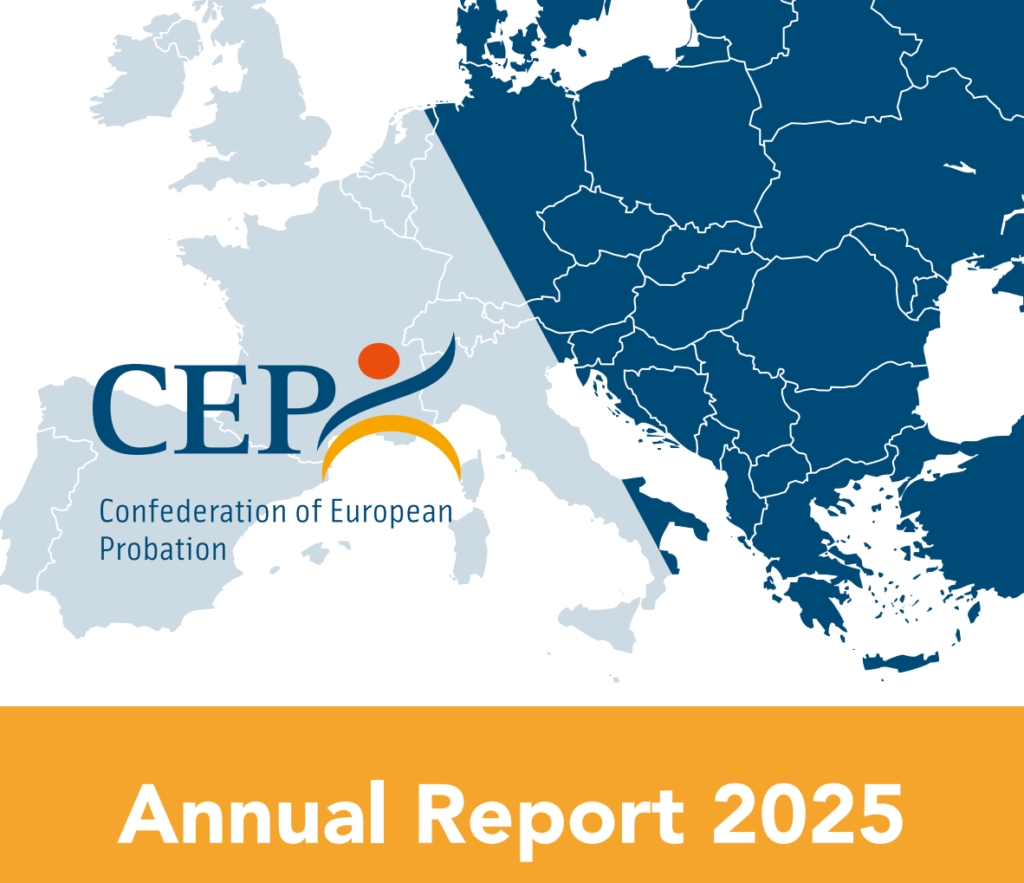
CEP annual report
07/04/2026
The Confederation of European Probation (CEP) has published its Annual Report 2025, showcasing a year marked by growth, cooperation, and continued commitment to strengthening probation across Europe.
Bringing together more than 100 member organisations across 42 countries and 59 jurisdictions, CEP continued to serve as a central platform for knowledge exchange, professional development, and collaboration within the European criminal justice field.

Uncategorized
ProtectEU: Commission presents new counterterrorism agenda
07/04/2026
On 26 February 2026, the European Commission presented ProtectEU, a renewed EU counterterrorism agenda aimed at strengthening the Union’s capacity to prevent, detect and respond to evolving terrorist threats.
New
Probation in Europe
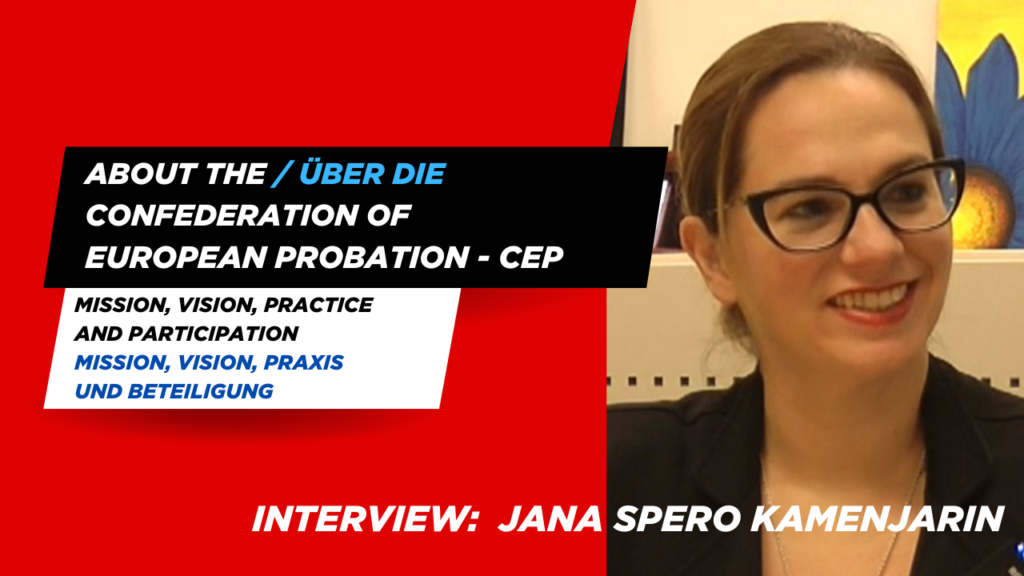
New Vodcast Episode: Jana Spero Kamenjarin on the Confederation of European Probation (CEP)
07/04/2026
The 19th episode of Division_Y features Jana Spero Kamenjarin, Secretary General of the Confederation of European Probation (CEP), based in Utrecht, the Netherlands.
New

Electronic monitoring
Electronic Monitoring in Europe: Insights from the 13th Electronic Monitoring conference Questionnaire
30/03/2026
The 13th Electronic Monitoring (EM) conference Questionnaire has now been released, offering a comprehensive overview of how EM is applied across Europe today.ion.
New
CEP members
New CEP member: Guernsey Probation Service
25/03/2026
In recent weeks, CEP has interviewed individual members and representatives of the new member organisations that joined CEP at the beginning of 2026. In these interviews, the new member organisations or individual members will share information on why they decided to become members, how they would like to contribute to the development of CEP and many more.
Enjoy reading!
Recap
Probation outside Europe
Recap: CEP and APPA webinar
25/03/2026
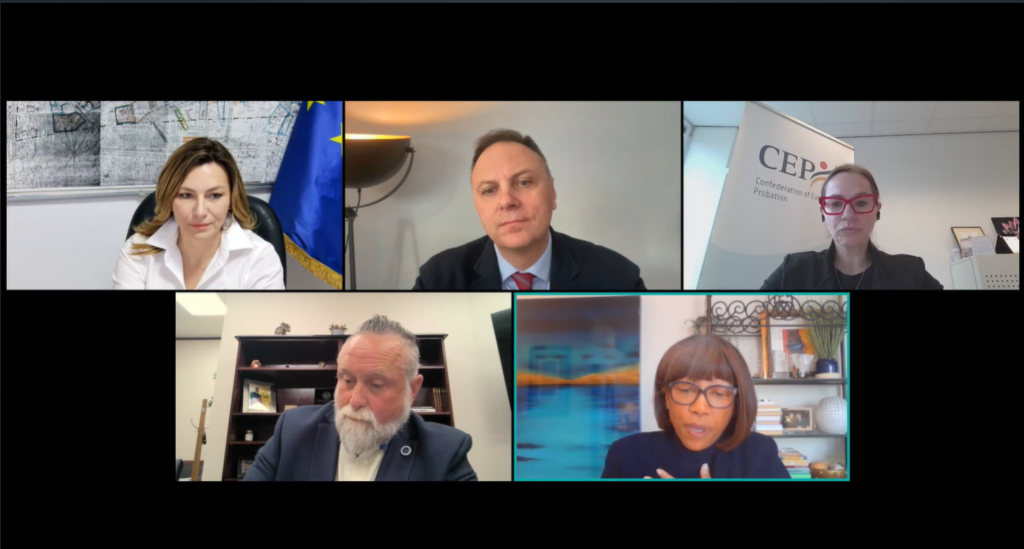
Confederation of European Probation (CEP) and American Probation and Parole Association (APPA) hosted the second joint webinar on 24 March 2026, this time on “Integrity of Performance: Ensuring Meaningful and Ethical Outcomes”.
The overarching theme of integrity of performance was explored through two distinct perspectives on this fundamental concept.
Subscribe to our bi-monthly email newsletter!
"*" indicates required fields
- Keep up to date with important probation developments and insights.