

Previous Article
News
Working in the empty headquarters of the Probation and Mediation Service
An article written by Miroslava Jakesova, international and communications officer at the Czech Probation and Mediation Service.
First Time for Everything
Each year is connected to some memories that shape the way you recall that year, and what brought me to this stage as working in the probation and mediation field. If you make a list, it would look like this:
1994 – first year of school
2007 – first year of university studies
2010 – first year of working full time
2018 – first year in the Probation and Mediation Service
2020 – first experience in living during a state of emergency
My work in 2020
Jumping into 2020 felt quite different this year. Besides the fact that 2020 launched a new decade, other changes and novelties lied ahead of me – a new senior colleague, reorganisation of our tasks, a few important milestones ahead of us – 20th anniversary of the Service, international conference in Prague, 5th Yellow Ribbon Run – all of them postponed until later, until the autumn or even spring 2021.
Who am I? My name is Miroslava and I have been working with the Probation and Mediation Service as an international relations and communication officer. I am responsible for coordinating all international matters regarding memberships, international visits, business trips, translations, communication with partners and colleagues, handling all international administration etc. The rest of my daily agenda is connected to the press department: co-organizing and coordinating various events for press and the public, editing and writing texts, updating website and social sites and many others.
Life slowed down in March
In February we managed to organise a successful press conference and public meeting. At the beginning of March, we joined the Law Night and if everything had gone as usual I would then focus on coordinating the international conference held in Prague scheduled for autumn 2020, our attendance on Yellow Ribbon Run 5th edition and all international matters. This spring we planned to attend a conference and general project assembly meeting, host some specialists from abroad, provide training to criminology students and give some presentations to foreign specialists visiting the Czech Republic. However at the end of February, it started to become clear that it would not be possible to travel abroad in the near future. The first three cases of the COVID-19 infection were confirmed on 1.3.2020 and after that a state of emergency was declared. Borders closed and we knew that not only would we go nowhere, but also no one would be able to arrive in the Czech Republic. So the first weeks of the emergency state for me were a new era of postponement and reorganisation of tasks and calendar. Every meeting and event needed to be rescheduled for a later date, everything planned as a face-to-face meeting needed to be redesigned. On a positive note, along with my daily tasks working from home I found time to complete all the paperwork, finish some translations which I originally planned to do in the summer and most importantly refresh my written English because we were asked to share measures that the Service adopted with our international partners.
Facemasks all around us and an empty office
Our Service Centres were not closed but the face-to-face meetings as well as the number of people in the office were reduced and the same was applied at the headquarters in Prague. Fortunately, we have been living in a technological era and therefore we were able to replace face-to-face meetings with the virtual ones like everyone else did. We partly worked from home and partly from the office. Travelling to work was not a problem because metro, buses and trams were almost empty and blue parking zones allowing only residents to park their cars at the city centres were temporarily cancelled. The office was empty as well. Now that we are back in here I realize how strange it felt going through deserted floors or having a Skype meeting with facemasks on. Another thing that always crosses my mind when thinking of the emergency state is the ubiquitous smell of disinfectant. We are obliged to use it up till now when entering the building or different floors but I have already got used to it.
Furthermore, it was mandatory to wear facemasks both outdoors and inside public buildings. As in the first couple of weeks it was impossible to buy single-use facemasks :the largest production of fabric facemasks hit our country and our probation officers were not behind. Looking back on that time, I keep being amazed when recalling all beautiful and original creations produced by my colleagues. We asked them to send us photos of their facemasks and published it successfully on our Facebook page. As the face-to-face meetings with clients were limited, my colleagues communicated with them by phone, email or Skype. We wanted to support the clients amongst whom there were both offenders and victims, and therefore we started publishing messages in order to support the offender´s efforts to live the life in accordance with the law and rules, and remind the victims of the fact that the Service kept providing counselling services.
Back to normality
Recently, our lives have been going back to „normality“. The Service Centres reopened, most people returned back to their offices, even though we keep wearing facemasks in the office and try to be cautious. My only hope now is that we will manage to launch the first celebrations connected to our 20th anniversary this autumn, as well as to organise the conference next spring.

Related News
Keep up to date with the latest developments, stories, and updates on probation from across Europe and beyond. Find relevant news and insights shaping the field today.
Recap
Electronic monitoring, Technology
14th Electronic Monitoring Conference, Electronic Monitoring in a Changing World – Perception vs Reality
08/10/2026
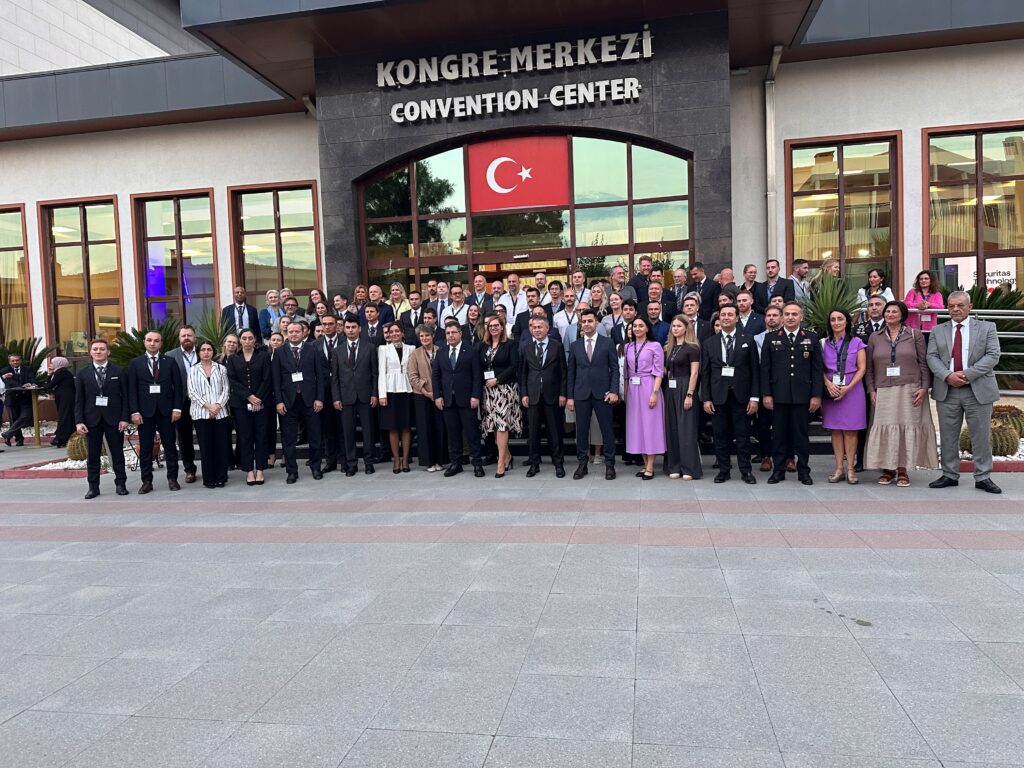
On 6-8 October 2026, Antalya hosted the 14th Electronic Monitoring Conference “Electronic Monitoring in a Changing World – Perception vs Reality”. More than 350 participants coming from 32 countries across Europe and worldwide representing probation services, Ministries of Justice, victims´ services, EM providers, researchers as well as local participants representing the Turkish Prison and Probation Service gathered to discuss how electronic monitoring (EM) is understood by all stakeholders involved including the victims and the public, and how these perceptions compare to the evidence and experiences of those affected. While the gap between perception and reality in electronic monitoring has been recognised for over a decade, the rapid expansion of EM into areas such as victim protection, high-risk supervision and digital innovation has brought new challenges and questions to the forefront.
Recap
ITSCCS
Core Correctional Skills in Digital Probation: highlights from the 6th ITSCCS in Barcelona
05/10/2026
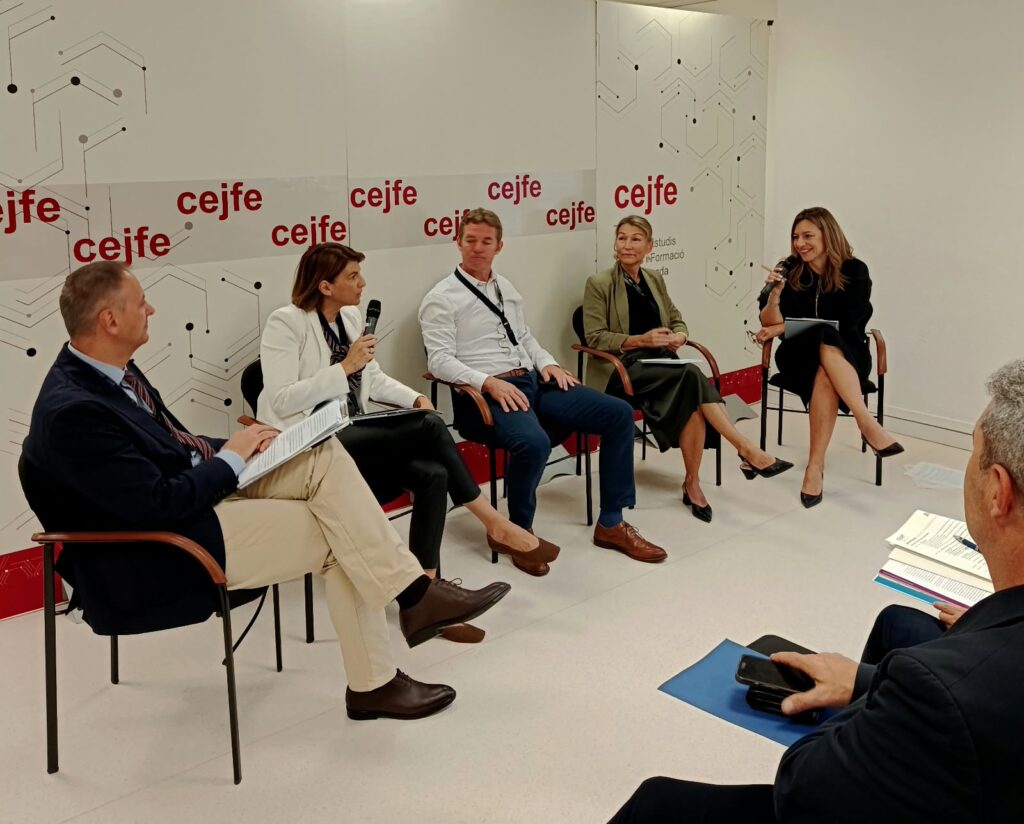
The sixth International Training School on Core Correctional Skills (ITSCCS) took place in Barcelona from 28 September to 2 October 2026, bringing together 26 participants for a week of learning, practical training and international exchange. Organised by the Confederation of European Probation (CEP) and the Centre for Legal Studies and Specialised Training (CEJFE), the programme focused on “Clicks and Empathy: Core Correctional Skills in Digital Probation.”
Recap
Framework Decisions
Recap: ERA workshop on Framework Decisions 829 and 947 in Bucharest
02/10/2026
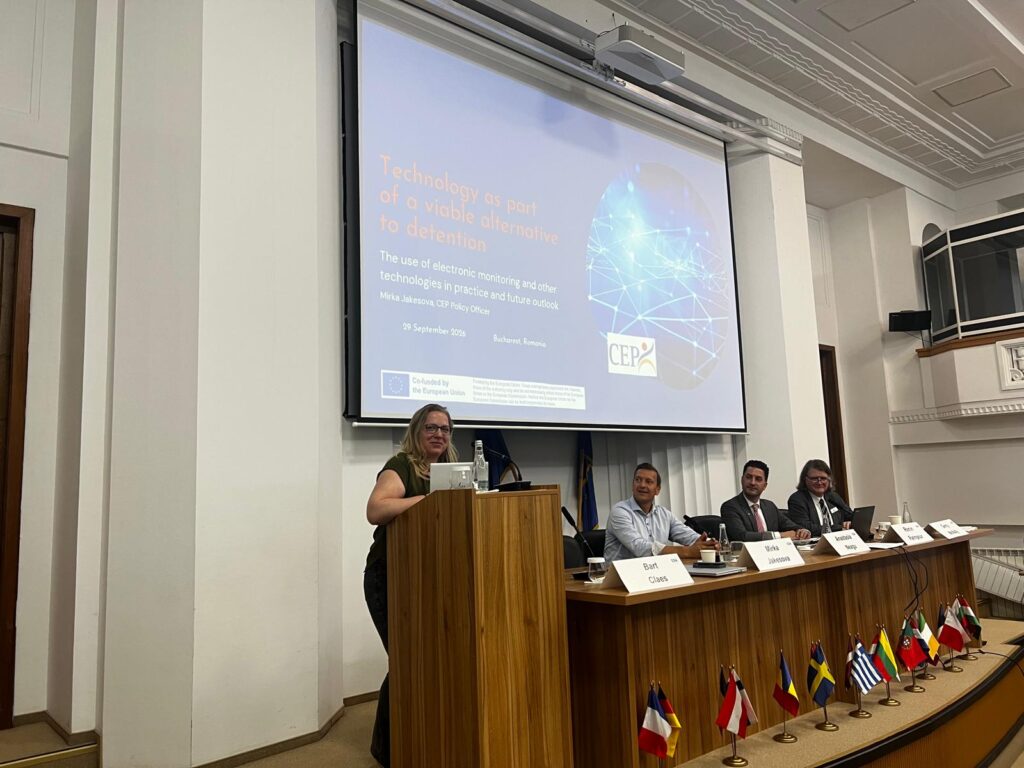
CEP Vice-President Daniel Danglades, Ambassador Gerry McNally and Policy Officer Mirka Jakesova participated in the Seminar on Framework Decisions 829 and 947 and their Impact on Alternatives in the EU organized under the EU project run by the Academy of European Law on 28-29 September in Bucharest, Romania. The seminar brought together judges, prosecutors, probation practitioners, academics, and policy experts to discuss the growing role of alternatives to detention within European criminal justice systems.
New
CEP
CEP and Catalan justice leaders reaffirm longstanding cooperation
29/09/2026
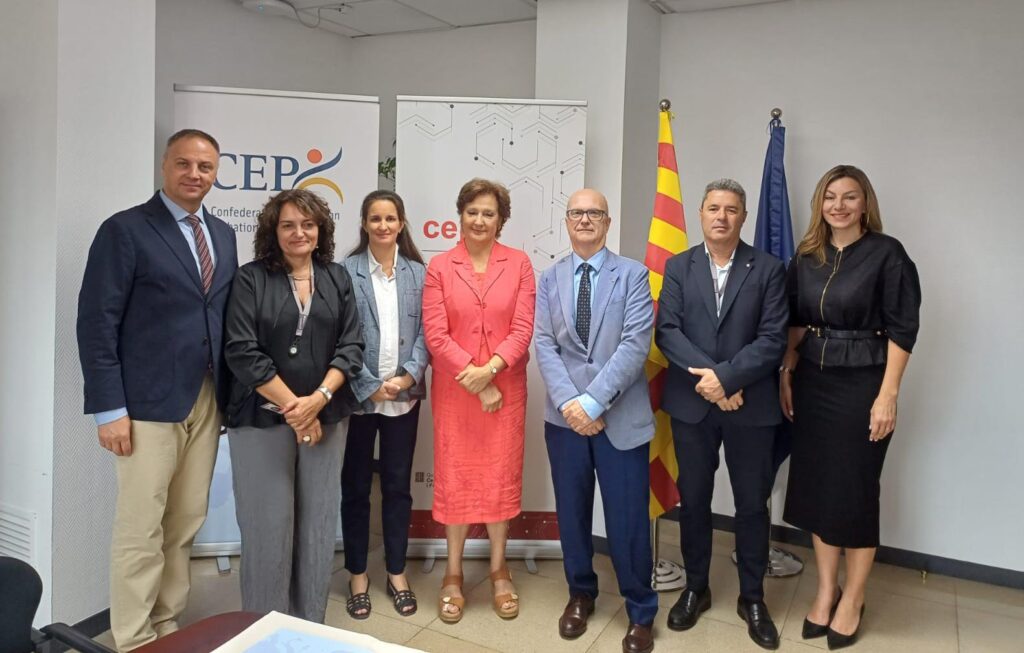
Representatives of the Confederation of European Probation (CEP) met with senior officials from the Catalan Department of Justice and Democratic Quality in Barcelona on 28 September 2026, alongside the opening of the sixth International Training School on Core Correctional Skills. The meeting offered an opportunity to recognise a longstanding partnership and discuss its continued development.
Updated
Mental Health
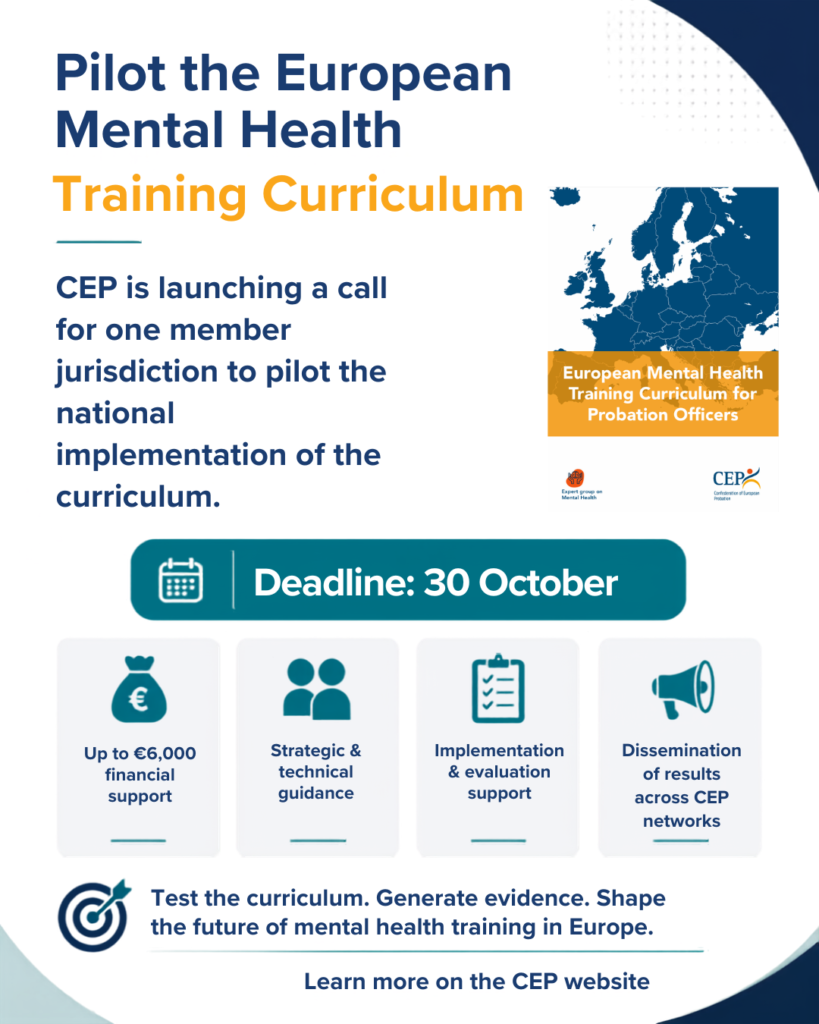
DEADLINE EXTENDED: Call for Pilot Implementation of the European Mental Health Training Curriculum
29/09/2026
Good news for CEP members! Following requests from our members, CEP has extended the deadline to apply for the pilot implementation of the European Mental Health Training Curriculum for Probation Officers.
Recap
ITSCCS, Technology
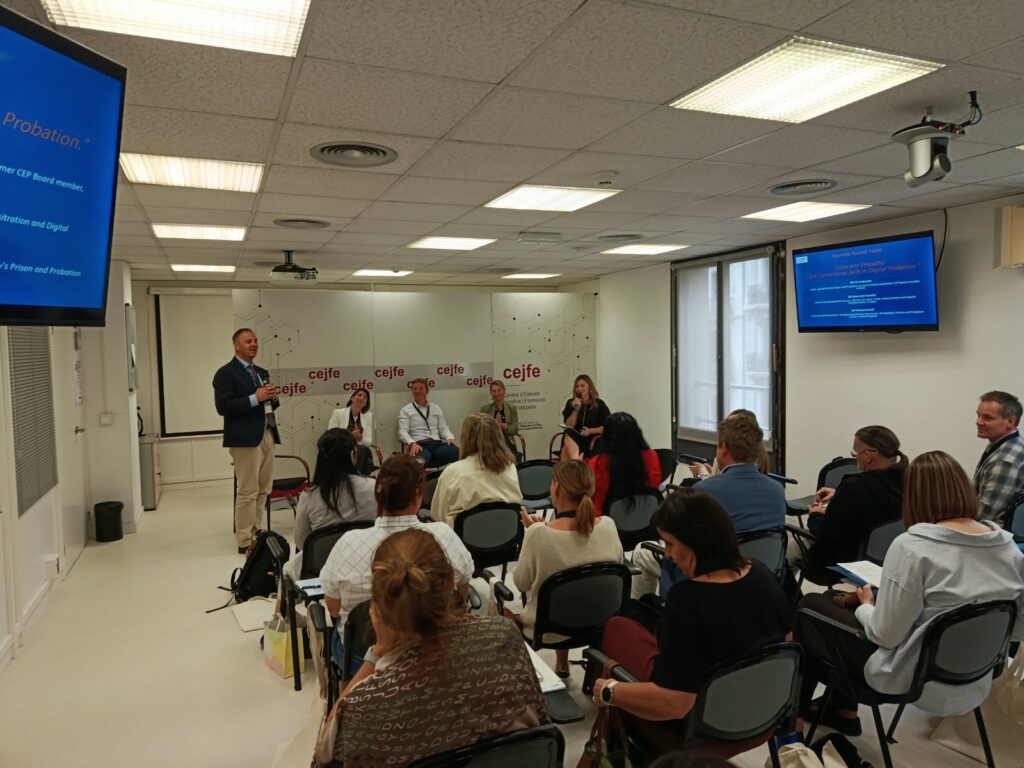
6th International Training School opens in Barcelona with a focus on digital probation
28/09/2026
How can probation professionals use new technologies in their interactions while building trust, showing empathy and supporting change? This question is at the heart of the sixth International Training School on Core Correctional Skills, which opened in Barcelona on 28 September 2026.
Subscribe to our bi-monthly email newsletter!
"*" indicates required fields
- Keep up to date with important probation developments and insights.