
Previous Article
News
The establishment of a new probation system: the Italian Probation Service
A lot has changed for the Italian Probation Service in the last two years. In 2015, they were separated from the Prison Service and combined into an entirely new department together with the Juvenile Justice and Community department. They did not only have to move all staff and material recourses, but a whole new organisational structure had to be developed. Ms. Lucia Castellano, Director General of this newly created department, tells us about the big developments that took place.

The Italian Probation Service had an important reasons for the reformation of their probation system: “We wanted to improve the probation system, start with implementing community sanctions and measures and of course reduce the amount of offenders in prison”, says Ms. Castellano. “We are committed to support and apply the legislative reforms, we will bring our country up to European standards concerning probation.”
Changes
The entire department had to get used to the organisational changes that have been implemented in the last two years. “The main issue for the probation officers was that they had to shift from case management on individual basis to regional management of interventions both in juvenile and adult justice”.
The reformation also created space for a lot of new professions in the probation department, such as psychologists, cultural mediators or volunteers. They work in co-operation with the probation officers both from juvenile and adult justice.
Alternative sanctions
The Italian government gives particular attention to the execution of sentences in the community, not only by adjusting legislation, but also by concrete actions.
In 2014, a law was issued that established the possibility to impose alternative sanctions for offenders. “Such measures were already provided for juveniles since 1988. This law is an important part of the establishment of the Juvenile and Probation department.”
Since the issuing of the law the number of alternative measures to detention grew. “In 2015 39.274 offenders were sentenced alternative sanctions, in 2017 this number raised to 46.778. The introduction of alternative sanctions and measures net-widened the Italian criminal justice system.”

Related News
Keep up to date with the latest developments, stories, and updates on probation from across Europe and beyond. Find relevant news and insights shaping the field today.
New
CEP
Newsletter October 2026 out now
29/10/2026
CEP’s latest newsletter is out now! It includes:
- Deadline approaching for the Workshop on Technology and Alternatives to Detention
- Recap of the 14th EM and CEP Excellence Leadership Training
- New publications from Expert Groups on Technology and Expert Group on Violent Extremism
- Call for Proposals: Evaluation of CEP Expert Groups
- Engaging with Research – a new section in our newsletter
- and much more!
New
Violent Extremism
Understanding Youth Radicalisation: What Can Probation Services Do? | New Report from CEP’s Expert Group
27/10/2026
In recent decades, the violent radicalisation of juveniles and young adults has become a pressing concern for policymakers, researchers, practitioners, and communities worldwide. While considerable attention has been devoted to psychological vulnerabilities, socio-economic marginalisation, and community-level influences, the broader context in which violent radicalisation develops is often overlooked. At the same time, the increasing involvement of young people in violent extremist offences highlights the urgent need for effective prevention efforts. Addressing youth radicalisation has become a complex and evolving challenge for families, educators, mental health professionals, law enforcement agencies, probation services, and security authorities.
Recap
Probation in Europe
Reflections on the European Society of Criminology Conference 2026 | From Criminological Research to Probation Practice
26/10/2026
At CEP, we are fascinated by research from across Europe and beyond, and by helping it reach the people who can use it. Ruth Armstrong, CEP Research and Policy Officer, went to the 26th Annual Conference of the European Society of Criminology (EuroCrim 2026 – Working Group on Community Sanctions and Measures) that took place in Warsaw, Poland, from 9–12 September 2026.
Against a backdrop of overcrowded prisons and net-widening (with ever more people drawn into supervision), three questions kept coming up in the research: how time shapes justice, what we mean by success, and how we define harm.
New
Technology
Registration deadline approaching: Join CEP’s final workshop of 2026 on technology in probation
22/10/2026
📢 Have you registered yet? CEP’s final workshop of 2026 takes place on 24 November in Barcelona, bringing together professionals to explore how technology is being used across probation services in Europe.
The Workshop on Alternatives to Detention and Technologies: Deep Diving into New Trends will look beyond artificial intelligence to examine the different ways technology is shaping probation practice, from staff training to working with clients and collaborating with other criminal justice partners.
Recap
Directors General Meetings
CEP Leadership Excellence Training: strengthening leadership and cooperation across Europe
22/10/2026
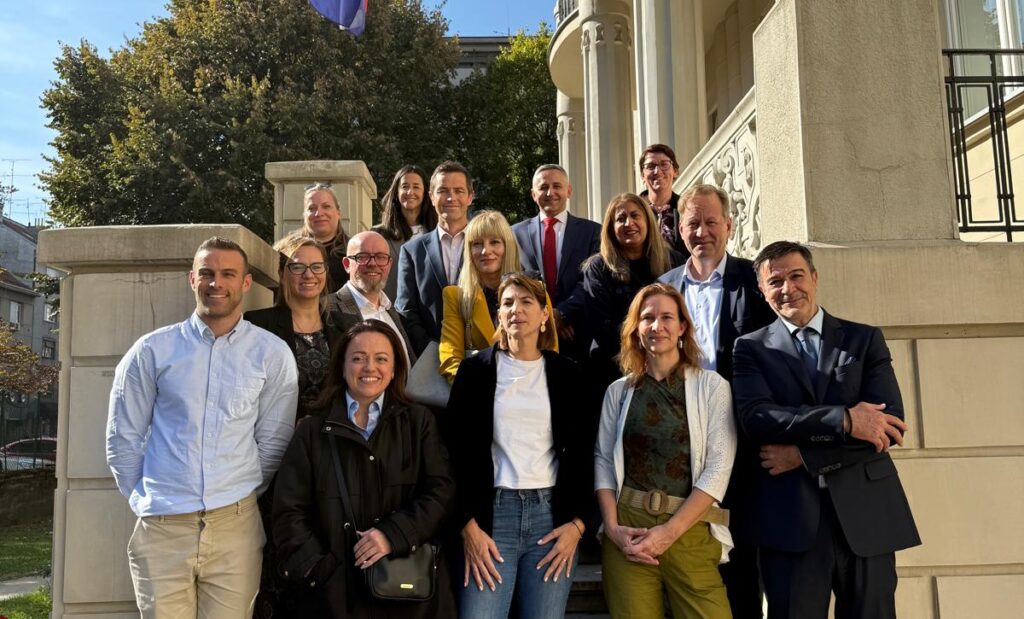
The CEP Leadership Excellence Training, held on 20–21 October in Zagreb, Croatia, brought together Directors General and senior probation managers from 11 European countries for a two-day interactive programme focused on leadership, communication, staff development, and international cooperation.
New
CEP
Call for Proposals: Evaluation of CEP Expert Groups
21/10/2026
On behalf of Ms. Jana Špero Kamenjarin, CEP Secretary General, it is my pleasure to invite you to submit a proposal to conduct an evaluation within the CEP work programme.
Subscribe to our bi-monthly email newsletter!
"*" indicates required fields
- Keep up to date with important probation developments and insights.