

News
Supporting Mental Health in Probation: CEP marks Mental Health Week 2025
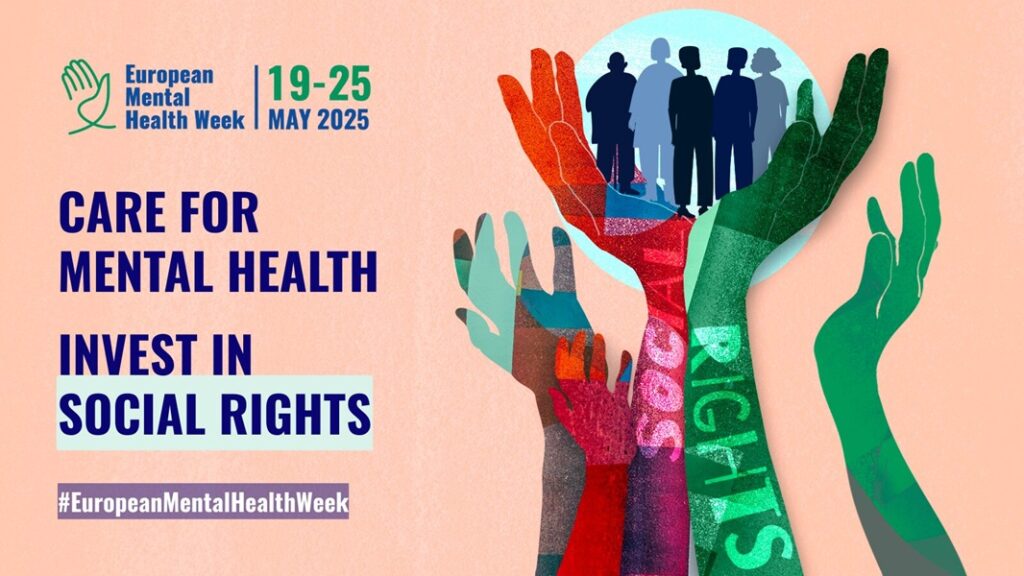
19–25 May is Mental Health Week, a moment to raise awareness, share knowledge, and promote positive mental health for all. The Confederation of European Probation (CEP) is proud to stand with our members and partners across Europe in recognising the importance of mental wellbeing – both for people under Probation and the professionals and volunteers who support them.
Mental health is a crucial component of rehabilitation and social reintegration. Across Europe, a significant number of individuals in the probation system experience mental health challenges, often alongside issues such as addiction, trauma, or housing instability. Probation services play a vital role in identifying these needs and working in an interagency cooperation with health and social care services to support recovery and reduce the risk of reoffending.
At the same time, Probation officers and volunteers work under increasing emotional pressure. Their wellbeing is essential for building a positive and secure working alliance, making sound decisions, and maintaining resilience in a complex professional environment.
During this week, CEP wants to highlight the work of its Expert Group on Mental Health in Probation. CEP established the Expert Group on Mental Health in Probation to address the growing mental health needs of individuals under Probation across Europe. This group serves as a collaborative platform for professionals to exchange knowledge, improve practices, and advocate for better mental health support in probation systems. The group is chaired by Ana Cristina Neves, Head of the Community Sanctions and Measures Division in Portugal and includes experts from Poland, Bulgaria, Turkey, Italy, Ireland, Germany and Northern Ireland with expertise in mental health and community rehabilitation.
The group is now working on two main objectives. The first is to develop a syllabus for a European Mental Health Training Curriculum for Probation Officers. And the second objective is to produce a Guide for Probation officers on ¨How to work with Probationers with Mental Health problems’, to be translated into different EU languages.
The group will present its work results by the end of 2026 and make them available for all CEP members.
If you want to get involved in the Mental Health Week :
- Share your organisation’s activities on Mental Health using the hashtag #EuropeanMentalHealthWeek
- Visit the CEP website and social media for resources, videos, and presentations on Mental Health in good practices in Probation across Europe
- Visit the European Mental Health Week website
Together, we can work towards European Probation systems that promote dignity, care, and recovery.

Related News
Keep up to date with the latest developments, stories, and updates on probation from across Europe and beyond. Find relevant news and insights shaping the field today.
New
Technology
Registration deadline approaching: Join CEP’s final workshop of 2026 on technology in probation
22/10/2026
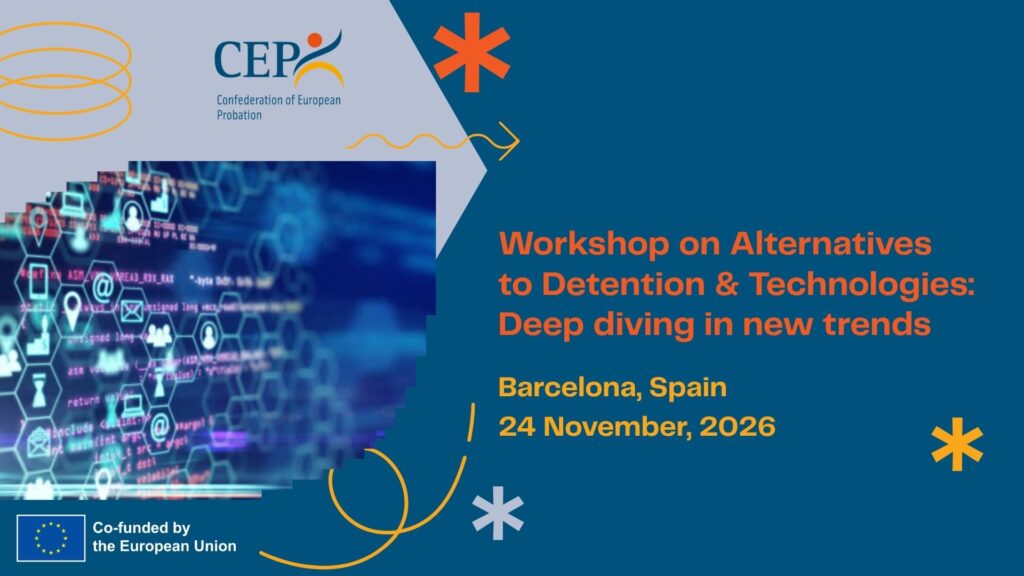
📢 Have you registered yet? CEP’s final workshop of 2026 takes place on 24 November in Barcelona, bringing together professionals to explore how technology is being used across probation services in Europe.
The Workshop on Alternatives to Detention and Technologies: Deep Diving into New Trends will look beyond artificial intelligence to examine the different ways technology is shaping probation practice, from staff training to working with clients and collaborating with other criminal justice partners.
Recap

Directors General Meetings
CEP Leadership Excellence Training: strengthening leadership and cooperation across Europe
22/10/2026
The CEP Leadership Excellence Training, held on 20–21 October in Zagreb, Croatia, brought together Directors General and senior probation managers from 11 European countries for a two-day interactive programme focused on leadership, communication, staff development, and international cooperation.
New

CEP
Call for Proposals: Evaluation of CEP Expert Groups
21/10/2026
On behalf of Ms. Jana Špero Kamenjarin, CEP Secretary General, it is my pleasure to invite you to submit a proposal to conduct an evaluation within the CEP work programme.
Recap

Uncategorized
CEP at UNODC: Contributing to the Development of Probation Services Worldwide
19/10/2026
The Confederation of European Probation (CEP) was represented by its Secretary General, Jana Špero Kamenjarin, at the Expert Group Meeting on the Establishment of Probation Services and Probation Practices, organised by the United Nations Office on Drugs and Crime (UNODC) and held at the Vienna International Centre (VIC) from 12 to 14 October 2026.
Recap

Electronic monitoring, Technology
14th Electronic Monitoring Conference, Electronic Monitoring in a Changing World – Perception vs Reality
08/10/2026
On 6-8 October 2026, Antalya hosted the 14th Electronic Monitoring Conference “Electronic Monitoring in a Changing World – Perception vs Reality”. More than 350 participants coming from 32 countries across Europe and worldwide representing probation services, Ministries of Justice, victims´ services, EM providers, researchers as well as local participants representing the Turkish Prison and Probation Service gathered to discuss how electronic monitoring (EM) is understood by all stakeholders involved including the victims and the public, and how these perceptions compare to the evidence and experiences of those affected. While the gap between perception and reality in electronic monitoring has been recognised for over a decade, the rapid expansion of EM into areas such as victim protection, high-risk supervision and digital innovation has brought new challenges and questions to the forefront.
Recap

ITSCCS
Core Correctional Skills in Digital Probation: highlights from the 6th ITSCCS in Barcelona
05/10/2026
The sixth International Training School on Core Correctional Skills (ITSCCS) took place in Barcelona from 28 September to 2 October 2026, bringing together 26 participants for a week of learning, practical training and international exchange. Organised by the Confederation of European Probation (CEP) and the Centre for Legal Studies and Specialised Training (CEJFE), the programme focused on “Clicks and Empathy: Core Correctional Skills in Digital Probation.”
Subscribe to our bi-monthly email newsletter!
"*" indicates required fields
- Keep up to date with important probation developments and insights.