

Previous Article
News
Recap: Conference on Public Perception of Probation
From 6 to 7 May, the CEP Conference on the Public Perception of Probation in Europe took place in Antalya, Türkiye, bringing together over 100 participants from more than 20 countries. The event offered space for open discussion, exchange of experiences, and practical ideas on how probation is seen and supported across Europe.
Getting Started in Antalya
The conference began on Monday evening with a welcome reception at the Turkish Prison & Probation Training Center, where participants had the chance to meet, reconnect, and ease into the programme. It was a relaxed start to what turned out to be two busy and engaging days.
Opening Day – 6 May
Tuesday started with opening speeches from:
-
Mr. Enis Yavuz Yıldırım, Director General of Prisons and Detention Houses (Türkiye)
-
Ms. Annie Devos, CEP President (Belgium)
-
Mr. Niyazi Acar, Deputy Minister of Justice (Türkiye)
They welcomed participants and reflected on the importance of international cooperation in building stronger probation services.
The morning plenary sessions followed. Mr. Fatih Güngör (Türkiye) talked about how probation is viewed in Türkiye, including both legal and social aspects. Then, Ms. Ingunn Seim (Norway), Dr. Danijela Mrhar Prelič (Slovenia), and Mr. Daniel Danglades (France) shared how probation is organised and understood in their countries.
In the afternoon, two workshops took place at the same time:
-
Workshop A, led by Dr. Prelič, focused on working with other professionals in the justice field. She was joined by Ms. Annie Devos (Belgium) and Dr. Hüseyin Şık (Türkiye).
-
Workshop B, chaired by Mr. Danglades, looked at how probation services communicate with the general public. It featured examples from Dr. Andrea Matouskova (Czech Republic) and Mr. Joachim Tein (Germany).
The first day wrapped up with a lot of input and food for thought.
Final Day – 7 May
Wednesday’s programme opened with a plenary session on how the idea and practice of probation has changed over time. Speakers Mr. Gerry McNally (Ireland), Mr. Vugar Aghayev (Azerbaijan), and Assoc. Prof. Hakan A. Yavuz (Türkiye) gave examples from their national contexts and looked at what has influenced these changes.
After that, a roundtable focused on how to promote probation and raise public awareness. The discussion included perspectives from Ms. Annie Devos, Dr. Andrea Matouskova, Dr. Hüseyin Şık, Mr. Joachim Tein, and Ms. Ingunn Seim.
To close the event, Prof. Fergus McNeill (UK) gave a thoughtful talk on the role of communities in probation, reminding us of its origins and the importance of public engagement.
Thank You
A big thank you to everyone who joined us in Antalya. Your ideas, openness, and shared experiences helped make the event meaningful and productive.
Let’s keep the conversation going.
Presentations
Click here to go to the presentations
Photos

Related News
Keep up to date with the latest developments, stories, and updates on probation from across Europe and beyond. Find relevant news and insights shaping the field today.
New

CEP
Newsletter October 2026 out now
29/10/2026
CEP’s latest newsletter is out now! It includes:
- Deadline approaching for the Workshop on Technology and Alternatives to Detention
- Recap of the 14th EM and CEP Excellence Leadership Training
- New publications from Expert Groups on Technology and Expert Group on Violent Extremism
- Call for Proposals: Evaluation of CEP Expert Groups
- Engaging with Research – a new section in our newsletter
- and much more!
New
Violent Extremism
Understanding Youth Radicalisation: What Can Probation Services Do? | New Report from CEP’s Expert Group
27/10/2026
In recent decades, the violent radicalisation of juveniles and young adults has become a pressing concern for policymakers, researchers, practitioners, and communities worldwide. While considerable attention has been devoted to psychological vulnerabilities, socio-economic marginalisation, and community-level influences, the broader context in which violent radicalisation develops is often overlooked. At the same time, the increasing involvement of young people in violent extremist offences highlights the urgent need for effective prevention efforts. Addressing youth radicalisation has become a complex and evolving challenge for families, educators, mental health professionals, law enforcement agencies, probation services, and security authorities.
Recap
Probation in Europe
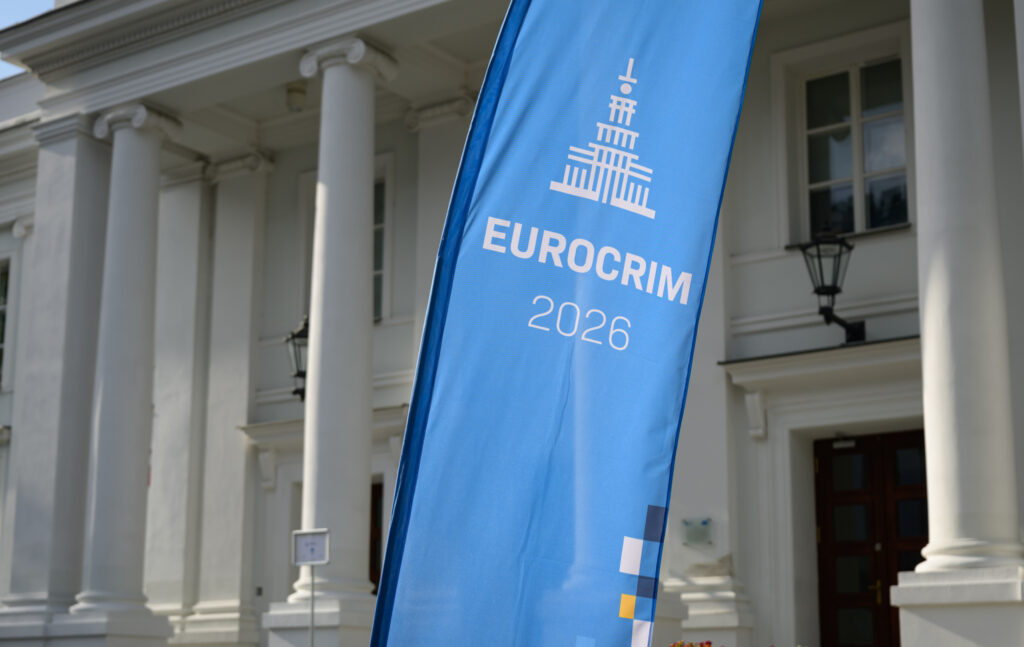
Reflections on the European Society of Criminology Conference 2026 | From Criminological Research to Probation Practice
26/10/2026
At CEP, we are fascinated by research from across Europe and beyond, and by helping it reach the people who can use it. Ruth Armstrong, CEP Research and Policy Officer, went to the 26th Annual Conference of the European Society of Criminology (EuroCrim 2026 – Working Group on Community Sanctions and Measures) that took place in Warsaw, Poland, from 9–12 September 2026.
Against a backdrop of overcrowded prisons and net-widening (with ever more people drawn into supervision), three questions kept coming up in the research: how time shapes justice, what we mean by success, and how we define harm.
New
Technology
Registration deadline approaching: Join CEP’s final workshop of 2026 on technology in probation
22/10/2026
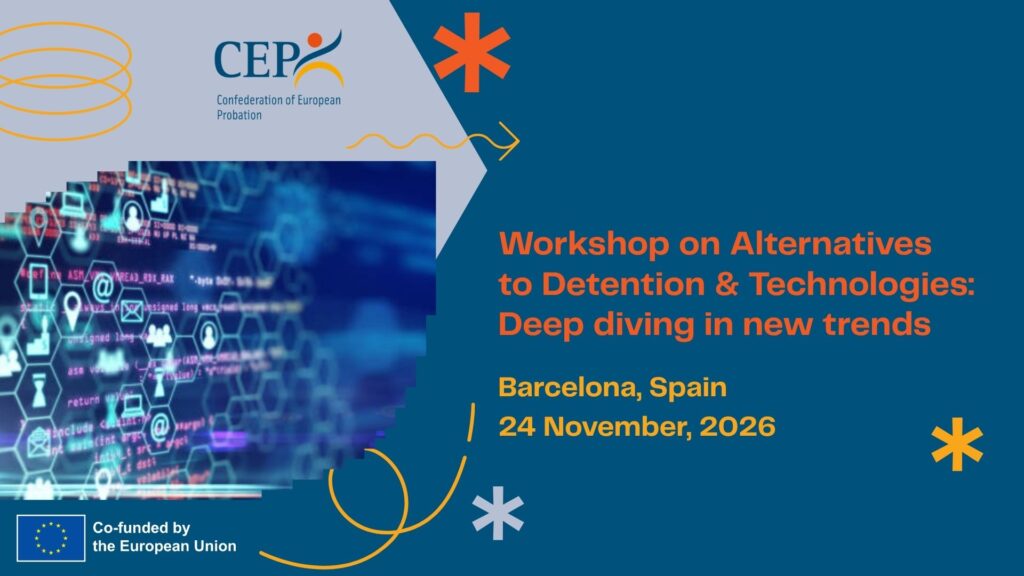
📢 Have you registered yet? CEP’s final workshop of 2026 takes place on 24 November in Barcelona, bringing together professionals to explore how technology is being used across probation services in Europe.
The Workshop on Alternatives to Detention and Technologies: Deep Diving into New Trends will look beyond artificial intelligence to examine the different ways technology is shaping probation practice, from staff training to working with clients and collaborating with other criminal justice partners.
Recap
Directors General Meetings
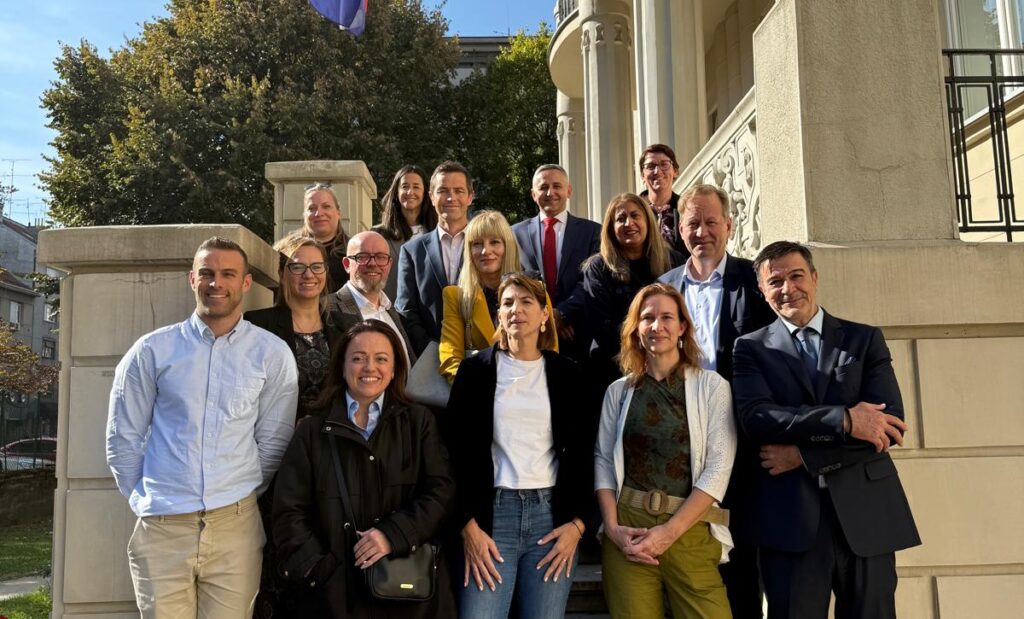
CEP Leadership Excellence Training: strengthening leadership and cooperation across Europe
22/10/2026
The CEP Leadership Excellence Training, held on 20–21 October in Zagreb, Croatia, brought together Directors General and senior probation managers from 11 European countries for a two-day interactive programme focused on leadership, communication, staff development, and international cooperation.
New

CEP
Call for Proposals: Evaluation of CEP Expert Groups
21/10/2026
On behalf of Ms. Jana Špero Kamenjarin, CEP Secretary General, it is my pleasure to invite you to submit a proposal to conduct an evaluation within the CEP work programme.
Subscribe to our bi-monthly email newsletter!
"*" indicates required fields
- Keep up to date with important probation developments and insights.