
Previous Article

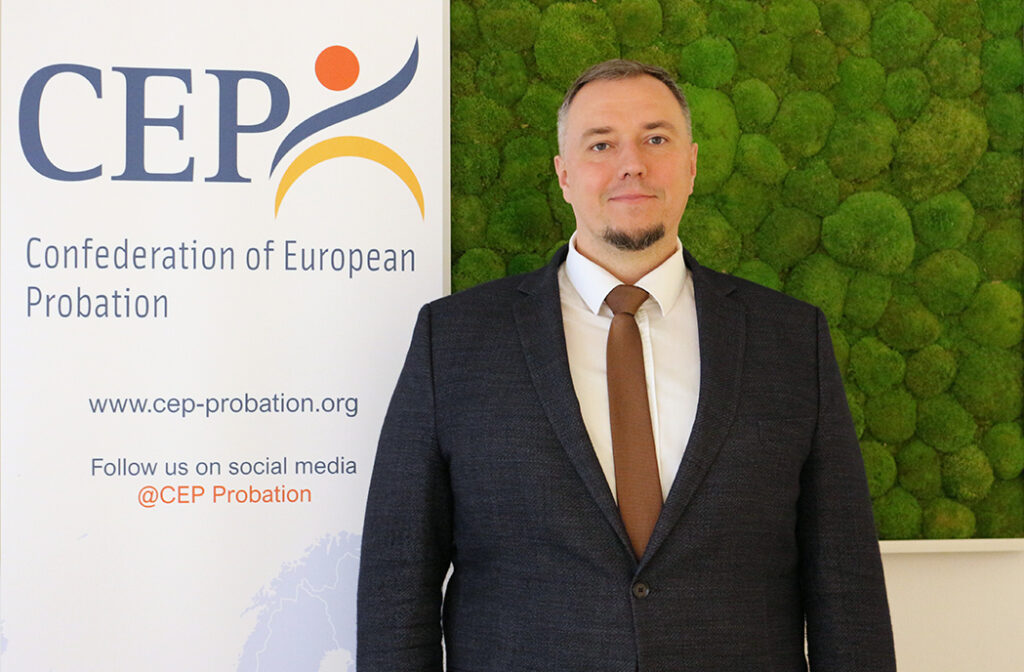
My name is Dmytro Yagunov and I am a Ukrainian lawyer, scientist and lecturer. From 2000 to 2002, I worked in the Prosecution Office of Ukraine. Since 2009, I have been working as an advocate, primarily in the fields of criminal law, criminal process, and the penitentiary system.
In 2021, I was elected as a member of the CPT regarding Ukraine. At the same time, as a scientist and scholar, I have published several books and practical guidelines on prison issues and the practices of the European Court of Human Rights and human rights in criminal procedure and penitentiary (2005, 2007, 2009, 2011, 2019, 2020, 2023).
In 2011, my book “Penitentiary Service of Ukraine: History, Contemporary Problems and Perspectives of Reforms” was recommended by the Head of the State Penitentiary Service of Ukraine for study in all educational establishments of the State Penitentiary Service of Ukraine and used as practical guidance for prison and probation officers.
From 2015 to 2019, I worked as a legal adviser in the Deputy Head of Administration of the President of Ukraine, responsible for analyzing Ukrainian legislation and providing the Administration of the President with recommendations in the fields of criminal justice and the penitentiary system.
Since June 2022, I have been working at Eberhard Karls Universität Tübingen as a research fellow, where I conduct research on human rights in prisons and the prevention of torture.
Why did you decide to join CEP (your motivation)?
My professional life was always connected to probation and the treatment of offenders. From the beginning of my professional career, dealing as a prosecutor, I was responsible for supervision over the local probation service (in the 2000s, it was called ‘criminal-executive inspection’), which was responsible for probation and parole.
Later, while studying at the Queen’s University of Belfast, I became acquainted with the history of probation in different states and brought all this knowledge to Ukraine with the aim of using it for the establishment of the national Ukrainian probation service. In 2007-2008, working for the UNICEF Project on Juvenile Justice, I was honoured to become a co-author of the Draft Law of Ukraine “On Probation,” which later became a draft law on probation and was adopted by the Parliament of Ukraine in 2015. I have also had the honour to cooperate with the Council of Europe since 2011 on projects focused on prison reform and probation as a national and international expert. I am still happy that I was involved in training for the probation officers.
In 2012, I published the translation and guidelines for the European Probation Rules as a part of the CoE Project on developing the probation system in Ukraine. Probation is obviously a dynamic concept. Therefore, I have a strong wish to explore the practical experience of the European countries in probation and take part in the expert discussions on the future of probation in Europe.At the same time, my motivation is to share my experience in human rights, prison and probation with colleagues from different states.
As far as my country is concerned, the motivation is also to assist in probation reform and to provide independent expertise in probation reforms in Ukraine. Being an independent researcher, I could allow to express my own independent view on the probation reform. As a person who has been dealing with Ukrainian probation and prison policy for many years, I am trying to focus the attention of the express and probation officers that probation service should avoid unnecessary formalization. It should be kept as an efficient, effective and transparent service with the main mission of protecting society and the rights of probation clients and providing them with a full scale of social services aimed at reducing of recidivism. I would also be happy focus my attention and bring my knowledge to restoring the potential of the Ukrainian probation service, which was obviously decreased because of the full-scaled military aggression of Russia.
The war brought many problems to the organization of prisons and probation in Ukraine. At the same time, not only organizational issues but also material damage should be considered. In my opinion, one of the main negative consequences of the War is a decline in the rehabilitation paradigm in probation practices and a re-shaping of the prison and probation philosophy towards a more punitive style, irrespective of the formal declarations of politicians.
Now, due to wartime criminal laws, sentencing policy in Ukraine has become harsher. There are numerous examples of imposing very harsh punishments on offenders for minor crimes only due to formal restrictions. Here, I can see a trend of losing trust in community punishments and probation. Therefore, my membership is concerned with the advocation of a rehabilitation paradigm and the benefits of community sanctions.
How would you like to contribute to the development of CEP, its project, actions and work programme?
I would be happy to share the experience of European probation services with Ukrainian experts and probation officers. Not only that, but I would be happy to propose all my professional Internet resources to highlight the CEP activities for Ukrainian experts and probation officers. Being a member of the editorial boards of some Ukrainian and European legal journals, I would be happy to provide the CEP members with opportunities to publish their experts opinions in these editions.
As a CEP member, what are your intentions regarding participation in CEP Expert groups?
My interests are mostly focused on human rights, research on reoffending, and the legal aspects of probation and parole. I would be happy to take part in any working groups and contribute to conferences organized by the CEP. Previously, I have published several papers on sex offenders. Therefore, I do hope that I can join related events and working groups. Expertise in human rights in detention is also my key point. Therefore, I hope that I can provide expertise in this area.