

Previous Article
News
Child pornography on the internet: a new type of offender
Child pornography has become a global issue with very serious social, legal and personal consequences. Although it is not a new phenomenon, internet has made child sexual abuse material to be easy to access from anonymous computers all around the world. Countries have reacted increasing the legal forces to detect and prevent this problem, as well as imposing severe penalties for this type of crime.
An article by Laura Negredo López
There are several actors that play a role in internet sex offending:
- The person who usually travels to countries with a lack of appropriate legislation to combat this crime, in order to abuse children and record the images;
- The distributor of the material;
- The consumer of the images.
Focusing on the consumers of child pornography, psychologists, social workers and other criminal behavior specialists face the challenge of working with this relatively new category of sex offenders. Do child pornography users share the same psychosocial characteristics as other types of sex offenders? Is there an association between the consumption of child pornography and child contact sex offenders? Are traditional treatment programs useful to work with them? What are the motivations behind this crime? The limited available evidence shows that it is a new phenomenon that requires specific intervention tools. According to Seto (2013), internet sex offenders show poor social skills and low self-esteem and tend to experience emotional loneliness. The combination of negative emotions, impulsivity and sexual deviance results in the consumption of abusive images.
The article explains the most relevant features of internet sex offending, including a brief reference to the Spanish legislation, and overviews the existing therapeutic approaches to these offenders. In this regard, there is not an extensive offer of therapeutic programs for internet sex offenders as most countries apply the same programs as for contact sex offenders. There are some interesting online initiatives that allow internet users approach their problem by reading and reflecting on materials about internet sex offending and the consequences of child abuse, among others. These initiatives are linked to the preventive approach that some jurisdictions are promoting, based on the assumption that there should be community resources accessible to persons with sexual interest on children. These resources could help these people accept and face their problem as well as prevent sex offending. The article also explains the program created by the Spanish Prison and Probation System in 2015 called Out of the Net (Fuera de la Red). It is a 10-month psychosocial program for internet sex offenders structured in three phases: an individual motivation for change phase, a group treatment phase –that approaches the main dynamic risk factors for this category of offenders-, and an individual follow-up phase. The program was built based on the Good Lives Model (Ward and Gannon, 2006), the Risk, Needs and Responsivity Model (Andrews and Bonta, 2006), and also considers specific theoretical models for sex offending, such as the Self-regulation Model of Sexual Offending (Ward and Hudson, 1998), the Pathways Model of Child Sexual Offending (Ward and Siegert, 2002) and the Motivation-Facilitation Model of Sexual Offending (Seto, 2013).
Click on the link to read the full article Child Pornography on the Internet

Related News
Keep up to date with the latest developments, stories, and updates on probation from across Europe and beyond. Find relevant news and insights shaping the field today.
Recap

Electronic monitoring, Technology
14th Electronic Monitoring Conference, Electronic Monitoring in a Changing World – Perception vs Reality
08/10/2026
On 6-8 October 2026, Antalya hosted the 14th Electronic Monitoring Conference “Electronic Monitoring in a Changing World – Perception vs Reality”. More than 350 participants coming from 30 countries across Europe and worldwide representing probation services, Ministries of Justice, victims´ services, EM providers, researchers as well as local participants representing the Turkish Prison and Probation Service gathered to discuss how electronic monitoring (EM) is understood by all stakeholders involved including the victims and the public, and how these perceptions compare to the evidence and experiences of those affected. While the gap between perception and reality in electronic monitoring has been recognised for over a decade, the rapid expansion of EM into areas such as victim protection, high-risk supervision and digital innovation has brought new challenges and questions to the forefront.
Recap
ITSCCS
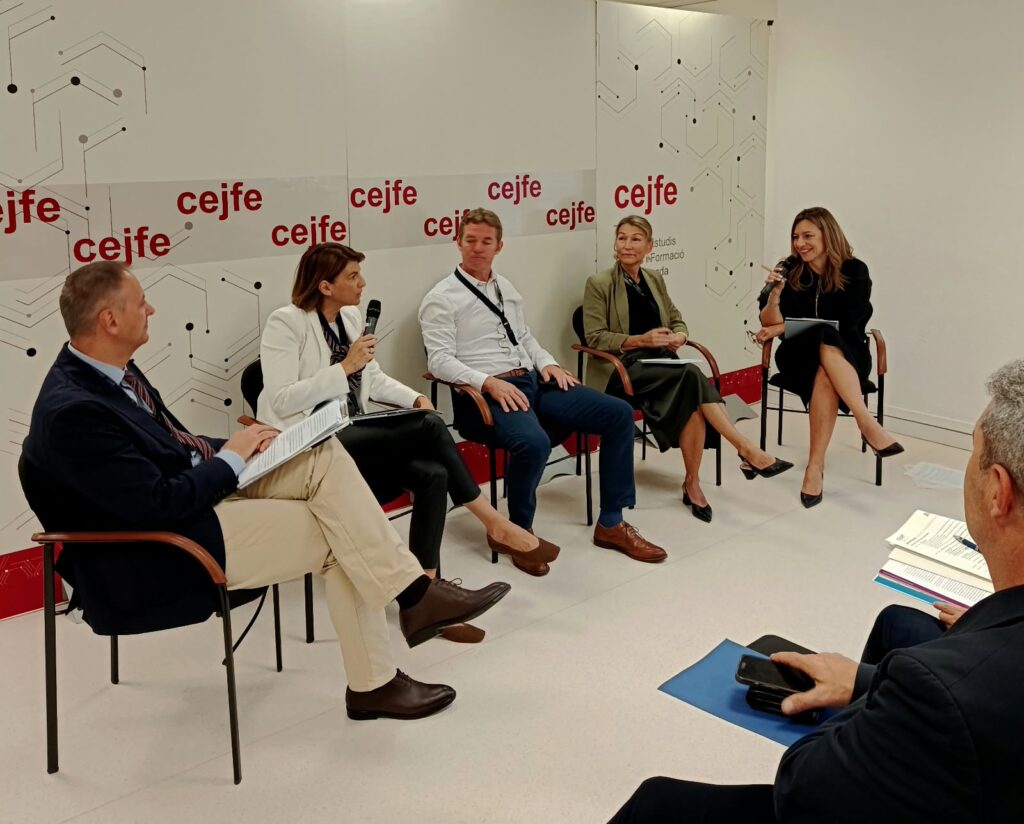
Core Correctional Skills in Digital Probation: highlights from the 6th ITSCCS in Barcelona
05/10/2026
The sixth International Training School on Core Correctional Skills (ITSCCS) took place in Barcelona from 28 September to 2 October 2026, bringing together 26 participants for a week of learning, practical training and international exchange. Organised by the Confederation of European Probation (CEP) and the Centre for Legal Studies and Specialised Training (CEJFE), the programme focused on “Clicks and Empathy: Core Correctional Skills in Digital Probation.”
Recap
Framework Decisions
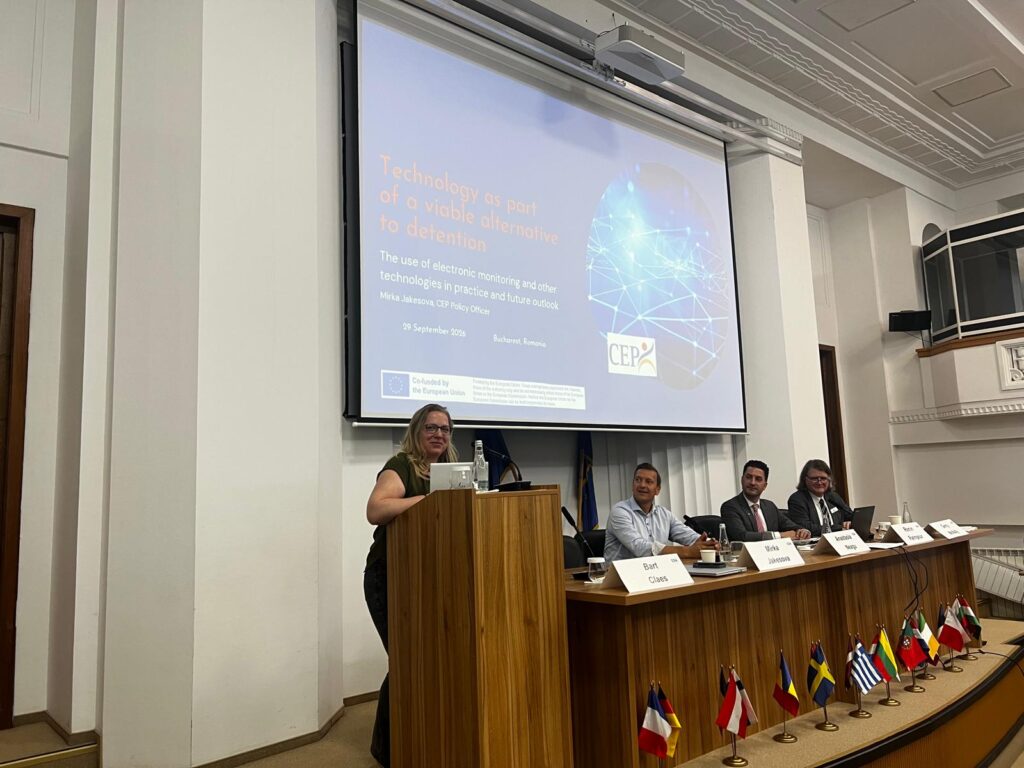
Recap: ERA workshop on Framework Decisions 829 and 947 in Bucharest
02/10/2026
CEP Vice-President Daniel Danglades, Ambassador Gerry McNally and Policy Officer Mirka Jakesova participated in the Seminar on Framework Decisions 829 and 947 and their Impact on Alternatives in the EU organized under the EU project run by the Academy of European Law on 28-29 September in Bucharest, Romania. The seminar brought together judges, prosecutors, probation practitioners, academics, and policy experts to discuss the growing role of alternatives to detention within European criminal justice systems.
New
CEP
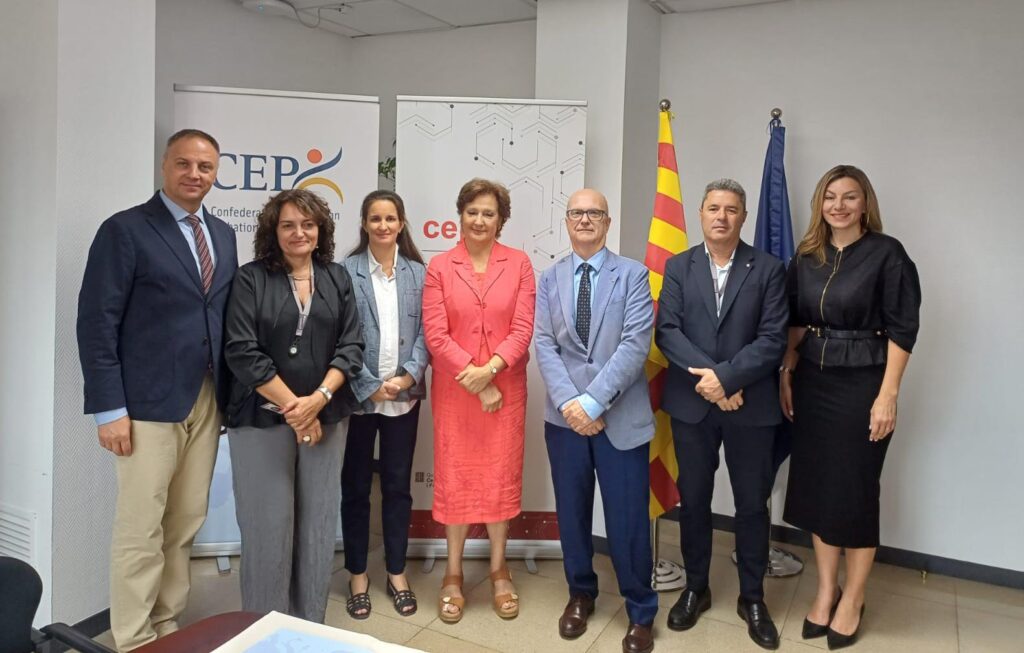
CEP and Catalan justice leaders reaffirm longstanding cooperation
29/09/2026
Representatives of the Confederation of European Probation (CEP) met with senior officials from the Catalan Department of Justice and Democratic Quality in Barcelona on 28 September 2026, alongside the opening of the sixth International Training School on Core Correctional Skills. The meeting offered an opportunity to recognise a longstanding partnership and discuss its continued development.
Updated
Mental Health
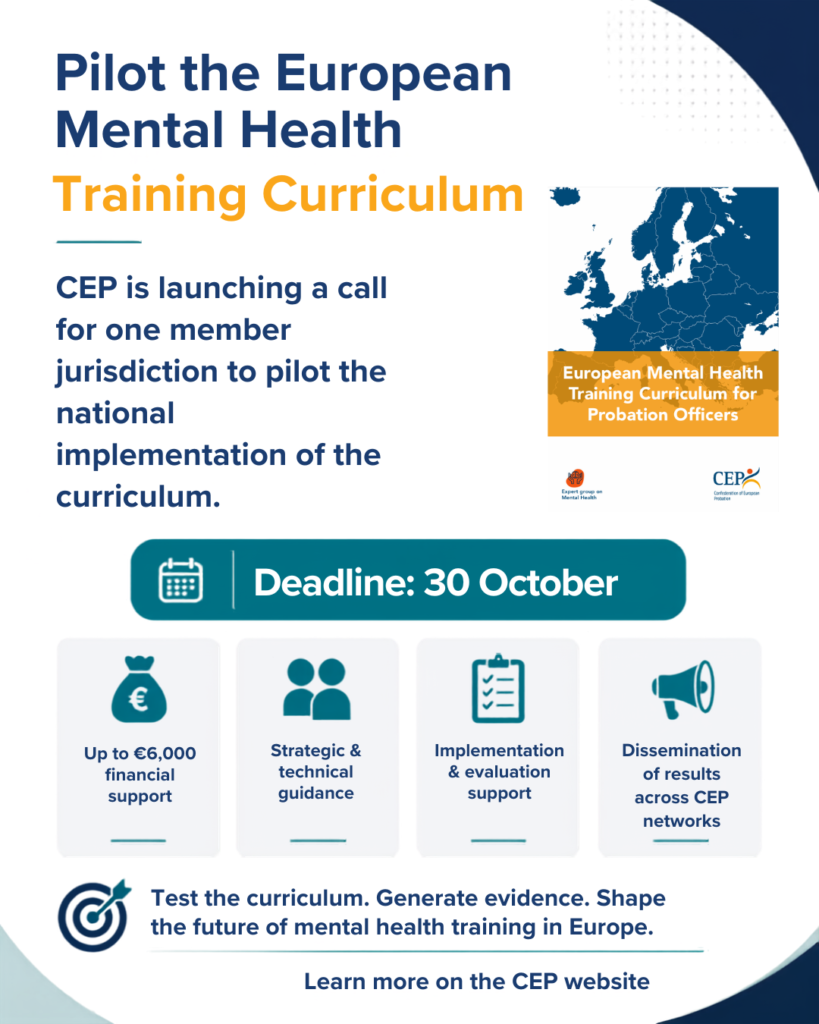
DEADLINE EXTENDED: Call for Pilot Implementation of the European Mental Health Training Curriculum
29/09/2026
Good news for CEP members! Following requests from our members, CEP has extended the deadline to apply for the pilot implementation of the European Mental Health Training Curriculum for Probation Officers.
Recap

ITSCCS, Technology
6th International Training School opens in Barcelona with a focus on digital probation
28/09/2026
How can probation professionals use new technologies in their interactions while building trust, showing empathy and supporting change? This question is at the heart of the sixth International Training School on Core Correctional Skills, which opened in Barcelona on 28 September 2026.
Subscribe to our bi-monthly email newsletter!
"*" indicates required fields
- Keep up to date with important probation developments and insights.