

Previous Article
Probation library
An update on the FORINER project: education for foreign national prisoners
The FORINER project, which was launched on the 1st of January 2016, was initiated to provide EU foreign national inmates in EU prisons with access to qualitative, low threshold, certified learning opportunities provided by home institutions but received by the inmate in an EU foreign prison. The FORINER project will come to an end in December this year. Project Coordinator Bianca Durkovics gives us an update on how the project has developed this far:
Since the beginning of 2016, the FORINER project took several steps to build an European network. We initiated pilot projects to test different ways of providing foreign national prisoners with education from their home country. Last year’s conference in London brought together organisations from twelve European countries interested in providing education to foreign prisoners in their native language.
Evaluation pilot projects
We carried out fifteen pilot projects within Europe between January and June 2017. The aim was to investigate how to facilitate educational support for EU citizens imprisoned outside their country of residence. Nine countries got involved in these pilots as a sending or receiving partner:
- Belgium
- Lithuania
- Germany
- Greece
- Malta
- Norway
- Romania
- The Netherlands
- United Kingdom
35 prisoners followed or are currently following an educational course from their home country. Based on formalised assessment criteria, we selected five of the most representative pilots to evaluate in depth. We expect the results will prove a basis for the FORINER project’s subsequent milestones. The first reactions indicate that the reading skills of the learners increased by following courses in their mother language. Moreover they are mainly motivated to learn about interesting or relevant topics. Before the end of August, prisoners together with sending and receiving partners will be interviewed as part of the process. The answers are valuable for the project, because personal experiences are very important during the pilot phase.
Policy advice
On 25th of September 2017 our partner VUB (Vrije Universiteit Brussel) will present the final results of the pilot evaluation during the Advisory Board Meeting in Eindhoven, Netherlands. Based on this evidence, the FORINER consortium will write a report containing concrete strategy, advice and recommendations to improve the distance education system for foreign national prisoners. We will disseminate the outcome to national and European policy makers. In the end, we will design a model and share it to a large audience. The education institutions from all over Europe will then be able to provide their national prisoners with the same quality standards as the home universities offer.
Final conference
At the end of 2017, the FORINER project will come to an end. On the 28th of November 2017 we will organise an international conference in Brussels, which will be live streamed. We will share the project results with collaborators, stakeholders, policy makers and practitioners that are interested in the FORINER project.
Future directions
In the context of the systematic development of adult learning programs, the FORINER project adds an important “brick”. Therefore we are planning to transfer the experience gained during FORINER into a new project.
We submitted a new project proposal – FORINER II – which aims to upscale the evidence-based outcomes of the FORINER I model. Thirteen different European countries are involved in this project proposal. The European Prison Education Association (EPEA) and EuroPris also joined to support the initiative. If the application will be approved, three ‘upscaling levels’ will be targeted throughout the project.
First of all, FORINER II aims to support the ongoing development of distance educational projects on a local level. This implies doing the actual work inside the prisons, and the continuation of the pilot projects from FORINER I. Secondly, different countries involved will form steering groups to implement the FORINER-model on a national level.
Lastly, on European level, three steering groups will be initiated: sending education, receiving education, and ICT. They will be responsible for creating European guidelines about how to better organise this type of distance learning. The FORINER consortium is convinced that actions on these three levels are necessary to generate more impact on local, national and European level.

Probation library
Probation Journal

Women, youth
Understanding the needs of girls and young women in youth justice
10/03/2026
New research highlights the underlying needs that influence girls’ and young women’s contact with youth justice systems and calls for more gender responsive approaches in policy and practice. Drawing on a review of recent studies, the authors identify several factors shaping girls’ pathways into the justice system, including persistent abuse, trauma, gendered expectations, and systemic failures. Girls involved in youth justice are often affected by multiple forms of victimisation, such as sexual abuse, neglect, and domestic violence, with experiences frequently beginning in early childhood.
Reading corner

Probation in Europe
The Routledge Handbook of European Penology
05/01/2026
The Routledge Handbook of European Penology, published by Routledge. This comprehensive volume has been edited by Sonja Snacken, Gaëtan Cliquennois, Ioan Durnescu, Diete Humblet and Elena Larrauri.
Reading corner

Criminal Justice
Bridging Research and Practice in Forensic Social Work: An interview with the editors of Forensic Social Work – Supporting Desistance
17/12/2025
Supporting desistance while managing risk is at the heart of criminal justice social work across Europe. In Forensic Social Work – Supporting Desistance, editors Jacqueline Bosker, Anneke Menger and Vivienne de Vogel bring together scientific insights and everyday professional practice to support those working with justice-involved individuals. In this interview, they reflect on the motivation behind the English edition of the book, its core themes, and how professionals can use its tools and approaches in their daily work.
Probation Journal

Domestic violence, Gender-based violence
New evaluation on whole family approach to domestic abuse
26/11/2025
Interventions Alliance has published a new evaluation of a Hub coordinated on behalf of police forces in the south of England, focused on tackling violence against women and children through a whole family approach. The Hub supports victims and perpetrators of domestic abuse and works across policing, health and social services.
Reading corner
Probation in Europe
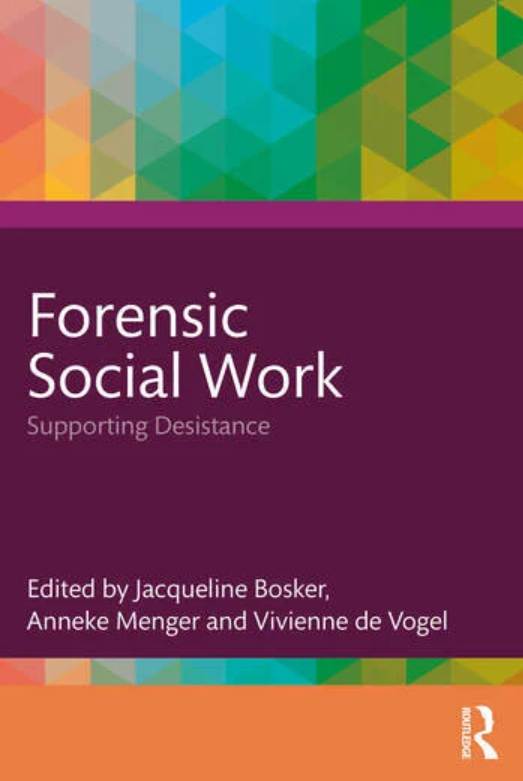
New Release: Forensic Social Work – Supporting Desistance
13/11/2025
This book, Forensic Social Work – Supporting Desistance, has been released by Routledge. It is a practice-oriented resource exploring how forensic social work can support desistance and foster meaningful change in the lives of justice-involved individuals.
Reading corner

Criminal Justice
Parole Futures
18/08/2025
At a time when many parole systems are experiencing considerable strain, the aims of this collection are twofold: first, to encourage systematic and critical reflection on the rationalities, institutions and practices of parole. Second, to think big, and pose ambitious ‘what if’ questions about the possible futures of parole and prison release. Offering novel insights from Asia, Australia, Europe, North America and South America, this collection builds the case for, and then showcases, a ‘way of doing’ parole research that is global in outlook, interdisciplinary in approach and unapologetically normative in character.
Probation Journal

Violent Extremism
2025 EU Guidance document responding to the needs of victims of terorrism
23/06/2025
To mark the EU Day of Remembrance for Victims of Terrorism on 11 March, the EU Centre of Expertise for Victims of Terrorism has published a new Guidance Document on the Needs of Victims. This document is a significant step forward in reinforcing a victim-centred approach within counter-terrorism efforts across the European Union.
Research
Launch of the CEP Research and Development Strategy Summary
17/06/2025
We’re thrilled to announce that the Confederation of European Probation (CEP), in cooperation with the University of Glasgow (led by CEP Honorary Member Professor Fergus McNeill), and with the support of the CEP Expert Group on Research, has produced the CEP Research and Development Strategy. We are happy to share the summary with you!
Probation Journal

Alternatives to pre-trial detention
Unpacking criminal detention rules and regulations across the EU
21/05/2025
The EU Agency for Fundamental Rights (FRA) has updated its online criminal detention database, which includes national standards, laws, and monitoring reports on detention conditions in the EU and the UK.
Probation Journal

Technology
Is AI Putting Remote Probation Supervision at Risk Before It Even Starts?
09/04/2025
David Jackson and Jed Stone focus on the use of AI in probation and advocate for investigations to understand the opportunity, address issues and innovate for the good of all.
Subscribe to our bi-monthly email newsletter!
"*" indicates required fields
- Keep up to date with important probation developments and insights.