

Previous Article
News
Interview with Christelle Rinchard, an officer in charge of victim support in Charleroi, Belgium
How do you experience working during the Covid-19 pandemic?
Quite badly actually. We are a team of four officers working in the same office. Almost overnight, we could only come to the office one at a time, in turns. We weren’t really equipped for working from home yet as we didn’t do it before and we found
ourselves completely inefficient when we teleworked. On the other hand, the officer who was in the office was overwhelmed because she managed alone the 4 telephones and all the victims’ requests.
At first, we thought that the situation would be resolved quickly, but it was not the case.
We felt less useful because we had a lot less work to do (no more hearings, no reconstruction, no possibility to meet the magistrates, etc.). We had very few contacts with our peers, most of whom also teleworking.
We tried to make appointments by phone, particularly in sentence execution cases, but we quickly noticed that the people quickly lost track and didn’t really understand the procedure outlined. This was very frustrating.
For the current second wave, we are better equipped and more familiar with teleworking. The hearings are still taking place and the investigating judges are continuing their investigations normally or almost normally. On one hand, it has become much easier for us to carry out our work despite the health crisis even if we still feel very lonely when we come to the office. On the other hand, the workload is very heavy when we are at office because we have a lot of administrative work such as sending letters and putting in order the files processed during telework, answering the phone calls) in addition to the usual tasks. Nevertheless, we have come to the conclusion that the work has generally reduced. The confined victims also make less requests on us.
What would you have done differently?
Given the configuration of our premises, we had no choice but to come in turn. Nevertheless, for teleworking, we could perhaps have been quicker and found out more about teleworking or how to put it into practice. We did not know how to connect to the VPN, VoIP phone services
and business applications from home. Now it’s all been sorted out. We have also decided to come to the hearings or the reconstructions so that the duty periods are as much as possible dedicated to receiving new requests. We continue to make appointments at the office for some delicate situations because we are now equipped with Plexiglas screens and antibacterial gel or sprays.
What are the challenges you are facing now?
Maintaining the relationship with the victims that we cannot meet as often as we normally do. Establishing the best possible contact with public prosecutors, examining magistrates, employees and registrars in order to continue to provide users with the best possible
information.
Reflecting on the consequences of teleworking. We have indeed noticed that the police are filing far fewer complaints. When it is the case, they are not always dealt in a short period by the Public Prosecutor’s Office. It is harmful to the victims. We have initiated a discussion with the King’s Prosecutor on this topic.

Related News
Keep up to date with the latest developments, stories, and updates on probation from across Europe and beyond. Find relevant news and insights shaping the field today.
New

Others
Applications for the Cambridge MSt in Applied Criminology, Penology and Management are now open
16/09/2026
The Institute of Criminology, Cambridge, have opened up applications for the MSt in Applied Criminology, Penology and Management in the next academic year.
Recap
Probation in Europe
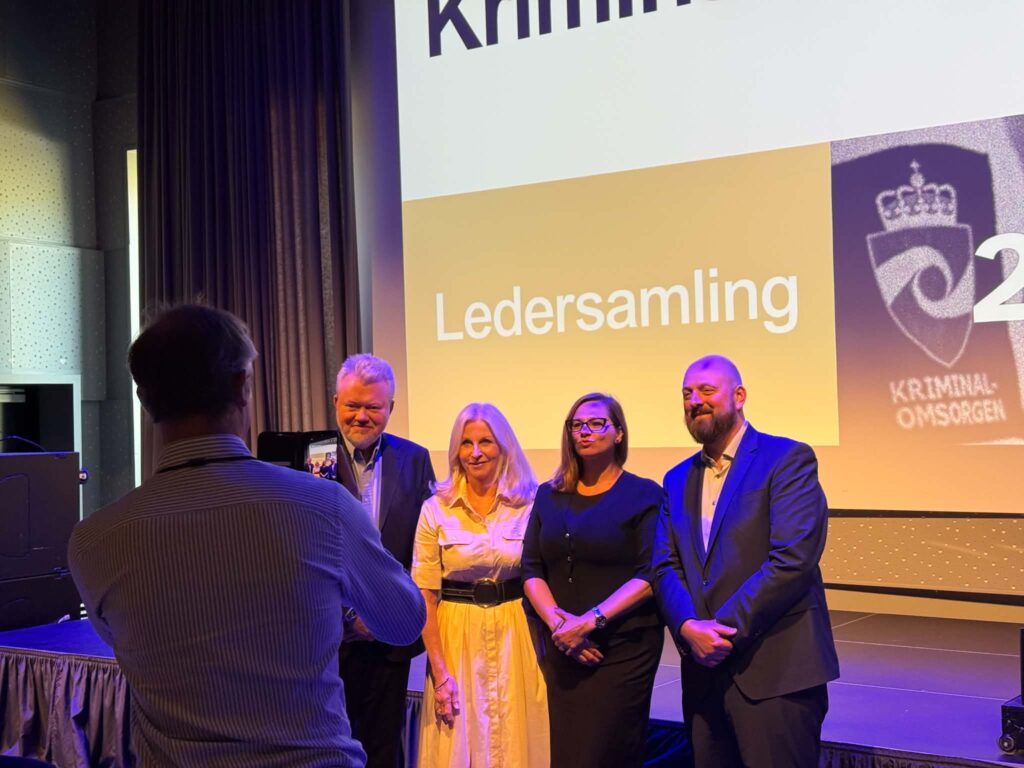
CEP at the Leadership Conference 2026
14/09/2026
CEP Secretary General Jana Špero Kamenjarin was delighted to participate in the Leadership Conference 2026 of the Norwegian Correctional Service, held on 9–10 September in Oslo.
Recap

Foreign Nationals in Prison and Probation
Recap: Expert Group of CEP and EuroPris, on Foreign Nationals in Prison and Probation (FNPP)
14/09/2026
On 7 and 8 September 2026 the joint Expert Group of CEP and EuroPris, on Foreign Nationals in Prison and Probation (FNPP), came together in The Hague for a valuable exchange of ideas, experiences, and expertise on one of the most important challenges facing prison and probation services across Europe.
New

CEP
Newsletter August 2026 out now
27/08/2026
CEP’s latest newsletter is out now! It includes:
- Approaching deadlines for upcoming events (ITSCCS26, 14th EM and DG leadership training) and the Mental Health curriculum pilot)
- Call for European Probation Journal on the topic of Workload in Probation
- EU documents like SPACE II, revised Victims’ Rights directive and so on
- and much more!
New

Caseload and workload
Do you work in probation? We need your voice!
24/08/2026
As part of its long-standing cooperation with research, CEP invites its members to contribute to a special edition of the European Probation Journal on the topic of Workload in Probation.
New

Alternatives to pre-trial detention, Foreign Nationals in Prison and Probation, Gender Equality, Probation in Europe
SPACE II report is now available
24/08/2026
The use of community sanctions and measures that allow individuals to remain in the community – also known as alternatives to imprisonment – continues to grow overall in Europe, although at a moderate pace, according to the latest Council of Europe annual penal statistics on persons under the supervision of probation agencies (2025 SPACE II survey).
Subscribe to our bi-monthly email newsletter!
"*" indicates required fields
- Keep up to date with important probation developments and insights.