

Previous Article
News
A new report: Advancing Juvenile Justice Principles for Children Convicted of Violent Extremism Offenses
The government of Australia commissioned the Global Center and the International Centre for Counter-Terrorism (ICCT) to prepare a report and accompanying policy brief putting forward guiding principles, recommendations, and considerations for the detention, rehabilitation, and reintegration of juveniles convicted of terrorism and violent extremism offenses. The report ‘Correcting the Course: Advancing Juvenile Justice Principles for Children Convicted of Violent Extremism Offenses’ was published in September this year. Junko Nozawa, legal specialist at the Global Center, tells us about the report and about what moves children to get involved with violent extremism.
The report states that children have always been among the most vulnerable victims of violence and, at times, some of its brutal purveyors. They have played various roles in furthering violent extremism and participating in acts of violence, ranging from inciting propaganda online to carrying out deadly attacks.
“One of the central themes we hit on in this report is that this is a group that precludes easy generalisation. Rather than exceptionalising Juvenile Violent Extremists (JVEOs), management approaches and interventions for their treatment in detention must be grounded in juvenile justice standards”, says Junko Nozawa.
According to Nozawa it is important that interventions are tailored to the individual in accordance with individualised assessments and consistent with the best interest of the child principle. “Unfortunately, this remains the exception rather than the rule in the practice of many jurisdictions.”
Trend
In the process of making this report, it was important to obtain basic information about countries’ experiences with and approaches towards Juvenile Violent Extremist Offenders (JVEOs) in the care of the prison and probation services. The researches set up a questionnaire that has been sent out to a network of experts and practitioners. The results gave a good insight in the average number of JVEO’s that countries have to deal with. “The survey indicated that most countries have fewer than 5 JVEOs, usually only 1 or 2 in their care.” This result was of great importance for the rest of their report. “As a result, we draw two important conclusions: (1) that this is not a sufficient sample size to make widespread conclusions or evidence-based recommendations; and (2) we should normalize this offender category rather than exceptionalise these offenders in their detention. Societal bias, sensationalism, and exceptionalism associated with violent extremism should be mitigated as much as possible given the negative effects that these play, especially to children’s rehabilitative potential, and juvenile justice principles should prevail. “
Juveniles, an easy target?
Junko Nozawa says that young people have always been borne the brunt of violent extremism. In some cases they have been increasingly targeted on for recruitment to extremist organisations. “Young people, boys and girls, have been targeted on account of their unique vulnerabilities and needs, and the strategic advantages that they may provide to violent extremist groups. A recent (2017) report by the Combatting Terrorism Center at West Point presents an overall increase in Boko Haram’s use of children in suicide bombing operations since 2014. Between January and June of 2017, 64.5% of child suicide bombers were girls.”
In countries there can be a lot of factors that contribute to violent extremism. “In countries with large unemployed youth populations, a multitude of factors come together to exacerbate political and economic grievances that can contribute to violent or antisocial behavior. Idleness, pervasive marginalization, a lack of outlet for constructively engaging in socio-political change to address real and perceived wrongs may all lead youth to seek out alternatives offered by violent extremist groups that tap into this widespread anger and frustration.”
The motivations of children to become involved are not so dissimilar as to adults. “However, young people do not have the same level of maturity or perspective that comes with development and experience, a defined sense of identity or purpose that may make them less susceptible to various peer and family influences, as well as ways to assert themselves. Young offenders may also have been forcibly recruited or born into a violent extremist organization.”
Click here to read the report ‘Correcting the Course: Advancing Juvenile Justice Principles for Children Convicted of Violent Extremist Offenses’.

Related News
Keep up to date with the latest developments, stories, and updates on probation from across Europe and beyond. Find relevant news and insights shaping the field today.
New
Technology
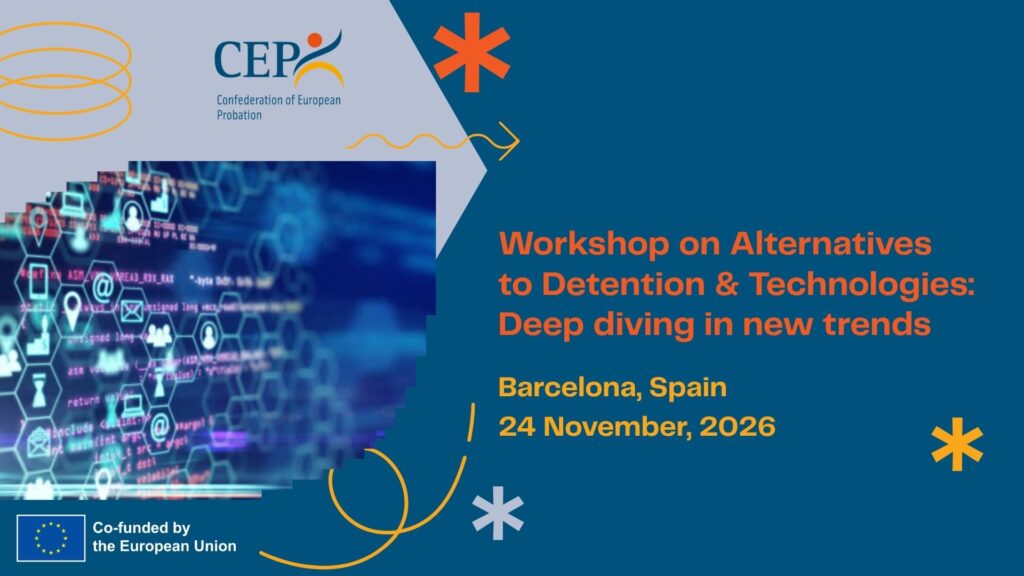
Registration deadline approaching: Join CEP’s final workshop of 2026 on technology in probation
22/10/2026
📢 Have you registered yet? CEP’s final workshop of 2026 takes place on 24 November in Barcelona, bringing together professionals to explore how technology is being used across probation services in Europe.
The Workshop on Alternatives to Detention and Technologies: Deep Diving into New Trends will look beyond artificial intelligence to examine the different ways technology is shaping probation practice, from staff training to working with clients and collaborating with other criminal justice partners.
Recap

Directors General Meetings
CEP Leadership Excellence Training: strengthening leadership and cooperation across Europe
22/10/2026
The CEP Leadership Excellence Training, held on 20–21 October in Zagreb, Croatia, brought together Directors General and senior probation managers from 11 European countries for a two-day interactive programme focused on leadership, communication, staff development, and international cooperation.
New

CEP
Call for Proposals: Evaluation of CEP Expert Groups
21/10/2026
On behalf of Ms. Jana Špero Kamenjarin, CEP Secretary General, it is my pleasure to invite you to submit a proposal to conduct an evaluation within the CEP work programme.
Recap

Uncategorized
CEP at UNODC: Contributing to the Development of Probation Services Worldwide
19/10/2026
The Confederation of European Probation (CEP) was represented by its Secretary General, Jana Špero Kamenjarin, at the Expert Group Meeting on the Establishment of Probation Services and Probation Practices, organised by the United Nations Office on Drugs and Crime (UNODC) and held at the Vienna International Centre (VIC) from 12 to 14 October 2026.
Recap
Electronic monitoring, Technology
14th Electronic Monitoring Conference, Electronic Monitoring in a Changing World – Perception vs Reality
08/10/2026
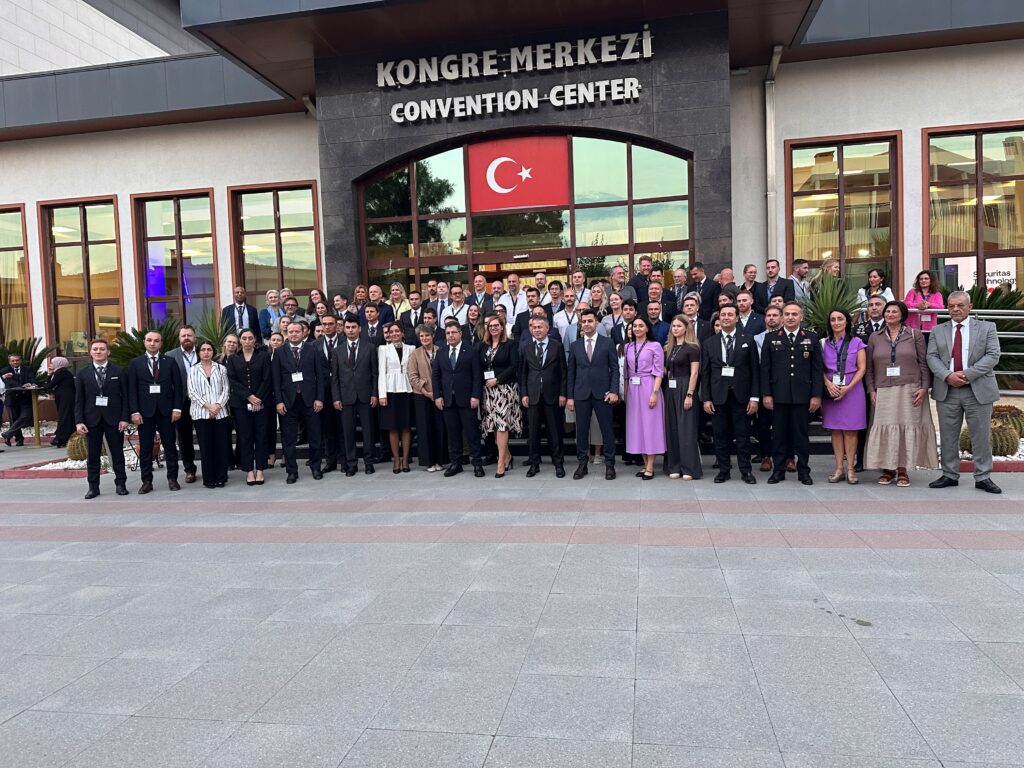
On 6-8 October 2026, Antalya hosted the 14th Electronic Monitoring Conference “Electronic Monitoring in a Changing World – Perception vs Reality”. More than 350 participants coming from 32 countries across Europe and worldwide representing probation services, Ministries of Justice, victims´ services, EM providers, researchers as well as local participants representing the Turkish Prison and Probation Service gathered to discuss how electronic monitoring (EM) is understood by all stakeholders involved including the victims and the public, and how these perceptions compare to the evidence and experiences of those affected. While the gap between perception and reality in electronic monitoring has been recognised for over a decade, the rapid expansion of EM into areas such as victim protection, high-risk supervision and digital innovation has brought new challenges and questions to the forefront.
Recap
ITSCCS
Core Correctional Skills in Digital Probation: highlights from the 6th ITSCCS in Barcelona
05/10/2026
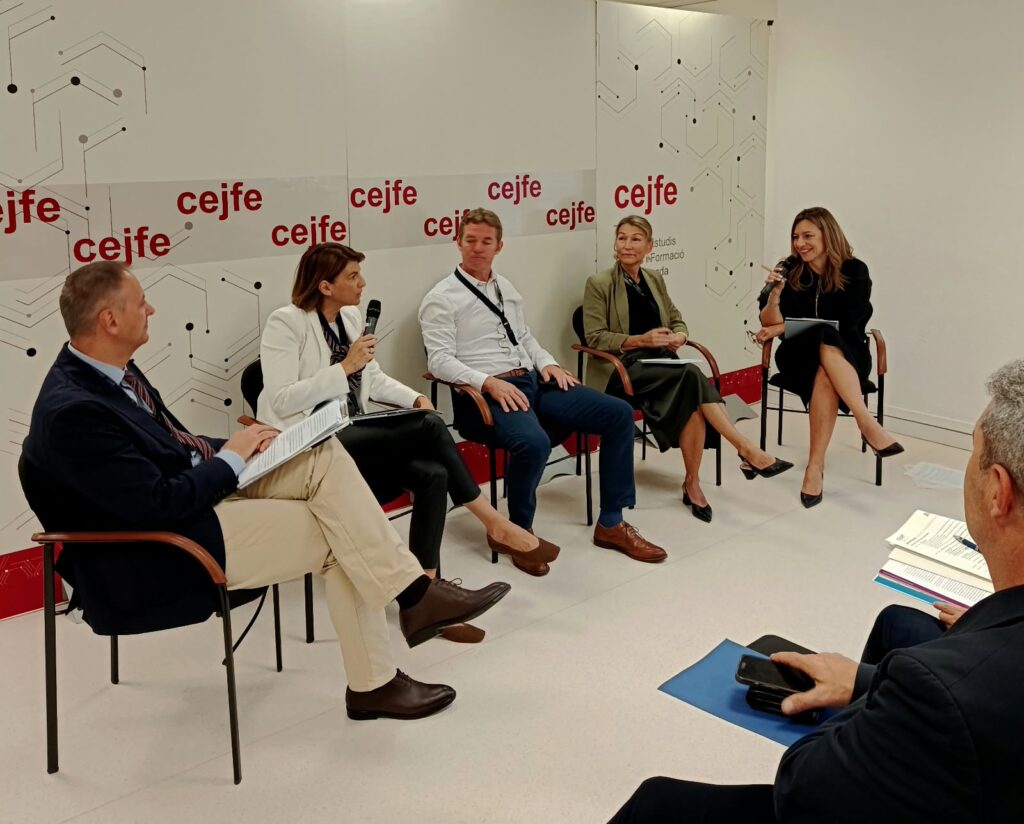
The sixth International Training School on Core Correctional Skills (ITSCCS) took place in Barcelona from 28 September to 2 October 2026, bringing together 26 participants for a week of learning, practical training and international exchange. Organised by the Confederation of European Probation (CEP) and the Centre for Legal Studies and Specialised Training (CEJFE), the programme focused on “Clicks and Empathy: Core Correctional Skills in Digital Probation.”
Subscribe to our bi-monthly email newsletter!
"*" indicates required fields
- Keep up to date with important probation developments and insights.