

Previous Article
News
E-supervision: an innovative method for behavioural change
Which interventions really have an impact on human behaviour? And more specifically the behaviour of juvenile delinquents. A question Janine Plaisier of Impact R&D (Amsterdam, Netherlands) aims to answer by launching the pilot of an innovative e-supervision method in which young (ex-)offenders receive personalized text messages on their mobile phone.
Janine Plaisier, initiator of the development of the e-supervision system, explains what the inspiration was for starting this pilot. “Impact R&D helps developing new methods for behavioural change. When it comes to youngsters who are in a rehabilitation process, this is quite a challenge. Because of their age and the temptations to which they are exposed, but also because of the relatively short time and limited contact moments a probation officer gets to invest in the rehabilitation. E-supervision is complementary to the work of youth probation. It does not replace the probation worker, but when the regular supervision of the worker ends, our system takes over. The system builds on the lessons the young client learned in direct contact with the probation officer, which will help to increase the effects. And for relatively low costs. The system uses technology and psychology in a smart way. It does not replace human contact but adds to it. It is already seen in mental health care. A patient consults a therapist and in between consults, he or she is supported by telephone and e-mail. We are now testing this with juvenile offenders, but we suspect it will be even more effective for adult offenders.”
The design of a message
Personalized and automatized text messages are send to the mobile phone of the young probation client. The messages are motivating, informing, inspiring, but can also simply be used as a reminder. Plaisier: “The messages are personalized based on risk and protective factors, goals, preferences, interests and background. Because it’s difficult to really get to this specific target group, the personalized character of the messages is key. Everyone in the test group had to fill out a questionnaire, so that we could customize the texts. The form and content are studiously designed by psychologists, on the basis of proven effective methods, positive psychology, and solution-directive therapy and motivational talks. Also, we involved 2 probation officers, helping us understanding the target group better and the specific issues we had to take into account. Despite the extensive preparation, the final development of the texts took longer than we expected. We had to find the right tone of voice and we had to find a way to interact. Also, each message could be wrongly interpreted, so we really had to pay attention to our choice of words. Another issue was the sender of the messages. We chose for the name Sarah as sender. A friendly female name, used in all kinds of religions.”
The pilot
The pilot – a first small trial- period runs from December 2014 – December 2015. The group exists of young men in the age of 16 to 24. Before the pilot started, some practical issues had to be tackled. For instance, do they all have mobile telephones? And do they have internet, or the option of sms texting? “That is also the main reason why we first chose for sms texting. Not everyone has internet option on the telephone. Instruments like what’sapp or other apps may be interesting for in the future, but for now, SMS texting is the most practical option,” says Plaisier. “The results of the pilot will be available in spring 2016, so at this moment we can not say much about how participants respond. So far the responds seem to vary and indeed this is one of our questions: for which offenders will this tool be most useful? Our research will help us to find out.
Buddy
Plaisier emphasizes that the e-supervision system is more of a buddy, than a monitoring system. A realy-life buddy is also incorporated in the system. “When we notice there’s hardly any interaction, or the youngster indicates it’s not going so well, we send a message to the buddy. That can be a father, a friend or the probation officer. The probation client needs to feel supported by the system, he, our test group consist of only boys so far, should feel a relationship of trust. A message is almost like a personal coach. One of the testers said: ‘Each time when I’m feeling down, I look at a message from Sarah and I start to feel good again. I can see things from a positive point of view.’ And of course, this is exactly what we hope for.
The e-supervision system is developed by Impact R&D and Noterik BV and is funded by the Dutch Ministry of Security and Justice. For more information, please visit the website of Impact R&D

Related News
Keep up to date with the latest developments, stories, and updates on probation from across Europe and beyond. Find relevant news and insights shaping the field today.
Reading corner

Probation in Europe
Dohľad
08/07/2026
The authentic world of probation and mediation, in which professional work intersects with human destinies, is brought to you by the publication through case studies revealing the diverse life stories of convicts and the dynamics of their relationship with probation and mediation officers.
Probation Journal
CEP
New Publication: CEP, Probation and the Digital Future
02/07/2026
The latest issue of the Journal of Offender Monitoring features an English version of Gerry McNally’s chapter, CEP, Probation and the Digital Future, first published in 2023 as part of the Portuguese book Execução das Penas e Medidas na Comunidade no Futuro Digital, edited by Nuno Caiado.
New
Calls and funding oppertunities
European Commission | Call for proposals to support transnational projects in the fields of e-Justice, victims’ rights, and procedural rights.
02/07/2026
The European Commission has launched a new call for proposals to support transnational projects in the fields of e-Justice, victims’ rights, and procedural rights.
With a total budget of €9.4 million, the call aims to fund projects that contribute to the digitalisation and effectiveness of justice systems, strengthen the protection of victims, and promote access to justice and judicial cooperation across Europe.
New

Education and Training
Launch of 40 e-Capsules: Training on EU Law for Justice Professionals
29/06/2026
The European Judicial Training Team of the European Commission is pleased to announce the launch of 40 e-capsules (each available in all EU languages) within civil law, criminal law and fundamental rights.
New
CEP
Delegation from Azerbaijan visits CEP Office in Utrecht
25/06/2026
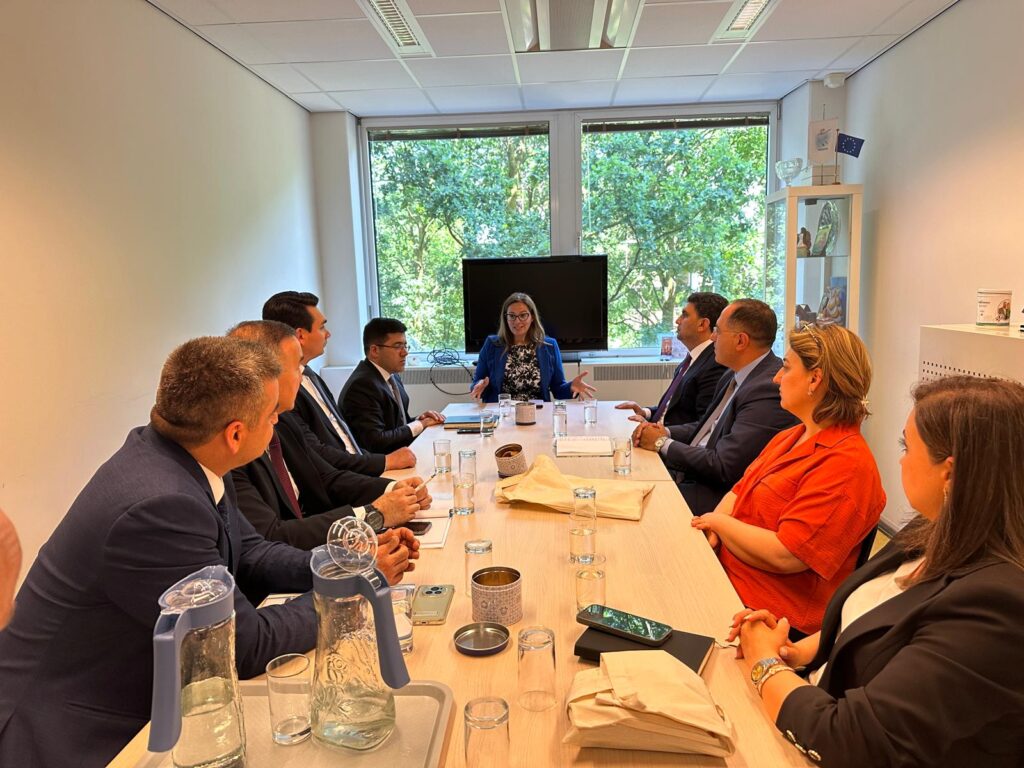
On 23 June, a delegation from Azerbaijan visited the CEP office in Utrecht, the Netherlands. The delegation included representatives of the Probation Service, Ministry of Justice of the Republic of Azerbaijan, a judge of the Supreme Court of the Republic of Azerbaijan and representatives of the Embassy of the Republic of Azerbaijan in the Netherlands. The visit to the CEP office was part of a broader learning programme with Reclassering Nederland.
New

CEP
Newsletter June 2026 out now
25/06/2026
CEP’s latest newsletter is out now! It includes:
- Recap of the Workshop on Caseload and Workload
- Save the date: Workshop on Technology and Alternatives to Detention
- New publications and outputs from Expert Groups
- Call for a new Expert Group on Overcrowding and Net-Widening
- Call for participation in DG training
- and much more!
Subscribe to our bi-monthly email newsletter!
"*" indicates required fields
- Keep up to date with important probation developments and insights.