

News
Special recognition for the Afforestation and Coordination Project
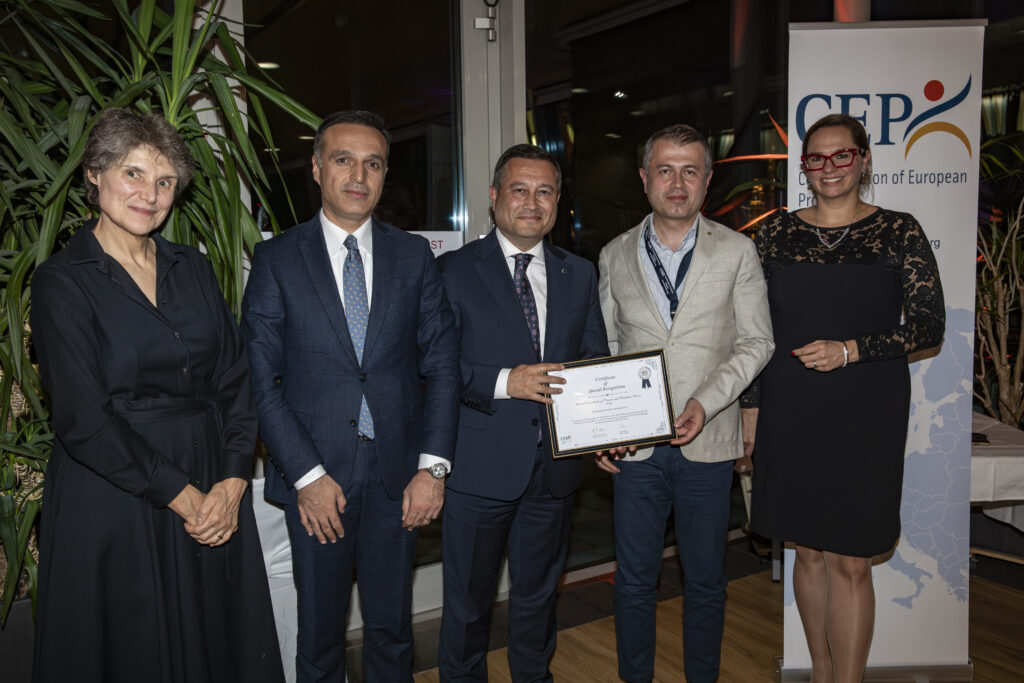
During the CEP Awards Ceremony on October 15, CEP also granted a special recognition to the General Directorate of Prisons and Detention Houses of Türkiye for the Afforestation and Coordination Project.
This project has been developed with the aim of fostering compliance with rules, respect for the rights of others, time management skills, and a disciplined work ethic among individuals incarcerated in penal institutions as well as those under probation supervision. Simultaneously, it seeks to cultivate environmental and ecological awareness, thereby contributing to the preservation and enhancement of the country’s natural heritage. Within this framework, since 2017, a total of 672 “Justice Forests” have been established, resulting in the planting of 2,392,382 saplings and the maintenance of 3,939,584 trees.
Within the framework of a protocol signed between the Ministry of Justice and the Ministry of Agriculture and Forestry, the “Afforestation and Coordination” project has been launched with an environmentally conscious and sustainable approach to penal execution. In this context, the “Justice Forests Project” not only contributes significantly to the rehabilitation and reintegration of convicted and probation supervised individuals into society but also to the preservation of the country’s natural resources.
Lands deemed suitable by the Ministry of Agriculture and Forestry are allocated for the establishment of Justice Forests, and saplings for planting activities are provided accordingly.
The boundaries of each Justice Forest are clearly defined, marked on maps, and registered in the system. All planting and maintenance activities are conducted strictly within these designated areas and are managed through a centrally monitored digital software system.
This digital tracking system ensures that all activities conducted under the Justice Forests Project are systematically monitored, recorded, and managed. For each Justice Forest, the boundaries are first clearly and definitively determined; these areas are then digitally mapped using geographic information systems. All planting and maintenance work is conducted exclusively within these delineated zones, and each activity is recorded in the system in association with its corresponding location.
Before and after every planting activity, authorized personnel are required to input data into the digital system. These entries are categorized under two stages: “pre-planting” and “post-planting.” Information such as the date of the planting, the species and number of saplings planted, as well as visual materials (e.g. photographs), are uploaded to the system. This process ensures that afforestation efforts are carried out transparently and in a traceable manner.
Similarly, maintenance activities are scheduled on a quarterly basis, with mandatory data and visual entries before and after each period. These records detail procedures such as irrigation, hoeing, and pruning, and document the extent to which maintenance has been carried out, supported by photographic evidence. Timely data entry into the system enables regular monitoring of maintenance activities; in cases where data is not entered within the scheduled period, the central software system automatically generates alerts. These notifications are forwarded to the relevant administrative units to prevent delays and ensure timely interventions.
In Justice Forests, individuals under probation participate voluntarily and without remuneration for the benefit of the public, actively engaging in tasks such as planting, watering, hoeing, and maintenance. This involvement fosters a sense of responsibility, environmental awareness, and emotional connection to nature among participants. Probation officers also take part in these efforts, reinforcing a collective sense of ownership and shared responsibility for the project.
These afforestation efforts offer not only ecological benefits but also play a vital role in personal transformation. Individuals under supervision develop a sense of love and belonging toward nature and forests, which in turn reinforces fundamental social values such as adherence to rules, respect for others’ rights, accountability, and the prevention of reoffending.
In this respect, the project directly supports the broader goal of protecting society from crime by promoting social reintegration and strengthening communal ties.
The Justice Forests Project goes beyond conventional afforestation initiatives by introducing an innovative dimension to the penal system. This unique model not only increases green spaces but also enables individuals to reconnect with nature and reintegrate into society. It stands as a compelling example of how environmental sustainability and social rehabilitation can be effectively interwoven. Thanks to the developed digital system, the project is now trackable, reportable, and sustainable.
This innovative and human-centered initiative within Turkey’s penal execution system is drawing international attention and is regarded as a best practice, inspiring similar efforts in other countries as well.
Learn more about the project
Video Link Showcasing the Activities Conducted Within the Scope of the Afforestation and Coordination Project: https://www.youtube.com/watch?v=cQEQlnWy1lI

Related News
Keep up to date with the latest developments, stories, and updates on probation from across Europe and beyond. Find relevant news and insights shaping the field today.
Recap
Electronic monitoring, Technology
14th Electronic Monitoring Conference, Electronic Monitoring in a Changing World – Perception vs Reality
08/10/2026
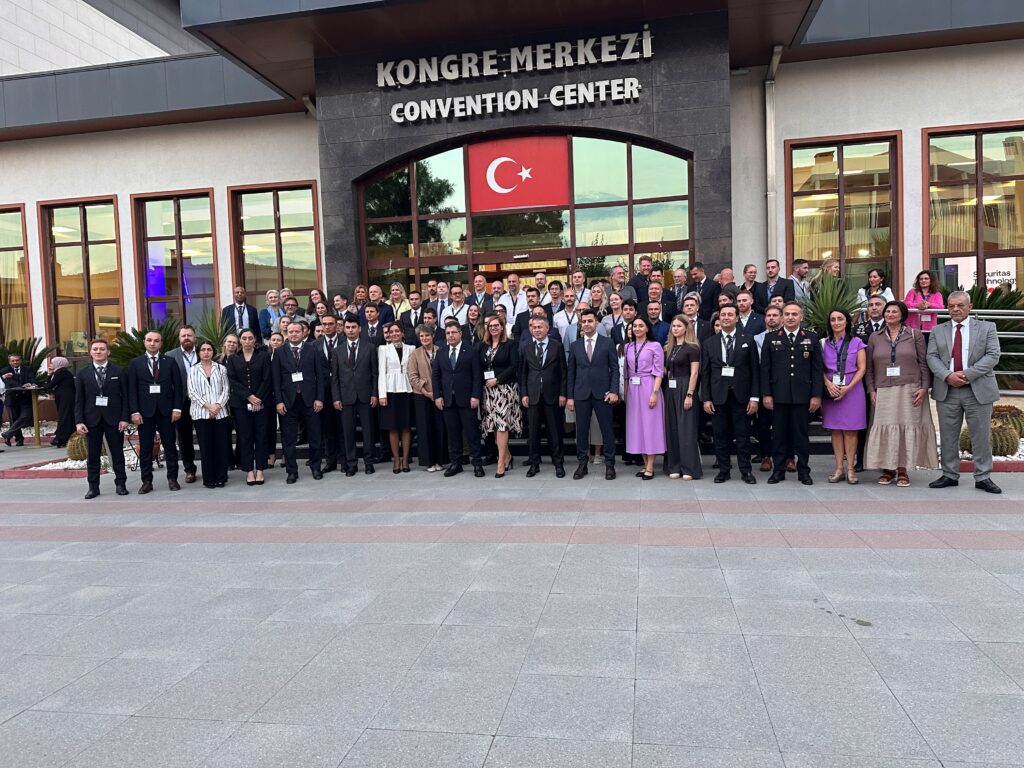
On 6-8 October 2026, Antalya hosted the 14th Electronic Monitoring Conference “Electronic Monitoring in a Changing World – Perception vs Reality”. More than 350 participants coming from 30 countries across Europe and worldwide representing probation services, Ministries of Justice, victims´ services, EM providers, researchers as well as local participants representing the Turkish Prison and Probation Service gathered to discuss how electronic monitoring (EM) is understood by all stakeholders involved including the victims and the public, and how these perceptions compare to the evidence and experiences of those affected. While the gap between perception and reality in electronic monitoring has been recognised for over a decade, the rapid expansion of EM into areas such as victim protection, high-risk supervision and digital innovation has brought new challenges and questions to the forefront.
Recap

ITSCCS
Core Correctional Skills in Digital Probation: highlights from the 6th ITSCCS in Barcelona
05/10/2026
The sixth International Training School on Core Correctional Skills (ITSCCS) took place in Barcelona from 28 September to 2 October 2026, bringing together 26 participants for a week of learning, practical training and international exchange. Organised by the Confederation of European Probation (CEP) and the Centre for Legal Studies and Specialised Training (CEJFE), the programme focused on “Clicks and Empathy: Core Correctional Skills in Digital Probation.”
Recap
Framework Decisions
Recap: ERA workshop on Framework Decisions 829 and 947 in Bucharest
02/10/2026
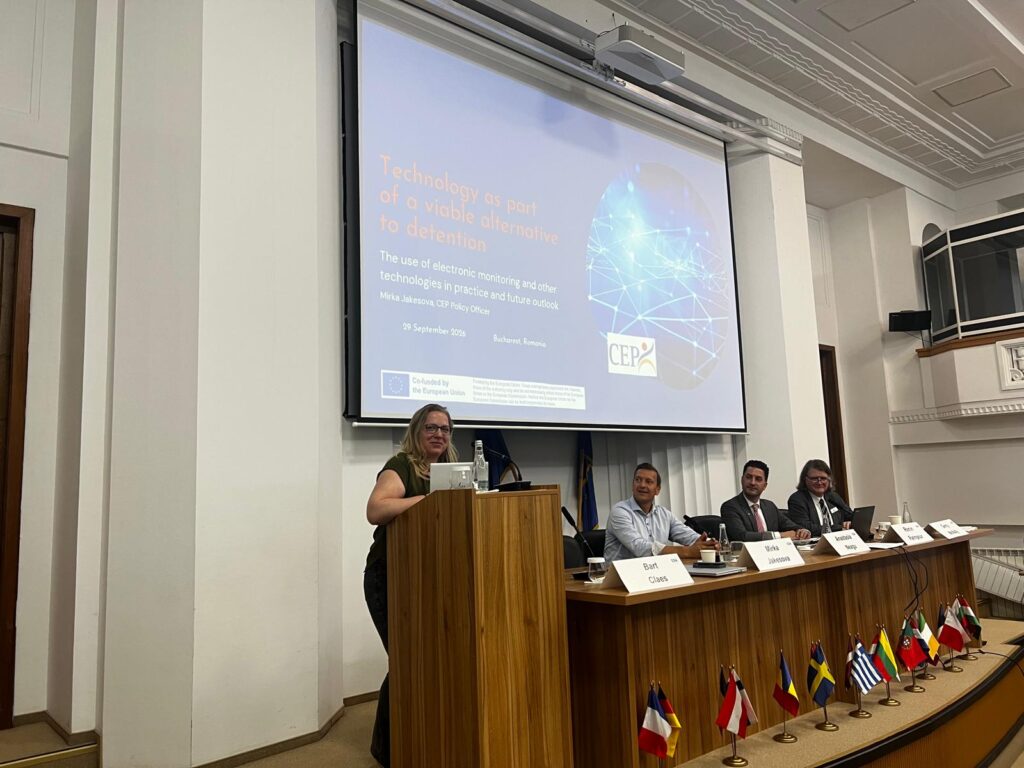
CEP Vice-President Daniel Danglades, Ambassador Gerry McNally and Policy Officer Mirka Jakesova participated in the Seminar on Framework Decisions 829 and 947 and their Impact on Alternatives in the EU organized under the EU project run by the Academy of European Law on 28-29 September in Bucharest, Romania. The seminar brought together judges, prosecutors, probation practitioners, academics, and policy experts to discuss the growing role of alternatives to detention within European criminal justice systems.
New
CEP
CEP and Catalan justice leaders reaffirm longstanding cooperation
29/09/2026
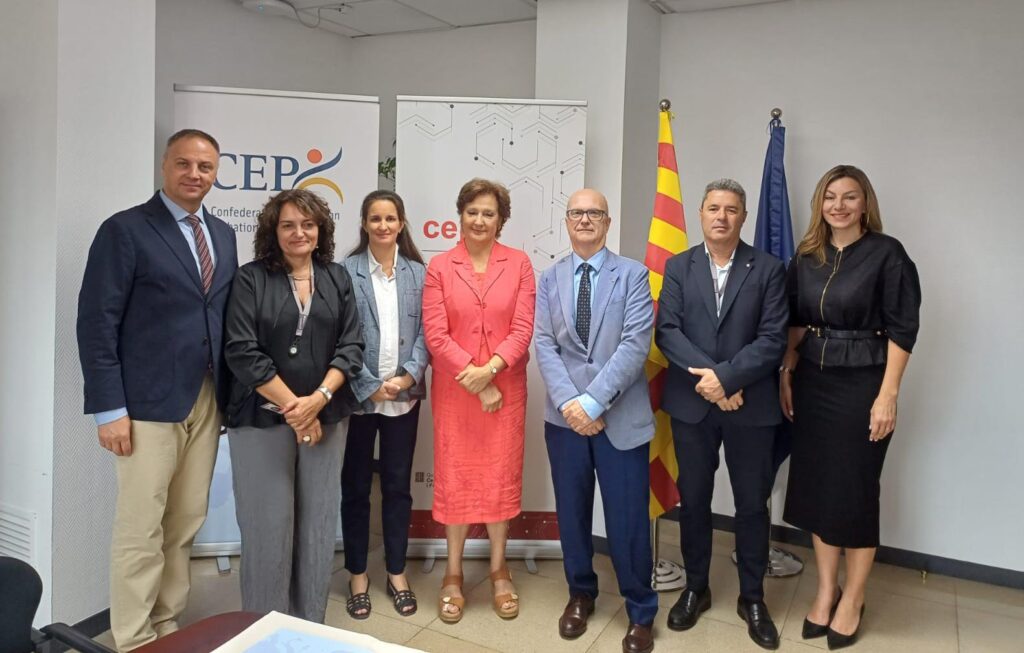
Representatives of the Confederation of European Probation (CEP) met with senior officials from the Catalan Department of Justice and Democratic Quality in Barcelona on 28 September 2026, alongside the opening of the sixth International Training School on Core Correctional Skills. The meeting offered an opportunity to recognise a longstanding partnership and discuss its continued development.
Updated

Mental Health
DEADLINE EXTENDED: Call for Pilot Implementation of the European Mental Health Training Curriculum
29/09/2026
Good news for CEP members! Following requests from our members, CEP has extended the deadline to apply for the pilot implementation of the European Mental Health Training Curriculum for Probation Officers.
Recap

ITSCCS, Technology
6th International Training School opens in Barcelona with a focus on digital probation
28/09/2026
How can probation professionals use new technologies in their interactions while building trust, showing empathy and supporting change? This question is at the heart of the sixth International Training School on Core Correctional Skills, which opened in Barcelona on 28 September 2026.
Subscribe to our bi-monthly email newsletter!
"*" indicates required fields
- Keep up to date with important probation developments and insights.