

Projects
HELP
EU/CoE HELP Project ‘Radicalisation Prevention, Judicial Response to Terrorism & International Cooperation in Criminal Matters’ (HELP RP-TERR-ICCM)
Cross-border crime, risks to public security and the rise of radicalisation leading to violent extremism and terrorism in the EU Member States continue to occur, alongside violations of fundamental rights. The increasingly open area of free movement could be abused by criminals (including terrorists) to pursue their objectives. The criminal justice response to these phenomena must be enhanced.
The European Union (EU) and the Council of Europe (CoE) work together in the area of criminal matters. Considering the global nature of cross-border crime, an effective response to such a challenge, while respecting human rights and allowing citizens to live in an area of freedom, security and justice, requires intense international cooperation. In this regard, it is essential to improve the coordination of investigations and prosecutions and the cooperation between the competent authorities in the Member States, particularly by facilitating the execution of international mutual legal assistance requests and the implementation of extradition requests.
The Council of Europe (CoE) Programme for Human Rights Education for Legal Professionals (HELP) aims at supporting CoE Member States in implementing European human rights standards (CoE and EU) at national level, by raising the capacities of legal professionals to apply those instruments in their daily work.
The HELP Project ‘Radicalisation Prevention, Judicial Response to Terrorism & International Cooperation in Criminal Matters’ (HELP RP-TERR-ICCM) is funded by the European Union and implemented by the Council of Europe through its HELP Programme in partnership with the Confederation of European Probation (CEP).
The project’s main objective is to improve justice cooperation in criminal matters and to contribute to the effective and coherent application of related European instruments through increasing capacities and mutual trust of justice practitioners. The emphasis is on transnational cooperation and the following priorities: mutual recognition of instruments; judicial responses to terrorism, notably on reinforcing the prevention of radicalisation, especially in prisons; issues related to pre-trial detention, in particular raising awareness of case law of the European Court of Human Rights (ECtHR); the functioning of European and other international Treaties/legal instruments on international co-operation in criminal matters.
This two-year project supports EU criminal justice systems via (i) the development and implementation in targeted EU countries of a series of cross-border seminars and ii) a high- level conference promoting mutual learning. These events will provide a unique opportunity for justice professionals to exchange experiences and best practices with a multi-agency and transnational approach.
In addition, the project will benefit from existing HELP online courses on ‘radicalisation prevention’, ‘international cooperation in criminal matters’, ‘procedural safeguards in criminal proceedings and victims’ rights’ and ‘CPT (Committee for the Prevention of Torture) Standards’ among others.
In November 2020 CEP organized its first international seminar in the framework of this project, more information can be found here.
In December 2021 a second event took place, face-to-face in Barcelona, more information can be found here.
In 2022 CEP launched a series of 8 vodcasts – online video interviews with experts working in the field of deradicalization and rehabilitation in Europe. They are created by Mr. Robert Örell (co-chair EU RAN Rehabilitation Working Group, Sweden) and Prof. Ioan Durnescu (University of Bucharest, Romania) in cooperation with CEP.
- Spiros Papadopoulos, Preventing and Countering Violent Extremism expert within the Austrian probation service and project manager at NEUSART KOMPASS, Austria.
- Liesbeth van der Heide, Researcher and lecturer at Leiden University, the Netherlands.
- Tina Mykkänen, International Consultant, P/CVE and CT Expert.
- Maarten van de Donk, Expert of RADAR, working for Radicalisation Awareness Network (RAN).
- Marc Hecker, Director of Research and Communications, French Institute for International Relations.
- Elvar Jonsson, Program Educator, Entré program Sweden.
- Pedro Liberado, Chief Research Officer & Head of Radicalisation, Violent Extremism and organisied crime at Innovative Prison Systems (IPS).
- Torben Adams, Crime Prevention and Criminal Justice Officer UNODC Vienna.
On 30 March 2022 CEP organized its third seminar in the framework of the HELP project, this time in Cologne, Germany. This last seminar was focused on radicalization and rehabilitation after the release from prison. More information can be found here.
On 12 May 2022 CEP Secretary General Mr. Willem van der Brugge and CEP Policy Officer Ms Mirka Jakesova participated in the final seminar ‘Strengthening EU criminal justice systems’: Project impact & Success stories. The aim of the seminar was to examine the results of the EU-CoE project HELP RP-TERR-ICCM and offer an opportunity to hear success stories from some of the participating institutions, professions and countries who will explain the project’s impact at national level. CEP as a partner to the project presented on the implementation and results within the project. For more information please see here.
For the project website, click here.
Our knowledge of Violent Extremism

Related News
Check out the latest news and updates on this project’s focus area.
Electronic monitoring, Technology
14th Electronic Monitoring Conference, Electronic Monitoring in a Changing World – Perception vs Reality
08/10/2026
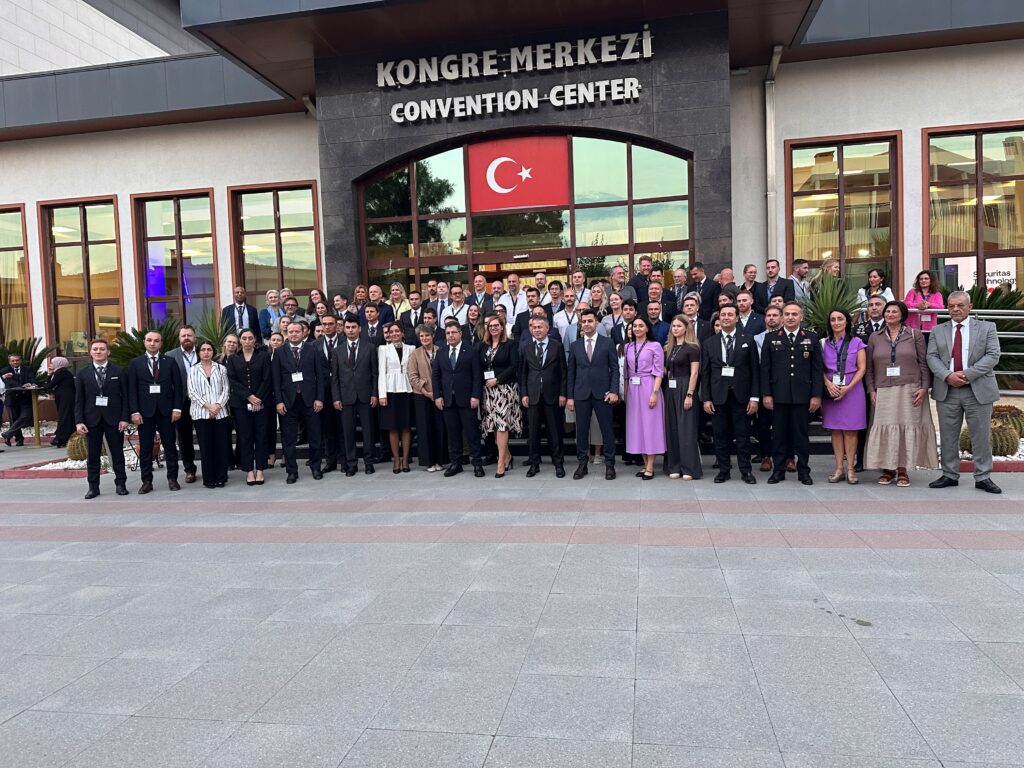
On 6-8 October 2026, Antalya hosted the 14th Electronic Monitoring Conference “Electronic Monitoring in a Changing World – Perception vs Reality”. More than 350 participants coming from 30 countries across Europe and worldwide representing probation services, Ministries of Justice, victims´ services, EM providers, researchers as well as local participants representing the Turkish Prison and Probation Service gathered to discuss how electronic monitoring (EM) is understood by all stakeholders involved including the victims and the public, and how these perceptions compare to the evidence and experiences of those affected. While the gap between perception and reality in electronic monitoring has been recognised for over a decade, the rapid expansion of EM into areas such as victim protection, high-risk supervision and digital innovation has brought new challenges and questions to the forefront.
ITSCCS
Core Correctional Skills in Digital Probation: highlights from the 6th ITSCCS in Barcelona
05/10/2026
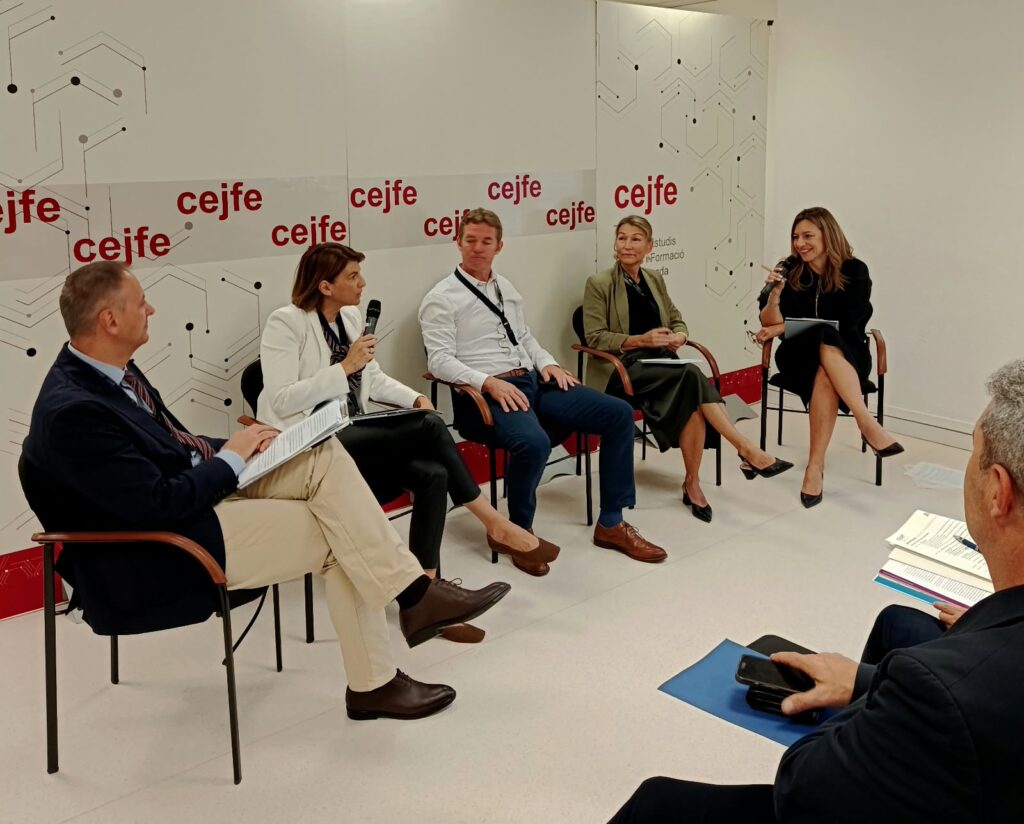
The sixth International Training School on Core Correctional Skills (ITSCCS) took place in Barcelona from 28 September to 2 October 2026, bringing together 26 participants for a week of learning, practical training and international exchange. Organised by the Confederation of European Probation (CEP) and the Centre for Legal Studies and Specialised Training (CEJFE), the programme focused on “Clicks and Empathy: Core Correctional Skills in Digital Probation.”
Framework Decisions
Recap: ERA workshop on Framework Decisions 829 and 947 in Bucharest
02/10/2026
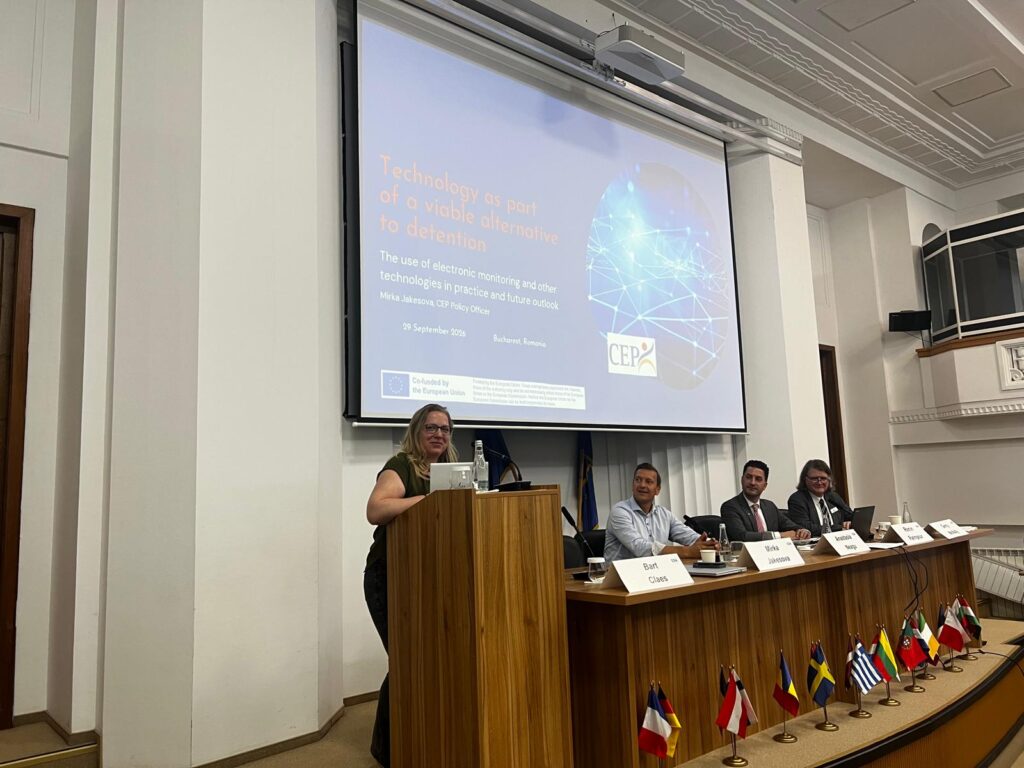
CEP Vice-President Daniel Danglades, Ambassador Gerry McNally and Policy Officer Mirka Jakesova participated in the Seminar on Framework Decisions 829 and 947 and their Impact on Alternatives in the EU organized under the EU project run by the Academy of European Law on 28-29 September in Bucharest, Romania. The seminar brought together judges, prosecutors, probation practitioners, academics, and policy experts to discuss the growing role of alternatives to detention within European criminal justice systems.
CEP
CEP and Catalan justice leaders reaffirm longstanding cooperation
29/09/2026
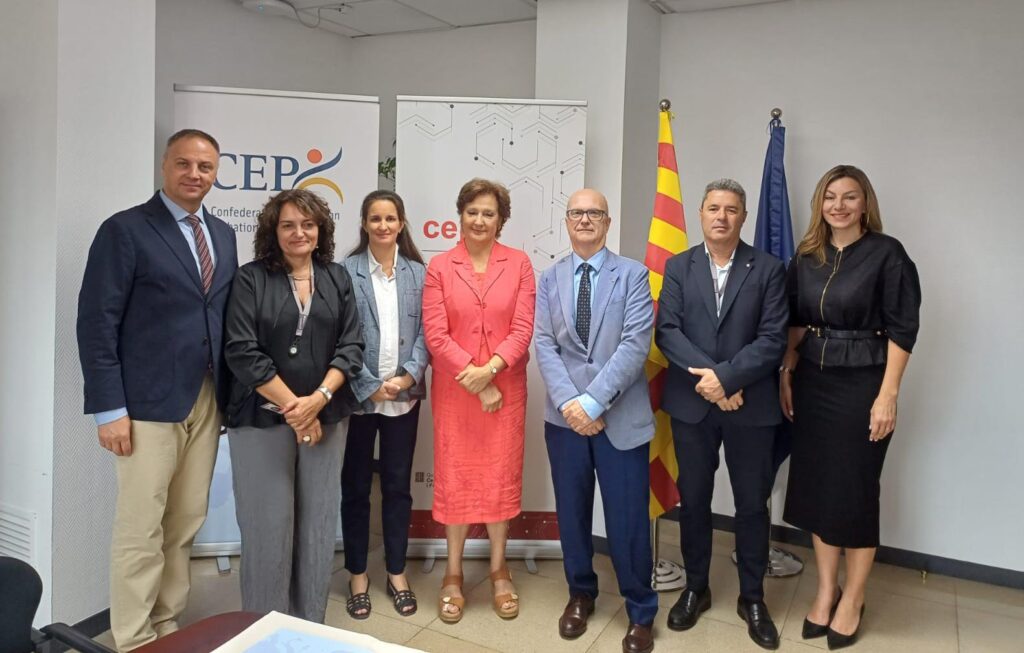
Representatives of the Confederation of European Probation (CEP) met with senior officials from the Catalan Department of Justice and Democratic Quality in Barcelona on 28 September 2026, alongside the opening of the sixth International Training School on Core Correctional Skills. The meeting offered an opportunity to recognise a longstanding partnership and discuss its continued development.
Mental Health
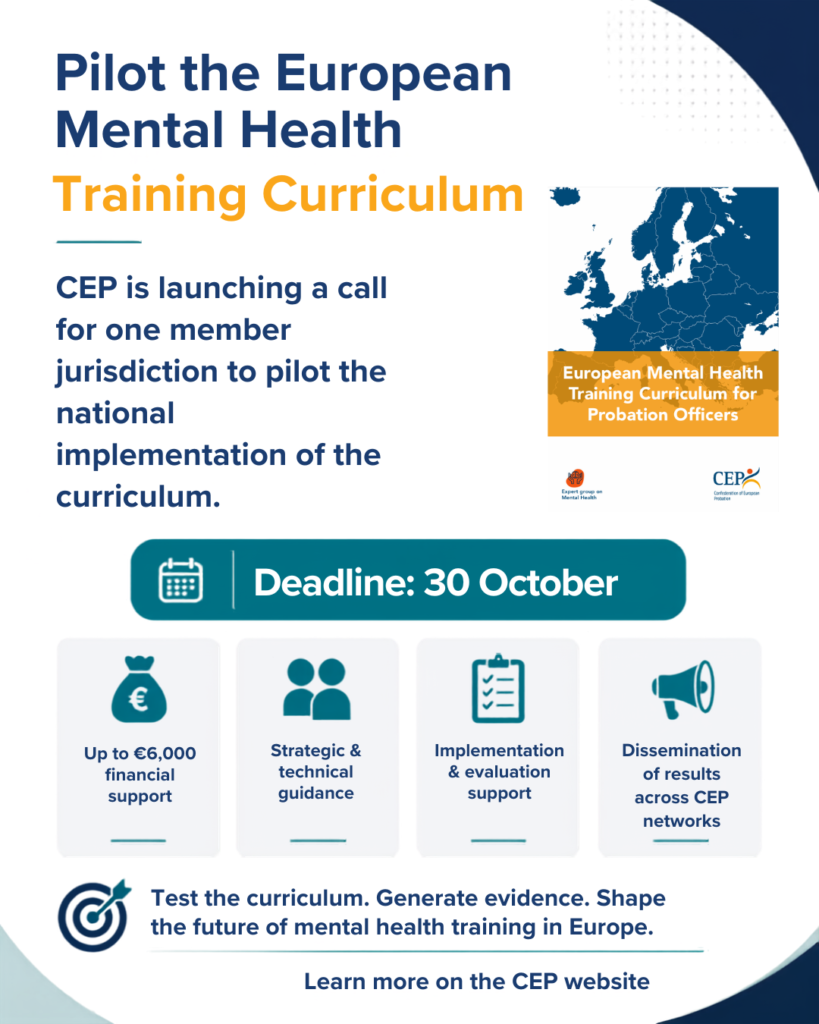
DEADLINE EXTENDED: Call for Pilot Implementation of the European Mental Health Training Curriculum
29/09/2026
Good news for CEP members! Following requests from our members, CEP has extended the deadline to apply for the pilot implementation of the European Mental Health Training Curriculum for Probation Officers.

ITSCCS, Technology
6th International Training School opens in Barcelona with a focus on digital probation
28/09/2026
How can probation professionals use new technologies in their interactions while building trust, showing empathy and supporting change? This question is at the heart of the sixth International Training School on Core Correctional Skills, which opened in Barcelona on 28 September 2026.
Subscribe to our bi-monthly email newsletter!
"*" indicates required fields
- Keep up to date with important probation developments and insights.