

Previous Article
News
Working with violent extremist offenders in Stockholm: an interview with assistant governor Michael Laitinen
Many probation services in Europe have to deal with radicalised offenders on a daily bases. This requires a different way of working for probation officers. How do they do this at the probation service in Stockholm, the capital of Sweden? Assistant Governor of the Swedish Prison and Probation Service in Stockholm, Michael Laitinen is specialised in working with radicalised clients. We spoke to him about how his organisation works with violent extremist clients and how much he has to deal with this types offenders on a daily basis. He explains that in Stockholm there has been a notable increase of violent extremist offenders in the last two years.
How did you get involved in working with violent extremist offenders?
I have always been interested in issues regarding ideology, faith and security. My field of expertise is issues surrounding security, which provided me with a gateway to working in the field of violent extremist offenders. My study background has also provided me with a unique combination of knowledge. I have a law degree, but also spent three years studying history and religion at the university. One of my teachers in religious history is one of Sweden’s most important experts in extremism.
How much do you have to deal with radicalisation in general and on a daily basis in Stockholm?
Radicalisation has been on the rise in Sweden. These individuals belong mostly to Jihadist or right-wing extremist groups. A citizen, on a daily basis, often only comes in contact with this type of offenders via the media or by hearing others talking about this topic. In the parts of the Swedish Prison and Probation Service (SPSS) that I work in, these clients are part of the daily routine. In the last couple of years we have had violent extremist offenders serving a probation sentence on a daily basis.
What does your day look like?
My days are extremely varied. I work as an Assistant Governor, which comes with many different tasks, from authorising expenditures for coffee to directing my staff in case of a serious incident. I’m required to stay updated on all the cases that involve violent extremist offenders. How are they progressing in their behavior and are there any complications? We also need to make plans to continue our work with the specific clients. I spend a lot of time with the probation officers that work with these clients, I coach them and help them with their work.
I try to keep up with this fast changing environment and with the techniques for working with violent extremist offenders. Lately, my main focus has been on how to increase the likelihood of them leaving their respective groups and reintegrate within the society at large.
From time to time I also lecture probation officers within the SPSS and work as an advisor regarding this topic for other departments of the SPPS regarding security issues.
How are the probation offices in Stockholm prepared to deal with violent extremist offenders?
The probation officers that work with violent extremist offenders are chosen specifically for this work. We make sure that they are mentally prepared for the task and that they know what the aspects are that drive these type of offenders to involvement in violent extremism. Since working with these clients is quite demanding on our probation officers, they receive a lot of coaching and usually work in pares when working the most heavy extremist clients. The probation officers always try to steer the clients towards our Entré program.
The Swedish Prison and Probation Service (SPPS) has come up with a counter-radicalisation strategy, the Entré programme, that combines security efforts with intensive treatment to improve the transition of violent extremist offenders that are at risk of reoffending, to the community. This includes keeping order and security, treating prisoners, parolees and probationers with dignity and respect, as well as providing directed services and programmes to redirect pathways away from violent extremism and the person distances him/herself from their past radicalised lifestyle and violent acts.
Is the Stockholm Probation Service cooperating with other organisations in working with violent extremist offenders?
The government has selected a total of twelve government organisations to cooperate in fighting against violent extremism and organised crime. Therefore, our organisation also cooperates with all of these organisations in one way or another. Amongst these organizations are the Swedish intelligence services, Swedish Tax Agency and The Swedish enforcements agency. This cooperation has made it possible for the SPPS to gather a more complete picture of what these environments look like and changes that happen within them. It also made it possible to cooperate on a more operative level, such as sharing offices for meetings.

Related News
Keep up to date with the latest developments, stories, and updates on probation from across Europe and beyond. Find relevant news and insights shaping the field today.
New
Technology
Registration deadline approaching: Join CEP’s final workshop of 2026 on technology in probation
22/10/2026
📢 Have you registered yet? CEP’s final workshop of 2026 takes place on 24 November in Barcelona, bringing together professionals to explore how technology is being used across probation services in Europe.
The Workshop on Alternatives to Detention and Technologies: Deep Diving into New Trends will look beyond artificial intelligence to examine the different ways technology is shaping probation practice, from staff training to working with clients and collaborating with other criminal justice partners.
Recap
Directors General Meetings
CEP Leadership Excellence Training: strengthening leadership and cooperation across Europe
22/10/2026
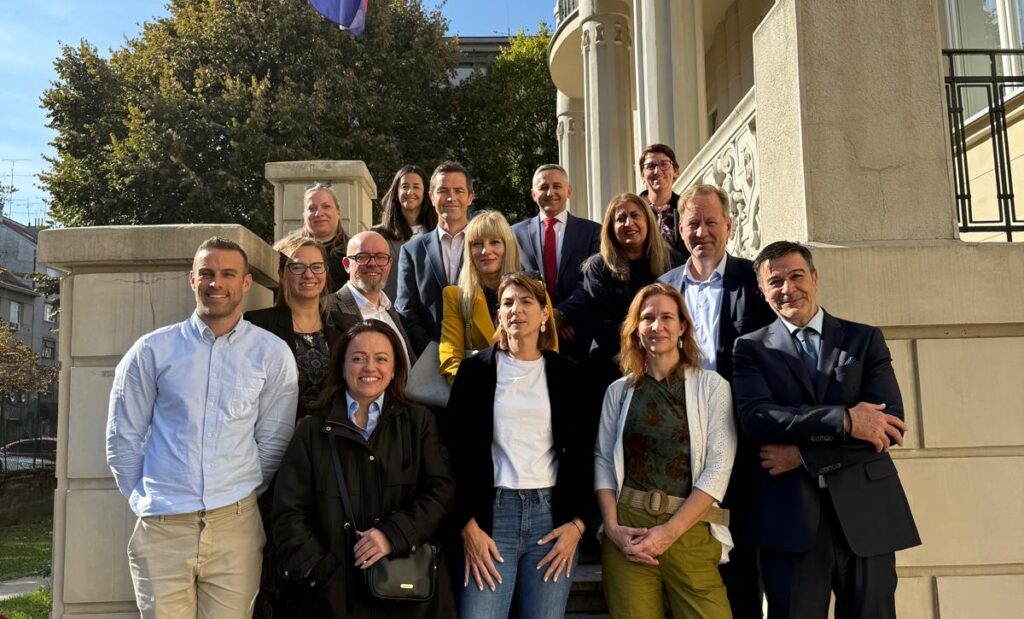
The CEP Leadership Excellence Training, held on 20–21 October in Zagreb, Croatia, brought together Directors General and senior probation managers from 11 European countries for a two-day interactive programme focused on leadership, communication, staff development, and international cooperation.
New

CEP
Call for Proposals: Evaluation of CEP Expert Groups
21/10/2026
On behalf of Ms. Jana Špero Kamenjarin, CEP Secretary General, it is my pleasure to invite you to submit a proposal to conduct an evaluation within the CEP work programme.
Recap

Uncategorized
CEP at UNODC: Contributing to the Development of Probation Services Worldwide
19/10/2026
The Confederation of European Probation (CEP) was represented by its Secretary General, Jana Špero Kamenjarin, at the Expert Group Meeting on the Establishment of Probation Services and Probation Practices, organised by the United Nations Office on Drugs and Crime (UNODC) and held at the Vienna International Centre (VIC) from 12 to 14 October 2026.
Recap
Electronic monitoring, Technology
14th Electronic Monitoring Conference, Electronic Monitoring in a Changing World – Perception vs Reality
08/10/2026
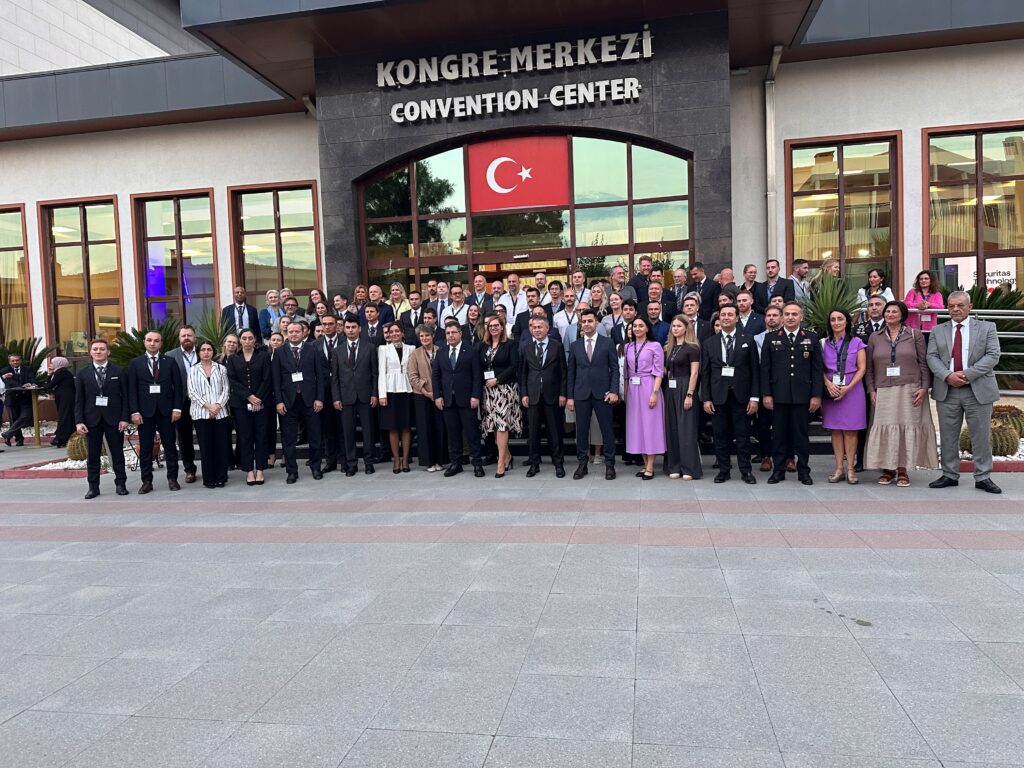
On 6-8 October 2026, Antalya hosted the 14th Electronic Monitoring Conference “Electronic Monitoring in a Changing World – Perception vs Reality”. More than 350 participants coming from 32 countries across Europe and worldwide representing probation services, Ministries of Justice, victims´ services, EM providers, researchers as well as local participants representing the Turkish Prison and Probation Service gathered to discuss how electronic monitoring (EM) is understood by all stakeholders involved including the victims and the public, and how these perceptions compare to the evidence and experiences of those affected. While the gap between perception and reality in electronic monitoring has been recognised for over a decade, the rapid expansion of EM into areas such as victim protection, high-risk supervision and digital innovation has brought new challenges and questions to the forefront.
Recap
ITSCCS
Core Correctional Skills in Digital Probation: highlights from the 6th ITSCCS in Barcelona
05/10/2026
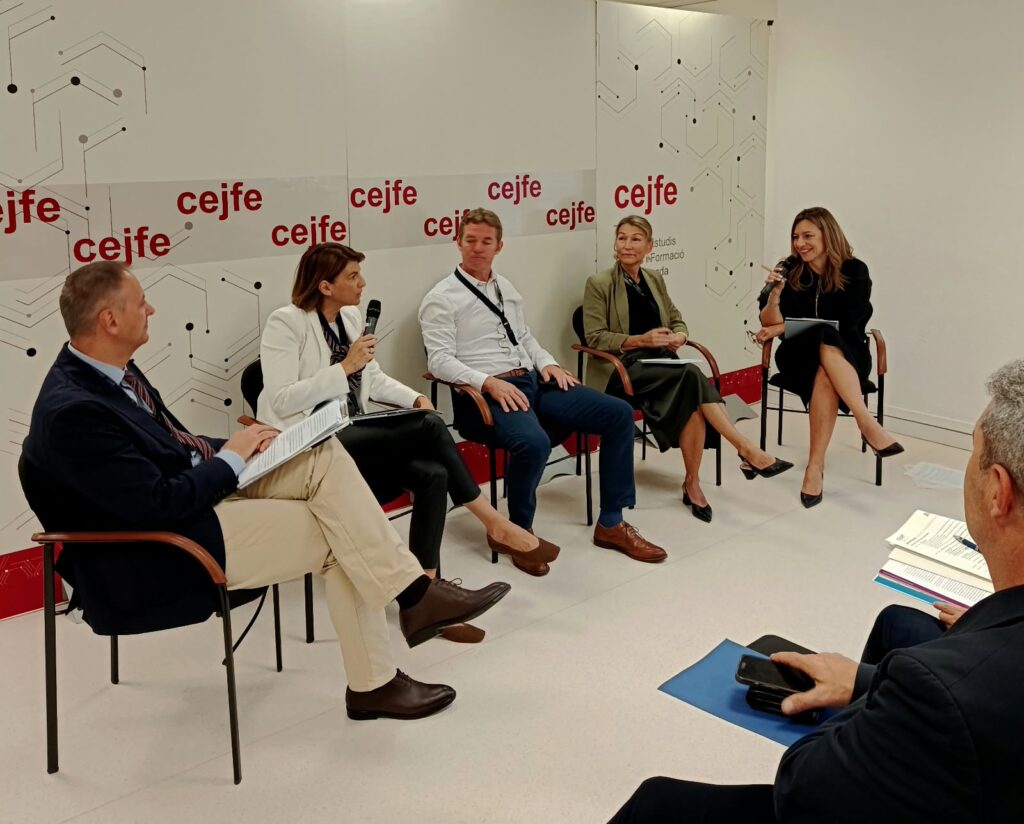
The sixth International Training School on Core Correctional Skills (ITSCCS) took place in Barcelona from 28 September to 2 October 2026, bringing together 26 participants for a week of learning, practical training and international exchange. Organised by the Confederation of European Probation (CEP) and the Centre for Legal Studies and Specialised Training (CEJFE), the programme focused on “Clicks and Empathy: Core Correctional Skills in Digital Probation.”
Subscribe to our bi-monthly email newsletter!
"*" indicates required fields
- Keep up to date with important probation developments and insights.