

Previous Article
Probation library
Why punish? An Introduction to the Philosophy of Punishment
Why punish? is an attempt to show the value of combining the insights of social sciences with those of philosophy in trying to understand punishment. Subtitled An Introduction to the Philosophy of Punishment, the book takes no particular philosophical position but is guided by a definition from the Harvard philosopher, Michael Sandel:
‘Philosophy is reflecting critically on the way things are. That includes reflecting critically on social and political and economic arrangements. It always intimates the possibility that things could be other than they are. And better.’
This article is written by Rob Canton.
Why hard treatment?
The book begins by distinguishing three ways of approaching the question ‘why punish?’. The first of these enquires into the reasons why responding to wrongdoing so often involves ‘hard treatment’ – repaying the wrong with some sort of pain or hardship to the wrongdoer. This retributive response is recognised always and everywhere, but why is it that people do this? Perhaps we punish in order to defend and uphold the social order. By denouncing the crime, we affirm the values that bind people into a community. Or does punishment expose some of our psychological needs and insecurities? An early chapter discusses this and tries to understand what punishment means to us, how we learn about it and how ideas of fitting retribution are expressed and reproduced in religion and in stories.
Purposes of punishment
The second way of approaching the question is referred to as a political inquiry. It asks about the purposes that people set for punishment (remembering that different people may have different purposes in mind). These stated objectives may not be the same as the true reasons: for example, many politicians and scholars use the instrumental language of reason and effectiveness, but the inquiry into the origins and meanings of punishment suggests that punitive reactions are as often emotional and expressive. David Garland refers to the tragedy of punishment, tragic because it is politically inescapable, but can achieve almost none of the purposes set for it.
The moral justification
The third inquiry is an ethical one. What is the moral justification of punishment? Most attempts at justification amount to one or other of these arguments:
- Punishment is justifiable, because it’s the only way properly to acknowledge the harm done to the victim, do justice to the wrongdoing or respect the moral responsibility of the offender;
- Punishment is justifiable, because by one mechanism or another it reduces crime.
Reduction of crime?
But the book goes on to challenge all these accounts. The mechanisms that are supposed to control crime, deterrence, rehabilitation and incapacitation, do not make nearly as strong a contribution to crime reduction as is commonly assumed and indeed some kinds of punishment (prison especially) may well lead to more offending rather than less. A chapter on restorative justice explores the question whether punishment is the best way to honour the experience of victims.
Another chapter considers the limitations and dangers of punishment. Punishment often makes things worse and a reliance on the apparatus of criminal justice and enforcement often fails to reduce the incidence of what Nils Christie called ‘deplorable acts’. Crime has complex social origins and it is unreasonable to think that criminalisation, arrest and punishment can resolve them. The belief that it can has been the origin of a great deal of flawed policy leading to disappointment, anger, and frustration. Criminal justice is constantly at risk of undermining other mechanisms, notably trust, a sense of moral responsibility, mutual respect, dignity and social justice, that have a sounder ethical foundation and do much more than the institutions and practices of punishment to reduce crime and bad behaviour. It is argued here that it is social justice, not criminal justice, that is the answer to crime problems.
The concluding chapter proposes that if we are to use philosophy to make things better (as Sandel proposes), we must first decide what ‘better’ would be like, what would be improvement. Some recommendations for policy makers, for sentencers and for practitioners are set out. The focus here is both on ethical enhancement and on effectiveness, although it is the ethical questions that are in the foreground of the discussion. The need to improve the ways in which punishment is administered is more pressing than the usual search for ‘the justification of punishment’. Secondly, we must inquire into the political feasibility of trying to bring about these changes, a formidable challenge, given the emotions associated with punishment and its place in many cultures.
Practical implications of theoretical positions
Many books in the philosophy of punishment are remote and abstract. This book attempts to ground discussion in some real world dilemmas of policy and of sentencing practice. Case studies, many taken from the author’s own experiences when working as a probation officer many years ago, are used to try to draw out some of the practical implications of the theoretical positions elaborated in the book.
The complex answers to the enduring questions about punishment vary across time and place, and are directly linked to people’s personal, cultural, social, religious and ethical commitments and even to their sense of identity. Why Punish? challenges criminology and criminal justice students as well as policy makers, judges, magistrates and criminal justice practitioners to think more critically about the role of punishment and the moral principles that underpin it. Bridging abstract theory with the realities of practice, the book asks what better punishment would look like and how it can be achieved.
Please click on the link, if you are interested in purchasing Why Punish? An introduction to the philosophy of punishment.

Probation library
Probation Journal

Women, youth
Understanding the needs of girls and young women in youth justice
10/03/2026
New research highlights the underlying needs that influence girls’ and young women’s contact with youth justice systems and calls for more gender responsive approaches in policy and practice. Drawing on a review of recent studies, the authors identify several factors shaping girls’ pathways into the justice system, including persistent abuse, trauma, gendered expectations, and systemic failures. Girls involved in youth justice are often affected by multiple forms of victimisation, such as sexual abuse, neglect, and domestic violence, with experiences frequently beginning in early childhood.
Reading corner

Probation in Europe
The Routledge Handbook of European Penology
05/01/2026
The Routledge Handbook of European Penology, published by Routledge. This comprehensive volume has been edited by Sonja Snacken, Gaëtan Cliquennois, Ioan Durnescu, Diete Humblet and Elena Larrauri.
Reading corner

Criminal Justice
Bridging Research and Practice in Forensic Social Work: An interview with the editors of Forensic Social Work – Supporting Desistance
17/12/2025
Supporting desistance while managing risk is at the heart of criminal justice social work across Europe. In Forensic Social Work – Supporting Desistance, editors Jacqueline Bosker, Anneke Menger and Vivienne de Vogel bring together scientific insights and everyday professional practice to support those working with justice-involved individuals. In this interview, they reflect on the motivation behind the English edition of the book, its core themes, and how professionals can use its tools and approaches in their daily work.
Probation Journal

Domestic violence, Gender-based violence
New evaluation on whole family approach to domestic abuse
26/11/2025
Interventions Alliance has published a new evaluation of a Hub coordinated on behalf of police forces in the south of England, focused on tackling violence against women and children through a whole family approach. The Hub supports victims and perpetrators of domestic abuse and works across policing, health and social services.
Reading corner
Probation in Europe
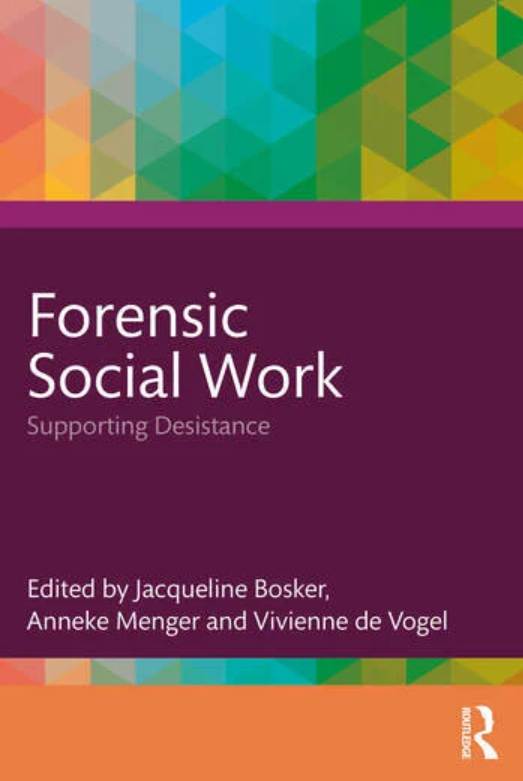
New Release: Forensic Social Work – Supporting Desistance
13/11/2025
This book, Forensic Social Work – Supporting Desistance, has been released by Routledge. It is a practice-oriented resource exploring how forensic social work can support desistance and foster meaningful change in the lives of justice-involved individuals.
Reading corner
Criminal Justice
Parole Futures
18/08/2025
At a time when many parole systems are experiencing considerable strain, the aims of this collection are twofold: first, to encourage systematic and critical reflection on the rationalities, institutions and practices of parole. Second, to think big, and pose ambitious ‘what if’ questions about the possible futures of parole and prison release. Offering novel insights from Asia, Australia, Europe, North America and South America, this collection builds the case for, and then showcases, a ‘way of doing’ parole research that is global in outlook, interdisciplinary in approach and unapologetically normative in character.
Probation Journal

Violent Extremism
2025 EU Guidance document responding to the needs of victims of terorrism
23/06/2025
To mark the EU Day of Remembrance for Victims of Terrorism on 11 March, the EU Centre of Expertise for Victims of Terrorism has published a new Guidance Document on the Needs of Victims. This document is a significant step forward in reinforcing a victim-centred approach within counter-terrorism efforts across the European Union.

Research
Launch of the CEP Research and Development Strategy Summary
17/06/2025
We’re thrilled to announce that the Confederation of European Probation (CEP), in cooperation with the University of Glasgow (led by CEP Honorary Member Professor Fergus McNeill), and with the support of the CEP Expert Group on Research, has produced the CEP Research and Development Strategy. We are happy to share the summary with you!
Probation Journal

Alternatives to pre-trial detention
Unpacking criminal detention rules and regulations across the EU
21/05/2025
The EU Agency for Fundamental Rights (FRA) has updated its online criminal detention database, which includes national standards, laws, and monitoring reports on detention conditions in the EU and the UK.
Probation Journal

Technology
Is AI Putting Remote Probation Supervision at Risk Before It Even Starts?
09/04/2025
David Jackson and Jed Stone focus on the use of AI in probation and advocate for investigations to understand the opportunity, address issues and innovate for the good of all.
Subscribe to our bi-monthly email newsletter!
"*" indicates required fields
- Keep up to date with important probation developments and insights.