
Previous Article
News
Update on the PONT Project
In the last article we wrote for the CEP Newsletter, the PONT project team made significant progress in finalising the literature review, training gap analysis and the first version of the training e-manual. This article will reflect mainly on the training gap analysis and the draft e-manual. Just to remind the readers: PONT is a project funded by DG Justice to enhance the use of the mutual recognition tools, in particular for FD 947 on probation transfer and FD 829/2009 on the European Supervision Order.
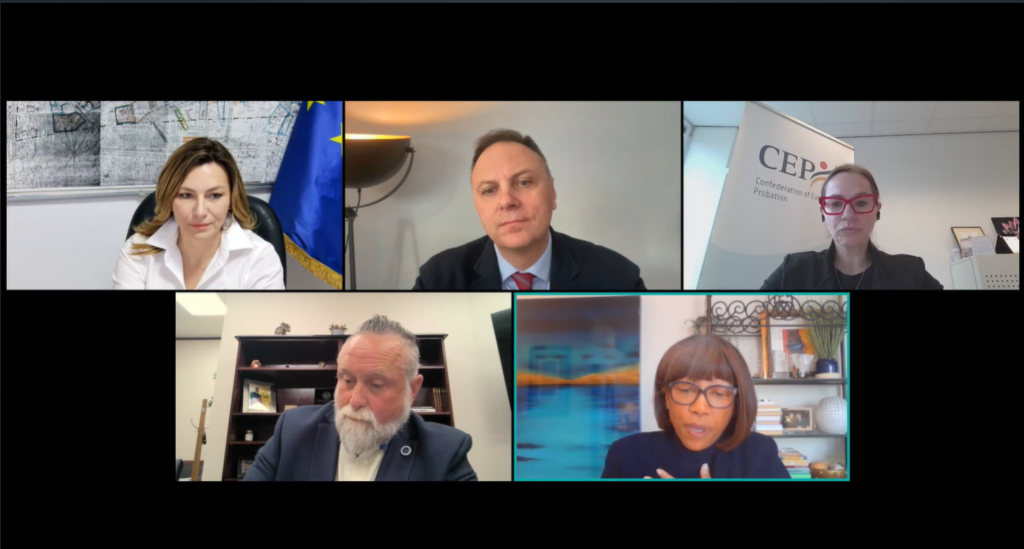
Short interview with Gisella Conrad (International Office, Dutch Probation Service) about the PONT project and the use of the framework decisions in the Netherlands.
Training gap analysis
The training gap analysis is aimed at identifying the training needs of the competent authorities and probation staff from their own perspective. In this respect, a questionnaire was uploaded on the EU survey platform. European Judicial Network assisted with the dissemination of the questionnaire to the contact points and competent authorities. 35 respondents uploaded their answers and the conclusions were that indeed FD 829/2009 in particular is quite difficult to implement due to not knowing the legal options in the executing State, not being familiar with the procedure and not receiving the documents in an accessible language. Some participants also reported a certain level of anxiety regarding the trust in another jurisdiction to monitor the supervisory measure.
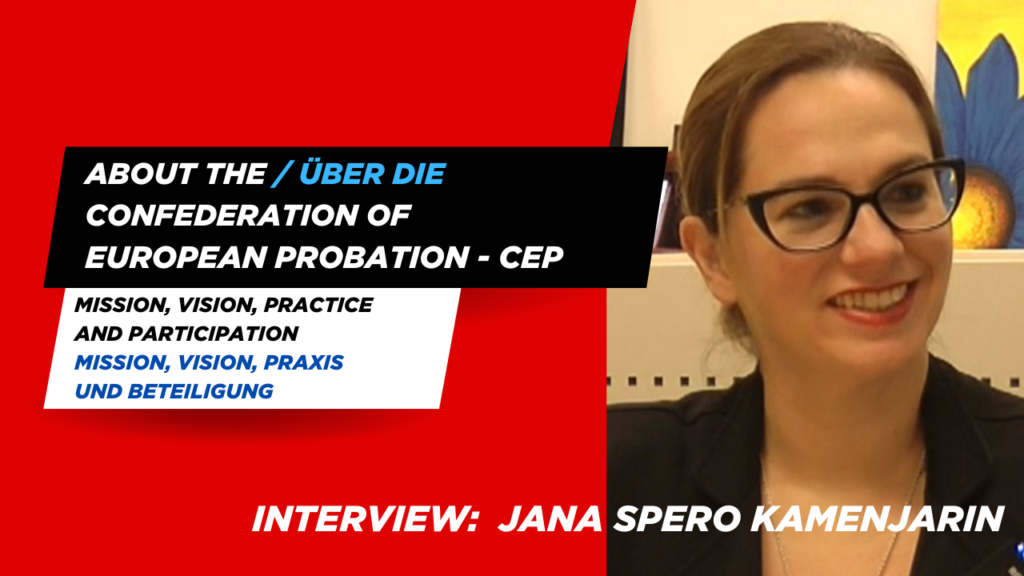
Interview with CEP Secretary General Willem van der Brugge about the advantages of the FDs and his views on the PONT project.
As far as the difficulties related to the implementation of the FD 947/2008, the respondents mentioned not being sure about the legal options in the executing State, not being sure that the obligations will be carried out in the executing State and not having clear standards on how to measure the rehabilitation prospects.
Apart from these difficulties, some competent authorities reported not knowing how to fill in the certificate, how to adapt the sentence and how to identify the competent authority in the executing State as other practical obstacles in the implementation on the FD 947/2008. Transferring probationers with medical treatment obligations was also mentioned as difficult in practice.
Interview with Tony Marguery about his book ‘Mutual Trust Under Pressure, the Transferring of Sentenced Persons in the EU’ and his thoughts on the PONT project.
The training e-manual
Based on these findings and also on the literature review, the project team put together an e-manual that will serve as a resource for the future trainings for the competent authorities and probation staff. The manual exists of two parts: one theoretical (focusing on mutual trust, normative context of the partners involved in PONT and so on) and a practice related one, where all the difficulties discussed above are debated and practical solutions are offered.
The e-manual also provides a list of all relevant case-law of the European Court of Human Rights and the Court of Justice of EU. Case examples are offered to illustrate different ways of responding to challenges.
The e-manual was discussed with colleagues taking part in the CEP Expert meeting, that took place in Leuven, 24-25th of October 2019. The general impression regarding the format and the content of the e-manual can be observed in the picture below.

We would like to take this opportunity to thank them publicly for their useful comments and suggests for improvement.
We are still collecting case examples for transfer (either under FD 947/2008 or FD 829/2009), dilemmas and other materials that can be used for the training. We would be grateful for your contribution (e.monteroperezdetudela@gmail.com).
For more information, please visit our project website.
Esther Montero Perez de Tudela
Universidad de Loyola Andalucía

Related News
Keep up to date with the latest developments, stories, and updates on probation from across Europe and beyond. Find relevant news and insights shaping the field today.
New
Domestic violence, Gender-based violence
Practitioner guidance for supporting neurodivergent clients in domestic abuse work
23/12/2025
A new practitioner guide is currently being piloted across the UK that aims to support professionals working with neurodivergent clients for more inclusive domestic abuse perpetrator interventions. The guide has been co developed for domestic abuse perpetrator intervention practitioners who work with neurodivergent clients, translating research findings into practical guidance for day to day practice.
New
Probation in Europe
New Vodcast Episode: Christoph Koss on Probation and Parole in Austria
22/12/2025
The 17th episode of Division_Y features Christoph Koss, Director of the NEUSTART Association for Probation and Parole, Restorative Justice, and Social Work in Austria.
New
Uncategorized
Newsletter December 2025 out now, featuring the 2026 CEP Activity calendar
18/12/2025
CEP’s latest newsletter is out now! Articles on the CoPPer Final Project Conference, New CEP report: The European Survey of Probation Staff’s Stress and Morale, and more.>> Read here
Reading corner
Criminal Justice
Bridging Research and Practice in Forensic Social Work: An interview with the editors of Forensic Social Work – Supporting Desistance
17/12/2025
Supporting desistance while managing risk is at the heart of criminal justice social work across Europe. In Forensic Social Work – Supporting Desistance, editors Jacqueline Bosker, Anneke Menger and Vivienne de Vogel bring together scientific insights and everyday professional practice to support those working with justice-involved individuals. In this interview, they reflect on the motivation behind the English edition of the book, its core themes, and how professionals can use its tools and approaches in their daily work.
New
Mental Health
Why some court-ordered psychiatric patients remain in prison in Europe
15/12/2025
There is an urgent yet insufficiently recognised human-rights and public-health crisis unfolding across Europe: the systematic imprisonment of mentally ill individuals who have already been assessed by courts or psychiatric professionals as requiring treatment in secure psychiatric hospitals rather than confinement in correctional facilities. Evidence indicates that structural failings—including bed shortages, procedural delays, and fragmented legal and administrative frameworks—have produced a situation in which thousands of vulnerable individuals remain in prison in direct contravention of judicial orders, clinical assessments, and international human-rights obligations. This constitutes a largely invisible mental-health scandal, obscured by inconsistent data collection, political sensitivities, and the general invisibility of people in custody.
New
Partners
Memorandum of Understanding Signed Between CEP and RESCALED
11/12/2025
On 10 December 2025, at the CEP Headquarters in Utrecht, CEP and RESCALED signed a Memorandum of Understanding (MoU) aimed at strengthening cooperation in areas of mutual interest. The MoU was signed by Rogier Elshout, Chair of Rescaled and Jana Špero Kamenjarin, CEP Secretary General, with the signing ceremony attended by Helen De Vos, Rescaled Executive Director and Daniel Danglades, CEP Vice-President.
Through this partnership, both organizations will work together to develop joint activities, exchange expertise, and support initiatives that advance their shared objectives.
This MoU reflects a commitment to transparent communication and the creation of new opportunities for joint projects and broader community impact.
Subscribe to our bi-monthly email newsletter!
"*" indicates required fields
- Keep up to date with important probation developments and insights.