
Previous Article
Probation library
Risk assessment the Dutch way: a scalable, easy to use tool for probation reports
An important task of a probation officer is to provide information to courts and prisons about the offender’s risk of doing harm, the risk of re-offending and to provide them with an appropriate risk management plan. To improve the process of making a report and to make it more efficient, the Dutch probation organisations have developed a new tool for making risk assessments and probation reports. During the Third World Congress on Probation in Japan we got the opportunity to present our new model and share our experiences with the other participants.
An article by Laurus van Essen, Huib van Alphen and Jan-Maarten van Tuinen, Dutch Probation Service.
What started it…
In the Netherlands, around 1000 probation officers produce over 40.000 probation reports each year, often under time pressure and with strict deadlines. Currently probation officers mainly use the RISc tool, based on OAYsis, and several other tools, like QuickScan (a screening tool mainly used when offenders have just been apprehended) or B-Safer, a tool specifically for domestic violence cases.
There has been a growing dissatisfaction with the current instruments, both from probation officers and among researchers. The RISc focusses too much on static factors, this leads to deskilling professionals [1]. The RISc, just like the OASys, is considered to be too complex and too time consuming [2]. This results in probation officers that don’t use the tool correctly, which has a negative impact on the quality of the risk assessments. Furthermore, there is quite some overlap between the different instruments, which is experienced by probation officers as frustrating, because they have to answer the same questions several times.
Last but not least, the current tools are difficult to adjust and don’t include categories on, for instance, victim awareness, radicalisation or protective factors. An important objective therefore was to make a tool that we can easily continue to develop based on new research and developments, evaluations or feedback from professionals.
An integrated tool for risk assessment and probation reports
The Dutch Probation Service developed a scientifically based and easy to use instrument which can be used in all stages of the criminal justice process and for all types of offences and offenders. This tool makes it easier to produce high quality probation reports in an efficient way. We have integrated elements for specific offences/offenders, for example the Static-99R-Stable-Acute for sexual offenders and the VERA-2R for radicalised and extremist offenders.
While making the tool, we focused on professional structured judgement of the probation officers. However, to support probation officers with their risk assessments, we have integrated a Dutch version of the OXREC in cooperation with the University of Oxford to objectify their assessments.

We consider the usability of the risk assessment tool as one of the most important aspects for daily practice [3]. That is why we developed it in close collaboration with the probation officers. We have designed the instrument in a way that it can even be used within limited time constraints. The instrument, for instance, automatically adjusts itself to the stage of the criminal justice process where the offender is in or to his characteristics.
We also have invested quite some time, together with researchers and probation officers, in formulating the questions that are asked in the tool as clear as possible. There are no different interpretations possible and we made it clear why the questions are included in the tool.
Another feature, highly appreciated by probation officers, makes it possible to easily access previous risk assessments without leaving the current one. The tool is integrated in the central probation system that makes it possible to automatically fill in the standard data (age, sex, offence, etc.), which saves time for probation officers as well.
By designing a modular tool, new categories and data or specific tools can easily be added to make sure the instrument stays ‘state-of-the-art’.
Validation
In September 2017, 200 probation officers started working with the new instrument during a two month pilot. After the pilot we will evaluate the instrument. We aim to implement the new tool in the Netherlands in the beginning of 2018.
More info?
Because of it’s modular design and scalability, the risk assessment tool can easily be adjusted for the use in different countries or in different contexts. We are happy to share our knowledge with other probation organisations. If you want more information, please contact us!
- Laurus van Essen: l.van.essen@reclassering.nl
- Huib van Alphen: h.van.alphen@reclassering.nl
- Jan-Maarten van Tuinen: j.m.p.v.tuinen@reclassering.nl
[1] Williams, A. (2010). An Epistemological Chasm? Actuarial Risk Assessment Through OASys. In Nash, M., & Williams, A. (eds). Handbook of Public Protection. Oxford: Willian Publishing.
[2] Mair, G., Burke, L. & Taylor, S. (2006). ‘The worst tax form you’ve ever seen’? Probation officers’ views about OASys. In Probation Journal, Volume: 53 issue: 1, page(s): 7-23
[3] Aye Maung, N., & Hammond, N. (2000). Risk of re-offending and needs assessments : the user’s perspective. London : Home Office Research, Development and Statistics Directorate.

Probation library
Lorem ipsum dolor sit amet consectetur adipiscing elit semper dalar elementum tempus hac tellus libero accumsan.
Reading corner
Probation in Europe
The Routledge Handbook of European Penology
05/01/2026
The Routledge Handbook of European Penology, published by Routledge. This comprehensive volume has been edited by Sonja Snacken, Gaëtan Cliquennois, Ioan Durnescu, Diete Humblet and Elena Larrauri.
Reading corner
Criminal Justice
Bridging Research and Practice in Forensic Social Work: An interview with the editors of Forensic Social Work – Supporting Desistance
17/12/2025
Supporting desistance while managing risk is at the heart of criminal justice social work across Europe. In Forensic Social Work – Supporting Desistance, editors Jacqueline Bosker, Anneke Menger and Vivienne de Vogel bring together scientific insights and everyday professional practice to support those working with justice-involved individuals. In this interview, they reflect on the motivation behind the English edition of the book, its core themes, and how professionals can use its tools and approaches in their daily work.
Probation Journal
Domestic violence, Gender-based violence
New evaluation on whole family approach to domestic abuse
26/11/2025
Interventions Alliance has published a new evaluation of a Hub coordinated on behalf of police forces in the south of England, focused on tackling violence against women and children through a whole family approach. The Hub supports victims and perpetrators of domestic abuse and works across policing, health and social services.
Reading corner
Probation in Europe
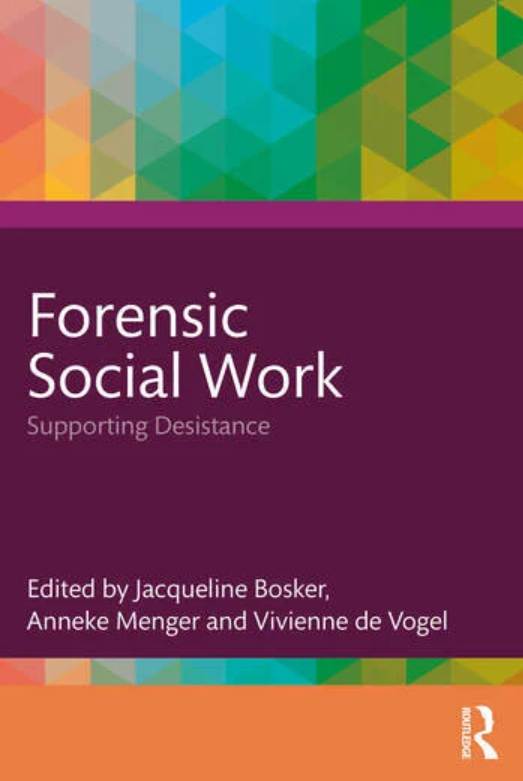
New Release: Forensic Social Work – Supporting Desistance
13/11/2025
This book, Forensic Social Work – Supporting Desistance, has been released by Routledge. It is a practice-oriented resource exploring how forensic social work can support desistance and foster meaningful change in the lives of justice-involved individuals.
Reading corner
Criminal Justice
Parole Futures
18/08/2025
At a time when many parole systems are experiencing considerable strain, the aims of this collection are twofold: first, to encourage systematic and critical reflection on the rationalities, institutions and practices of parole. Second, to think big, and pose ambitious ‘what if’ questions about the possible futures of parole and prison release. Offering novel insights from Asia, Australia, Europe, North America and South America, this collection builds the case for, and then showcases, a ‘way of doing’ parole research that is global in outlook, interdisciplinary in approach and unapologetically normative in character.
Probation Journal
Violent Extremism
2025 EU Guidance document responding to the needs of victims of terorrism
23/06/2025
To mark the EU Day of Remembrance for Victims of Terrorism on 11 March, the EU Centre of Expertise for Victims of Terrorism has published a new Guidance Document on the Needs of Victims. This document is a significant step forward in reinforcing a victim-centred approach within counter-terrorism efforts across the European Union.
Research
Launch of the CEP Research and Development Strategy Summary
17/06/2025
We’re thrilled to announce that the Confederation of European Probation (CEP), in cooperation with the University of Glasgow (led by CEP Honorary Member Professor Fergus McNeill), and with the support of the CEP Expert Group on Research, has produced the CEP Research and Development Strategy. We are happy to share the summary with you!
Probation Journal
Alternatives to pre-trial detention
Unpacking criminal detention rules and regulations across the EU
21/05/2025
The EU Agency for Fundamental Rights (FRA) has updated its online criminal detention database, which includes national standards, laws, and monitoring reports on detention conditions in the EU and the UK.
Probation Journal
Technology
Is AI Putting Remote Probation Supervision at Risk Before It Even Starts?
09/04/2025
David Jackson and Jed Stone focus on the use of AI in probation and advocate for investigations to understand the opportunity, address issues and innovate for the good of all.
Probation Journal
Probation in Europe
New Executive summaries for the report on Building Probation Capacity
19/02/2025
In March 2024, we paid attention to the study of Steve Pitts and Leo Tigges about Building Probation Capacity . The executive summary of their publication is now available in French and German, including the infographic on capacity building in both languages. Later this year, translations in Italian and Spanish will also be released!
Subscribe to our bi-monthly email newsletter!
"*" indicates required fields
- Keep up to date with important probation developments and insights.