

Previous Article
News
Researching sexual abuse in the “new” normal
As we move towards the end of 2020, we all find ourselves in a challenging and unique position, with fluctuating restrictions, local lockdown, and talk of a vaccine but no sign of one. We keep hearing that we are entering an as-yet undefined “new normal”. It is a new normal that poses many questions, challenges, and opportunities in many arenas. This is especially true in the fields of sexual abuse, domestic abuse, and interpersonal violence. How do we create and maintain an evidence base when the landscape in which we do our research has changed?
By Kieran McCartan, PhD, & David S. Prescott, LICSW
Researching sexual abuse involves many research methods and tools, all of which have their purpose and tell different research stories that are valid and important in their own contexts. Generally, we use quantitative and qualitative research methods, with a case study approach being a close third, all of which have been impacted by the pandemic in different ways and. We therefore need to recognize these issues and think about how we adapt to them. This post spells out some of the challenges that we face as researchers in the field.
Ethics: Developing and using good ethical practice in research has become central when conducting all research midst, the pandemic and moving into the “new” normal in all fields, but especially in the field of sexual abuse. In broad terms, the process of doing ethical research has shifted with the timeframe for getting ethical approval has lengthened, with more information being asked for, especially in terms of data collection, data storage, participant safeguarding, researcher safeguarding, and partnership arrangements. In regards, to sexual abuse research ethics the nature of our field indicates that our research participants maybe in vulnerable or shielded populations, as well as the fact that lockdown may mean that participants are trapped in an abusive relationship, maybe in a situation that triggers there victimization or preparation, or that they maybe feel more psychologically on edge. All of this means that we need to think more about ethics and good ethical practice in our research than ever before.
Safeguarding: In the “new” normal we need to think about the added impact of doing sexual abuse research at a distance, in terms of the researchers and the participants.
- Researchers are more likely to be doing research online, at a distance, at home and, potentially, in isolation. This means that researchers may need to check in with each other more often, talk with them about their research, and quite possibly discuss the impact that it is having on them (and their relationships with family and friends). For those who are doing research in institutions, they are doing these in COVID-19 conditions with addition precautions around them and, therefore, may feel more on edge and more vulnerable.
- In regard to participants, either people who have been victimized, people who have committed sexual abuse, and/or the peers and families that surround both groups, we need to make sure that there are appropriate safeguards in place, clear information on where they can go for support and assurances, and that the research will not do more damage than good. The reality is that participants involved in sexual abuse research, especially qualitative research, may be more vulnerable, whether psychologically or physically, because of the lived reality of COVID-19; we need to recognize as well as support them in this. In addition, the participants may be in a shared house, with people potentially causing harm to one another or being an unaware third party in a home in which abuse is occurring or about to occur. This will change the nature of the interview and could present additional risk concerns.
The reality is that online research presents additional concerns about data protection, anonymity, and privacy. Certainly, in Europe there has been conversations about the General Data Protection Regulation (GDPR) and online qualitative research.
Data Collection: Although we are still collecting data, the pandemic has affected means for doing so. This impact has been, and will be, different depending on the methodology. The biggest impact will be on lab-based research and qualitative research. During the pandemic, especially in Europe, we have seen labs closed for periods of time, greater restrictions on how labs are being used, and who has access to them. In conversations with lab-based researchers it’s not uncommon to hear them question how their projects can continue or the data collection altered. In terms of qualitive methodology, the pandemic has resulted in a change to online data collection, with zoom interviews or Microsoft Teams focus groups. Is this the most effective approach? Is doing qualitative research with people who have been sexually abused and people who have committed it effective when data collection occurs online? The challenge is that we don’t know, especially with the research and methodological fields swinging back and forward; some have stated that it could enable people to participate more while at the same time others believe that online interviews can inhibit conversations. The reality is that moving qualitative research online changes it and presents substantive challenges to the research, the researcher, and the participant. This, in turn, changes the approach to data collection impacts the data that is collected.
Doing sensitive and challenging research in the new normal means that we need to adapt our approach, that we must look at new methods and add in different considerations. It does not mean that data collection cannot happen, just that it cannot happen in the way that it did before.

Related News
Keep up to date with the latest developments, stories, and updates on probation from across Europe and beyond. Find relevant news and insights shaping the field today.
Recap

Electronic monitoring, Technology
14th Electronic Monitoring Conference, Electronic Monitoring in a Changing World – Perception vs Reality
08/10/2026
On 6-8 October 2026, Antalya hosted the 14th Electronic Monitoring Conference “Electronic Monitoring in a Changing World – Perception vs Reality”. More than 350 participants coming from 32 countries across Europe and worldwide representing probation services, Ministries of Justice, victims´ services, EM providers, researchers as well as local participants representing the Turkish Prison and Probation Service gathered to discuss how electronic monitoring (EM) is understood by all stakeholders involved including the victims and the public, and how these perceptions compare to the evidence and experiences of those affected. While the gap between perception and reality in electronic monitoring has been recognised for over a decade, the rapid expansion of EM into areas such as victim protection, high-risk supervision and digital innovation has brought new challenges and questions to the forefront.
Recap

ITSCCS
Core Correctional Skills in Digital Probation: highlights from the 6th ITSCCS in Barcelona
05/10/2026
The sixth International Training School on Core Correctional Skills (ITSCCS) took place in Barcelona from 28 September to 2 October 2026, bringing together 26 participants for a week of learning, practical training and international exchange. Organised by the Confederation of European Probation (CEP) and the Centre for Legal Studies and Specialised Training (CEJFE), the programme focused on “Clicks and Empathy: Core Correctional Skills in Digital Probation.”
Recap
Framework Decisions
Recap: ERA workshop on Framework Decisions 829 and 947 in Bucharest
02/10/2026
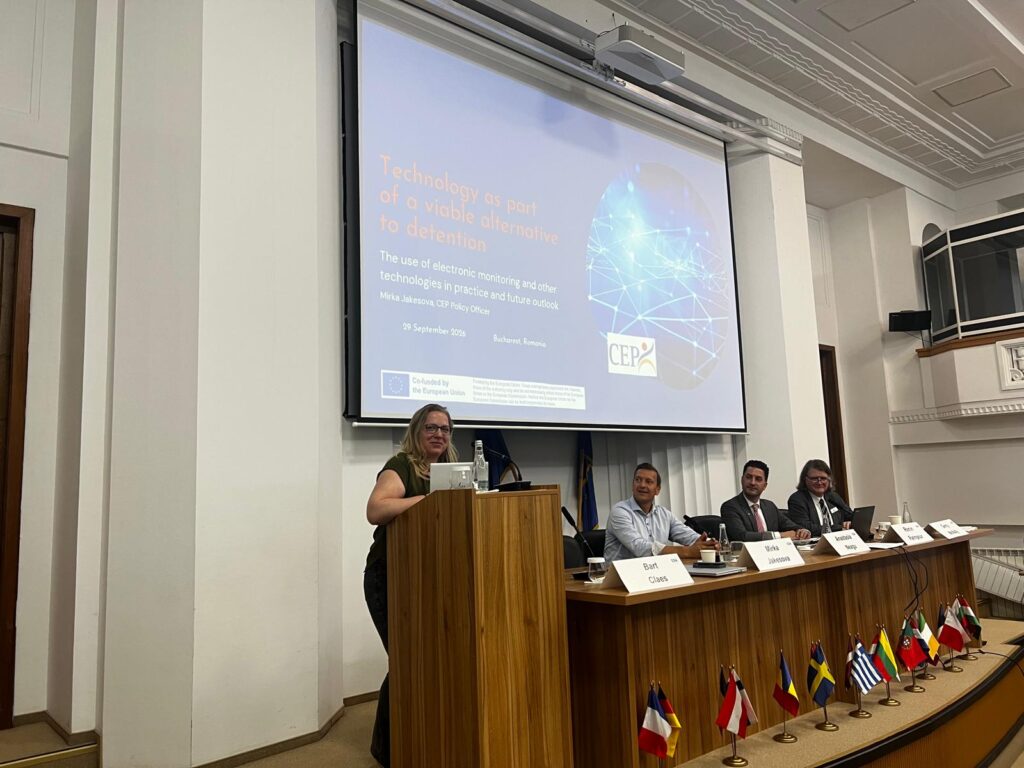
CEP Vice-President Daniel Danglades, Ambassador Gerry McNally and Policy Officer Mirka Jakesova participated in the Seminar on Framework Decisions 829 and 947 and their Impact on Alternatives in the EU organized under the EU project run by the Academy of European Law on 28-29 September in Bucharest, Romania. The seminar brought together judges, prosecutors, probation practitioners, academics, and policy experts to discuss the growing role of alternatives to detention within European criminal justice systems.
New
CEP
CEP and Catalan justice leaders reaffirm longstanding cooperation
29/09/2026
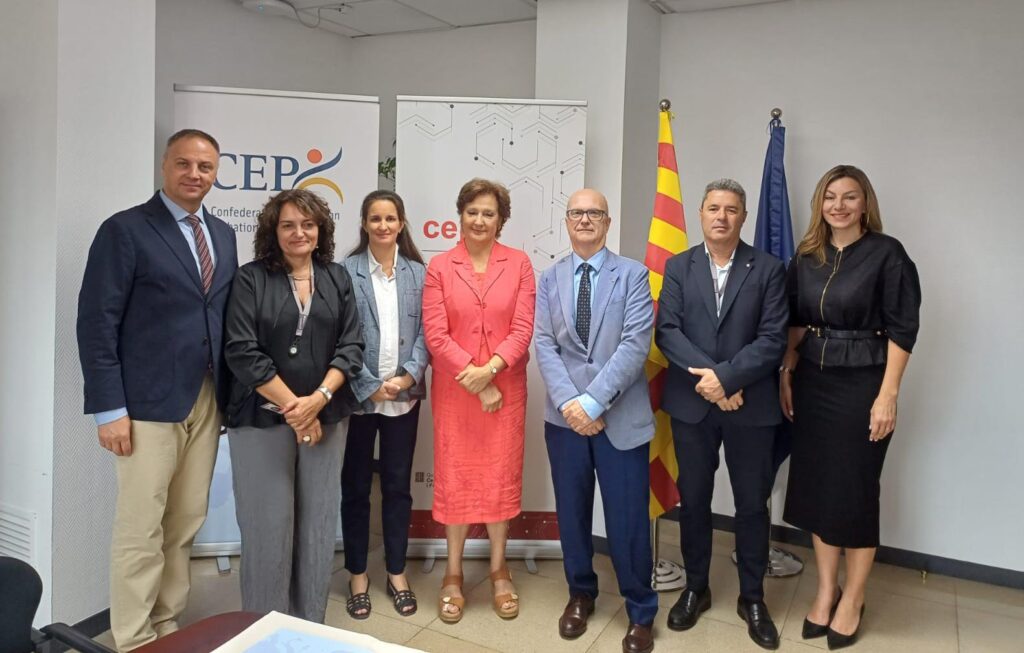
Representatives of the Confederation of European Probation (CEP) met with senior officials from the Catalan Department of Justice and Democratic Quality in Barcelona on 28 September 2026, alongside the opening of the sixth International Training School on Core Correctional Skills. The meeting offered an opportunity to recognise a longstanding partnership and discuss its continued development.
Updated
Mental Health
DEADLINE EXTENDED: Call for Pilot Implementation of the European Mental Health Training Curriculum
29/09/2026
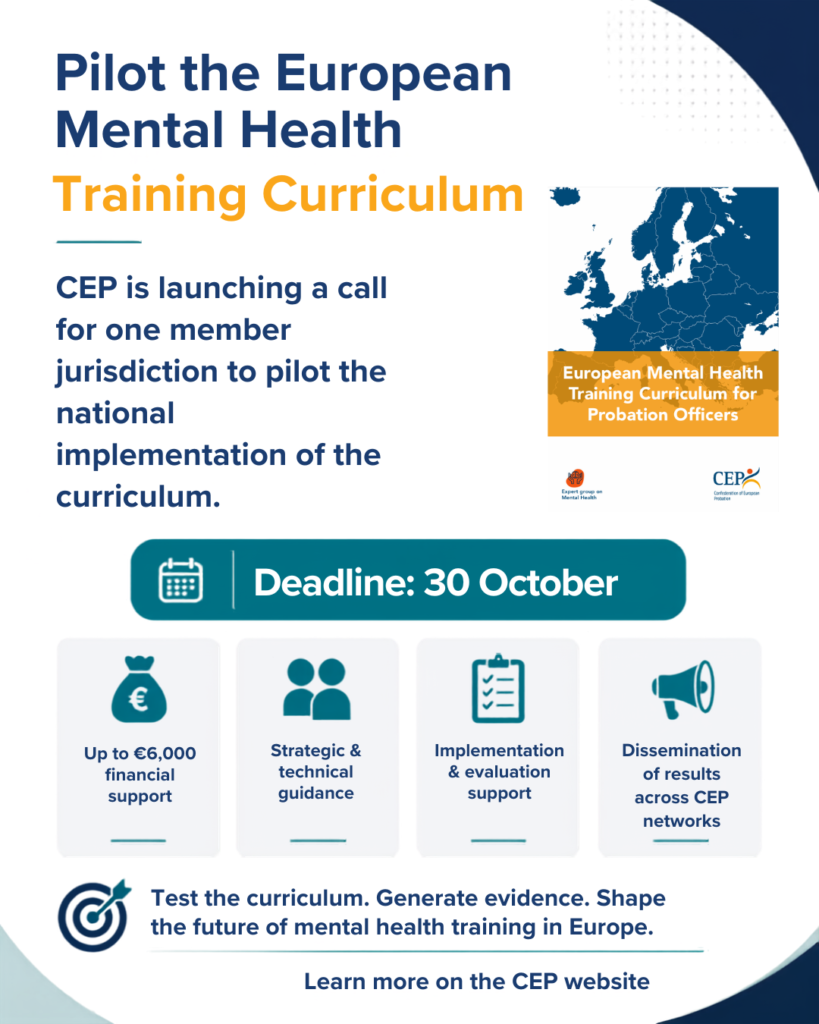
Good news for CEP members! Following requests from our members, CEP has extended the deadline to apply for the pilot implementation of the European Mental Health Training Curriculum for Probation Officers.
Recap

ITSCCS, Technology
6th International Training School opens in Barcelona with a focus on digital probation
28/09/2026
How can probation professionals use new technologies in their interactions while building trust, showing empathy and supporting change? This question is at the heart of the sixth International Training School on Core Correctional Skills, which opened in Barcelona on 28 September 2026.
Subscribe to our bi-monthly email newsletter!
"*" indicates required fields
- Keep up to date with important probation developments and insights.