

Previous Article
News
Research note
The ethnography of the prisoner transitions aims at developing an advanced understanding of the re-entry process from the subjective perspective of prisoners themselves. The processes, interactions, meanings and conflicts involved in re-entry will be examined from Roma and non-Roma prisoner’s point of view. Moreover, in order to assess the impact of the cultural, political and social environment on the reintegration process, the research will be conducted in two countries: Norway and Romania. The research sample will consist of 20 Romanian prisoners with Roma background, 20 Romanian prisoners with non-Roma background, 10 Romanian prisoners held in a Norwegian prison and 5 Romanian prisoners with Roma background held in a Norwegian prison. The data collection and data analysis will follow the same procedure in both countries so that comparative analysis will be possible.
By Ioan Durnescu
The research methodology is based on an ethnographic design where researchers will ‘immerse’ themselves into the subjective realities of the prisoners. The main research methods will be observation, in-depth interview, psychometric tests and photography. During the research, the researchers will spend as much time as possible with the participants prior to and post release. The participants will ‘shadow’ the released prisoners in the first day of freedom. Interviews will be conducted: one before release and four after release (after one week, after one month, after three months, after one year from release). Psychometrics will monitor changes in motivation, agency, hope, problem solving and coping abilities.
Preliminary results will be presented at the Annual Conference of the European Society of Criminology, Porto, September, 2015.
The project is co-funded by the EEA Grants / Norway through the Romanian Authority for Scientific Research and Innovation.
For more info:
Ioan Durnescu: idurnescu@gmail.com
Thomas Ugelvik: thomas.ugelvik@jus.uio.no

Related News
Keep up to date with the latest developments, stories, and updates on probation from across Europe and beyond. Find relevant news and insights shaping the field today.
New
CEP Board
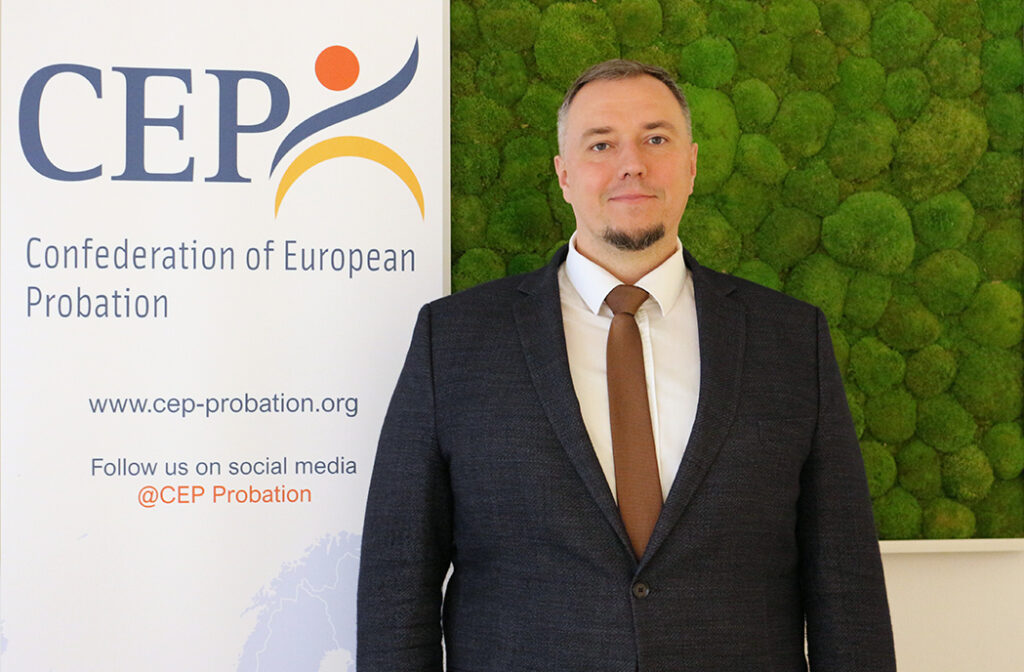
Interview with new CEP board member Žilvinas Miliauskas
17/03/2026
During the General Assembly in Austria, a new CEP Board got elected for the upcoming three years. In the coming weeks we will publish interviews with all newly-elected board members where they will share information on their professional background, how they would like to contribute, what challenges lie ahead and many more.
Enjoy reading!
Recap
Violent Extremism
Recap: Expert Group meeting on Violent Extremism
16/03/2026
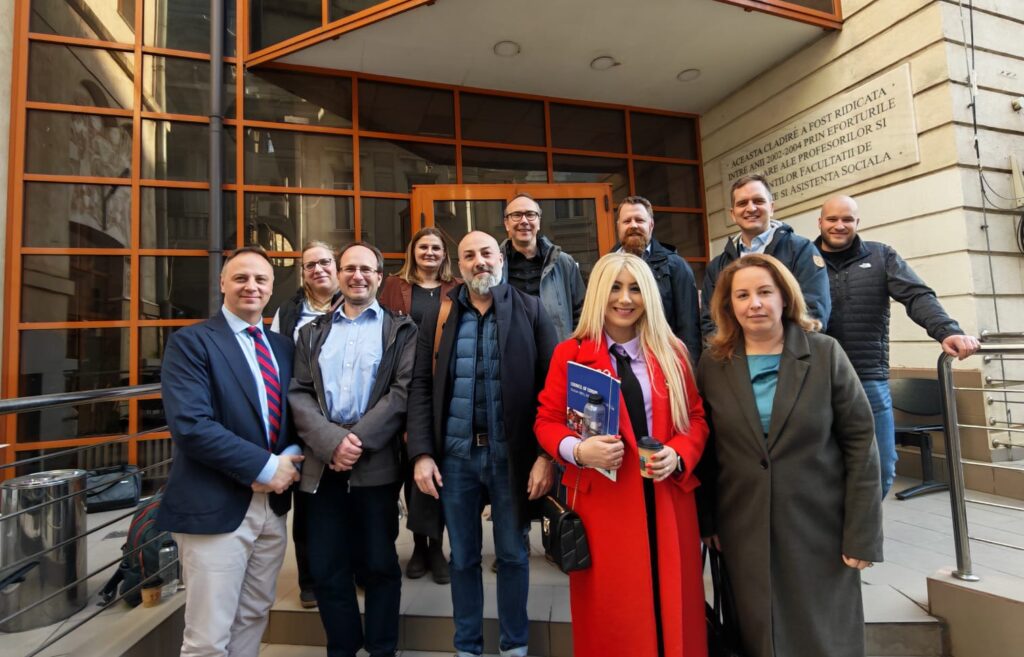
On 12–13 March 2026, the Expert Group on Violent Extremism convened for an in‑person meeting in Bucharest, Romania. Hosted at the University of Bucharest, the meeting brought together practitioners and representatives from across Europe to finalise the overview of best practices for preventive interventions targeting juveniles and young adults up to the age of 26 under probation. Building on the extensive discussions and progress made in 2025, the group worked collaboratively to bring the document to completion.
Recap
Electronic monitoring
Recap: CEP Expert Group meeting at ATGV Antalya
12/03/2026
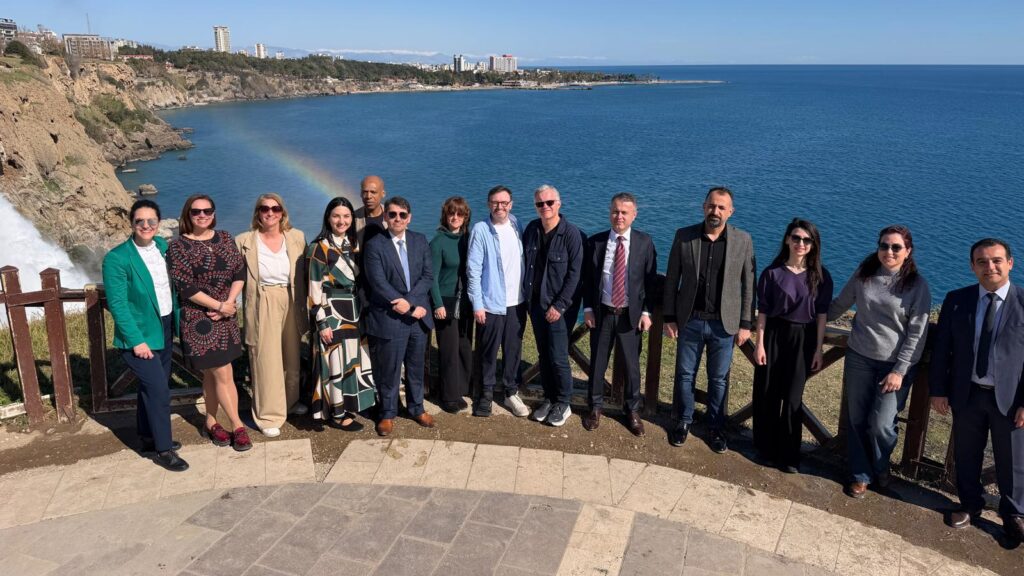
The CEP Expert Group on Electronic Monitoring, along with representatives of the CEP Office led by Mr. Daniel Danglades, CEP Vice-President, visited the Education and Social Facility of the Ministry of Justice in Türkiye – ATGV Antalya. The host country was represented by a high-level delegation, including Deputy Director General Mr. Fatih Güngör, Head of the Turkish Probation Department Dr. Hüseyin Şık, Member of the CEP EM Expert Group Ms. Elçin Kilecioğlu, as well as the Director and representatives of the ATGV facility, and officials from the courts, prosecution, and probation services in Antalya.
Recap
Education and Training
Recap: CEP Expert Network on Education and Training in Probation meets with the European Commission to discuss the EU Judicial Training Strategy
11/03/2026
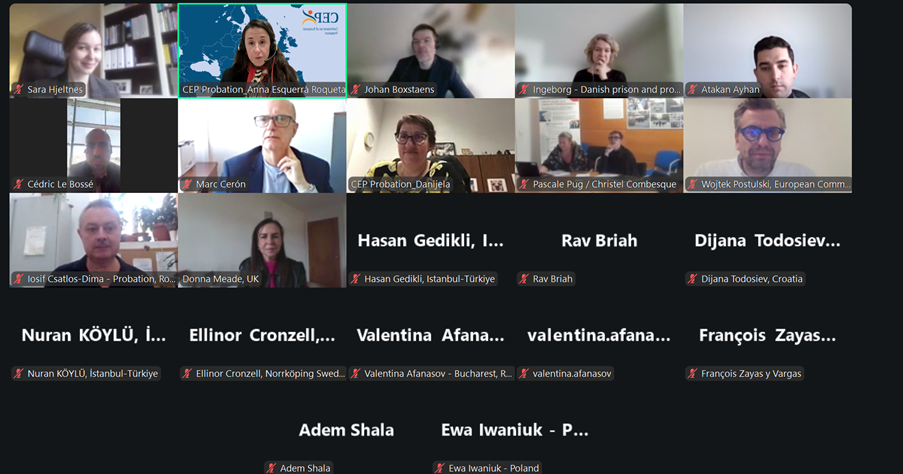
On 11 March 2026, the CEP Expert Network on Education and Training in Probation met online with more than 20 participants from Belgium, Denmark, Sweeden, France, Romania, Croatia, Catalonia, Poland, United Kingdom and Türkiye to exchange views with the European Commission on the newly adopted EU Judicial Training Strategy 2025–2030.
The meeting provided a valuable opportunity for representatives of probation training institutions across Europe to engage directly with European Commission officials and discuss how the strategy may impact the training of probation and prison staff in the coming years.
Probation Journal

Women, youth
Understanding the needs of girls and young women in youth justice
10/03/2026
New research highlights the underlying needs that influence girls’ and young women’s contact with youth justice systems and calls for more gender responsive approaches in policy and practice. Drawing on a review of recent studies, the authors identify several factors shaping girls’ pathways into the justice system, including persistent abuse, trauma, gendered expectations, and systemic failures. Girls involved in youth justice are often affected by multiple forms of victimisation, such as sexual abuse, neglect, and domestic violence, with experiences frequently beginning in early childhood.
New
CEP Board
Interview with new CEP board member Ian Barrow
09/03/2026
During the General Assembly in Austria, a new CEP Board got elected for the upcoming three years. In the coming weeks we will publish interviews with all newly-elected board members where they will share information on their professional background, how they would like to contribute, what challenges lie ahead and many more.
Enjoy reading!
Subscribe to our bi-monthly email newsletter!
"*" indicates required fields
- Keep up to date with important probation developments and insights.