

Previous Article
News
‘Poor prison conditions may increase the likelihood of radicalisation’
CEP Vice-President Sue Hall attended the 9th Meeting of the Council for Penological Co-operation held in Strasbourg, 22-24 April 2015. Main topic was the development of an early draft of Guidelines on the role prison and probation services can play in dealing with radicalisation and violent extremism. A recap.
‘I attended the 9th meeting of the Working Group in Strasbourg between 22-24 April 2015. Although most of the discussions took place within the working group, observers were allowed to contribute. Part of my brief was to ensure that sufficient account was taken of the probation perspective on behalf of CEP.
The main topic was the development of an early draft of ‘Guidelines on the role prison and probation services can play in dealing with radicalisation and violent extremism’. PC-CP has been requested to produce a further draft for discussion at the Council of Europe Conference of Directors of Prison and Probation Services to be held in Bucharest in June.
Radicalisation is currently also a priority for the European Commission which has established the Radicalisation Awareness Network (RAN). It has also published a Communication: ‘Preventing Radicalisation to Terrorism and Violent Extremism: Strengthening the EU’s Response” (COM 2013 941). It was therefore important for the PC-CP to define the contribution that a Council of Europe document could add to other work being undertaken.
For this reason the first draft focused on ensuring that treatment of individuals and groups – particularly in prison – did not lead to an infringement of human rights. The aim however is to produce a document which is not just a re-statement of good practice as expressed through the existing European Probation and Prison Rules.
It became apparent that trying to develop specific rules which give positive guidance is difficult. It is recognised that these rules will only relate to a minority of individuals in prison or subject to community sanctions. Research and evidence of effective practice is still at an early stage. There are many routes through which individuals become radicalised but not all radicalised individuals go on to commit violent acts. Although poor prison conditions or social conditions increase the likelihood of radicalisation for some individuals, these are not the only factors – all countries are facing problems and radicalised individuals can be drawn from any sector of society.
Despite these challenges progress was made in developing the content, but significant amount of work remains to be done in producing the next draft.
The experience of observing the PC-CP working group was extremely interesting. Further information on the work of the PC-CP can be found on the PC-CP website.
The PC-CP working group
The Council for Penological Co-operation (PC-CP) works to the European Committee on Crime Problems within the Council of Europe. It is responsible for developing the European Rules on Community Sanctions and Measures, the European Prison Rules, the European Probation Rules, the European Rules for Juvenile Offenders subject to Sanctions and Measures and the recent Recommendation on Electronic Monitoring.
The PC-CP working group has 9 members from different European countries and is chaired by Mauro Palma from Italy (see list below). CEP has observer status, as does EuroPris. Representatives from the EU, the Council for the Prevention of Torture and from the USA, Russian Federation and Denmark were also present.
Members of the PC-CP Working Group
Chair: Mauro Palma (Italy)
Vice Chair: Alina Barbu (Romania)
Harald Føsker (Norway)
Vivian Gerian (Ireland)
Antanas Jatkevičius (Lithuania)
Joerg Jesse (Germany)
Attial Juhász (Hungary)
Dominik Lehner (Switzerland)
Peter Lindströhm (Sweden)

Related News
Keep up to date with the latest developments, stories, and updates on probation from across Europe and beyond. Find relevant news and insights shaping the field today.
Recap
Framework Decisions
Recap: ERA workshop on Framework Decisions 829 and 947 in Bucharest
02/10/2026
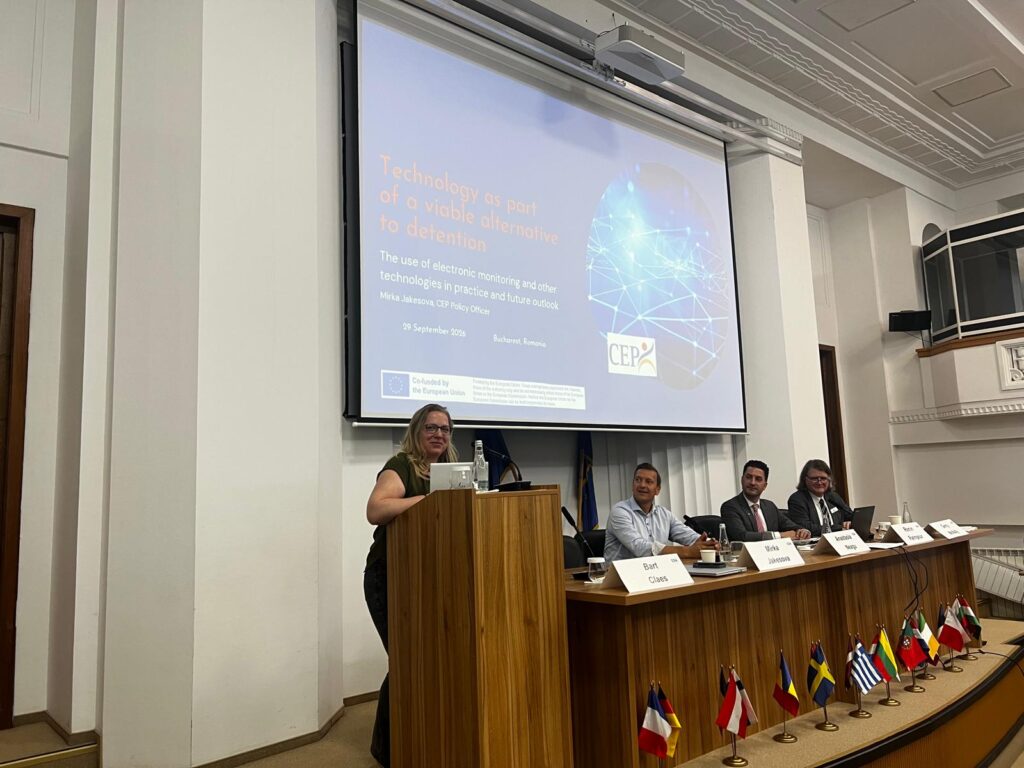
CEP Vice-President Daniel Danglades, Ambassador Gerry McNally and Policy Officer Mirka Jakesova participated in the Seminar on Framework Decisions 829 and 947 and their Impact on Alternatives in the EU organized under the EU project run by the Academy of European Law on 28-29 September in Bucharest, Romania. The seminar brought together judges, prosecutors, probation practitioners, academics, and policy experts to discuss the growing role of alternatives to detention within European criminal justice systems.
New
CEP
CEP and Catalan justice leaders reaffirm longstanding cooperation
29/09/2026
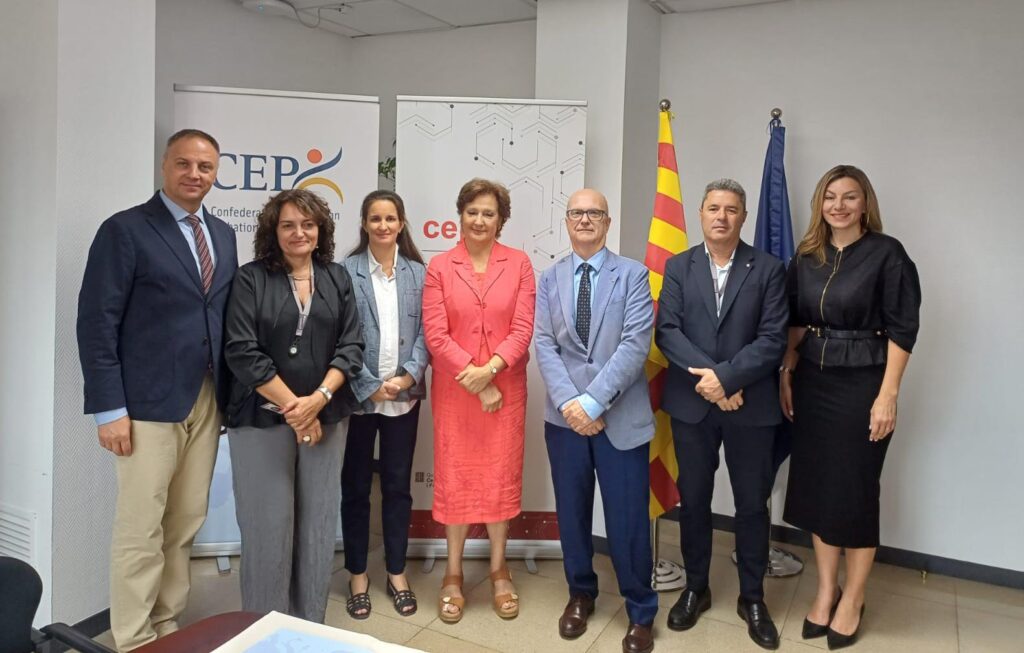
Representatives of the Confederation of European Probation (CEP) met with senior officials from the Catalan Department of Justice and Democratic Quality in Barcelona on 28 September 2026, alongside the opening of the sixth International Training School on Core Correctional Skills. The meeting offered an opportunity to recognise a longstanding partnership and discuss its continued development.
Updated
Mental Health
DEADLINE EXTENDED: Call for Pilot Implementation of the European Mental Health Training Curriculum
29/09/2026
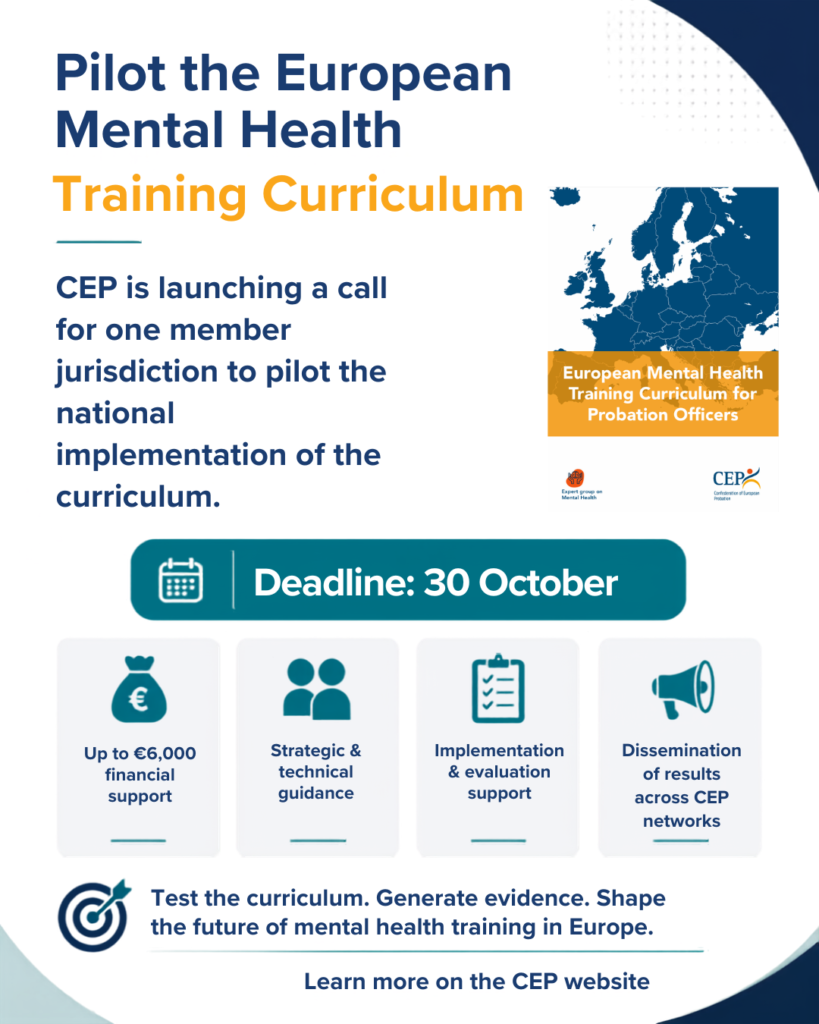
Good news for CEP members! Following requests from our members, CEP has extended the deadline to apply for the pilot implementation of the European Mental Health Training Curriculum for Probation Officers.
Recap

ITSCCS, Technology
6th International Training School opens in Barcelona with a focus on digital probation
28/09/2026
How can probation professionals use new technologies in their interactions while building trust, showing empathy and supporting change? This question is at the heart of the sixth International Training School on Core Correctional Skills, which opened in Barcelona on 28 September 2026.
Recap
Probation in Europe
CEP at 42nd PC-CP Working Group Meeting
23/09/2026
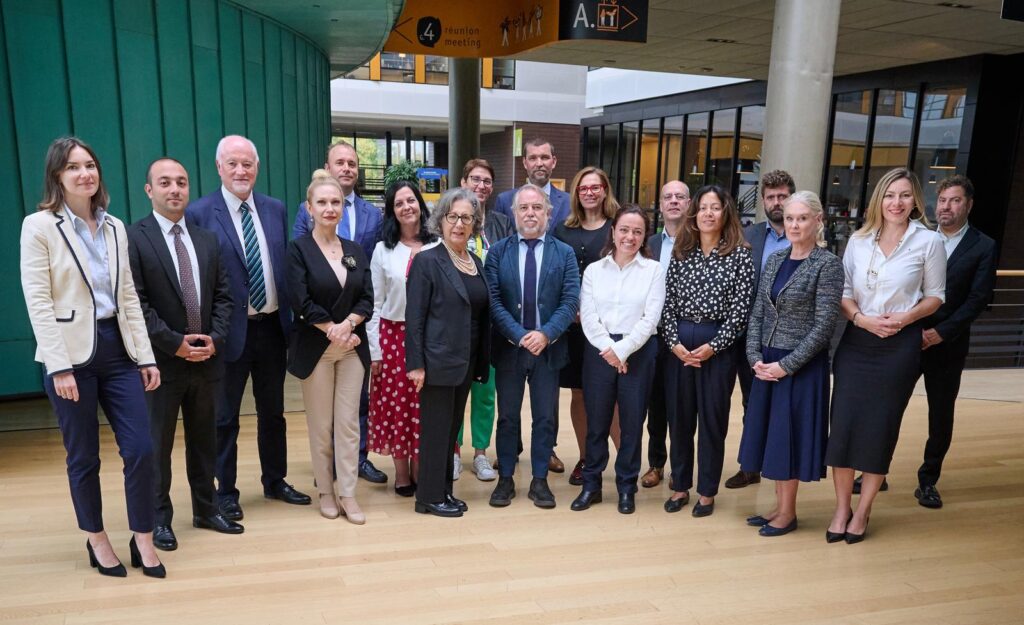
The Council for Penological Co-operation (PC-CP) Working Group held its 42nd meeting from 15–17 September 2026 in Strasbourg. CEP was represented by Secretary General Jana Špero Kamenjarin.
New
Probation in Europe
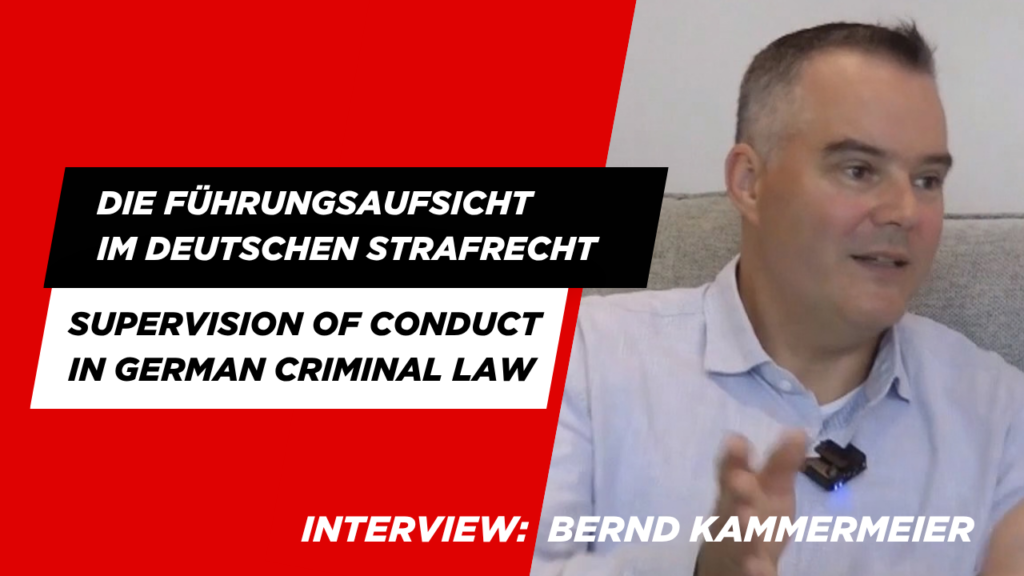
New Division episode: Bernd Kammermeier on Supervision of Conduct
23/09/2026
The 22nd episode of Division_Y features Bernd Kammermeier from Rostock, Mecklenburg-Western Pomerania.
Bernd is a unionist, practitioner and academic expert on supervision of conduct (Führungsaufsicht) in Germany. His recent PhD thesis examines the development and legal framework of this important instrument.
Subscribe to our bi-monthly email newsletter!
"*" indicates required fields
- Keep up to date with important probation developments and insights.