
Previous Article
News
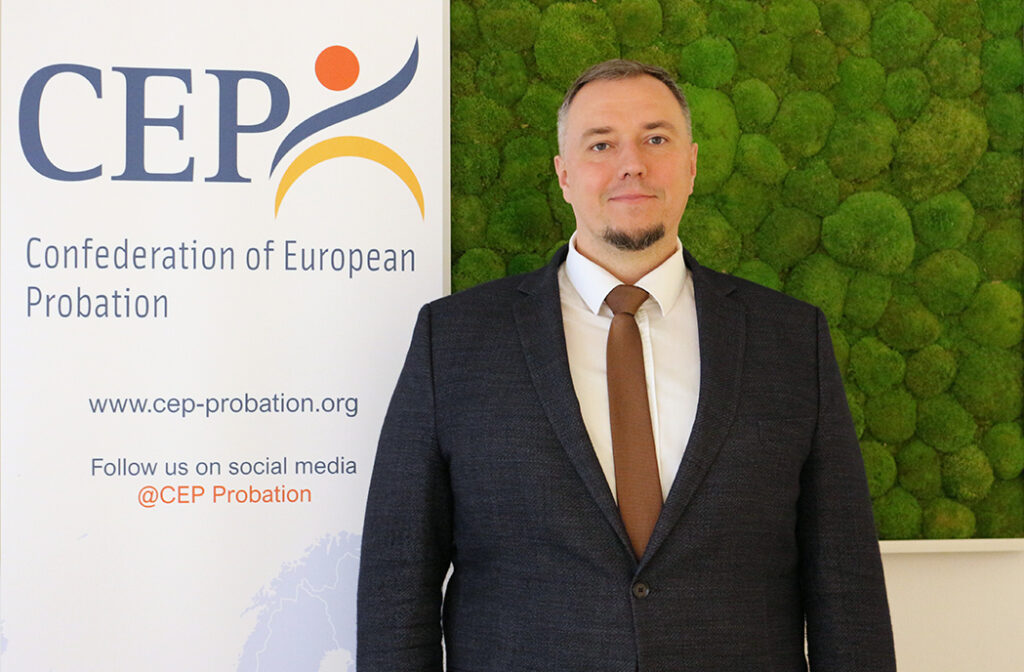
new CEP member: Christian Ghanem
In recent weeks, CEP has interviewed individual members and representatives of the new member organisations that joined CEP at the beginning of 2024. In these interviews, the new member organisations or individual members will share information on why they decided to become members, how they would like to contribute to the development of CEP and many more. Enjoy reading!
Can you introduce yourself?
My name is Christian Ghanem and my first encounters with probation work occurred during my studies in Social Work. Through an internship in 2008, I had the opportunity to discover the potentials of this field of Social Work. After completing my studies, I worked as a probation officer in Munich, where I developed a passion for probation work. At that time, questions arose about how to reconcile scientific knowledge and social work practice as well as my professional identity with the realities of probation work in which paternalism and force play a crucial role. I pursued these questions in my PhD studies and they continue to accompany me to this day. Currently, I work as a professor at the Technical University of Nuremberg, focusing on topics related to criminal justice social work and criminology.
Why did you decide to join CEP?
For many years, I have been receiving the CEP newsletter, allowing me to follow the initiatives and achievements from a distance. In 2023, I was invited to give a lecture at the 10th CEP Directors Generals conference on German probation service, desistance, and the development of the Act on Ambulant Reintegration of Offenders. At this inspiring conference, I met wonderful and highly dedicated colleagues from practice and academia from all over Europe. I not only found the content to be very well-founded and beneficial but also appreciated the dynamic exchange across borders. As German probation is relatively closed with limited interaction with other countries, there is a strong need for such international networks like CEP to exchange knowledge and benefit from each other.
How would you like to contribute to the development of CEP, its projects, actions, and work programme, and what are your plans with CEP (Expert Groups that you would like to join or contribute to, topics or themes that you want to pay attention to, e.g., mental health, parole, etc)?
Destigmatizing convicted individuals is important to me, and creating spaces to amplify their voices. This includes advocating for the rights of convicted individuals and criminal justice social work on a political level to create conditions that not only enable desistance but also make human rights tangible in concrete life worlds. With these goals, I am willing to share my experiences and collaborate on projects across borders. Another priority in my life is my family and three lovely children. While my time resources are somewhat limited in this phase of my life, I would be eager to invest the remaining time to promote international dialogue and connect the realms of science and probation practice.
More specifically, I am generally interested in various themes within prison and probation research:
- Desistance processes of individuals
- Professionalism in probation
- Harm reduction strategies for substance users
- Parenthood and incarceration
- Elderly inmates
- Digital technologies in criminal justice
I am currently involved in research projects on some of these topics, and I am willing to contribute research findings to CEP in a suitable way.

Related News
Keep up to date with the latest developments, stories, and updates on probation from across Europe and beyond. Find relevant news and insights shaping the field today.
New
Electronic monitoring
Electronic Monitoring in Europe: Insights from the 13th Electronic Monitoring conference Questionnaire
30/03/2026
The 13th Electronic Monitoring (EM) conference Questionnaire has now been released, offering a comprehensive overview of how EM is applied across Europe today.ion.
New
CEP members
New CEP member: Guernsey Probation Service
25/03/2026
In recent weeks, CEP has interviewed individual members and representatives of the new member organisations that joined CEP at the beginning of 2026. In these interviews, the new member organisations or individual members will share information on why they decided to become members, how they would like to contribute to the development of CEP and many more.
Enjoy reading!
Recap
Probation outside Europe
Recap: CEP and APPA webinar
25/03/2026
Confederation of European Probation (CEP) and American Probation and Parole Association (APPA) hosted the second joint webinar on 24 March 2026, this time on “Integrity of Performance: Ensuring Meaningful and Ethical Outcomes”.
The overarching theme of integrity of performance was explored through two distinct perspectives on this fundamental concept.
Recap
Communication and Awareness-Raising
Recap: Opening Doors to Second Chances: The Mission and Impact of Yellow Ribbon Run
25/03/2026
On Thursday 19 March, CEP hosted the second webinar of 2026 on the topic of Alternatives to Detention. The session led by Dr. Gabriela Slovakova from the Czech Probation and Mediation Service titled „Opening Doors to Second Chances: The Mission and Impact of Yellow Ribbon Run“ introduced the Yellow Ribbon project with a powerful message of second chances and fair opportunities.
New
CEP Board
Interview with new CEP board member Žilvinas Miliauskas
17/03/2026
During the General Assembly in Austria, a new CEP Board got elected for the upcoming three years. In the coming weeks we will publish interviews with all newly-elected board members where they will share information on their professional background, how they would like to contribute, what challenges lie ahead and many more.
Enjoy reading!
Recap
Violent Extremism
Recap: Expert Group meeting on Violent Extremism
16/03/2026
On 12–13 March 2026, the Expert Group on Violent Extremism convened for an in‑person meeting in Bucharest, Romania. Hosted at the University of Bucharest, the meeting brought together practitioners and representatives from across Europe to finalise the overview of best practices for preventive interventions targeting juveniles and young adults up to the age of 26 under probation. Building on the extensive discussions and progress made in 2025, the group worked collaboratively to bring the document to completion.
Subscribe to our bi-monthly email newsletter!
"*" indicates required fields
- Keep up to date with important probation developments and insights.