

Previous Article
News
Interview with Nataša Radonjić: Director General for Criminal Sanctions
Nataša Radonjić: Director General for Criminal Sanctions Enforcement Department of the Ministry of Justice in Montenegro
- How did the probation service in Montenegro change over time?
- How many cases would an Officer receive after the case load calculation formula in comparison to before?
- What was the main reason for this change?
Probation service of Montenegro has been developing similarly to all young probation services. Following the increase in the confidence of courts in Montenegro to impose the alternative sanctions, mainly community service sentence, probation service was growing, developing and increasing its capacities in terms of staffing.The number of court decisions which enforcement was entrusted by the courts to the Probation service, current number of staff members and working conditions definitely asked for a new organizational approach. After being appointed at the position of the Director General in the Ministry of Justice, I have invested efforts in establishing better organizational models while one of the approaches was actually development of the model for caseload calculation for probation officers. Having in mind all necessary actions which need to be taken when processing the case, including the field work of the probation officers, it was necessary to reach the level of the objective caseload and equal allocation of the probation cases among probation officers.
- What were the strengths in the newly created probation formula?
- What do you think about the fact that probation formula could be of inspiration for another country?
- Did the Officers in Montenegro learn more about their own system through this cooperation and creation of a formula?
Once the case is allocated to the probation officer, he becomes responsible for it and monitors the progress in processing, which is the good point. Thus, according to all allocated cases, a probation officer can estimate how much time is required for case processing and organization of the work under each allocated case. Also, from the aspect of the work organization it is possible to estimate whether the total number of cases which are being processed is lower or higher than the average number of cases which can be completed within regular working hours. The introduction of the system required the cooperation and commitment of all probation officers. At this point, I can conclude that we all benefited from the system, especially from the aspect of efficiency and organization of the probation work in the Probation service.
- How does a working probation system look like? What is the ideal?
- What are some of the next steps for the Montenegro probation service department?
In line with the established caseload system, the case submitted by the court for enforcement is allocated to the probation officer who becomes responsible for the case and initiates its processing. Currently, probation officers are mainly enforcing the community service sentence and home detention. However, the model is being supported to encourage courts to decide on conditional releases which duration will be longer than it is the case now, together with special conditions imposed to the conditionally released persons, as well as, suspended sentences with protective supervision, which has not been the practice so far. Also, we are establishing the electronic monitoring for enforcement of two security measures – restraining order and removal from the place of residence which are applicable for the criminal offences in the area of domestic violence.
The Probation office in Bijelo Polje has started functioning in March 2020. Enforcement of the alternative sanctions imposed by the courts in the north of Montenegro falls under the competence of the office in Bijelo Polje. We hope that additional probation office covering the southern region of the country will be established in the future. However, considering the current number of incoming probation cases, conditions and functionality in performing probation tasks, the cases submitted by the courts from the central and southern region of the country can be successfully enforced by the Probation office in Podgorica. Due to the competences which probation officers have in relation to security measures, increased number of home detention cases and competences of the probation service in preparing the pre-trial reports which has been introduced recently, probation office in Podgorica will be strengthened by two new probation officers by the end of this year. It is worth mentioning that the Probation service has had positive experience since the practice of preparing pre-trial reports was introduced and our reports are well accepted by the courts, as well as the types of alternative sanctions proposed by the probation officers. We are all striving for ideals. I believe that all probation services are ideal model which is being developed further thanks to our constant and everyday commitment, results of our work and wish to meet in the future the convicted persons who served an alternative sanction being the useful members of our community who will never commit criminal offences again.

Related News
Keep up to date with the latest developments, stories, and updates on probation from across Europe and beyond. Find relevant news and insights shaping the field today.
Recap
Electronic monitoring, Technology
14th Electronic Monitoring Conference, Electronic Monitoring in a Changing World – Perception vs Reality
08/10/2026
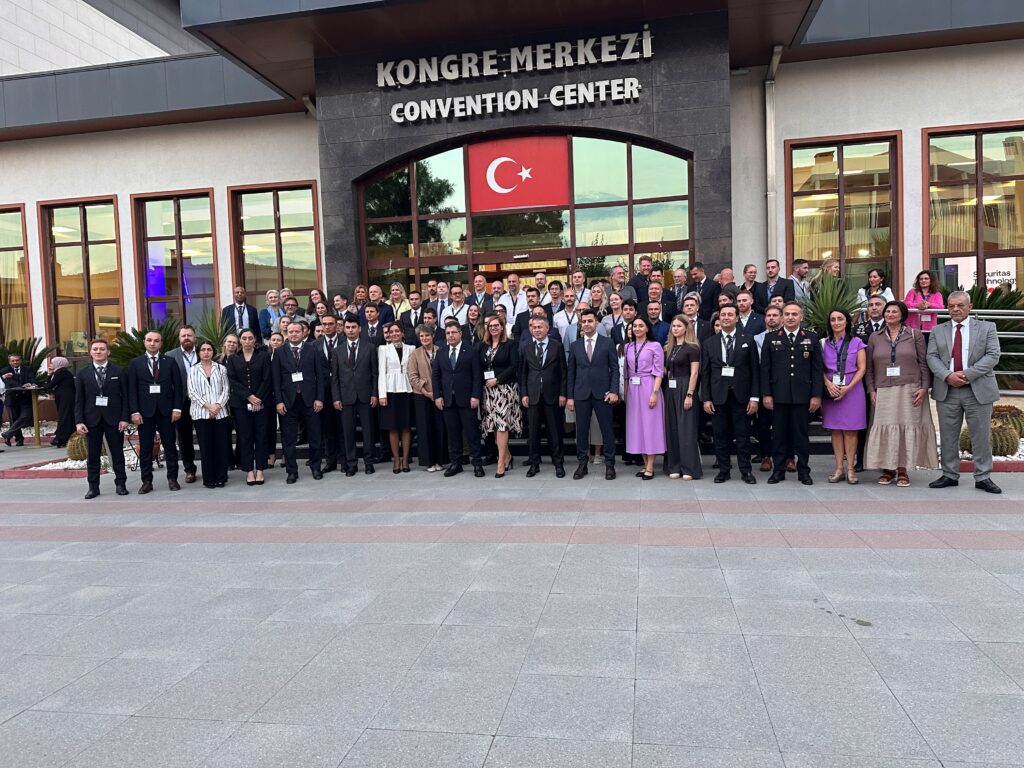
On 6-8 October 2026, Antalya hosted the 14th Electronic Monitoring Conference “Electronic Monitoring in a Changing World – Perception vs Reality”. More than 350 participants coming from 32 countries across Europe and worldwide representing probation services, Ministries of Justice, victims´ services, EM providers, researchers as well as local participants representing the Turkish Prison and Probation Service gathered to discuss how electronic monitoring (EM) is understood by all stakeholders involved including the victims and the public, and how these perceptions compare to the evidence and experiences of those affected. While the gap between perception and reality in electronic monitoring has been recognised for over a decade, the rapid expansion of EM into areas such as victim protection, high-risk supervision and digital innovation has brought new challenges and questions to the forefront.
Recap
ITSCCS
Core Correctional Skills in Digital Probation: highlights from the 6th ITSCCS in Barcelona
05/10/2026
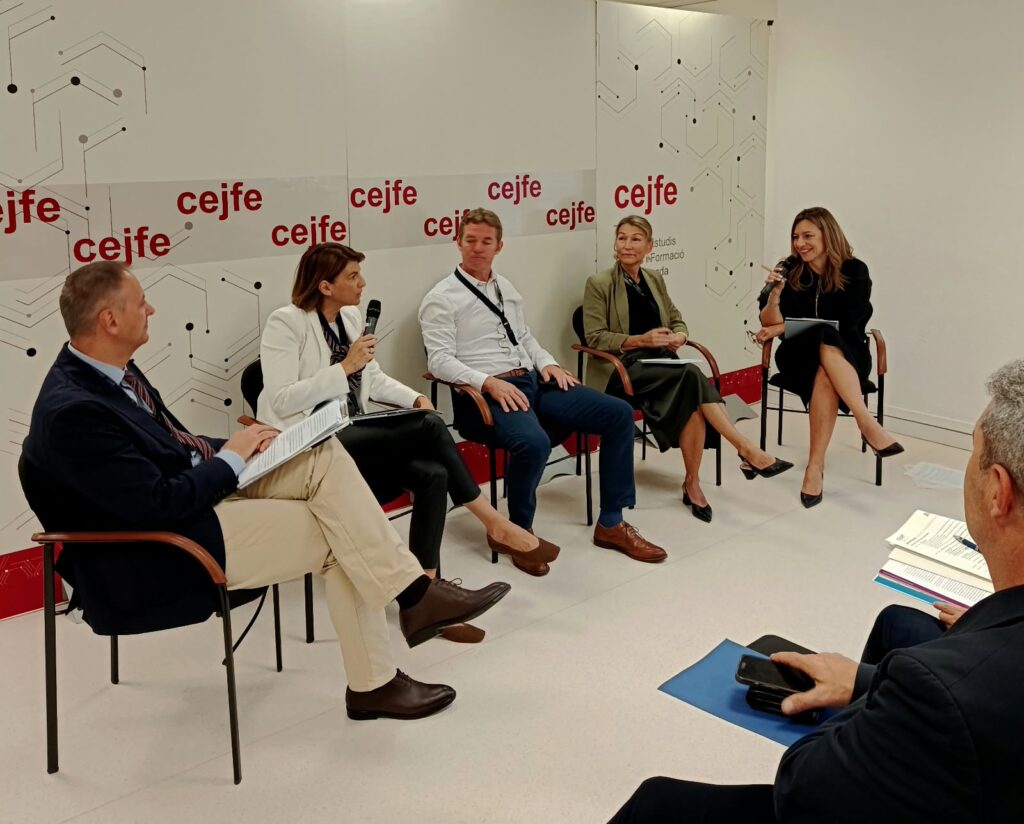
The sixth International Training School on Core Correctional Skills (ITSCCS) took place in Barcelona from 28 September to 2 October 2026, bringing together 26 participants for a week of learning, practical training and international exchange. Organised by the Confederation of European Probation (CEP) and the Centre for Legal Studies and Specialised Training (CEJFE), the programme focused on “Clicks and Empathy: Core Correctional Skills in Digital Probation.”
Recap
Framework Decisions
Recap: ERA workshop on Framework Decisions 829 and 947 in Bucharest
02/10/2026
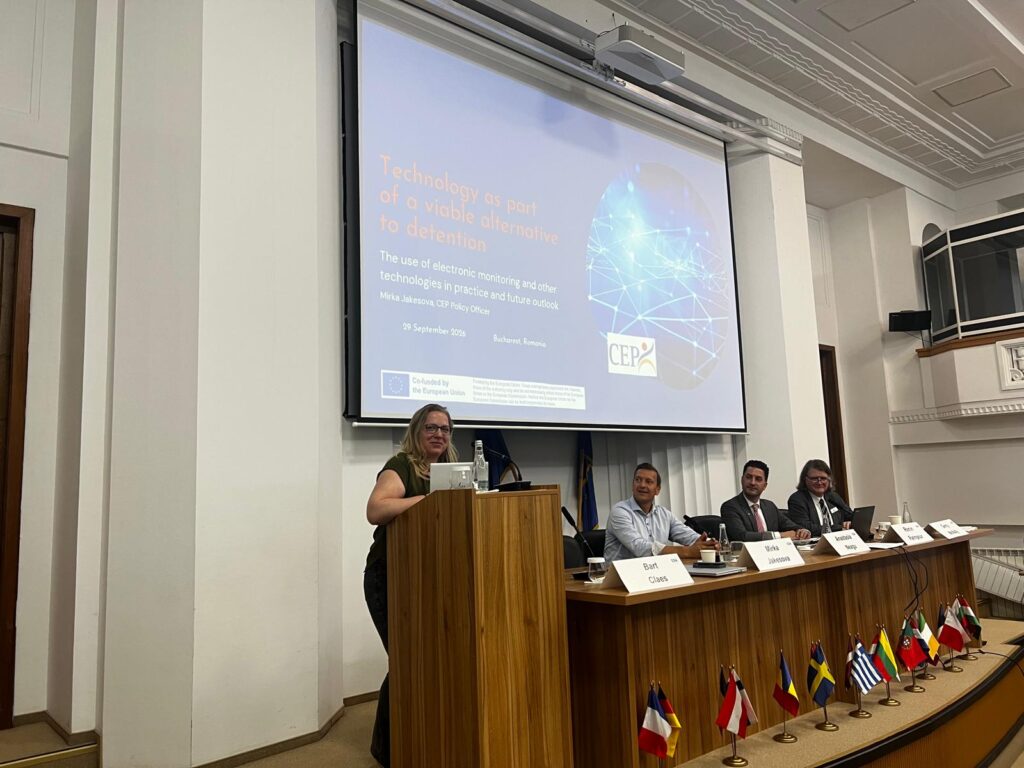
CEP Vice-President Daniel Danglades, Ambassador Gerry McNally and Policy Officer Mirka Jakesova participated in the Seminar on Framework Decisions 829 and 947 and their Impact on Alternatives in the EU organized under the EU project run by the Academy of European Law on 28-29 September in Bucharest, Romania. The seminar brought together judges, prosecutors, probation practitioners, academics, and policy experts to discuss the growing role of alternatives to detention within European criminal justice systems.
New
CEP
CEP and Catalan justice leaders reaffirm longstanding cooperation
29/09/2026
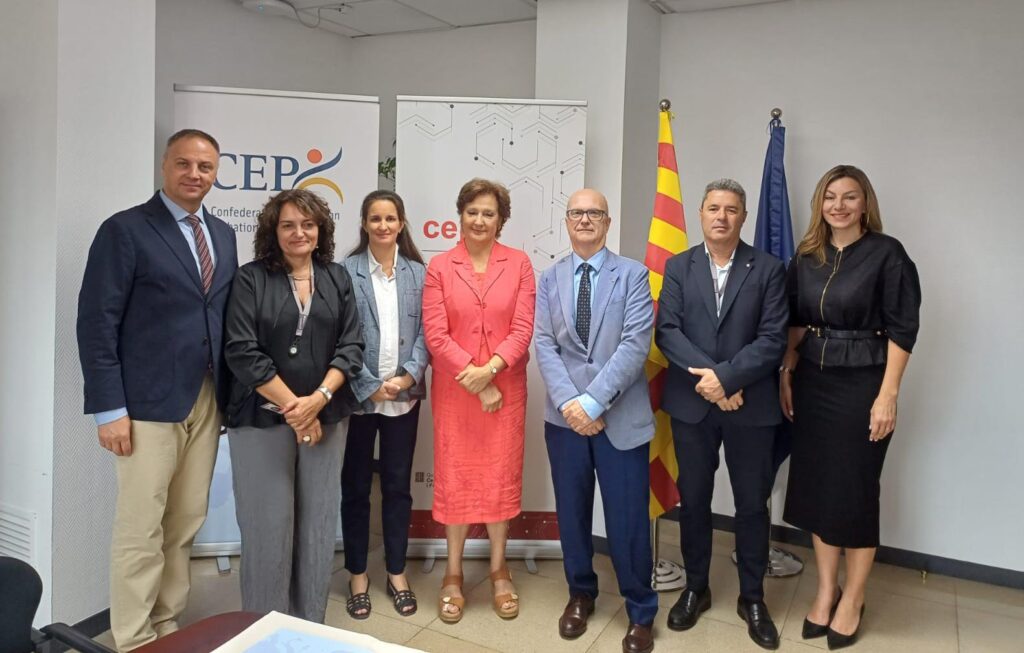
Representatives of the Confederation of European Probation (CEP) met with senior officials from the Catalan Department of Justice and Democratic Quality in Barcelona on 28 September 2026, alongside the opening of the sixth International Training School on Core Correctional Skills. The meeting offered an opportunity to recognise a longstanding partnership and discuss its continued development.
Updated

Mental Health
DEADLINE EXTENDED: Call for Pilot Implementation of the European Mental Health Training Curriculum
29/09/2026
Good news for CEP members! Following requests from our members, CEP has extended the deadline to apply for the pilot implementation of the European Mental Health Training Curriculum for Probation Officers.
Recap
ITSCCS, Technology
6th International Training School opens in Barcelona with a focus on digital probation
28/09/2026
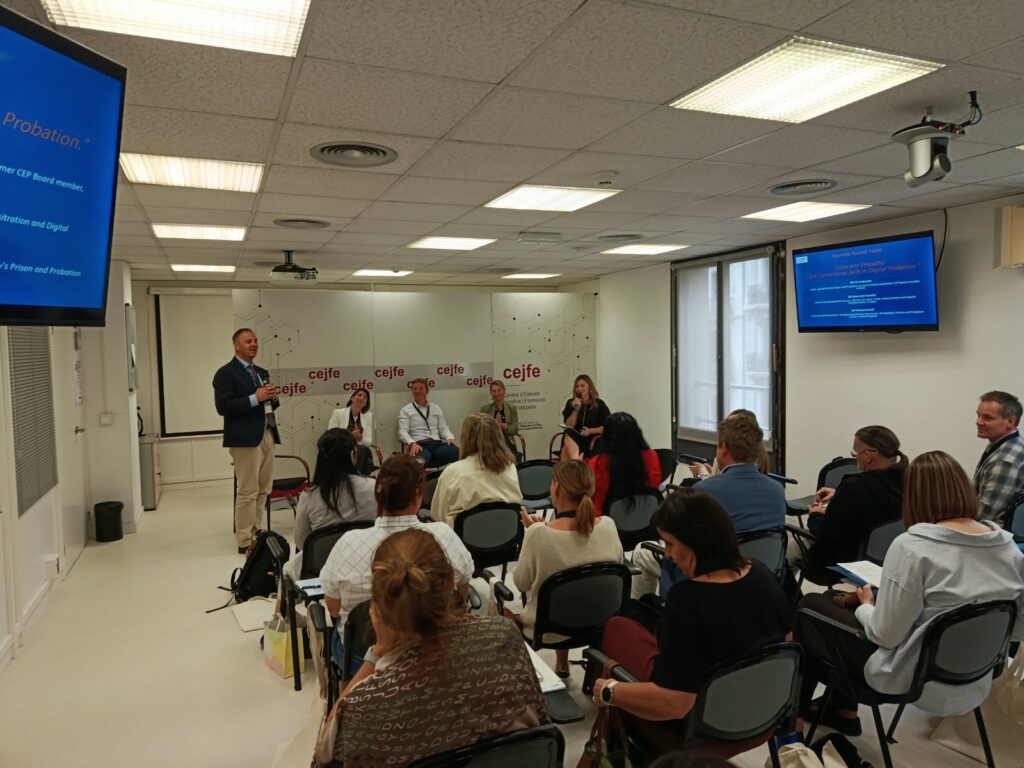
How can probation professionals use new technologies in their interactions while building trust, showing empathy and supporting change? This question is at the heart of the sixth International Training School on Core Correctional Skills, which opened in Barcelona on 28 September 2026.
Subscribe to our bi-monthly email newsletter!
"*" indicates required fields
- Keep up to date with important probation developments and insights.