

Previous Article
Probation library
Enforcement of Offender Supervision in Europe
The book ‘Enforcement of Offender Supervision’ by Niamh MaGuire and Miranda Boone provides a comparative analysis of the process of breach across ten different European jurisdictions. The book focused on the breach processes that follow non-compliance with a community sanction or measure and non-compliance with conditional early release from prison. It is informed by the research activities of the COST Action IS1106 on Offender Supervision in Europe, particularly the Action’s work on developing new comparative methodologies to examine the process of decision-making involved in the breaching of offenders for non-compliance. CEP spoke to the authors about their research and findings.
The volume consists of ten country chapters and six thematic chapters. The ten country chapters include: Belgium, England and Wales, Germany, Greece, Ireland, Italy, Lithuania, The Netherlands, Spain and Sweden. The key themes and emerging concerns that we examined in the thematic chapters include: the roles and responsibilities of the different actors involved in the breach process, the degree and nature of discretion exercised by decision-makers and legitimacy, due process and procedural requirements both on a European level as on a cross country level.
How was the information for the book gathered?
The book consists of two parts. Part A is the result of our comparative analyses and conclusions. This part is rooted in the findings of ten country reports which are published in part B. These country reports are based on exhaustive reviews of the literature available in each jurisdiction as well as the results of an empirical pilot study using vignettes (short case descriptions) that were presented to and discussed with practitioners all over Europe. The analysis in our thematic chapters, although based upon country chapters, goes beyond them. During the many meetings we had in person or by Skype or email we often checked and double-checked with the authors of the country chapters that our comparative analysis made sense and did not misrepresent or misinterpret a particular system. The thematic chapters attempt to go beyond descriptions and classifications towards providing some level of explanation and interpretation.
What are the most important conclusions?
We can talk about three important conclusions here. An important finding that is reproduced in almost all the thematic chapters, is that the layperson, someone who technically stands outside the penal field, is an important decision-maker in breach processes in almost all jurisdictions. In most cases, his or her position often goes unrecognised by laws, regulations and guidelines governing the enforcement of non-compliance.
Another important finding is that early stage actors exercise more significant decision-making power than previously thought. This in turn raises the issue of the need to ensure that appropriate due process protections are in place during the early stages of the process of breach to ensure fairness, but without reducing their discretion so much that they cannot perform their role of supporting the offender to complete the supervisory order successfully.
A third important finding is that breach processes in the different countries we studied seemed to embody one of two different approaches towards enforcement. The majority adopted a rehabilitative approach, whereby a degree of non-compliance is tolerated and even expected as part of the journey of a person desistance and reintegration. The other main approach towards enforcement relied more upon deterrent approach with more emphasise on preventing risk and ensuring formal rather than substantive compliance.
What challenges did you face in the process of making the book?
Despite our hard efforts, the major challenge was of course to come to comparative analyses that really added to analyses on a national level. One of the endeavors and objectives of doing comparative research is to understand each other and develop a common language. This objective seems to be even more difficult to realise in the field of sentencing implementation. Even within the one language, many terms have several equivalents, which can be used as alternatives, but sometimes also have a slightly different meaning, for example probation or rehabilitation. It can take a while before these misunderstandings come to the surface. And even if one understands the different meanings of comparative concepts, it does not make immediately clear what the consequences of these differences are for the system as a whole.
During the course of our work on breach processes we had many misunderstandings. For this reason alone (other aspects of comparative research will be discussed later in the methodological section) good cooperation is an absolute condition for an international research group to do comparative work. One has to cultivate the willingness to listen carefully to each other and to ask endless questions to avoid misunderstandings. Another challenge of this research was comparing statistics. It would be an interesting outcome if we could make a clear statistical link between characteristics of different systems and rates of revocation and recall. The assumption that rates of revocation and recall were rising in different jurisdiction was, after all, one of the starting points of our research. We, however, faced several problems with respect to collecting and comparing rates of revocation, problems we describe extensively in the introduction of our book. Therefore the statistics produced in this volume only have very restricted value. At most, they show interesting fluctuations or stabilities in the countries they derive from. The explanations mentioned for these tendencies reflect universal correlations but do at least show the accuracy of the thesis that differences in compliance rates are influenced by many factors other than good or bad behavior alone.
What surprised you the most during the process of making the book?
What surprised us most was that despite the legal, cultural, social and political differences between our countries and despite how differently our countries respond to almost identical enforcement issues, the comparative themes we chose to explore-particularly due process, power, professionalism and legitimacy were equally relevant and important to all jurisdictions.
Please click on the link if you are interesting in purchasing Enforcement of Offender Supervision in Europe.

Probation library
Probation Journal

Women, youth
Understanding the needs of girls and young women in youth justice
10/03/2026
New research highlights the underlying needs that influence girls’ and young women’s contact with youth justice systems and calls for more gender responsive approaches in policy and practice. Drawing on a review of recent studies, the authors identify several factors shaping girls’ pathways into the justice system, including persistent abuse, trauma, gendered expectations, and systemic failures. Girls involved in youth justice are often affected by multiple forms of victimisation, such as sexual abuse, neglect, and domestic violence, with experiences frequently beginning in early childhood.
Reading corner

Probation in Europe
The Routledge Handbook of European Penology
05/01/2026
The Routledge Handbook of European Penology, published by Routledge. This comprehensive volume has been edited by Sonja Snacken, Gaëtan Cliquennois, Ioan Durnescu, Diete Humblet and Elena Larrauri.
Reading corner

Criminal Justice
Bridging Research and Practice in Forensic Social Work: An interview with the editors of Forensic Social Work – Supporting Desistance
17/12/2025
Supporting desistance while managing risk is at the heart of criminal justice social work across Europe. In Forensic Social Work – Supporting Desistance, editors Jacqueline Bosker, Anneke Menger and Vivienne de Vogel bring together scientific insights and everyday professional practice to support those working with justice-involved individuals. In this interview, they reflect on the motivation behind the English edition of the book, its core themes, and how professionals can use its tools and approaches in their daily work.
Probation Journal

Domestic violence, Gender-based violence
New evaluation on whole family approach to domestic abuse
26/11/2025
Interventions Alliance has published a new evaluation of a Hub coordinated on behalf of police forces in the south of England, focused on tackling violence against women and children through a whole family approach. The Hub supports victims and perpetrators of domestic abuse and works across policing, health and social services.
Reading corner
Probation in Europe
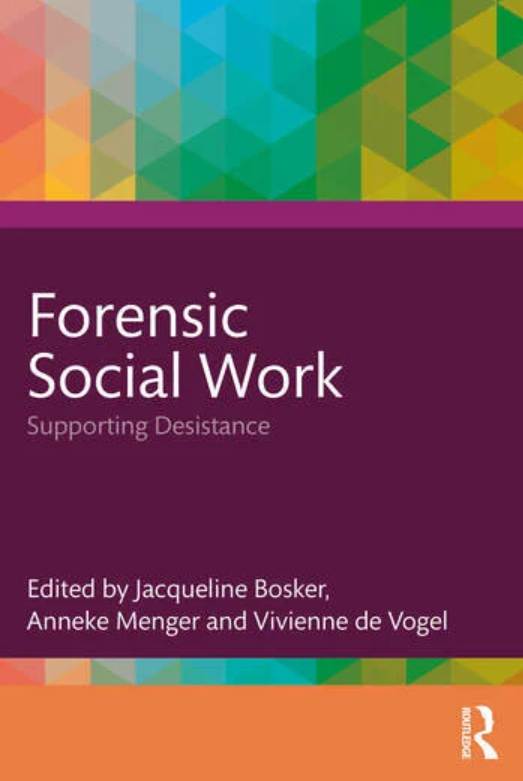
New Release: Forensic Social Work – Supporting Desistance
13/11/2025
This book, Forensic Social Work – Supporting Desistance, has been released by Routledge. It is a practice-oriented resource exploring how forensic social work can support desistance and foster meaningful change in the lives of justice-involved individuals.
Reading corner

Criminal Justice
Parole Futures
18/08/2025
At a time when many parole systems are experiencing considerable strain, the aims of this collection are twofold: first, to encourage systematic and critical reflection on the rationalities, institutions and practices of parole. Second, to think big, and pose ambitious ‘what if’ questions about the possible futures of parole and prison release. Offering novel insights from Asia, Australia, Europe, North America and South America, this collection builds the case for, and then showcases, a ‘way of doing’ parole research that is global in outlook, interdisciplinary in approach and unapologetically normative in character.
Probation Journal

Violent Extremism
2025 EU Guidance document responding to the needs of victims of terorrism
23/06/2025
To mark the EU Day of Remembrance for Victims of Terrorism on 11 March, the EU Centre of Expertise for Victims of Terrorism has published a new Guidance Document on the Needs of Victims. This document is a significant step forward in reinforcing a victim-centred approach within counter-terrorism efforts across the European Union.

Research
Launch of the CEP Research and Development Strategy Summary
17/06/2025
We’re thrilled to announce that the Confederation of European Probation (CEP), in cooperation with the University of Glasgow (led by CEP Honorary Member Professor Fergus McNeill), and with the support of the CEP Expert Group on Research, has produced the CEP Research and Development Strategy. We are happy to share the summary with you!
Probation Journal

Alternatives to pre-trial detention
Unpacking criminal detention rules and regulations across the EU
21/05/2025
The EU Agency for Fundamental Rights (FRA) has updated its online criminal detention database, which includes national standards, laws, and monitoring reports on detention conditions in the EU and the UK.
Probation Journal

Technology
Is AI Putting Remote Probation Supervision at Risk Before It Even Starts?
09/04/2025
David Jackson and Jed Stone focus on the use of AI in probation and advocate for investigations to understand the opportunity, address issues and innovate for the good of all.
Subscribe to our bi-monthly email newsletter!
"*" indicates required fields
- Keep up to date with important probation developments and insights.