

Previous Article
News
Electronic Monitoring: the key to 21th century probation?
Electronic monitoring is booming. Probation services in almost all Western European countries are experimenting with it, while probation services in most Eastern European countries are considering pilots. Is this foothold of hi-tech in European probation the beginning of a profound change in probation services? Mike Nellis, professor Criminal and Community Justice at the University of Glasgow, comments.
‘In a way, the use of an electronic monitoring programme as a probation tool is inevitable. In every country in Europe society is changing quickly – especially technologically – and probation has to respond to these changes, to modernise its practice. That implies to me that probation should make use of the new care and control techniques that are now available, subject, of course, to ethical considerations. The new global electronic infrastructure means that new opportunities have arisen in the management of offenders.’
Although electronic monitoring programmes are just in an experimental stage, many science-fiction thinkers have fantasised about the future of technological control over offenders. Devices might be developed which will not just register where someone is, but will also ‘act’ to incapacitate them if they break the rules. For instance, an electronic knee lock has been proposed which will force the wearer to kneel if he leaves his house without permission. This form of electronic monitoring does become a substitute for prison bars. ‘That’s very worrying science-fiction thinking’, Nellis says. ‘The producers of electronic monitoring devices have indicated that they are still very far from developing that kind of techniques.’ Hopefully, he says, ‘they will never want to, or be expected to.’
‘Electronic monitoring will never be the probation panacea on its own – it needs to be embedded in rehabilitation programmes. Electronic monitoring programmes help with some offenders; it won’t help with all of them. But probation is always in the business of winning small successes. There are very rarely spectacularly successful results in probation. So anything that helps to win small successes is useful. I firmly believe that electronic monitoring programmes can help to win small successes. Therefore I see electronic monitoring as a key part of the 21st century way of supervising offenders.’
Of course, there’s more to electronic monitoring than simply the technological aspect. For instance: how should it be implemented in respect of probation systems? In England and Wales, the surveillance of people wearing a bracelet is done by private companies, whereas in Sweden, Belgium and Holland it is done by probation services themselves. Nellis: ‘I wouldn’t want a harmonious European model of how to integrate electronic monitoring in probation. There is room for diversity in scope according to what particular countries need. Moreover, all these different approaches and experiences may help each probation service to improve its use of electronic monitoring. Therefore we should tell each other about what we are doing and learn from each other. I think even thirty years from now, it’s highly unlikely that we will all be doing the same thing, but if we haven’t learned from each other, that would be a loss.’
‘From all the systems used now, I personally prefer implementing electronic monitoring within the framework of probation, as is happening in Sweden’, Nellis continues. ‘I would like to think that any probation service can take electronic monitoring into itself and see it as a legitimate extension of its work, and a development of its tradition, rather than as something different and alien. It is not that I would never endorse surveillance being undertaken by private companies. I do believe that there are people in the private sector with a public service ethic. However, the point is that it is harder to get the private sector and the state to work together at ground level than some people think. For that reason, I think developing electronic monitoring within state-run probation services is more simple, more efficient and more modern.’
‘I want to stress that I hope the use of electronic monitoring will develop alongside the traditional 20th century-way of supervising offenders and not instead of it. Traditional forms of probation practice still have a lot to offer. It is important to make relationships with offenders, and to work on restorative justice. We also should not give up on our ideals, for instance reducing the prison population. But to do that, we need to make use of the new options and possibilities that have been created for us in the 21st century. Electronic monitoring is definitely one of these.’
Mike Nellis – mike.nellis@strath.ac.uk

Related News
Keep up to date with the latest developments, stories, and updates on probation from across Europe and beyond. Find relevant news and insights shaping the field today.
Recap
Electronic monitoring, Technology
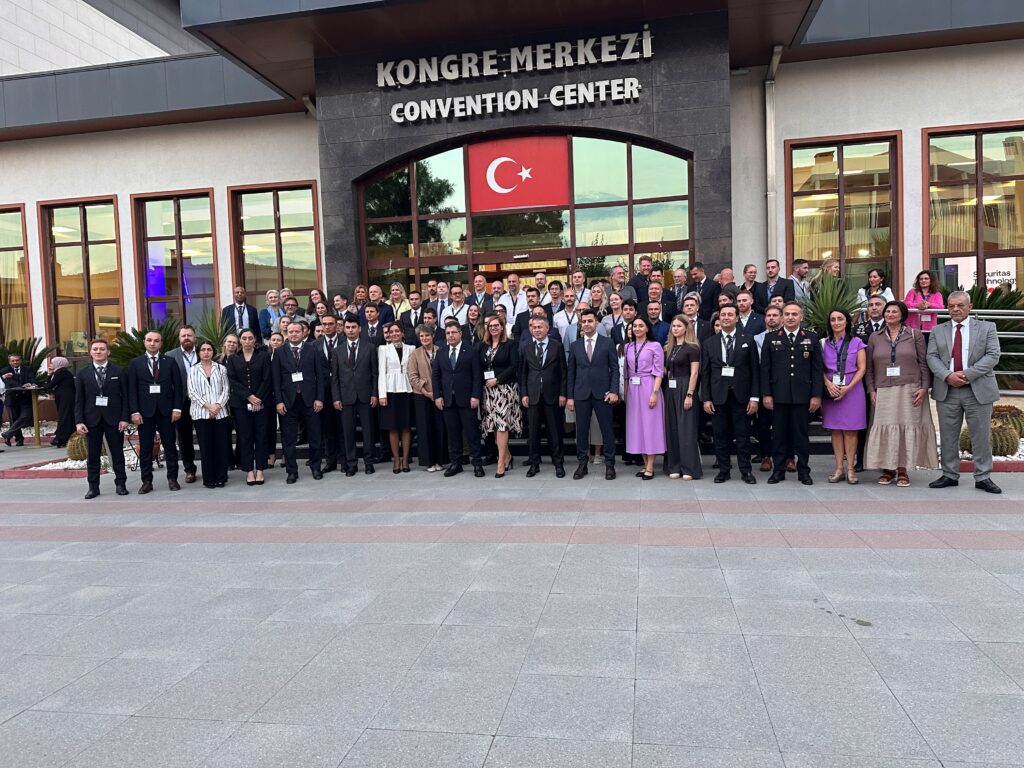
14th Electronic Monitoring Conference, Electronic Monitoring in a Changing World – Perception vs Reality
08/10/2026
On 6-8 October 2026, Antalya hosted the 14th Electronic Monitoring Conference “Electronic Monitoring in a Changing World – Perception vs Reality”. More than 350 participants coming from 30 countries across Europe and worldwide representing probation services, Ministries of Justice, victims´ services, EM providers, researchers as well as local participants representing the Turkish Prison and Probation Service gathered to discuss how electronic monitoring (EM) is understood by all stakeholders involved including the victims and the public, and how these perceptions compare to the evidence and experiences of those affected. While the gap between perception and reality in electronic monitoring has been recognised for over a decade, the rapid expansion of EM into areas such as victim protection, high-risk supervision and digital innovation has brought new challenges and questions to the forefront.
Recap

ITSCCS
Core Correctional Skills in Digital Probation: highlights from the 6th ITSCCS in Barcelona
05/10/2026
The sixth International Training School on Core Correctional Skills (ITSCCS) took place in Barcelona from 28 September to 2 October 2026, bringing together 26 participants for a week of learning, practical training and international exchange. Organised by the Confederation of European Probation (CEP) and the Centre for Legal Studies and Specialised Training (CEJFE), the programme focused on “Clicks and Empathy: Core Correctional Skills in Digital Probation.”
Recap
Framework Decisions
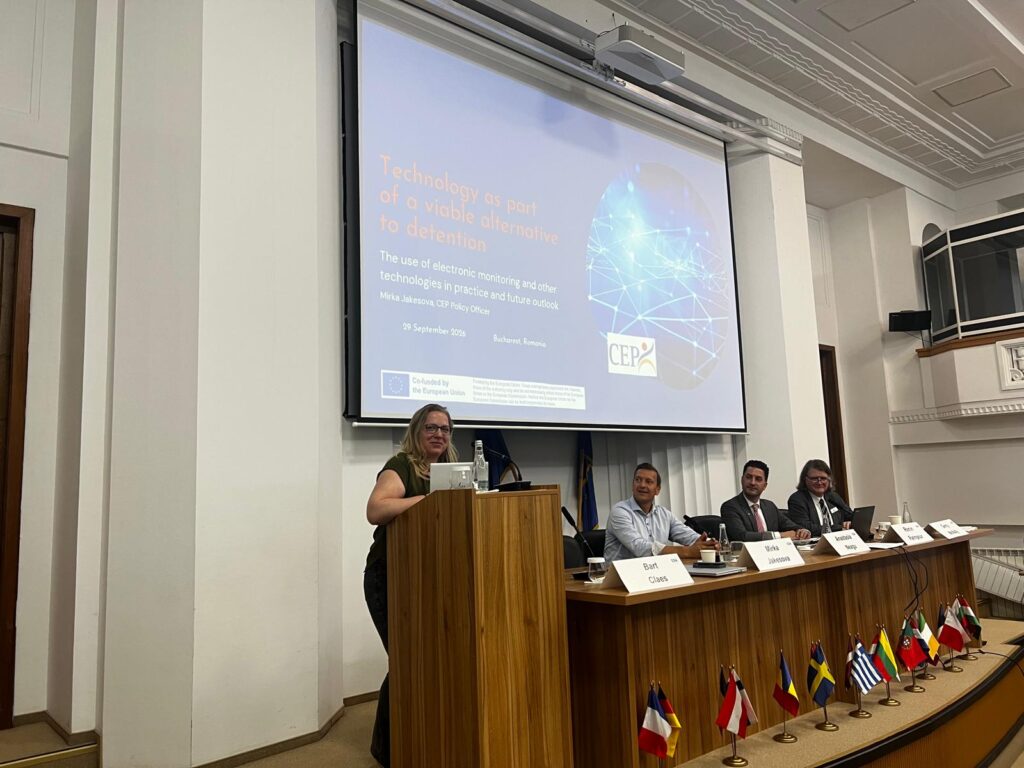
Recap: ERA workshop on Framework Decisions 829 and 947 in Bucharest
02/10/2026
CEP Vice-President Daniel Danglades, Ambassador Gerry McNally and Policy Officer Mirka Jakesova participated in the Seminar on Framework Decisions 829 and 947 and their Impact on Alternatives in the EU organized under the EU project run by the Academy of European Law on 28-29 September in Bucharest, Romania. The seminar brought together judges, prosecutors, probation practitioners, academics, and policy experts to discuss the growing role of alternatives to detention within European criminal justice systems.
New
CEP
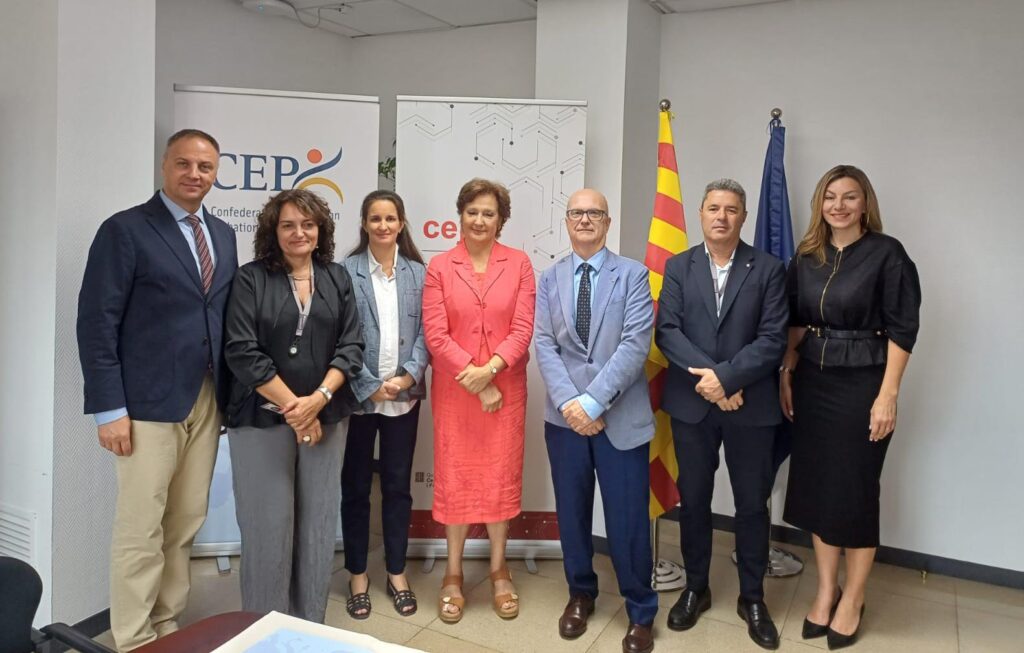
CEP and Catalan justice leaders reaffirm longstanding cooperation
29/09/2026
Representatives of the Confederation of European Probation (CEP) met with senior officials from the Catalan Department of Justice and Democratic Quality in Barcelona on 28 September 2026, alongside the opening of the sixth International Training School on Core Correctional Skills. The meeting offered an opportunity to recognise a longstanding partnership and discuss its continued development.
Updated

Mental Health
DEADLINE EXTENDED: Call for Pilot Implementation of the European Mental Health Training Curriculum
29/09/2026
Good news for CEP members! Following requests from our members, CEP has extended the deadline to apply for the pilot implementation of the European Mental Health Training Curriculum for Probation Officers.
Recap

ITSCCS, Technology
6th International Training School opens in Barcelona with a focus on digital probation
28/09/2026
How can probation professionals use new technologies in their interactions while building trust, showing empathy and supporting change? This question is at the heart of the sixth International Training School on Core Correctional Skills, which opened in Barcelona on 28 September 2026.
Subscribe to our bi-monthly email newsletter!
"*" indicates required fields
- Keep up to date with important probation developments and insights.