

Previous Article
News
Drink&Drive programme in Moldova
The Dutch Probation services and the Romanian Probation Directorate succesfully implemented project Drink&Drive Programme Moldova, financed by the Dutch Embassy in Romania. The project equipped the National Probation Inspectorate from Moldova with a new rehabilitation programme that can be used in working with offenders. The programme is available in seven probation services in Moldova.
The goal of the project was the development of a Drink&Drive programme in Moldova in order to support the rehabilitation of the offenders registered within the Moldovan probation system. The programme aims to diminish recidivism behavior, to reduce the numbers of injures and victims caused by driving under influence and to increase the road safety.
As well, within the project was envisaged the best practice exchange in order to support the strengthening of the Moldovan probation system. The Dutch and Romanian experts attended four workshops and conducted two training sessions for the probation staff in order to design and to disseminate the Drink&Drive programme.
Development of the programme
In 2016, led by the Netherlands Probation and the Romanian Probation, four working meetings were held with representatives of the Moldovan probation, organized by the Institute for Penal Reform Moldova. In the first stage of the project, an analysis report of the current situation related to the drink driving offences in Moldova was developed and a report of evaluation was completed by the experts. The report represents an analysis of all aspects in Moldova around drink driving such as the prevalence and risks of driving under the influence, legal framework, detection and enforcement campaigns about traffic safety, security measures, etc. In addition, the report describes the cooperation between the partners and the draft structure and content of the Drink&Drive programme.
In a second phase of the project, the Drink&Drive programme was created and designed in order to meet the needs of the Moldovan probation system. The content of the programme is based on motivational interviewing and on cognitive behavioral approaches. The Drink&Drive programme has eight sessions (four individual sessions and four group sessions). The programme includes topics such as improving knowledge about relevant items, raising awareness, attitude change and the development of strategies to prevent driving under influence. The guidelines of the programme are drafted in a manual for the probation staff usage.
Improvement required
The Dutch and Romanian experts mentioned the need of a further implementation of the programmme, which must be applied and piloted by the probation staff. In this manner, after the pilot implementation, the programme could be revised and adjusted according to the results of the application. The above mentioned issues could be addressed within the framework of a new project taking into consideration that the Dutch and Romanian experts are willing to continue the cooperation and the support of the Moldovan probation system.

Related News
Keep up to date with the latest developments, stories, and updates on probation from across Europe and beyond. Find relevant news and insights shaping the field today.
New
CEP
CEP annual report
07/04/2026
The Confederation of European Probation (CEP) has published its Annual Report 2025, showcasing a year marked by growth, cooperation, and continued commitment to strengthening probation across Europe.
Bringing together more than 100 member organisations across 42 countries and 59 jurisdictions, CEP continued to serve as a central platform for knowledge exchange, professional development, and collaboration within the European criminal justice field.

Uncategorized
ProtectEU: Commission presents new counterterrorism agenda
07/04/2026
On 26 February 2026, the European Commission presented ProtectEU, a renewed EU counterterrorism agenda aimed at strengthening the Union’s capacity to prevent, detect and respond to evolving terrorist threats.
New
Probation in Europe
New Vodcast Episode: Jana Spero Kamenjarin on the Confederation of European Probation (CEP)
07/04/2026
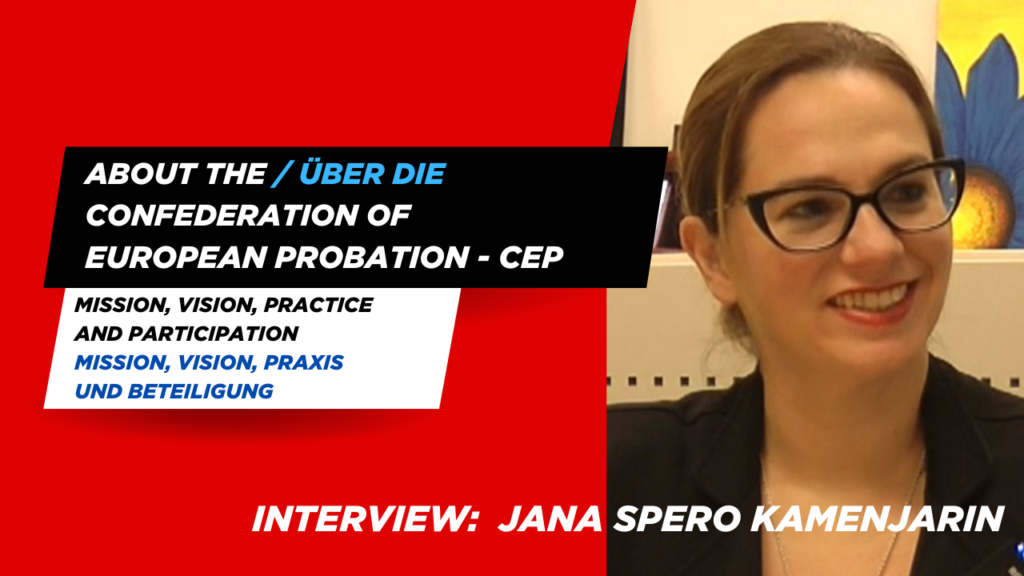
The 19th episode of Division_Y features Jana Spero Kamenjarin, Secretary General of the Confederation of European Probation (CEP), based in Utrecht, the Netherlands.
New

Electronic monitoring
Electronic Monitoring in Europe: Insights from the 13th Electronic Monitoring conference Questionnaire
30/03/2026
The 13th Electronic Monitoring (EM) conference Questionnaire has now been released, offering a comprehensive overview of how EM is applied across Europe today.ion.
New
CEP members
New CEP member: Guernsey Probation Service
25/03/2026
In recent weeks, CEP has interviewed individual members and representatives of the new member organisations that joined CEP at the beginning of 2026. In these interviews, the new member organisations or individual members will share information on why they decided to become members, how they would like to contribute to the development of CEP and many more.
Enjoy reading!
Recap
Probation outside Europe
Recap: CEP and APPA webinar
25/03/2026
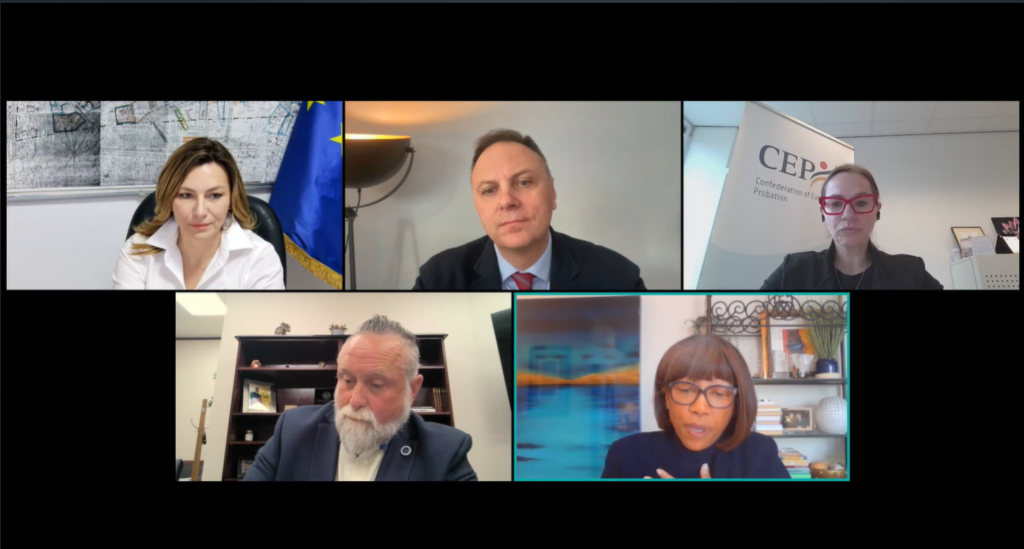
Confederation of European Probation (CEP) and American Probation and Parole Association (APPA) hosted the second joint webinar on 24 March 2026, this time on “Integrity of Performance: Ensuring Meaningful and Ethical Outcomes”.
The overarching theme of integrity of performance was explored through two distinct perspectives on this fundamental concept.
Subscribe to our bi-monthly email newsletter!
"*" indicates required fields
- Keep up to date with important probation developments and insights.