
Previous Article
Probation library
Circles project: Innovation in sex offender programmes in Europe
The reintegration of sex offenders usually causes a lot of commotion; they are unwelcome in every community. Moreover, the recidivism rate of sex offenders is considerably higher than other types of offenders. Circles of Support & Accountability, a Canadian concept, is an effective strategy to reduce the risk of reoffending. In November 2009, a grant by the EU funding programme Daphne III was awarded to Avans University of Applied Sciences in The Netherlands in order to spread the use of Circles in the Netherlands and to start in Belgium as well. Bas Vogelvang, lector of Probation Services & Public Safety Policy at Avans University: “One of the project aims is to gather knowledge about the implementation of this method in specific situations, so that Circles can be applied in other European countries too.”
When Chris Wilson, national development manager of Circles UK, was speaking at the 2008 CEP Conference ‘Resettling Adult Offenders’ in Glasgow about the concept, it seemed to Bas Vogelvang to be an effective and practical method for the complex problem of resocialising sex offenders. Back in Holland, he contacted the Dutch Probation Service, in order to set up a project to translate and test the Circles concept in the Netherlands. Together they managed to raise the interest the Dutch Ministry of Justice, which financially supported this project in 2008. “I thought that the Circles method might be suitable for all European countries. After all many countries are dealing with the problem of reintegrating sex offenders in neighbourhoods which are alarmed by the news coverage of the local media”, says Bas Vogelvang. “We were motivated to further implement the Dutch Circles project and promote the concept in Europe. A successful grant application at the EU funding programme for the prevention of violence against groups at risk, Daphne III, gave us the opportunity to do so.”
Based on the results of a study into implementation of the Circles concept in the Netherlands, Bas Vogelvang expects to obtain similar results in the Netherlands as were realized in the UK by Chris Wilson. The results from Wilson´s study that showed that the recidivism rate of Circles participants was 70% less than expected due to the level of risk they presented. “Part of the reason that Circles is so successful is the unique combination of strategies”, explains Bas Vogelvang. “As such it is a method that aims to reduce the social isolation and emotional loneliness of the sex offender, while emphasizing the importance of both public protection and of the accountability of the offender. This combination is a perfect and realistic response to the public reactions to the problem of reintegrating sex offenders.”
Circles is based on the idea that the sex offender is surrounded by two “circles” or groups. These circles prevent the offender from reoffending and help the further reintegration of the offender in the society. A complete circle consists of an inner and outer circle. The inner circle consists of the sex offender (the “core member”) and four to six volunteers. The outer circle consists of professionals, among which a probation officer. Central in the interaction between the core member and the other circle members are the principles of ‘supporting, monitoring and maintaining’. The sex-offender is supported by regular contact with the volunteers and monitored by the volunteers and professionals. Ultimately, the offender, with support of the group, maintains his accountability and motivation for additional professional treatment.
“Prerequisites to set up a Circle of support is that the offender participates voluntarily, and that there is high need for support”, informs Bas Vogelvang. “Moreover, Circles can only take place in a judicial framework. Surrounded by a multidisciplinary network, the offender commits to being truthful about the life he leads and makes sure to inform volunteers about what signals from him would indicate that he is relapsing. The volunteers in the inner circle have been selected and trained and are committed to supporting the core member in the community and holding him to account. The sex offenders are monitored through regular probation supervision, frequent house visits and social meetings. When a core member does not show his participation, or shows signals of recidivism, he can eventually be sent back to prison by the judge who is connected to the professional outer circle. To make the ‘system work’, an appointed and trained circle coordinator of the Dutch Probation Service works closely with both the volunteers and the outer circle, thereby keeping police, probation, prison and other professionals informed about the status of the sex offender.”
In the DAPHNE III financed project, the Dutch Probation Service will start in December 2009 with a pilot in the region of Den Bosch, with two sex-offenders. In a second phase the concept will be rolled out in other regions in the Netherlands. At the same time, Belgium will also set up several Circles projects. Based on the experience and results provided by these projects, Bas Vogelvang and Avans researcher Mechtild Höing will write a handbook on how to develop Circles projects in other EU countries. “The handbook will describe the underlying concepts by using the experience and research generated in our project, and others”, says Bas Vogelvang. “After all, by creating a model for European use, and with the support of Daphne III, similar Circles projects can be implemented all across Europe.”
CEP is a partner in the Circles project and supports the Circles initiative. For more information, please email to communications@www.cep-probation.org
The Circles project is supported by the European Commission via
Probation library
Lorem ipsum dolor sit amet consectetur adipiscing elit semper dalar elementum tempus hac tellus libero accumsan.
Reading corner
Probation in Europe
The Routledge Handbook of European Penology
05/01/2026
The Routledge Handbook of European Penology, published by Routledge. This comprehensive volume has been edited by Sonja Snacken, Gaëtan Cliquennois, Ioan Durnescu, Diete Humblet and Elena Larrauri.
Reading corner
Criminal Justice
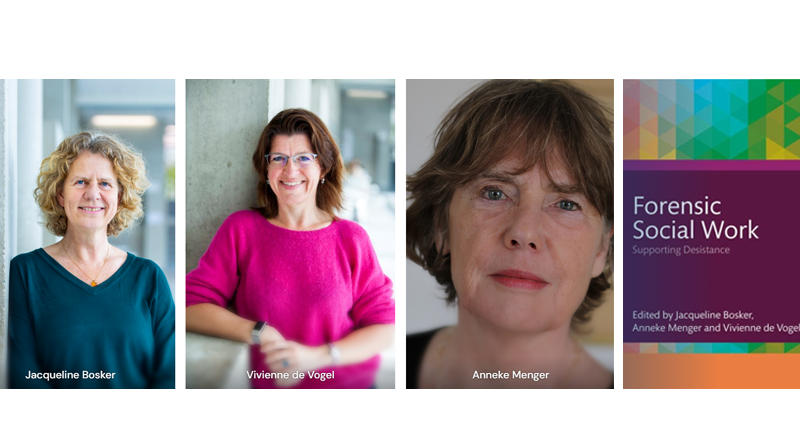
Bridging Research and Practice in Forensic Social Work: An interview with the editors of Forensic Social Work – Supporting Desistance
17/12/2025
Supporting desistance while managing risk is at the heart of criminal justice social work across Europe. In Forensic Social Work – Supporting Desistance, editors Jacqueline Bosker, Anneke Menger and Vivienne de Vogel bring together scientific insights and everyday professional practice to support those working with justice-involved individuals. In this interview, they reflect on the motivation behind the English edition of the book, its core themes, and how professionals can use its tools and approaches in their daily work.
Probation Journal
Domestic violence, Gender-based violence
New evaluation on whole family approach to domestic abuse
26/11/2025
Interventions Alliance has published a new evaluation of a Hub coordinated on behalf of police forces in the south of England, focused on tackling violence against women and children through a whole family approach. The Hub supports victims and perpetrators of domestic abuse and works across policing, health and social services.
Reading corner
Probation in Europe
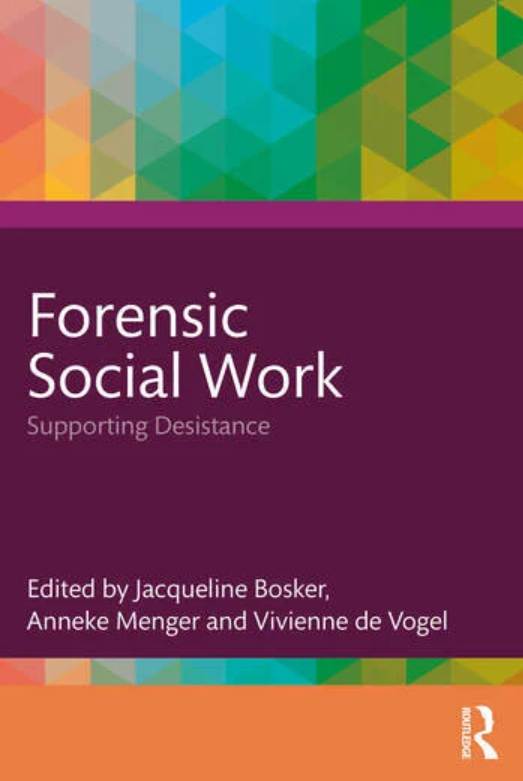
New Release: Forensic Social Work – Supporting Desistance
13/11/2025
This book, Forensic Social Work – Supporting Desistance, has been released by Routledge. It is a practice-oriented resource exploring how forensic social work can support desistance and foster meaningful change in the lives of justice-involved individuals.
Reading corner
Criminal Justice
Parole Futures
18/08/2025
At a time when many parole systems are experiencing considerable strain, the aims of this collection are twofold: first, to encourage systematic and critical reflection on the rationalities, institutions and practices of parole. Second, to think big, and pose ambitious ‘what if’ questions about the possible futures of parole and prison release. Offering novel insights from Asia, Australia, Europe, North America and South America, this collection builds the case for, and then showcases, a ‘way of doing’ parole research that is global in outlook, interdisciplinary in approach and unapologetically normative in character.
Probation Journal
Violent Extremism
2025 EU Guidance document responding to the needs of victims of terorrism
23/06/2025
To mark the EU Day of Remembrance for Victims of Terrorism on 11 March, the EU Centre of Expertise for Victims of Terrorism has published a new Guidance Document on the Needs of Victims. This document is a significant step forward in reinforcing a victim-centred approach within counter-terrorism efforts across the European Union.
Research
Launch of the CEP Research and Development Strategy Summary
17/06/2025
We’re thrilled to announce that the Confederation of European Probation (CEP), in cooperation with the University of Glasgow (led by CEP Honorary Member Professor Fergus McNeill), and with the support of the CEP Expert Group on Research, has produced the CEP Research and Development Strategy. We are happy to share the summary with you!
Probation Journal
Alternatives to pre-trial detention
Unpacking criminal detention rules and regulations across the EU
21/05/2025
The EU Agency for Fundamental Rights (FRA) has updated its online criminal detention database, which includes national standards, laws, and monitoring reports on detention conditions in the EU and the UK.
Probation Journal
Technology
Is AI Putting Remote Probation Supervision at Risk Before It Even Starts?
09/04/2025
David Jackson and Jed Stone focus on the use of AI in probation and advocate for investigations to understand the opportunity, address issues and innovate for the good of all.
Probation Journal
Probation in Europe
New Executive summaries for the report on Building Probation Capacity
19/02/2025
In March 2024, we paid attention to the study of Steve Pitts and Leo Tigges about Building Probation Capacity . The executive summary of their publication is now available in French and German, including the infographic on capacity building in both languages. Later this year, translations in Italian and Spanish will also be released!
Subscribe to our bi-monthly email newsletter!
"*" indicates required fields
- Keep up to date with important probation developments and insights.