

Previous Article
News
CEP on Television?
During the CEP conference on electronic monitoring, some participants were interviewed by Paris-based Freelance Director Philippe Borel. ‘I’m making a television documentary on Electronic Monitoring, commissioned by the Franco-German television network ARTE’, says Borrel. ‘I plan to finish my work by the end June, so after translation and screening the programme can be broadcasted in September.’
‘In France, Electronic monitoring is still a very new phenomenon’, explains Borrel. ‘There are 60,000 inmates, and only some 2,000 are in a programme of electronic monitoring. ARTE wanted to inform the French and German audience on electronic monitoring: what is at stake with this surveillance system. As electronic monitoring is a rather new development anywhere in the world, I want to show the different developments in this field in Europe and the United States. In the programme, for instance, I will show the extreme example of what is happening in Denver, where there is a strong businesslike approach to electronic monitoring. Offenders are seen as clients, who pay 18 dollars a day for their satellite tracking device. I also want to show another part of the US where the State prison system prefers to invest in voice recognition instead of these bracelets, in order to save money to invest in human rehabilitation. I want to show that these two models and other approaches might be useful, but that there are aspects on the different ways of implementing electronic monitoring which may have unwanted side effects.’
‘I visited this CEP conference for one particular item: the interaction between probation, i.e. the users, and the electronic industry, i.e. the manufacturers. In France the general idea is that probation shouldn’t mix up with the industry. There is some fear that companies always will try to push their sales by influencing people from the public domain, as is known from the pharmaceutical industry. However, there are some countries in Europe where there is dealt differently with this matter. On the CEP conference, both experts and representatives from the industry were present. I wanted to register the different ideas on the interaction between the public and the private parties.’
‘Apart from the US and Holland, I have footage from France, England, Spain and Germany. I tried to be as broad as possible: I have interviewed experts, politicians, lawyers, psychologists, inmates, offenders. My purpose was just to register the different opinions. Therefore, I won’t use any voice over in my documentary; you won’t hear me speaking. My programme will take some 52 minutes. As far as I know, it should be broadcasted in September, but there’s no guarantee it will be. Two years ago, a colleague of mine was also commissioned to do a programme on electronic monitoring, but it was never broadcasted.’
‘Personally, I thought it was striking that everyone I spoke to agreed on the destructive influence that jail has on the personality of inmates. In that sense, I do believe jail is counterproductive. So I think electronic monitoring is an interesting technology, since it can provide a more humane alternative to jail. Nevertheless, I think we have to remain vigilant. We constantly should ask ourselves the question whether or not we’re doing the right thing in every step of the development of electronic monitoring.’

Related News
Keep up to date with the latest developments, stories, and updates on probation from across Europe and beyond. Find relevant news and insights shaping the field today.
Recap
Electronic monitoring, Technology
14th Electronic Monitoring Conference, Electronic Monitoring in a Changing World – Perception vs Reality
08/10/2026
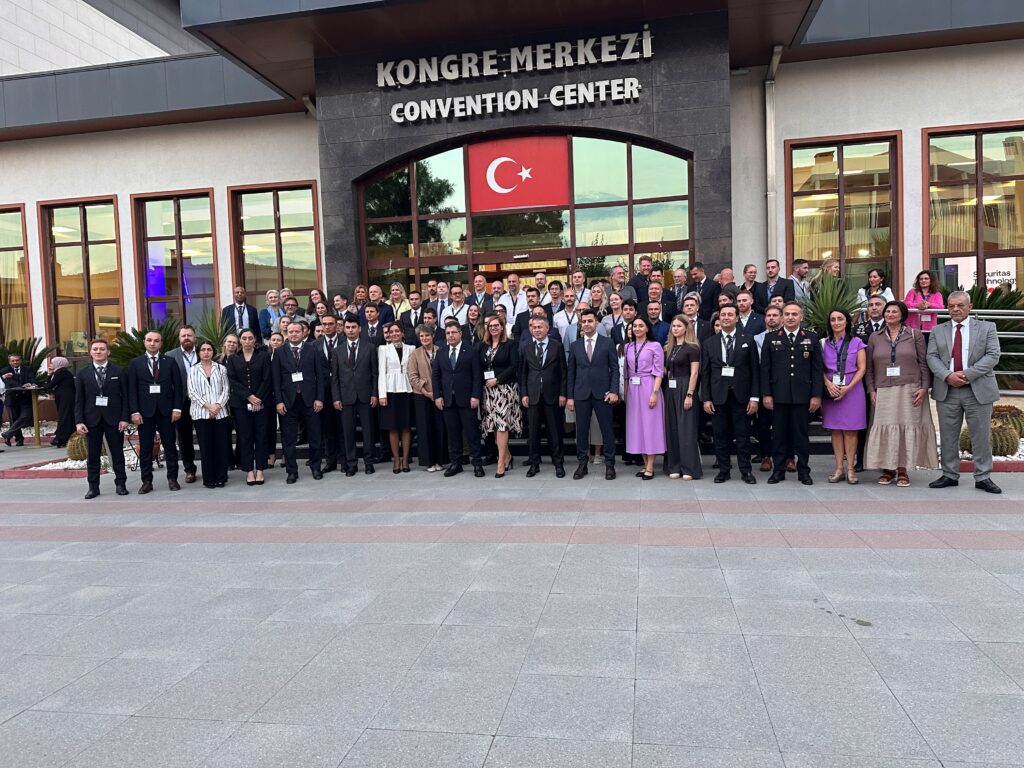
On 6-8 October 2026, Antalya hosted the 14th Electronic Monitoring Conference “Electronic Monitoring in a Changing World – Perception vs Reality”. More than 350 participants coming from 30 countries across Europe and worldwide representing probation services, Ministries of Justice, victims´ services, EM providers, researchers as well as local participants representing the Turkish Prison and Probation Service gathered to discuss how electronic monitoring (EM) is understood by all stakeholders involved including the victims and the public, and how these perceptions compare to the evidence and experiences of those affected. While the gap between perception and reality in electronic monitoring has been recognised for over a decade, the rapid expansion of EM into areas such as victim protection, high-risk supervision and digital innovation has brought new challenges and questions to the forefront.
Recap
ITSCCS
Core Correctional Skills in Digital Probation: highlights from the 6th ITSCCS in Barcelona
05/10/2026
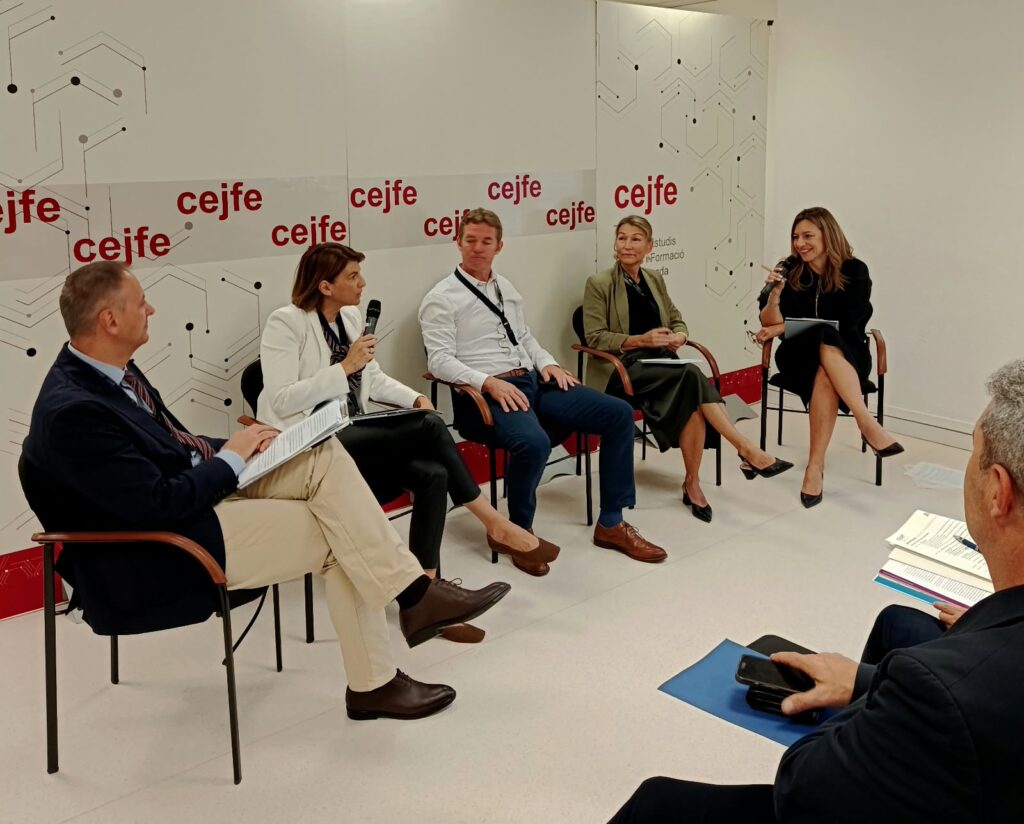
The sixth International Training School on Core Correctional Skills (ITSCCS) took place in Barcelona from 28 September to 2 October 2026, bringing together 26 participants for a week of learning, practical training and international exchange. Organised by the Confederation of European Probation (CEP) and the Centre for Legal Studies and Specialised Training (CEJFE), the programme focused on “Clicks and Empathy: Core Correctional Skills in Digital Probation.”
Recap
Framework Decisions
Recap: ERA workshop on Framework Decisions 829 and 947 in Bucharest
02/10/2026
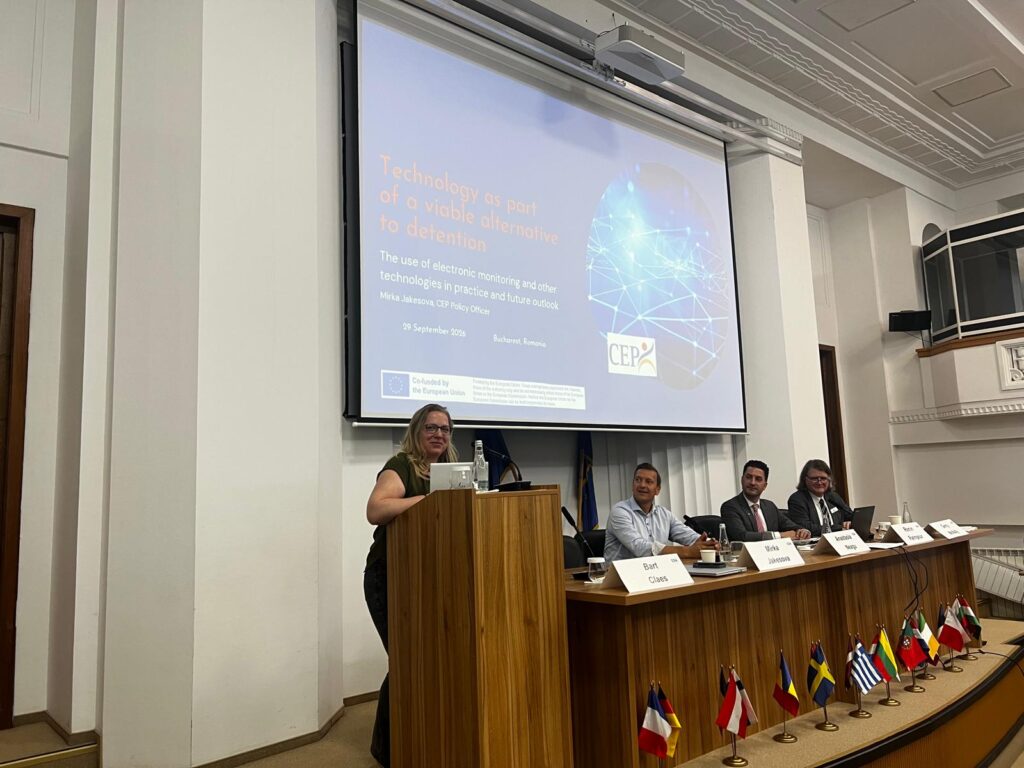
CEP Vice-President Daniel Danglades, Ambassador Gerry McNally and Policy Officer Mirka Jakesova participated in the Seminar on Framework Decisions 829 and 947 and their Impact on Alternatives in the EU organized under the EU project run by the Academy of European Law on 28-29 September in Bucharest, Romania. The seminar brought together judges, prosecutors, probation practitioners, academics, and policy experts to discuss the growing role of alternatives to detention within European criminal justice systems.
New
CEP
CEP and Catalan justice leaders reaffirm longstanding cooperation
29/09/2026
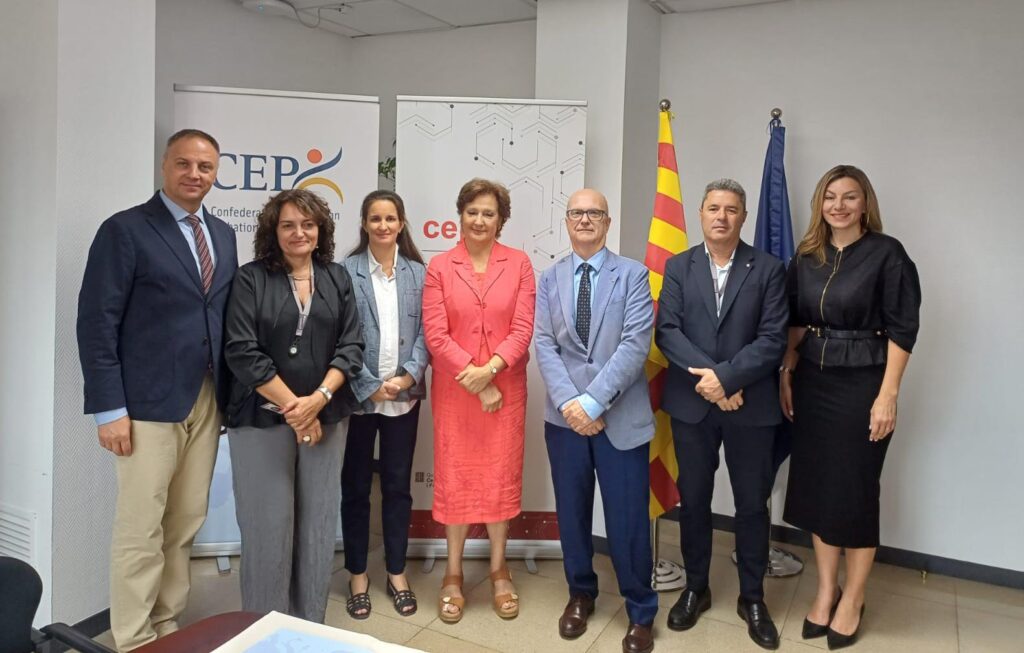
Representatives of the Confederation of European Probation (CEP) met with senior officials from the Catalan Department of Justice and Democratic Quality in Barcelona on 28 September 2026, alongside the opening of the sixth International Training School on Core Correctional Skills. The meeting offered an opportunity to recognise a longstanding partnership and discuss its continued development.
Updated

Mental Health
DEADLINE EXTENDED: Call for Pilot Implementation of the European Mental Health Training Curriculum
29/09/2026
Good news for CEP members! Following requests from our members, CEP has extended the deadline to apply for the pilot implementation of the European Mental Health Training Curriculum for Probation Officers.
Recap
ITSCCS, Technology
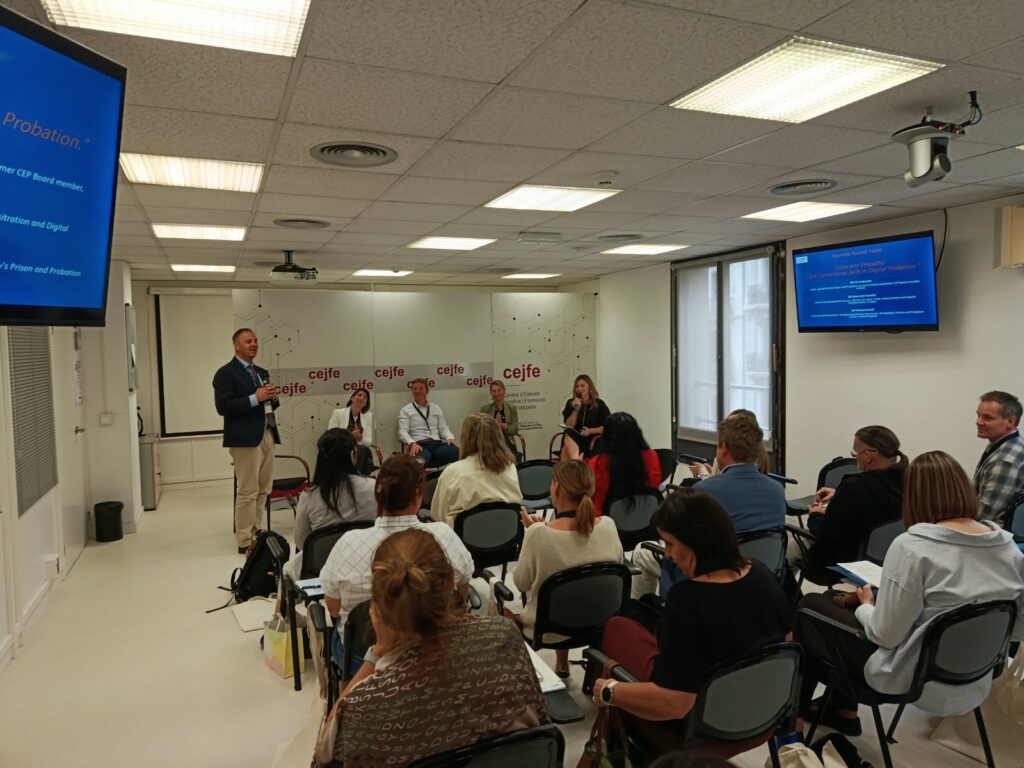
6th International Training School opens in Barcelona with a focus on digital probation
28/09/2026
How can probation professionals use new technologies in their interactions while building trust, showing empathy and supporting change? This question is at the heart of the sixth International Training School on Core Correctional Skills, which opened in Barcelona on 28 September 2026.
Subscribe to our bi-monthly email newsletter!
"*" indicates required fields
- Keep up to date with important probation developments and insights.