

Previous Article
News
Electronic Monitoring: transition from tool to knowledge product
A number of developments can be observed in the field of Electronic Monitoring (EM). A first example is a worldwide growth in the number of (criminal) cases and target groups where EM is applied. A second example is an emergence in various countries of new technologies – wearables & carriables – under the ‘umbrella’ of EM. For example, judicial interventions are increasingly using technologies such as the Alcohol Meter (SCRAM), smartphones and (methodical) apps.
This increases the complexity of the implementation practice. And while in other sectors of society a decision-making support system (with guidelines) is often introduced to secure the quality requirements in the application, the application of technologies in judicial interventions (internationally) remain – in this respect – remarkably silent. What should be the basis for a decision support system with guidelines?
In order to guarantee the quality requirements in the application of technologies in the actual case, it is important to professionally integrate the (complex) technologies with risk assessment tools, methodologies, scientific research and literature. With (legal) attention to privacy and ‘Legal Principles’, such as proportionality and subsidiarity, as formulated in the Recommendation CM/Rec(2014)4 – Council of Europe. This starting point helps to clarify two aspects. Firstly, when applying EM in a specific case, the transition must be made from ‘tool to knowledge product’. Secondly, that EM is a (criminal justice) chain product, where expertise from different disciplines is important to meet these quality requirements. The application of EM cannot be left solely to the (full) discretion of decision-makers and/or the capabilities of the technologies. Moreover, the call from scientists/researchers, in particular, to pay attention to these aspects seems to be increasingly audible. For example, during the last CEP conference on Electronic Monitoring in Zagreb.
In recent years, work has been done on a methodology (with a supporting) software programme that supports users with guidelines for the application of technologies in the actual case: the GOA Decision Support System. The GOA Decision Support System is designed to support professionals/decision-makers and does not ‘prescribe’ anything.
Goal-Oriented Approach
The abbreviation GOA stands for Goal-Oriented Approach – a goal-oriented approach in the application of technologies. GOA is a methodology that can be used to shape an EM profile in a specific case. Using GOA, the various EM technologies are integrated into their methods to achieve multiple specific criminal justice objectives. In order to achieve a systematic and well-founded application of EM, a link is made between the technologies on the one hand and risk assessment, (criminological) theories, scientific research and literature on the other. It also promotes consistency of the application with legal principles, such as proportionality and subsidiarity.
A chain perspective is used to achieve an integrated approach to criminal law objectives relating to the entire criminal law chain. The criminal-law objectives pursued and the aspects relevant to them are combined in a multidimensional EM profile. This can include an approach geared towards reintegration, which also devotes attention to victim protection.
Outcomes of previous risk assessment & report(s) in the case are used to map out which criminogenic and protective factors apply to the individual in question and the extent of the problems in various living situations. Based on this, agreements are made, or special conditions are drawn up to prevent recidivism. In order to promote compliance with these agreements/conditions, an EM profile can be drawn up.
When designing an EM profile, it is necessary to determine which technology(s) are applied, with what intensity and scope of the applied restriction of freedom. According to the GOA methodology, this is explicitly and structurally linked to the areas (risk factors) that emerge from the risk assessment instruments and the extent of the problems identified within them. Therefore, the question is always which risk or protective factors play a role for the individual and how technology can address these factors. Offender characteristics, as identified within scientific writings, can contribute to answering this question.
GOA – Decision Support System
The software programme consists of (roughly) three parts: a knowledge base, an ‘advice tool’ with which advice (EM profile) can be formulated in a structured way in the actual case, and a Manual (Follow-up Protocol).
What are the (main) steps to be taken to arrive at an EM profile? The starting point is the (type of) offence in which the application of (EM) technology is being considered. Next, the outcomes of the previously conducted risk assessment and report(s) in the case have to be assessed in order to make a ‘translation’ to the dashboard of the software program. Then the options for the application of technologies are presented and a choice can be made. During each process step, information included in the knowledge base can be used.
Testing
The GOA-Decision Support System has been tested with stalking and sex offences (courtesy of Reclassering Nederland). EM specialists from two regions participated in the test and both groups were asked to advise EM on an identical case. Both groups had the same (process) information. In the test, one group was trained to work with the GOA Decision Support System and there was a control group.
The differences in the results were significant and can be (briefly) summarised as follows. The EM profiles in the cases drawn up with the aid of the GOA Decision Support System clearly showed methodical depth at the case level. In other words: a systematic approach to living areas/risk factors, differentiated EM profiles with an eye for victim protection and EM specifically geared to the case. In addition, more attention was paid to Legal Principles and transparency in the application of EM.
Link: goa-electronicmonitoring.com
Click here to watch the interview.

Related News
Keep up to date with the latest developments, stories, and updates on probation from across Europe and beyond. Find relevant news and insights shaping the field today.
New

Others
Applications for the Cambridge MSt in Applied Criminology, Penology and Management are now open
16/09/2026
The Institute of Criminology, Cambridge, have opened up applications for the MSt in Applied Criminology, Penology and Management in the next academic year.
Recap
Probation in Europe
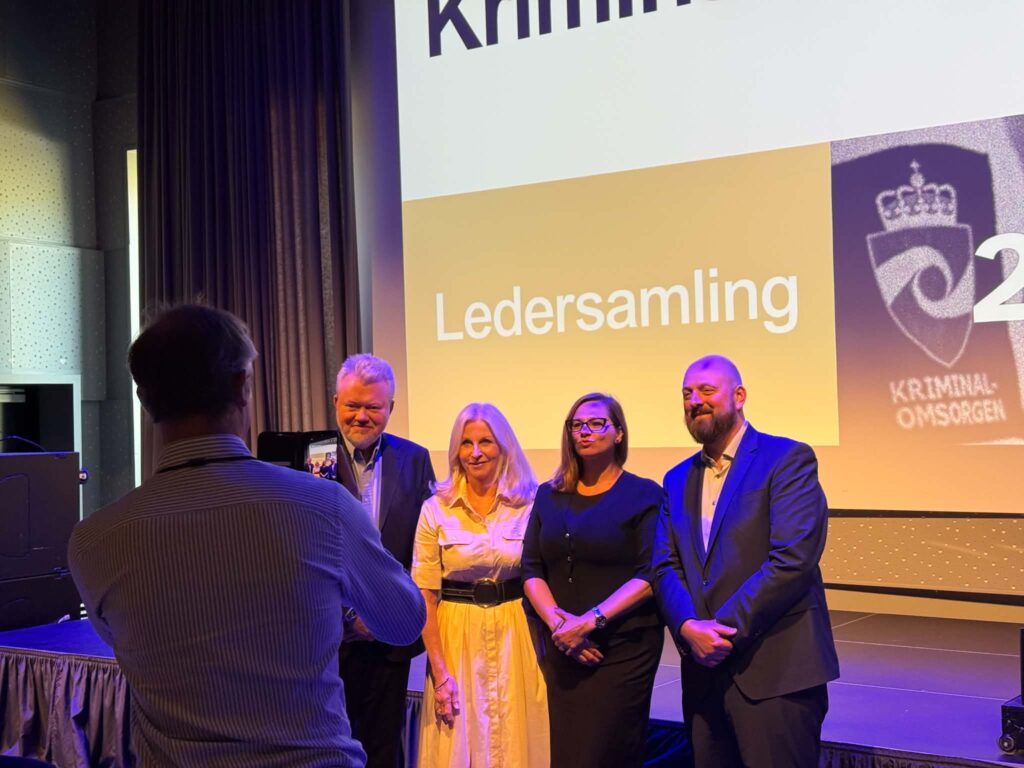
CEP at the Leadership Conference 2026
14/09/2026
CEP Secretary General Jana Špero Kamenjarin was delighted to participate in the Leadership Conference 2026 of the Norwegian Correctional Service, held on 9–10 September in Oslo.
Recap

Foreign Nationals in Prison and Probation
Recap: Expert Group of CEP and EuroPris, on Foreign Nationals in Prison and Probation (FNPP)
14/09/2026
On 7 and 8 September 2026 the joint Expert Group of CEP and EuroPris, on Foreign Nationals in Prison and Probation (FNPP), came together in The Hague for a valuable exchange of ideas, experiences, and expertise on one of the most important challenges facing prison and probation services across Europe.
New

CEP
Newsletter August 2026 out now
27/08/2026
CEP’s latest newsletter is out now! It includes:
- Approaching deadlines for upcoming events (ITSCCS26, 14th EM and DG leadership training) and the Mental Health curriculum pilot)
- Call for European Probation Journal on the topic of Workload in Probation
- EU documents like SPACE II, revised Victims’ Rights directive and so on
- and much more!
New

Caseload and workload
Do you work in probation? We need your voice!
24/08/2026
As part of its long-standing cooperation with research, CEP invites its members to contribute to a special edition of the European Probation Journal on the topic of Workload in Probation.
New

Alternatives to pre-trial detention, Foreign Nationals in Prison and Probation, Gender Equality, Probation in Europe
SPACE II report is now available
24/08/2026
The use of community sanctions and measures that allow individuals to remain in the community – also known as alternatives to imprisonment – continues to grow overall in Europe, although at a moderate pace, according to the latest Council of Europe annual penal statistics on persons under the supervision of probation agencies (2025 SPACE II survey).
Subscribe to our bi-monthly email newsletter!
"*" indicates required fields
- Keep up to date with important probation developments and insights.