

Previous Article
News
Eyes without a face – Probation in COVID-19 times
It was in 2009 when I joined the then less than 10 years old Czech Probation and Mediation Service, attracted by the opportunity to make positive changes in peoples´ lives through talking to them. Now, eleven years later, I am happy that I am still working as a probation officer and that by talking to our service users I can lead them through their probation period making sure they do not fall for the dark side anymore. Moreover, promoting restorative justice activities in my practice and hosting face-to-face victim offender mediation, I can see the massive impact of spoken words on repairing the harm caused to the victim.
Milan Morava, a probation officer from Cheb, Czech Republic, shares his perspective on how communication with service users has changed since the outbreak of the Covid-19 pandemic.
Robust staff training
The Czech Probation and Mediation Service pays a great deal of attention to robust staff training, a large part of which deals with various communication techniques and strategies, including motivational interviewing. The reason is simple – in our daily probation practice picking up suitable ways to talk to our service users is the key to accomplishing our goals. However, it is not only the spoken word that counts. Non verbal signals or facial expressions tell us a lot, sometimes even more than the spoken words themselves.
Is this the end of probation as we know it?
In March 2020 COVID-19 arrived completely uninvited and since then many things are not the same anymore. Our lives are not quite what they used to be and the pandemic inevitably delivered unprecedented changes to our work as well. While the meaning and goals of probation have remained unaltered, the basic work-tool of all our activities has transformed. Yes, we still talk to our service users asking them questions, responding to their reactions, stepping lightly sometimes, while giving it a little push on other occasions. What is very much different now, however, is what some of my colleagues call the “fourth dimension of communication” – the human dimension.
Introduction of face masks
The change started with wearing face masks, the unspoken symbol of the Covid-19 resistance. All of a sudden all I could see were the eyes of my colleagues and of our service users. I just could not help recalling Billy Idol´s little 80´s pop gem “Eyes Without a Face“. By no means I want to undermine the importance of wearing face masks! On the other hand, they have stolen peoples´ faces and the opportunity to actually read their facial expressions in our meetings. It was different with the regular offenders, with whom we had already established a professional relationship. The newly referred cases appear much more challenging as I can only see the faces of our new service users when they arrive for their induction meetings and, still wearing face masks, they present their photo IDs.
New measures
As the virus keeps spreading, new measures have been introduced to protect both probation staff as well as the service users from getting infected in personal contact. Telephone calls and e-mail correspondence, once mostly additional ways of getting in touch with our service users, were the first to come, followed by video conferences shortly after. Again, we could and still can discuss all we need to, but the fourth dimension in communication is almost gone. One can never tell whether a pause in conversation, a commonly used communication technique, in a Skype chat really is the desired pause or just a delay caused by a network overload. All in all, the magic simply gets lost due to poor connection.
The fact is, however, that the measures implemented to stop the virus prompted us to employ such communication channels that we may have been a bit reluctant to use until now and that – despite their limitations – definitely have their strengths as well. A regular staff meeting over a video conference has delivered a welcome help in time management efficiency. What previously took all day, as all participants had to travel to meet in one place, is now squeezed into two hours and the rest of the workday can be spent otherwise – i.e. by engaging with our service users.
The best of both worlds
It is more than obvious that our lifestyle as well as working styles have seen a substantial shift over the past few months. Nobody is quite sure what the future brings, what things will be like in the following weeks, months or even years. The most important thing now, in my opinion, is to take the times of pandemic as a lesson to learn from. We should not abandon the best of our pre-covid practice as well as we should embrace the positive new methods and communication channels. Taking the best of both worlds is taking the chance to move forward, to raise probation to a new level and to give it a brand new face.

Related News
Keep up to date with the latest developments, stories, and updates on probation from across Europe and beyond. Find relevant news and insights shaping the field today.
Recap
Electronic monitoring, Technology
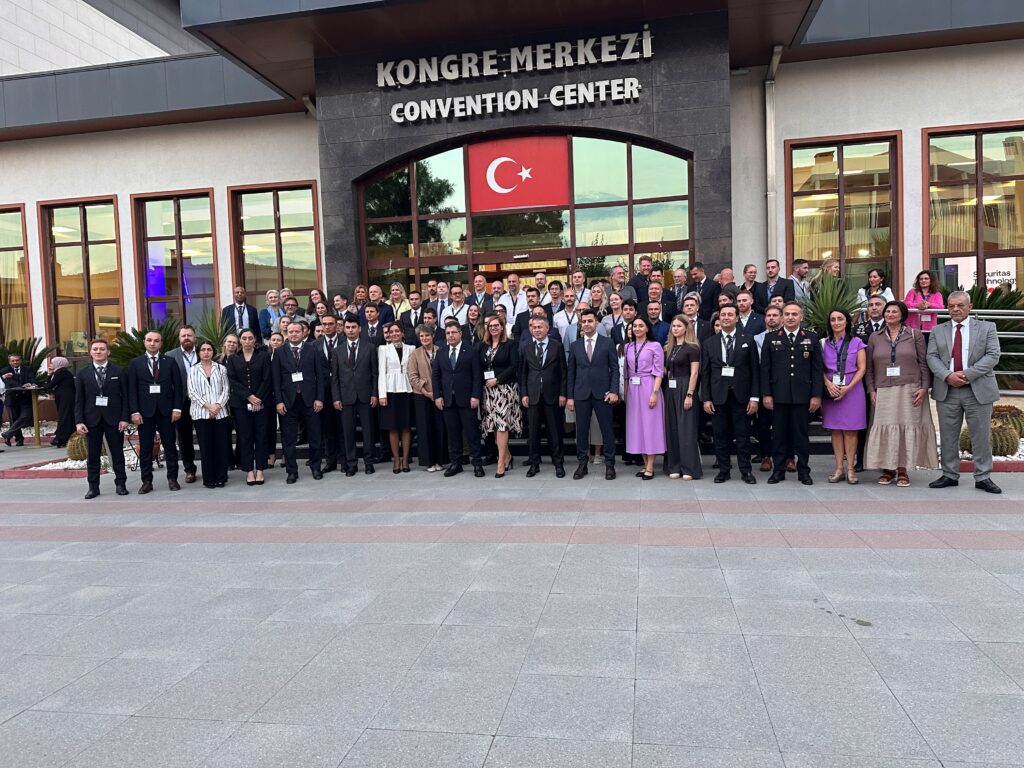
14th Electronic Monitoring Conference, Electronic Monitoring in a Changing World – Perception vs Reality
08/10/2026
On 6-8 October 2026, Antalya hosted the 14th Electronic Monitoring Conference “Electronic Monitoring in a Changing World – Perception vs Reality”. More than 350 participants coming from 32 countries across Europe and worldwide representing probation services, Ministries of Justice, victims´ services, EM providers, researchers as well as local participants representing the Turkish Prison and Probation Service gathered to discuss how electronic monitoring (EM) is understood by all stakeholders involved including the victims and the public, and how these perceptions compare to the evidence and experiences of those affected. While the gap between perception and reality in electronic monitoring has been recognised for over a decade, the rapid expansion of EM into areas such as victim protection, high-risk supervision and digital innovation has brought new challenges and questions to the forefront.
Recap
ITSCCS
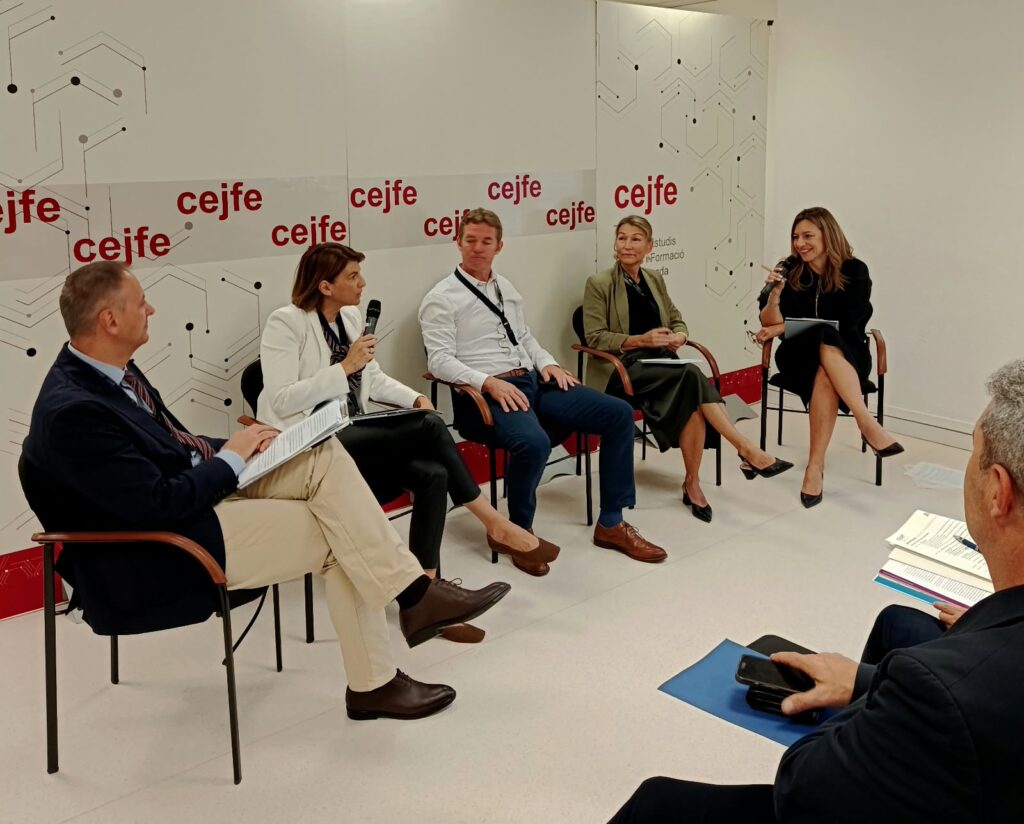
Core Correctional Skills in Digital Probation: highlights from the 6th ITSCCS in Barcelona
05/10/2026
The sixth International Training School on Core Correctional Skills (ITSCCS) took place in Barcelona from 28 September to 2 October 2026, bringing together 26 participants for a week of learning, practical training and international exchange. Organised by the Confederation of European Probation (CEP) and the Centre for Legal Studies and Specialised Training (CEJFE), the programme focused on “Clicks and Empathy: Core Correctional Skills in Digital Probation.”
Recap
Framework Decisions
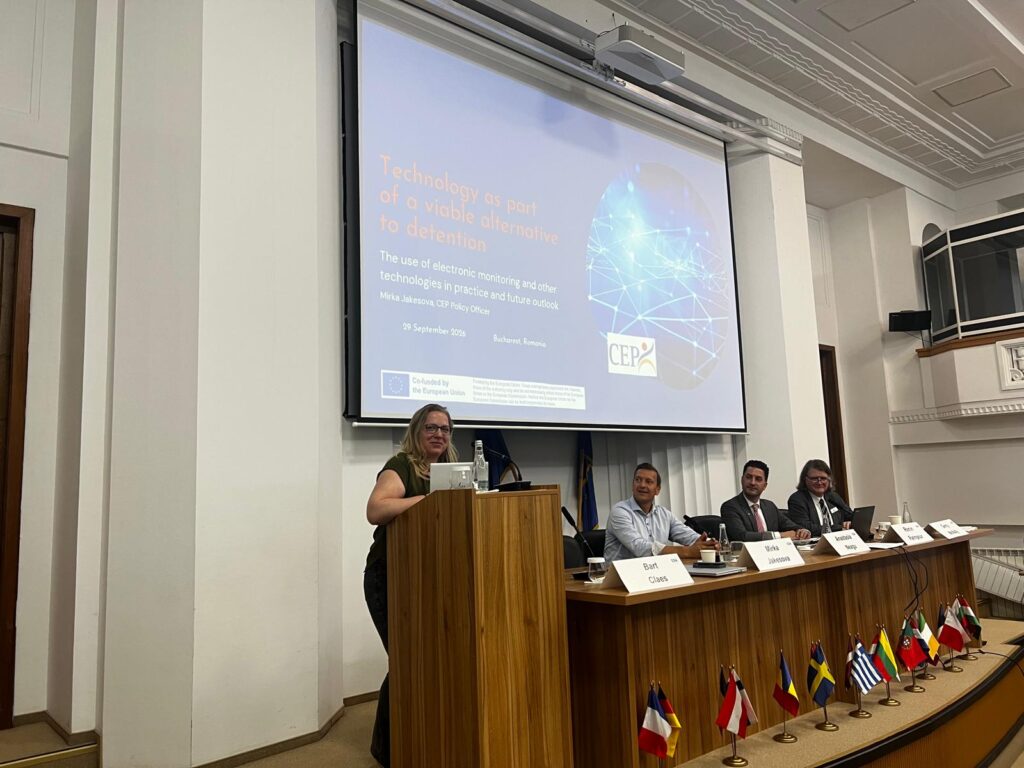
Recap: ERA workshop on Framework Decisions 829 and 947 in Bucharest
02/10/2026
CEP Vice-President Daniel Danglades, Ambassador Gerry McNally and Policy Officer Mirka Jakesova participated in the Seminar on Framework Decisions 829 and 947 and their Impact on Alternatives in the EU organized under the EU project run by the Academy of European Law on 28-29 September in Bucharest, Romania. The seminar brought together judges, prosecutors, probation practitioners, academics, and policy experts to discuss the growing role of alternatives to detention within European criminal justice systems.
New
CEP
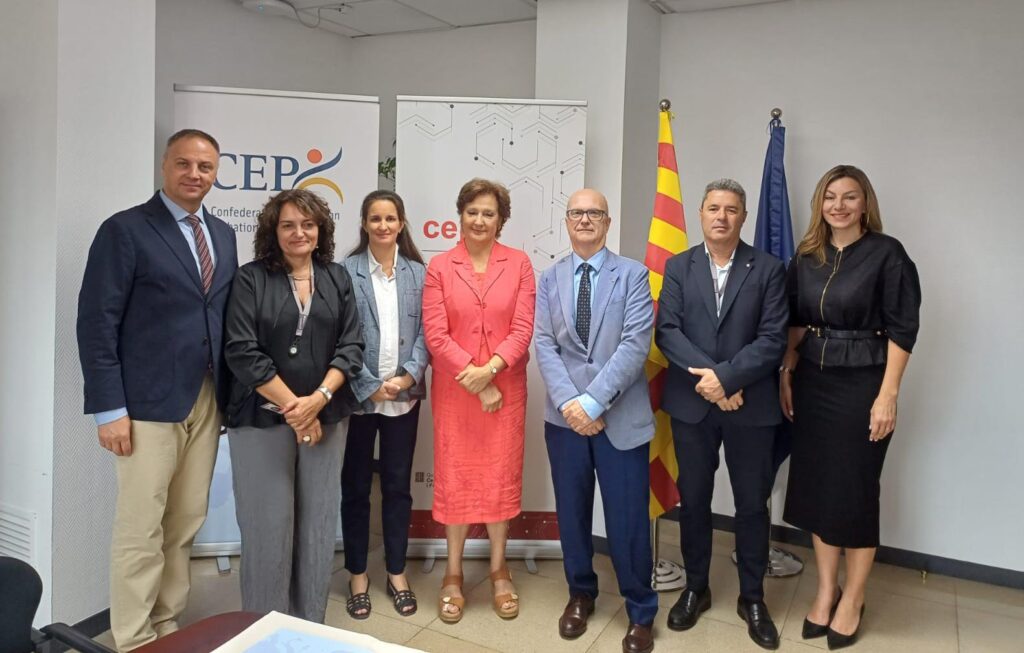
CEP and Catalan justice leaders reaffirm longstanding cooperation
29/09/2026
Representatives of the Confederation of European Probation (CEP) met with senior officials from the Catalan Department of Justice and Democratic Quality in Barcelona on 28 September 2026, alongside the opening of the sixth International Training School on Core Correctional Skills. The meeting offered an opportunity to recognise a longstanding partnership and discuss its continued development.
Updated
Mental Health
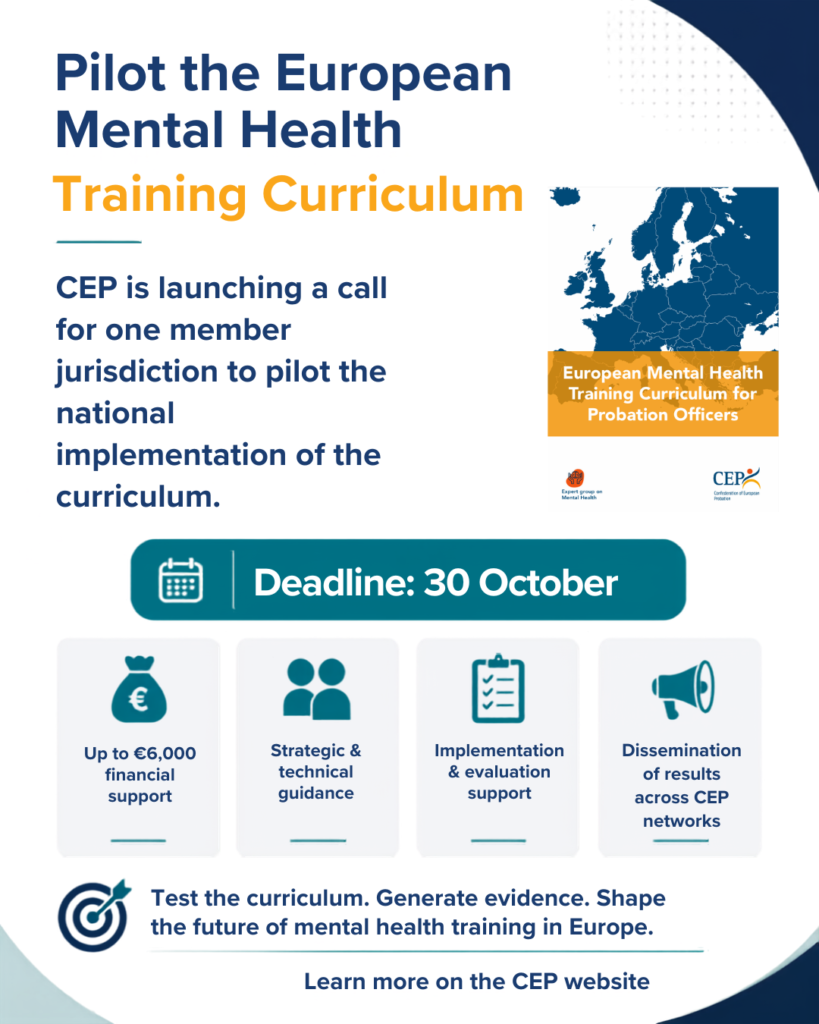
DEADLINE EXTENDED: Call for Pilot Implementation of the European Mental Health Training Curriculum
29/09/2026
Good news for CEP members! Following requests from our members, CEP has extended the deadline to apply for the pilot implementation of the European Mental Health Training Curriculum for Probation Officers.
Recap
ITSCCS, Technology
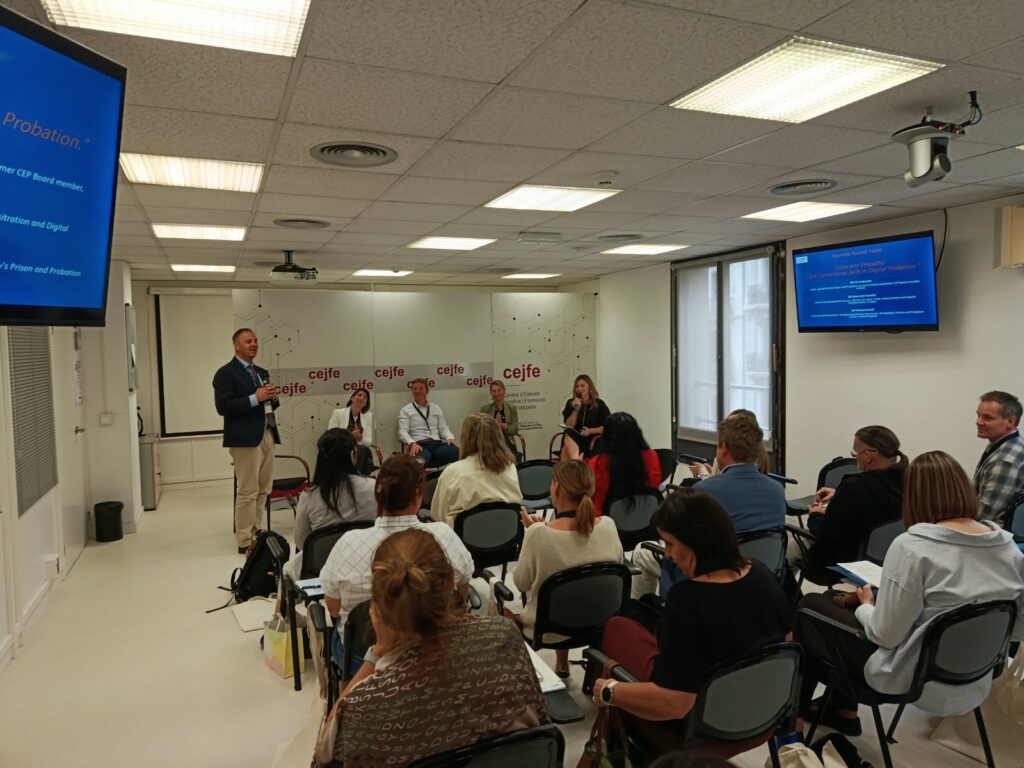
6th International Training School opens in Barcelona with a focus on digital probation
28/09/2026
How can probation professionals use new technologies in their interactions while building trust, showing empathy and supporting change? This question is at the heart of the sixth International Training School on Core Correctional Skills, which opened in Barcelona on 28 September 2026.
Subscribe to our bi-monthly email newsletter!
"*" indicates required fields
- Keep up to date with important probation developments and insights.