

Previous Article
News
Finnish Director General Esa Vesterbacka retires after 14 years
For fourteen years, Esa Vesterbacka was the Director General of the Finish Probation Service, the Criminal Sanctions Agency. He retired this month, time to look back with him on his career.
When did you start to work as a Director General and what is your background? For how many years have you been a director general?
I am a lawyer by training. After the basic studies, I continued as an assistant in Criminal Law at the university and completed the Licentiate of Law Degree. In addition, I completed court training, which meant I was qualified to work as a judge.
My first job was in Helsinki City Court as a prosecutor. However, I soon applied for a job as a prison director, because it was much more versatile than the post as a prosecutor. A prosecutor focuses mainly on legal questions, whereas a prison director practically faces the whole spectrum of issues linked to human life. I worked as a prison director both in an open prison (Köyliö Auxiliary Prison) and a closed prison (Turku Provincial Prison).
In 1995, I transferred to the Prison Department of the Ministry of Justice as the Deputy Head of Department and, six years later, I became the Head of Department of the Criminal Policy Department, which was established in the Ministry of Justice. I was appointed as Director General of the Criminal Sanctions Agency in March 2005, which means that I held the office for over 14 years.
What has changed during your years as Director General?
The biggest organisational chance was combining the management of the Prison Service and the Probation Service under one organisation, the Criminal Sanctions Agency in 2010. The new combined authority was responsible for the enforcement of both community sanctions and prison sentences. The whole merging process was very thorough and included wide discussions with the staff about the values and strategic policies of our work. The approved values and policies have guided our work throughout this decade.
The effectiveness of our work, which is also included in our legislation, has become essential. Our goal is to enhance the safety of society primarily by helping the sentenced people to reintegrate into society and, thus, reduce their risk of reoffending. In order to achieve that, we work in close cooperation with other authorities and third sector actors. The objective is that, as far as possible, the services that the prisoners need are provided by the same organisations who provide the services for other citizens. For example, prison education is arranged by the public educational institutions and the prisoner health-care services are fully managed by the Ministry of Social Affairs and Health. Another important policy is the aim to shift the focus towards more open enforcement; in other words, from prison sentences to community sanctions and from closed prisons to open prisons. We now have much more knowledge of how to influence recidivism and new working methods arise constantly.
What did you learn during your time as a director general?
Prisoners and community sanction clients are typically considered as one big mass, which is often problematic. We know, for example, that about 90 percent of the prisoners in Finland have or have had some substance addiction (in addition to other social problems). These kind of statistics provide a lot of important information that we can use in the planning of our work. However, we have to remember that all community sanction clients and prisoners are individuals, who have their own personal stories and histories. Therefore, it is important that, in each case, we take into account their individual circumstances and the different measures that can help to promote their reintegration into society. The sentence plan is a good tool for that. Even though the development towards an individual approach has been quite perceptible and positive, there is still more to learn.
I want to mention two more important points: everybody should be treated so that they have hope for a better future and no one should be humiliated unnecessarily. We all have the same need to save our face.
What will you miss after your retirement?
I will miss in particular my great colleagues both here in Finland and in the international forums. In fact, I would like to take this opportunity to express my deepest gratitude to all my colleagues and friends in CEP. I am glad that I will not be leaving this field of interest completely as I still continue my work in ICPA.
What are you looking forward to when you retire?
Most of all, I am looking forward to freedom from tight schedules. I have a big pile of unread books on my bedside table and there are many cultural events I want to attend now that I have more time. In addition, I have three grandchildren who will most certainly keep me occupied. I also have plans to travel and spend time at our seaside cottage.

Related News
Keep up to date with the latest developments, stories, and updates on probation from across Europe and beyond. Find relevant news and insights shaping the field today.
New
Probation in Europe
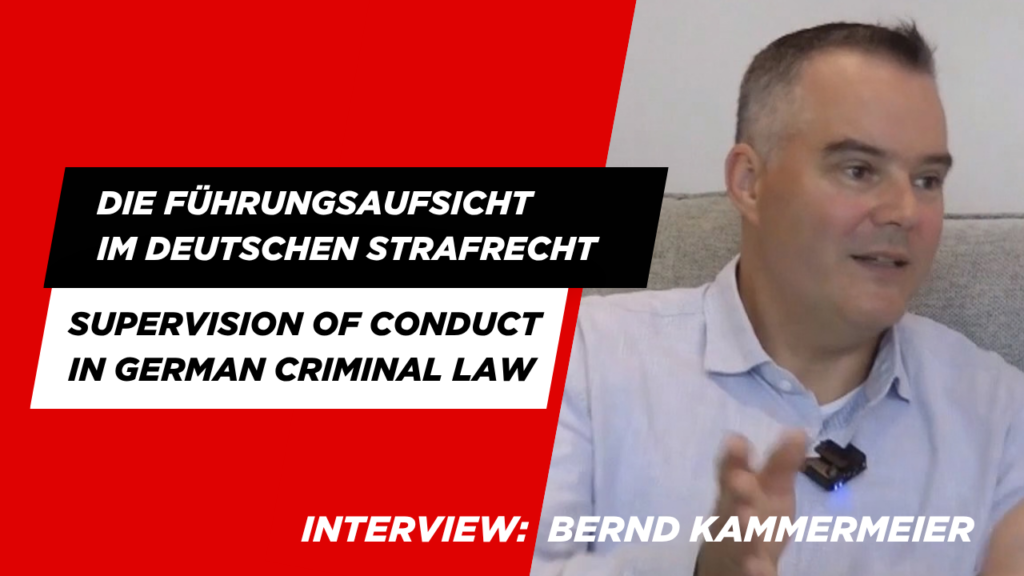
New Division episode: Bernd Kammermeier on Supervision of Conduct
23/09/2026
The 22nd episode of Division_Y features Bernd Kammermeier from Rostock, Mecklenburg-Western Pomerania.
Bernd is a unionist, practitioner and academic expert on supervision of conduct (Führungsaufsicht) in Germany. His recent PhD thesis examines the development and legal framework of this important instrument.
Recap
CEP
CEP at Kick-off Meeting for the 2026 Operating and Action Grants
22/09/2026
On 16 and 17 October, the Project and Policy Officers of the European Commission’s Directorate-General for Justice and Consumers (DG JUST) organised the Kick-off Meeting for the 2026 Operating and Action Grants. Opened with a video message from Commissioner McGrath, the meeting covered a range of topics related to project management, including reporting requirements and horizontal priorities such as gender mainstreaming, EU values, and the EU survey. Last but not least, participants were presented with the future developments of AgoraEU and the Justice Programmes under the new Multiannual Financial Framework (MFF) starting in 2028.
New

Others
Applications for the Cambridge MSt in Applied Criminology, Penology and Management are now open
16/09/2026
The Institute of Criminology, Cambridge, have opened up applications for the MSt in Applied Criminology, Penology and Management in the next academic year.
Recap
Probation in Europe
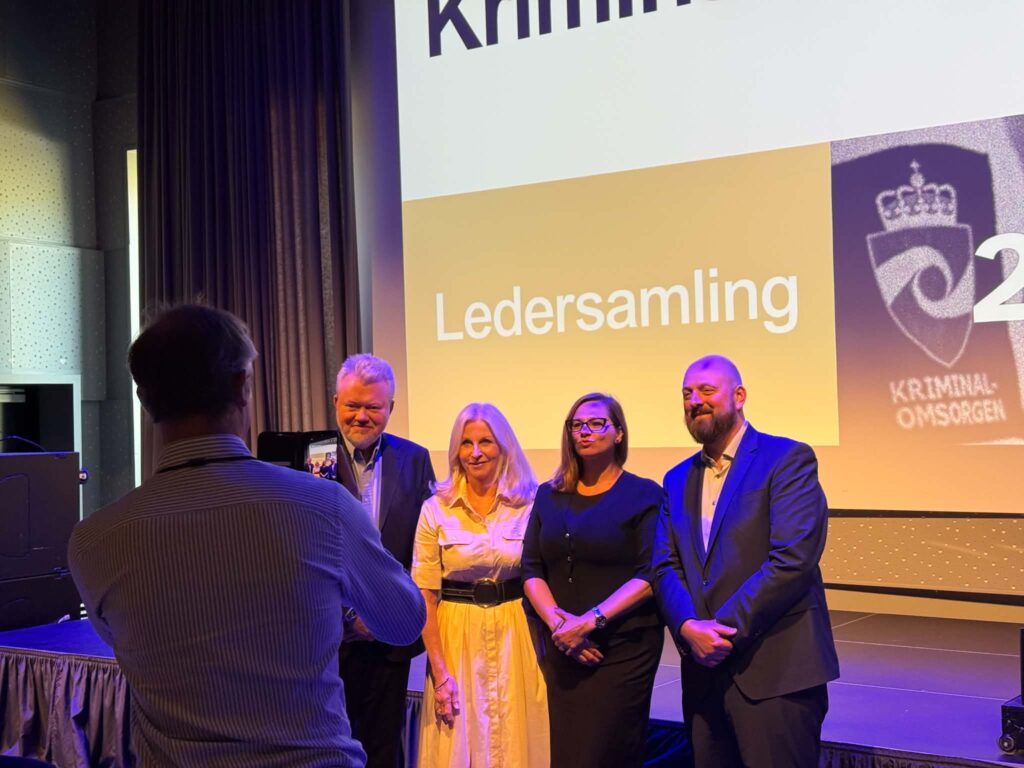
CEP at the Leadership Conference 2026
14/09/2026
CEP Secretary General Jana Špero Kamenjarin was delighted to participate in the Leadership Conference 2026 of the Norwegian Correctional Service, held on 9–10 September in Oslo.
Recap

Foreign Nationals in Prison and Probation
Recap: Expert Group of CEP and EuroPris, on Foreign Nationals in Prison and Probation (FNPP)
14/09/2026
On 7 and 8 September 2026 the joint Expert Group of CEP and EuroPris, on Foreign Nationals in Prison and Probation (FNPP), came together in The Hague for a valuable exchange of ideas, experiences, and expertise on one of the most important challenges facing prison and probation services across Europe.
New

CEP
Newsletter August 2026 out now
27/08/2026
CEP’s latest newsletter is out now! It includes:
- Approaching deadlines for upcoming events (ITSCCS26, 14th EM and DG leadership training) and the Mental Health curriculum pilot)
- Call for European Probation Journal on the topic of Workload in Probation
- EU documents like SPACE II, revised Victims’ Rights directive and so on
- and much more!
Subscribe to our bi-monthly email newsletter!
"*" indicates required fields
- Keep up to date with important probation developments and insights.