

Previous Article
News
CEP is looking for a trainee Policy Officer!
Please note that this position is only open to someone working for a CEP member organisation. During the time of the traineeship, you will be seconded from the organisation you currently work at.
To work as a trainee Policy Officer (PO) for CEP is a unique opportunity to see and get to know probation in Europe. The PO is involved in many different activities and events and builds up a network of probation professionals all over Europe.
The PO trainee has:
- Education: Graduated from an accredited University with an academic degree in Law, Social Work, Criminology, Social Pedagogy, Public Administration, Psychology or Sociology, or other relevant qualifications.
- Experience: Proven (minimum 3 years) experience in the probation field casework or similar work in a related correctional field, or in organizations/institutions related to the correctional sector. Experience in planning and organising activities. Experience in working with strategic documents and long term planning. Candidates for trainee Policy Officer may have experience as Probation Officer or first line manager/policy officer or have another relevant position in their parent organization (a CEP member organisation).
- Skills: Good knowledge of the English language (both written and spoken), good communication skills, the capacity to represent CEP in international events – including giving presentations. Good social skills and capacity to build and maintain a network.
The tasks for the Policy Officer trainee are:
- Taking the lead in several expert groups of CEP (for example on Domestic Violence, Mental Health, Violent Extremism)
- Taking the lead in all aspects of work regarding the European Framework Decisions
- Cooperating in the yearly application for the EU Operating Grant
- Representing CEP at international meetings and events
Former seconded Policy Officer Maria Lindström did an interview about her two years at CEP, click on the link to read it.
Length of traineeship
In order to really understand and come up to full speed, a period of two years is needed for the trainee. It is also important for the work environment at the CEP secretariat to have enough time for new colleagues. It is important that the trainee understands that he/she needs to work very independently and that the tasks vary a lot.
The CEP office is based in Utrecht, the Netherlands, so it is important that the trainee, if she/he is from another country, has access to a good working space with colleagues, the right equipment such as a computer, smartphone, internet access, skype etc. to enable good communcation lines with the CEP office.
Applicants should have the support and endorsement of their employing organisation and CEP will engage with the employer on terms and conditions. All costs for travels made on behalf of CEP will be covered by CEP.
Application
Do you see yourself in this position and do you want to apply? Please send your motivation letter and cv to secr@cep-probaiton.org. Note that you have to have permission from your employer to apply for this position. The deadline for submitting your application is the 1st of November 2019.

Related News
Keep up to date with the latest developments, stories, and updates on probation from across Europe and beyond. Find relevant news and insights shaping the field today.
Recap
Electronic monitoring, Technology
14th Electronic Monitoring Conference, Electronic Monitoring in a Changing World – Perception vs Reality
08/10/2026
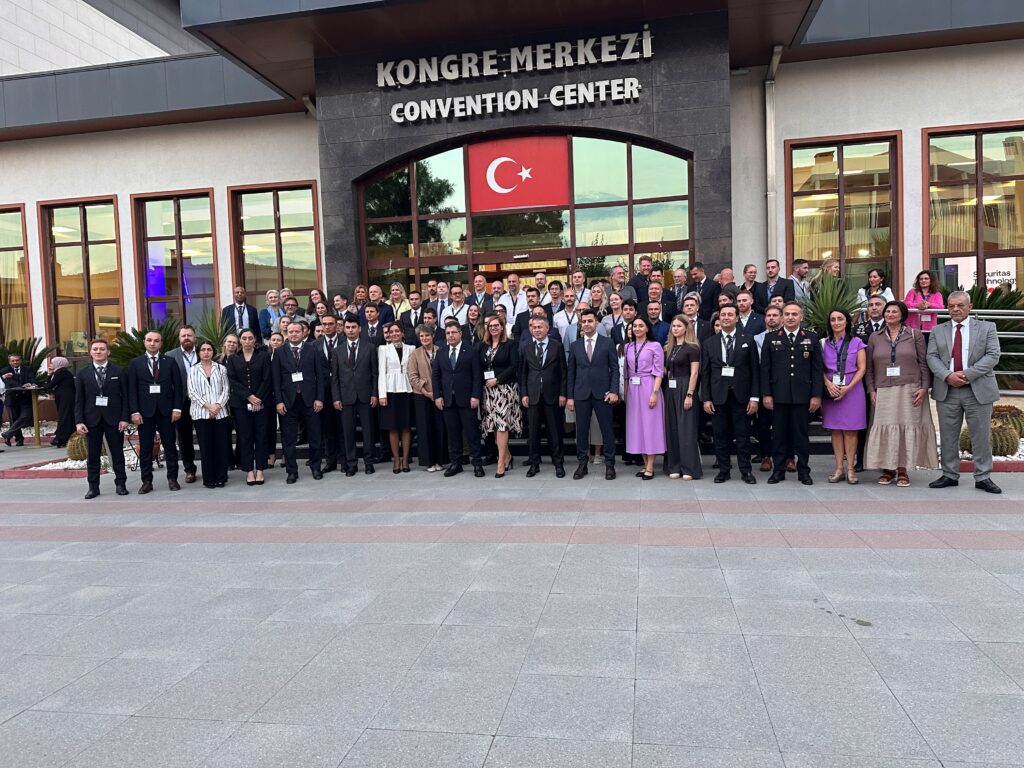
On 6-8 October 2026, Antalya hosted the 14th Electronic Monitoring Conference “Electronic Monitoring in a Changing World – Perception vs Reality”. More than 350 participants coming from 30 countries across Europe and worldwide representing probation services, Ministries of Justice, victims´ services, EM providers, researchers as well as local participants representing the Turkish Prison and Probation Service gathered to discuss how electronic monitoring (EM) is understood by all stakeholders involved including the victims and the public, and how these perceptions compare to the evidence and experiences of those affected. While the gap between perception and reality in electronic monitoring has been recognised for over a decade, the rapid expansion of EM into areas such as victim protection, high-risk supervision and digital innovation has brought new challenges and questions to the forefront.
Recap

ITSCCS
Core Correctional Skills in Digital Probation: highlights from the 6th ITSCCS in Barcelona
05/10/2026
The sixth International Training School on Core Correctional Skills (ITSCCS) took place in Barcelona from 28 September to 2 October 2026, bringing together 26 participants for a week of learning, practical training and international exchange. Organised by the Confederation of European Probation (CEP) and the Centre for Legal Studies and Specialised Training (CEJFE), the programme focused on “Clicks and Empathy: Core Correctional Skills in Digital Probation.”
Recap
Framework Decisions
Recap: ERA workshop on Framework Decisions 829 and 947 in Bucharest
02/10/2026
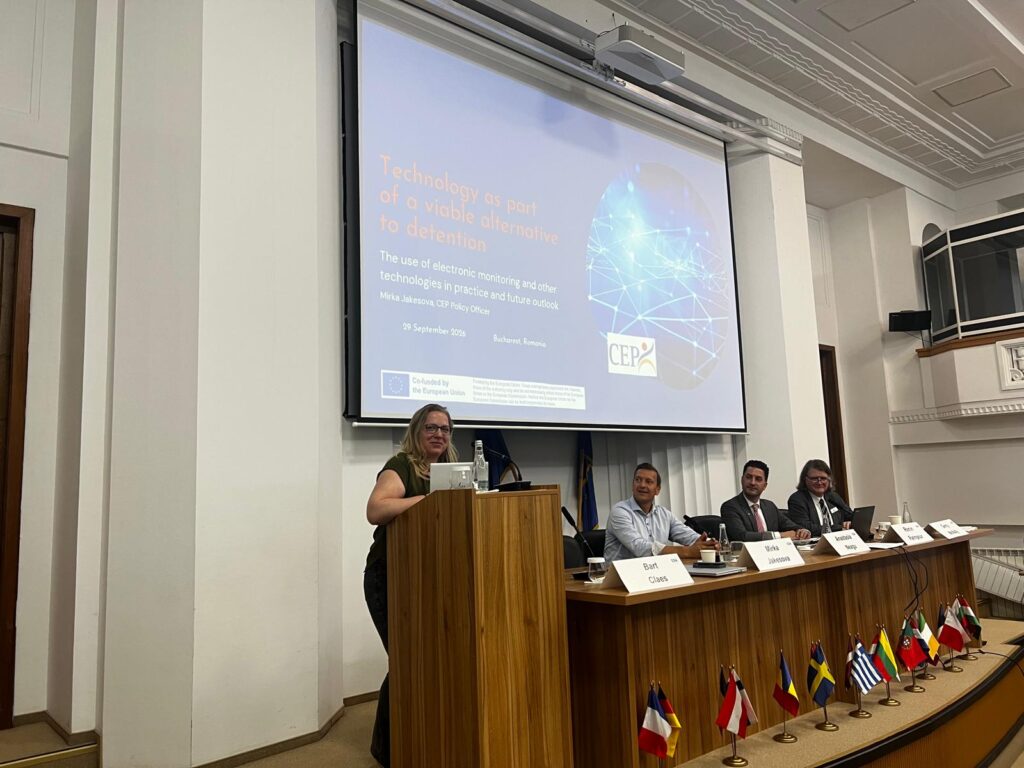
CEP Vice-President Daniel Danglades, Ambassador Gerry McNally and Policy Officer Mirka Jakesova participated in the Seminar on Framework Decisions 829 and 947 and their Impact on Alternatives in the EU organized under the EU project run by the Academy of European Law on 28-29 September in Bucharest, Romania. The seminar brought together judges, prosecutors, probation practitioners, academics, and policy experts to discuss the growing role of alternatives to detention within European criminal justice systems.
New

CEP
CEP and Catalan justice leaders reaffirm longstanding cooperation
29/09/2026
Representatives of the Confederation of European Probation (CEP) met with senior officials from the Catalan Department of Justice and Democratic Quality in Barcelona on 28 September 2026, alongside the opening of the sixth International Training School on Core Correctional Skills. The meeting offered an opportunity to recognise a longstanding partnership and discuss its continued development.
Updated

Mental Health
DEADLINE EXTENDED: Call for Pilot Implementation of the European Mental Health Training Curriculum
29/09/2026
Good news for CEP members! Following requests from our members, CEP has extended the deadline to apply for the pilot implementation of the European Mental Health Training Curriculum for Probation Officers.
Recap

ITSCCS, Technology
6th International Training School opens in Barcelona with a focus on digital probation
28/09/2026
How can probation professionals use new technologies in their interactions while building trust, showing empathy and supporting change? This question is at the heart of the sixth International Training School on Core Correctional Skills, which opened in Barcelona on 28 September 2026.
Subscribe to our bi-monthly email newsletter!
"*" indicates required fields
- Keep up to date with important probation developments and insights.