

Previous Article
News
The Effective Proposal Framework: a Digital Solution to Proposal Consistency
One of the priorities for the National Probation Service’s work in England and Wales is to provide professional consistent advice to courts, specifically by suggesting suitable sentences and interventions for convicted offenders, via a pre-sentence report.
An article by Zoë Walker, Senior Probation Officer, NPS North West
In 2016, a fundamental part of the new national E3 Blue Print agenda was to develop an effective proposal framework, which would inform the recommendations of pre-sentence report writers. The intention was to improve consistency of proposal behaviour across the seven divisions, and ensure proposals fitted with an individual offender’s risk and need. E3 was a programme launched as a main driver for improvements in the national service. The three ‘E’s stood for Effective, Efficient and Excellence.
The EPF tool, developed in 2017 and rolled out in 2018, provided a digital platform to ensure consistency. In essence the tool holds a database of all potential interventions available in England and Wales, along with their distinct eligibility criteria. The EPF tool then acts like a search engine; users input details of a person’s gender, age, geographical location, offending motivations, offence seriousness, needs, risk assessments and social characteristics, and the EPF shortlists those interventions which ‘match’ their profile. It also suggests the level and breadth of the sentence (whether it is a community order, or whether custody is an option) depending upon the offence seriousness – a direct application of Sentencing Council Guidelines.
Nudge theory and professional judgement
Inherent in the development of such a tool was the potential erosion of professional judgement and a fear proposals could become mechanistic and dictated, rather than individually crafted to the diversity needs of the person being sentenced. Therefore, the EPF tool was designed in such a way that a user is ultimately able to choose whatever they want, whilst being steered to consider the more appropriate options first, and making the route to the most appropriate proposal a smooth one.
It does this in three ways. First, the shortlists recommended by the tool are always overridable. A user can choose to pick something not shortlisted, by indicating their decision to invoke ‘professional override’ which brings up all other options. The tool also allows a proposal to be crafted from a mixture of these ‘shortlisted’ interventions and ‘professional override’ ones. Ultimately, nothing is off limits.
Second, it provides up to date information to aid professional judgement decisions. Before choosing any option (but especially ones using professional override), the user is encouraged to read the details of that intervention first, to see why it is appearing as not suitable. Sudden changes in policy which affect intervention eligibility can often be missed in the numerous communications, team meetings, and policy instructions fed through any organisation. The EPF puts this policy into practice and can alert people to changes which they may not have been made aware of, or may have forgotten. This skills up the user to consider up to date information, at the very point of their decision-making.
Third, nudge theory is employed to most effect in the way shortlists are presented. As is often the case, a person before court is potentially equally suitable for many different things. These all remain options for the professional to choose. However, to help the user understand the current priorities of the business (informed by up-to-date research on ‘what works’), the shortlists organises all equally suitable options in priority order – with the things people are encouraged to consider first at the top of the list, and items to consider afterwards further down. This softer approach to guiding proposals means that a strict binary outcome (a tool which says this is right, and this is wrong) is not developed, and instead by a more organic list of options which preserves professional judgement, but guides its application, is used instead.
Impact on proposal behaviour
Early indications showed that just by having accredited programmes shortlisted and prioritised high up when someone was potentially suitable, increased the chances of report writers proposing them when they were suitable. This meant some divisions noticed an increase in volume, whereas in others noticed a reduction, as the tool also discouraged incorrect proposals of accredited programmes which could have previous been occurring.Comparison data on the suitable proposal of programmes for eligible people only was not available pre-EPF in order to compare the efficacy of EPF in this regard. Put simply; before EPF there was no way of knowing how many programmes were mis-proposed. Data was also now available to note any inconsistencies in the proposal rate of interventions when they were suitable and investigate these.
At initial roll out, professional override in the tool could be as high as 20%, but gradually decreased as users became more used to the questions asked, less likely to mis-key, more likely to ‘trust’ the tool and thus less likely to propose something which the tool categorised as unsuitable for that offender’s profile.
Furthermore, the tool can be used to champion under-utilised interventions. For example, when a little known, little used, niche intervention specifically for young male offenders at risk of custody, was re-prioritised to show at the top of the list when suitable, rather than the bottom, proposals rose by over fifteen percentage points in one month.
Thus the ability for the tool to ‘champion’ certain interventions in specific situations, alongside the tools promotion of consistent, effective proposal suggestions, means that both consistency and individualisation of proposals can be accommodated at the same time.

Related News
Keep up to date with the latest developments, stories, and updates on probation from across Europe and beyond. Find relevant news and insights shaping the field today.
New

Technology
Registration deadline approaching: Join CEP’s final workshop of 2026 on technology in probation
22/10/2026
📢 Have you registered yet? CEP’s final workshop of 2026 takes place on 24 November in Barcelona, bringing together professionals to explore how technology is being used across probation services in Europe.
The Workshop on Alternatives to Detention and Technologies: Deep Diving into New Trends will look beyond artificial intelligence to examine the different ways technology is shaping probation practice, from staff training to working with clients and collaborating with other criminal justice partners.
Recap

Directors General Meetings
CEP Leadership Excellence Training: strengthening leadership and cooperation across Europe
22/10/2026
The CEP Leadership Excellence Training, held on 20–21 October in Zagreb, Croatia, brought together Directors General and senior probation managers from 11 European countries for a two-day interactive programme focused on leadership, communication, staff development, and international cooperation.
New

CEP
Call for Proposals: Evaluation of CEP Expert Groups
21/10/2026
On behalf of Ms. Jana Špero Kamenjarin, CEP Secretary General, it is my pleasure to invite you to submit a proposal to conduct an evaluation within the CEP work programme.
Recap

Uncategorized
CEP at UNODC: Contributing to the Development of Probation Services Worldwide
19/10/2026
The Confederation of European Probation (CEP) was represented by its Secretary General, Jana Špero Kamenjarin, at the Expert Group Meeting on the Establishment of Probation Services and Probation Practices, organised by the United Nations Office on Drugs and Crime (UNODC) and held at the Vienna International Centre (VIC) from 12 to 14 October 2026.
Recap
Electronic monitoring, Technology
14th Electronic Monitoring Conference, Electronic Monitoring in a Changing World – Perception vs Reality
08/10/2026
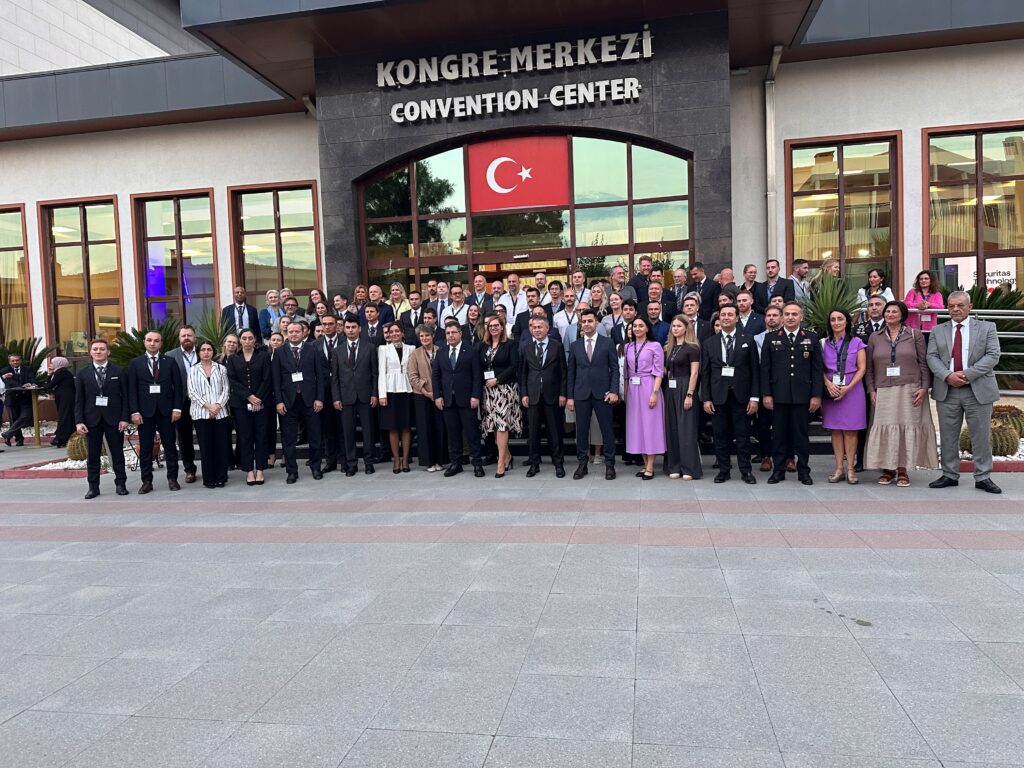
On 6-8 October 2026, Antalya hosted the 14th Electronic Monitoring Conference “Electronic Monitoring in a Changing World – Perception vs Reality”. More than 350 participants coming from 32 countries across Europe and worldwide representing probation services, Ministries of Justice, victims´ services, EM providers, researchers as well as local participants representing the Turkish Prison and Probation Service gathered to discuss how electronic monitoring (EM) is understood by all stakeholders involved including the victims and the public, and how these perceptions compare to the evidence and experiences of those affected. While the gap between perception and reality in electronic monitoring has been recognised for over a decade, the rapid expansion of EM into areas such as victim protection, high-risk supervision and digital innovation has brought new challenges and questions to the forefront.
Recap
ITSCCS
Core Correctional Skills in Digital Probation: highlights from the 6th ITSCCS in Barcelona
05/10/2026
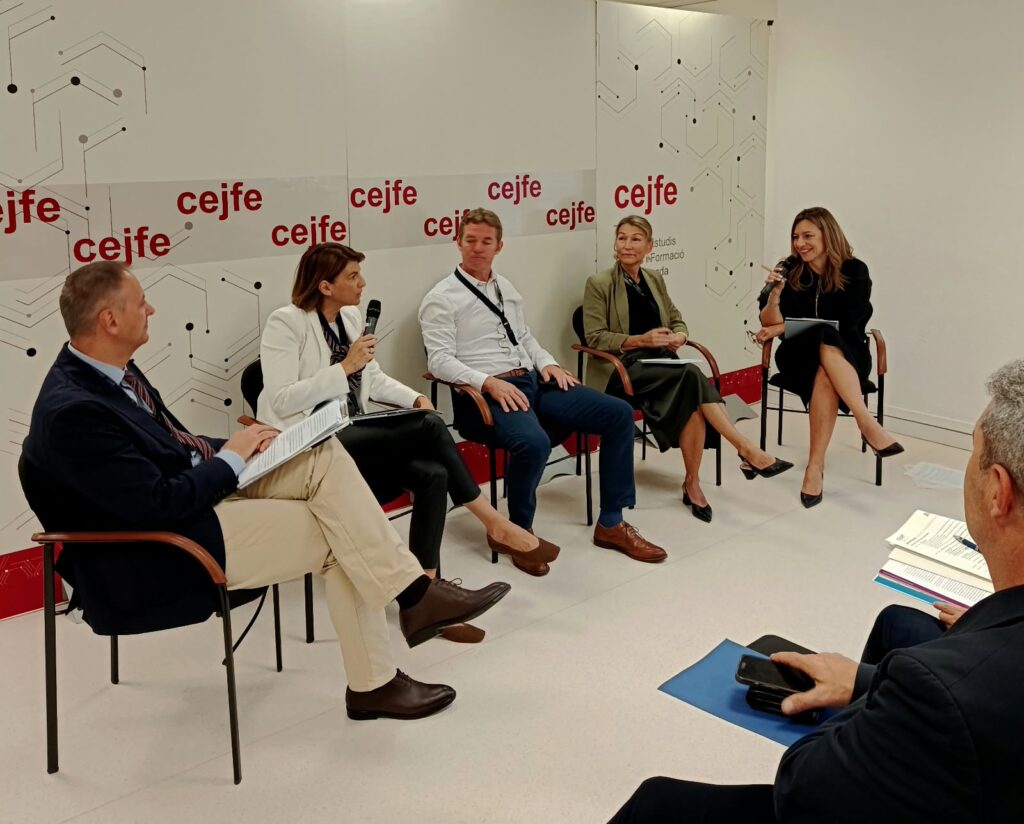
The sixth International Training School on Core Correctional Skills (ITSCCS) took place in Barcelona from 28 September to 2 October 2026, bringing together 26 participants for a week of learning, practical training and international exchange. Organised by the Confederation of European Probation (CEP) and the Centre for Legal Studies and Specialised Training (CEJFE), the programme focused on “Clicks and Empathy: Core Correctional Skills in Digital Probation.”
Subscribe to our bi-monthly email newsletter!
"*" indicates required fields
- Keep up to date with important probation developments and insights.