

Previous Article
News
Jihadist Dehumanisation Scale[1]: an interesting way to assess radicalisation
This article is written by researchers from the University of Nantes, France.
A large literature review published in 2015 by the International Center for the prevention of Crime [2] summarises some research conclusions (page 45) about radicalisation models:
- Radicalisation “trajectories” approach: “compared to the weaknesses of profile studies, can generate a better understanding of the gradual engagement process among individuals”;
- According to Christmann [3] (2012), these models concur that the radicalisation process implies an individual change determined by external factors.
From a clinical psychology point of view, the “individual change” is relevant to analyse. Indeed, one of the limits of all radicalisation models is that they do not answer to the question why this individual’s change sometimes happens and sometimes not, especially “that people who experience the same phases do not necessarily become radicalised” (page 45). We can also add that people who experience the same phases do not necessarily become violent.
The International Center for the prevention of Crime literature review identifies two models (McCauley & Moskalenko [4] (2008) and Stahelski [5] (2005)), out of six trajectories of homegrown radicalism in the West, involving dehumanisation as a stage before any violent action ideologically motivated. Dehumanisation, which is the act of perceiving or treating people as if they are less than human, might constitute the “individual change” that occurs for violent individual in a context of Muslim radicalisation, even if transitions mechanisms are not very clear. Dehumanisation has emerged as a major research issue on intergroup relations in the last sixty years, especially on racial and ethnic discriminations and violence, but also more recently on intergroup relations with immigrants, asylum seekers, psychiatric patients, etc. (Haslam & Stratemeyer [6], 2016).
The research assumption underlying Jihadist Dehumanisation Scale is that Jihadist dangerousness is considered to be directly linked with the dehumanisation level, understood in its psychological sense and which leads attacks perpetrators to consider as “non-human” those who do not share the same ideology. Dehumanisation represents therefore a key process in terms of dangerousness assessment.
Another research assumption is that in radicalisation context, violent action is considered as a behavioral consequence of cognitive and emotional changes. Consequently, cognitive and emotional dehumanisation determinants are relevant to detect in prevention purposes, and as early as possible.
According to their experience with radicalised people (in psychotherapy or research contexts) a team of psychologists and researcher from the University of Nantes (France) have clearly identified several stages between elements (emotional and cognitive aspects and not only behavioural ones) embodying freedom of conscience and religion, and others that characterise dehumanisation.
To focus on psychological processes underlying each stage presents many advantages:
- To position the debate in a psychological reference framework, and therefore to take distance from the controversy around radicalisation, Islam and violence;
- To use scientific methods to assess specific stages indicators (in terms of psychometric methodology for scale validation);
- To take into consideration the high variability of situations that were described by practitioners;
- To avoid any discrimination against Muslim practices that can be considered as freedom of conscience and religion, and at the meantime without ignoring that a certain radical vision of Islam precedes dehumanisation..
Jihadist Dehumanisation Scale purpose is therefore to assess, according to observable emotional, cognitive and behavioral indicators:
- The potential dangerousness of an individual;
- The cumulated indicators of radicalisation.
Another research assumption is that the more an individual cumulates radicalisation indicators, the more he is likely to become dehumanised and therefore potentially dangerous, even if transitions mechanisms need further researches.
In other words, Jihadist Dehumanisation Scale objectifies dangerousness by a score that positions the individual in one specific stage. Consequently, it presents a comparative advantage in terms of
- Synchronic comparison between several individuals assessed at the same moment;
- Diachronic comparison for the same individual assessed at different moments, his trajectory in terms of increased engagement or disengagement.
Moreover, Jihadist Dehumanisation Scale can be ranged between “Structured professional judgment tools and enables to standardise the risk assessment procedure for professionals facing radicalisation in their work environment, on the basis of a psychometric scale with scientific evidence. It is important to underscore that Jihadist Dehumanisation Scale is applicable outside prison and for professional use only. It is adapted for assessment purposes of non-prosecuted individuals by people working with youth, childcare services, police etc. and by probation services for individuals followed-up during their probation period.
Last but not least, concerning concealment risk (or dissimulation practices) that has to be taken into consideration with radicalised people, a specific score interpretation method enables to objectify it.
Compared with other existing risk assessment tools the DDS presents two advantages that have to be supported by more statistical evidence:
- Capacity to assess concealment risks and possibly to reinforce the concealment assumption;
- In the scoring method for each item, the reference to a specific psychological process and not a score (to be assessed by the professional) of “low”, “medium” or “high” risk often used in other tools).
For professionals facing radicalisation in their work environment, Jihadist Dehumanisation Scale aims to be a useful working tool, simple (25 items) and easily accessible with a short training. The scale has been introduced in French and can be translated in other languages, provided that the psychometric approach has to be respected for another language use. The first conclusions are encouraging regarding the Jihadist Dehumanisation Scale relevancy to assess jihadist dangerousness and also, in some extent, concealment risk.
Are you interested in more information about Dehumanisation Scale, please contact: radicalisation-psychometrics@univ-nantes.fr
[1] Djihadist Dehumanization scale was developed in the University of Nantes (France) and registered in April 2017 in Institut National de la propriété intellectuelle (french national institute for intellectual property).
[3] Christmann, K. (2012). Preventing Religious Radicalisation and Violent Extremism. London.
[4] McCauley, C., & Moskalenko, S. (2008). Mechanisms of political radicalization: pathways toward terrorism. Terrorism and Political Violence, 20(3), 415–433.
[5] Stahelski, A. (2005). Terrorists are made not born: Creating terrorists using social psychological conditioning. Cultic Studies Review, 4(1), 1–10.
[6] Haslam, N & Stratemeyer, M. (2016). Recent research on dehumanization. Current opinion in psychology, 11, 25-29.

Related News
Keep up to date with the latest developments, stories, and updates on probation from across Europe and beyond. Find relevant news and insights shaping the field today.
Recap
Electronic monitoring, Technology
14th Electronic Monitoring Conference, Electronic Monitoring in a Changing World – Perception vs Reality
08/10/2026
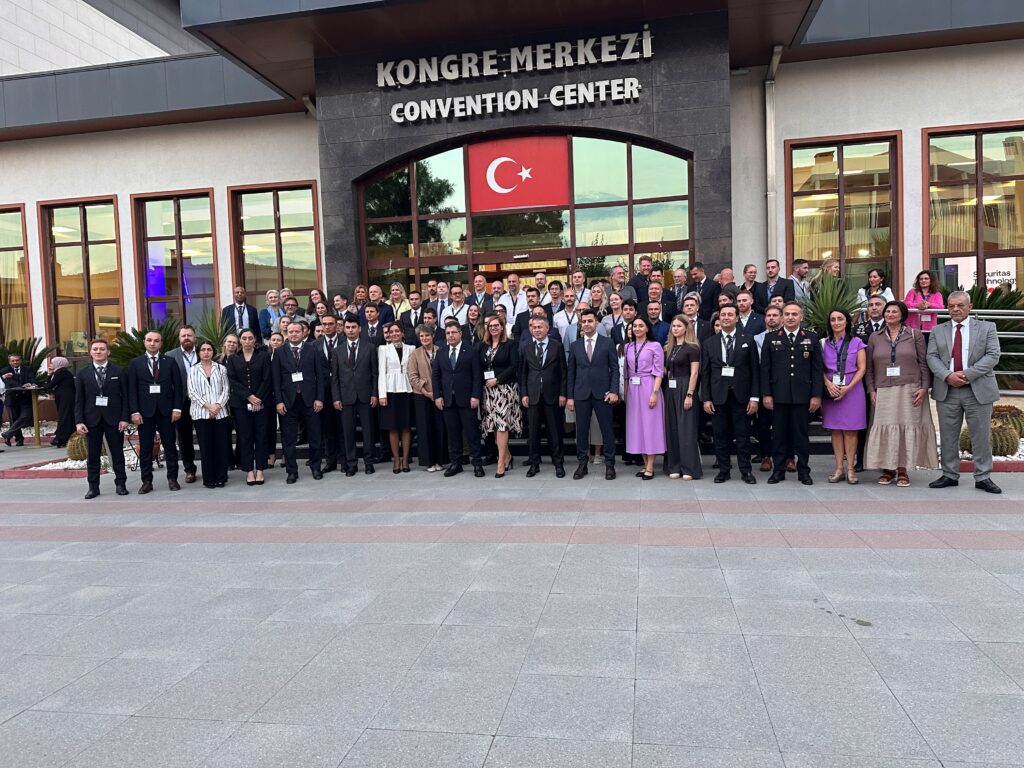
On 6-8 October 2026, Antalya hosted the 14th Electronic Monitoring Conference “Electronic Monitoring in a Changing World – Perception vs Reality”. More than 350 participants coming from 30 countries across Europe and worldwide representing probation services, Ministries of Justice, victims´ services, EM providers, researchers as well as local participants representing the Turkish Prison and Probation Service gathered to discuss how electronic monitoring (EM) is understood by all stakeholders involved including the victims and the public, and how these perceptions compare to the evidence and experiences of those affected. While the gap between perception and reality in electronic monitoring has been recognised for over a decade, the rapid expansion of EM into areas such as victim protection, high-risk supervision and digital innovation has brought new challenges and questions to the forefront.
Recap

ITSCCS
Core Correctional Skills in Digital Probation: highlights from the 6th ITSCCS in Barcelona
05/10/2026
The sixth International Training School on Core Correctional Skills (ITSCCS) took place in Barcelona from 28 September to 2 October 2026, bringing together 26 participants for a week of learning, practical training and international exchange. Organised by the Confederation of European Probation (CEP) and the Centre for Legal Studies and Specialised Training (CEJFE), the programme focused on “Clicks and Empathy: Core Correctional Skills in Digital Probation.”
Recap
Framework Decisions
Recap: ERA workshop on Framework Decisions 829 and 947 in Bucharest
02/10/2026
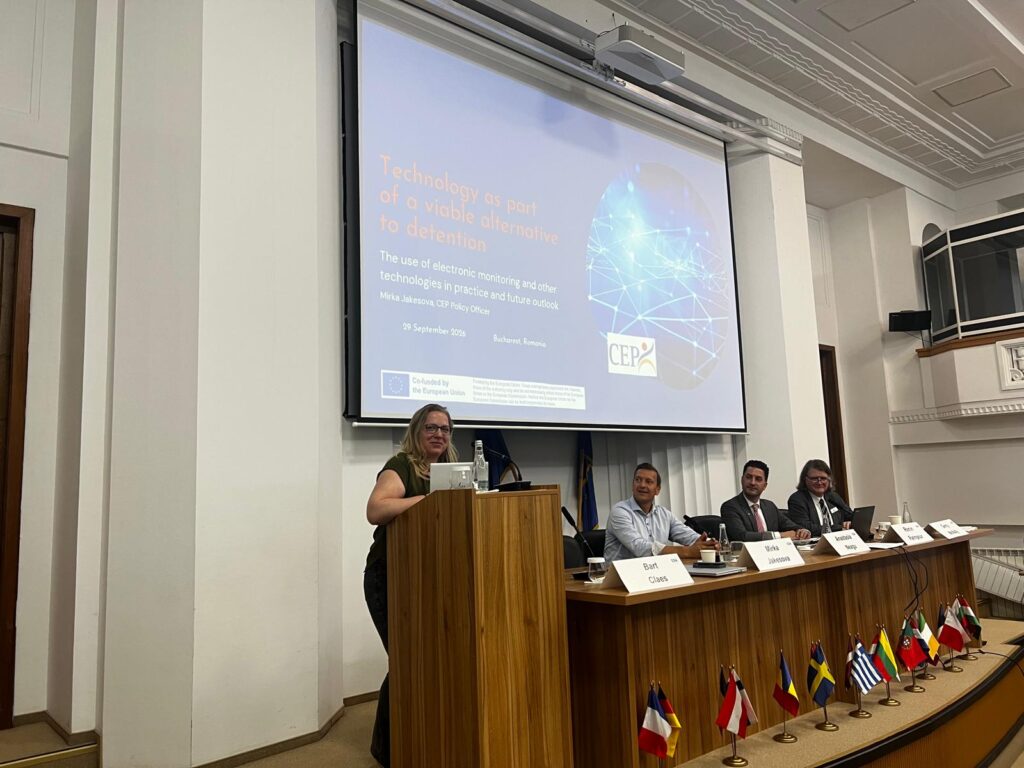
CEP Vice-President Daniel Danglades, Ambassador Gerry McNally and Policy Officer Mirka Jakesova participated in the Seminar on Framework Decisions 829 and 947 and their Impact on Alternatives in the EU organized under the EU project run by the Academy of European Law on 28-29 September in Bucharest, Romania. The seminar brought together judges, prosecutors, probation practitioners, academics, and policy experts to discuss the growing role of alternatives to detention within European criminal justice systems.
New

CEP
CEP and Catalan justice leaders reaffirm longstanding cooperation
29/09/2026
Representatives of the Confederation of European Probation (CEP) met with senior officials from the Catalan Department of Justice and Democratic Quality in Barcelona on 28 September 2026, alongside the opening of the sixth International Training School on Core Correctional Skills. The meeting offered an opportunity to recognise a longstanding partnership and discuss its continued development.
Updated

Mental Health
DEADLINE EXTENDED: Call for Pilot Implementation of the European Mental Health Training Curriculum
29/09/2026
Good news for CEP members! Following requests from our members, CEP has extended the deadline to apply for the pilot implementation of the European Mental Health Training Curriculum for Probation Officers.
Recap

ITSCCS, Technology
6th International Training School opens in Barcelona with a focus on digital probation
28/09/2026
How can probation professionals use new technologies in their interactions while building trust, showing empathy and supporting change? This question is at the heart of the sixth International Training School on Core Correctional Skills, which opened in Barcelona on 28 September 2026.
Subscribe to our bi-monthly email newsletter!
"*" indicates required fields
- Keep up to date with important probation developments and insights.