

Previous Article
News
Professionalising probation in Estonia
In a very short amount of time the Estonian probation service evolved into the organisation it is today. Director Maret Miljan wrote an article on how Estonian probation has changed over the past years.
The start of the Estonian probation supervision dates back to 1920, however the current supervision system started to function on the 1st of May 1998. The main goal was to have alternatives to prison, thus reducing the high prison population (280 prisoners per 100.000 people). Initially the responsible authority was the Estonian court, but in 2008 it was merged together with the prison service. The ideological idea behind this change was that the imprisonment and its alternatives would have the same purposes and principles and that the sentence enforcement process would be one logical chain in which prison and probation are just different phases. The method and process are also similar: same risk assessment tool, rehabilitation programmes etc. That is why it was decided to integrate probation into the prison service. With the result of more concentrated know-how and much more effective cooperation, thus enabling to save some resources. This was the start of professionalising probation in Estonia.
Risk assessment
First of all, probation serves a rehabilitative purpose. It is very important that all the interventions are aimed at factors that are known to be connected to criminal behavior. Therefore all interventions are preceded by a risk assessment. Since 2007, Estonia uses an OASys (Offender Assessment System) based tool. The purpose of a sentence is always punitive with the aim of public protection. There are regular meetings with a probation officer, home visits, alcohol and drug controls and contact moments about possible violations. In order to maintain a good quality of work, standardisation of the processes was needed and in 2011 the new national probation standard entered into force. This is a comprehensive guideline for the probation officers and is regularly updated.
As all the interventions and supervision activities should correspond to offender’s recidivism risk and the risk to harm, probationers are divided into 4 categories based on the Tiering-model. This change entered into force in 2014. The Tiering-model also corresponds to a workload counting system, whereas low-risk client are given one point by a probation officer, medium-risk two points, high-risk three points and very high-risk offenders four points. Per officer the optimum is 90 points, which for example might mean 30 high-risk clients for a probation officer simultaneously. The number of probationers (currently 4453) have been in decline in recent years, which enabled to keep the optimal workload. This is an important precondition to professional probation.
Probation studies
The work of the probation officer is to find out the risk of committing a new criminal offence and make a plan together with an ex-offender to set up means for avoiding this risk, while cooperating with the state and local government, structural units and non-profit associations and organising formal supervision as well. It is both a care and control oriented approach. As an entry requirement, a probation officer is expected to have higher education, a good stress tolerance and a high moral integrity. To manage all the tasks he/she should have an additional training on the topics of: client work skills, risk assessment skills, legal knowledge, technical skills for electronic monitoring or how to use breathalyzers or drug tests.
There is no university in Estonia that offers studies for probation officers and therefore there is a list of academic backgrounds that are suitable for the profession of probation officer (usually in the social field, but also in corrections and law). Estonia implemented a minimum standard for additional education depending on the study background (for example social workers lack the knowledge of law and lawyers miss the skills to work with clients). Since last year, the piloting of a preparation period for new probation officers has started. In the first six months, a new officer gets a supervisor and an individual plan for the trainings that are needed. This period ends with an examination to make sure the officer is suitable and ready for probation work. In addition to testing the fact based knowledge, there are also hypothetical case management problems that they need to solve. The idea behind this is to evaluate the values and attitudes of the future probation officers and not only focus on facts and skills.
Junior and senior probation officers
There are currently 165 probation officers in Estonia working at more than 30 locations that are divided between three regional prisons. This approach needs the centralisation of some tasks that probation fulfils. Probation officers should mainly focus on case management and that is why, since 2013, we have established the position of ‘junior officers’ that help with easier control and technical tasks. They are less qualified and act as a mobile unit that drives around the region conducting home visits and controlling alcohol and drug consumption according to the orders of the probation officers. The probation service is also responsible for rehabilitation interventions and there is either a central team in the region or senior probation officers who are conducting the group rehabilitation programmes. It is easier to have a group specialised officers than to teach a large amount of probation officers these skills. Senior officers are responsible for more difficult target groups (sex offenders, violent offenders, conditionally released prisoners etc). This is a way to balance the control versus care dilemmas that officers often have.
Cooperation
The probation system in Estonia could be considered as proactive. There was a great need for a systematic network for the high risk offenders and starting from 2014 Estonia implements a similar cooperation model to the UK´s MAPPA (Multi-Agency Public Protection Arrangements). The probation departement took the initiative to develop such a system and has the main responsibility to coordinate the cooperation between police, local government social workers, victim support etc. Another example is organising community service tasks. Usually the organisations providing these tasks are external institutes (like local governments or ngo-s), but it is not always easy to find reliable partners and control their work. Since 2015 the probation agency has legal options to organise community service by themselves. Usually the local government gives a location to use (for example a park) and junior officers coordinate the work done by the offenders there. Video surveillance can be used to make the control easier. This is also a good opportunity for the offenders that are sometimes rejected by outside partners because of their behavior or crime committed.
The Estonian probation system has changed a lot in the recent years. Usually the prison department within the Ministry of Justice is initiating the changes and regional prisons implement them. There is a locally elected board of probation officers that was established in 2012. It is re-elected every three years and it acts as advisory body to the ministry. This form of work helps to keep probation officers more involved into these processes and implement the changes into their everyday work.
The future
The challenges for the future will continue. For example, the balance in gender is uneven within the Estonian probation service and equality should therefore be achieved. At the moment almost 90% of the probation officers is female. The digital skills of probation officers have to be improved as well. We see that more experienced officers are usually very good at working with clients, but lack digital skills that might complicate the work with informational systems and also the control over the probationer on the internet (social media etc).

Related News
Keep up to date with the latest developments, stories, and updates on probation from across Europe and beyond. Find relevant news and insights shaping the field today.
Recap
Electronic monitoring, Technology
14th Electronic Monitoring Conference, Electronic Monitoring in a Changing World – Perception vs Reality
08/10/2026
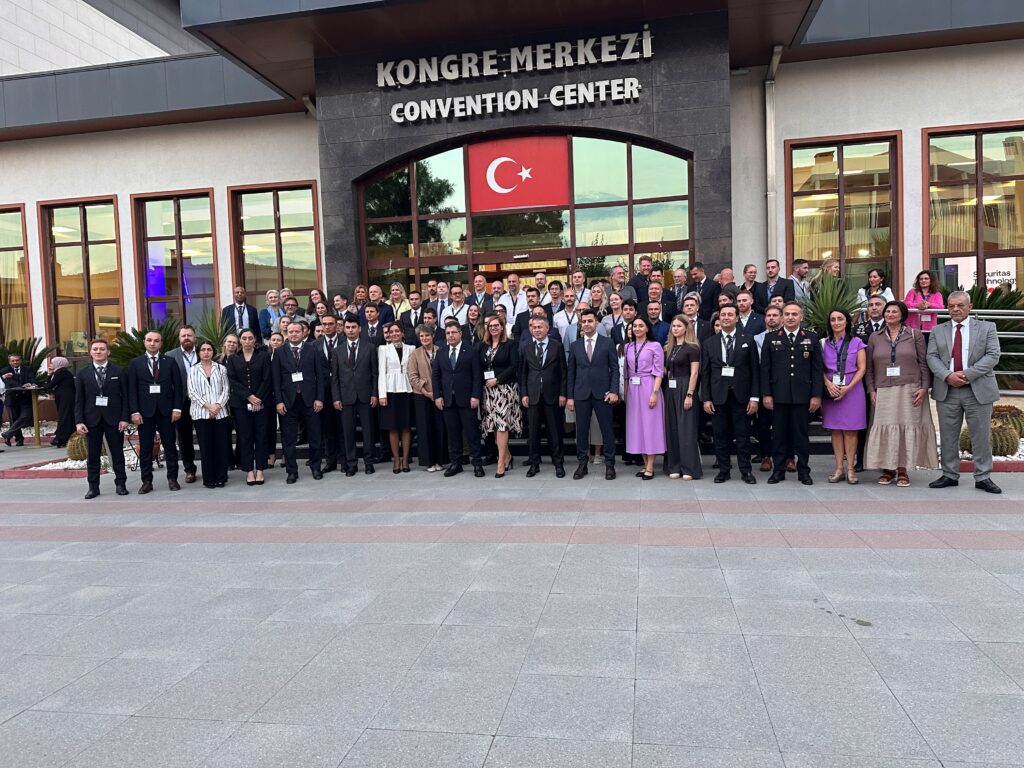
On 6-8 October 2026, Antalya hosted the 14th Electronic Monitoring Conference “Electronic Monitoring in a Changing World – Perception vs Reality”. More than 350 participants coming from 30 countries across Europe and worldwide representing probation services, Ministries of Justice, victims´ services, EM providers, researchers as well as local participants representing the Turkish Prison and Probation Service gathered to discuss how electronic monitoring (EM) is understood by all stakeholders involved including the victims and the public, and how these perceptions compare to the evidence and experiences of those affected. While the gap between perception and reality in electronic monitoring has been recognised for over a decade, the rapid expansion of EM into areas such as victim protection, high-risk supervision and digital innovation has brought new challenges and questions to the forefront.
Recap

ITSCCS
Core Correctional Skills in Digital Probation: highlights from the 6th ITSCCS in Barcelona
05/10/2026
The sixth International Training School on Core Correctional Skills (ITSCCS) took place in Barcelona from 28 September to 2 October 2026, bringing together 26 participants for a week of learning, practical training and international exchange. Organised by the Confederation of European Probation (CEP) and the Centre for Legal Studies and Specialised Training (CEJFE), the programme focused on “Clicks and Empathy: Core Correctional Skills in Digital Probation.”
Recap
Framework Decisions
Recap: ERA workshop on Framework Decisions 829 and 947 in Bucharest
02/10/2026
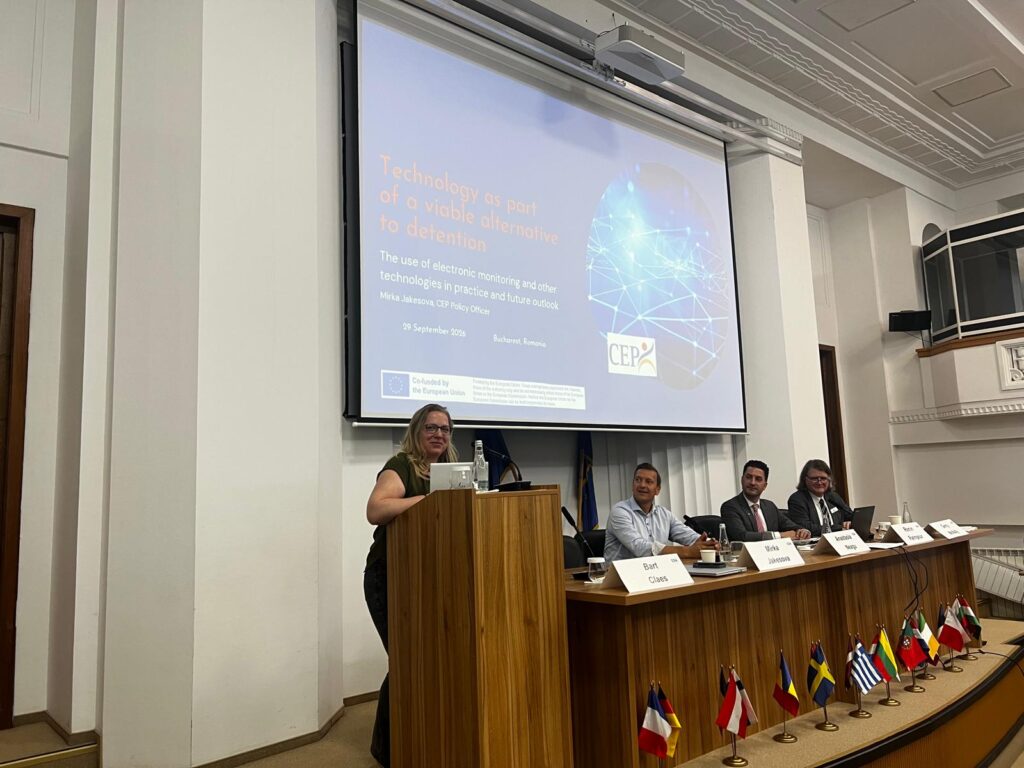
CEP Vice-President Daniel Danglades, Ambassador Gerry McNally and Policy Officer Mirka Jakesova participated in the Seminar on Framework Decisions 829 and 947 and their Impact on Alternatives in the EU organized under the EU project run by the Academy of European Law on 28-29 September in Bucharest, Romania. The seminar brought together judges, prosecutors, probation practitioners, academics, and policy experts to discuss the growing role of alternatives to detention within European criminal justice systems.
New
CEP
CEP and Catalan justice leaders reaffirm longstanding cooperation
29/09/2026
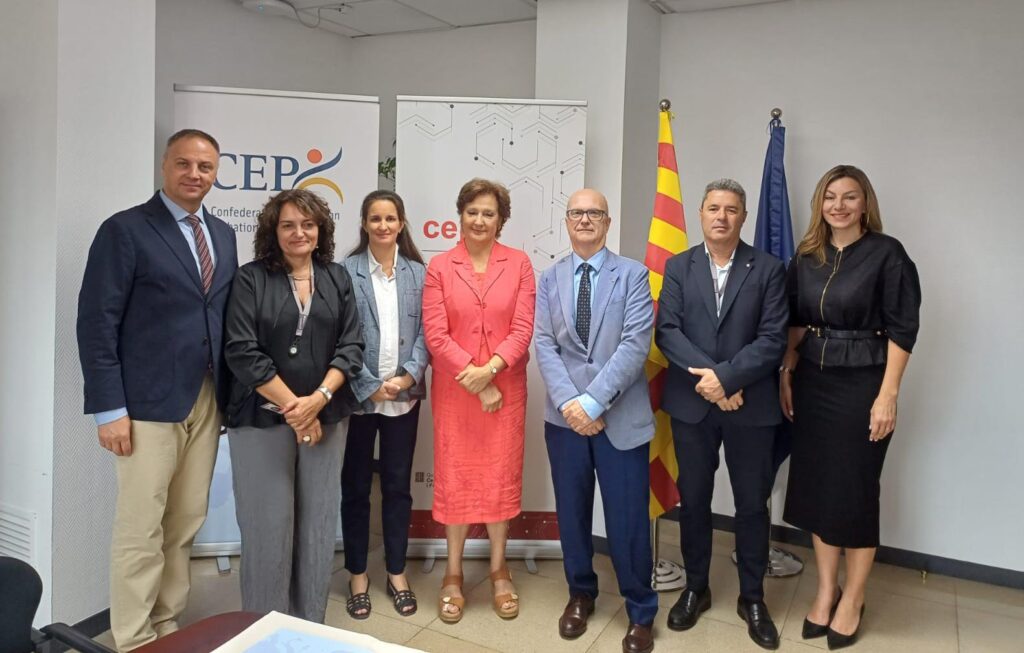
Representatives of the Confederation of European Probation (CEP) met with senior officials from the Catalan Department of Justice and Democratic Quality in Barcelona on 28 September 2026, alongside the opening of the sixth International Training School on Core Correctional Skills. The meeting offered an opportunity to recognise a longstanding partnership and discuss its continued development.
Updated

Mental Health
DEADLINE EXTENDED: Call for Pilot Implementation of the European Mental Health Training Curriculum
29/09/2026
Good news for CEP members! Following requests from our members, CEP has extended the deadline to apply for the pilot implementation of the European Mental Health Training Curriculum for Probation Officers.
Recap

ITSCCS, Technology
6th International Training School opens in Barcelona with a focus on digital probation
28/09/2026
How can probation professionals use new technologies in their interactions while building trust, showing empathy and supporting change? This question is at the heart of the sixth International Training School on Core Correctional Skills, which opened in Barcelona on 28 September 2026.
Subscribe to our bi-monthly email newsletter!
"*" indicates required fields
- Keep up to date with important probation developments and insights.